One of the most common questions patients ask after mole removal is a simple one: how long will this scar last? The honest answer is that a mole removal scar never disappears entirely — every surgical incision leaves some trace — but the difference between a scar at six weeks and a scar at twelve months is dramatic. Understanding what is happening to the skin at each stage of healing helps patients set realistic expectations, take the right steps to support healing, and recognise when a scar is following a normal course versus when it might benefit from additional treatment.
At Centre for Surgery in London, mole removal is performed by GMC-registered plastic surgeons using techniques specifically chosen to minimise scarring from the outset. The quality of the surgical technique — the precision of the incision, the method of closure, the placement of sutures — has a profound effect on what the scar ultimately looks like. But post-operative care and patience play an equally important role in the months that follow.
The Phases of Wound Healing After Mole Removal
Scar formation is not a single event — it is a continuous biological process that unfolds over months and sometimes years. Understanding the distinct phases of wound healing helps explain why a scar looks and feels the way it does at each stage.
Phase 1 — Inflammatory Phase (Days 1–7)
In the first week after mole removal, the wound is in its inflammatory phase. The body sends increased blood flow to the area, which is why the skin around the wound appears red, feels warm, and may be slightly swollen. This is not a sign that something has gone wrong — it is the immune system’s initial response to tissue injury. The wound itself is held together by sutures, and the primary task of the body during this phase is to seal the wound and prevent infection.
The scar will not look like a scar yet. It will look like a healing wound — pink to red, slightly raised, and potentially tender to the touch. Keeping the wound clean, moist, and protected from sun exposure during this phase is essential. Petroleum jelly or a prescribed wound ointment applied beneath a non-adherent dressing maintains the moisture that supports healthy healing and reduces the risk of scab formation.
Phase 2 — Proliferative Phase (Weeks 2–6)
Once the wound has sealed, the body begins laying down new collagen to rebuild the damaged tissue. This is the proliferative phase, and it is characterised by active scar formation. The scar may appear to worsen during this period — it can become more raised, firmer, and more vividly pink or red as new blood vessels form within the healing tissue. This is entirely normal and does not indicate a poor outcome.
Sutures, where placed, are typically removed at five to seven days for facial mole removal wounds and seven to ten days for body wounds. Once sutures are out, the wound continues to strengthen internally even as the surface appears healed. Gentle scar massage can begin once the wound has fully closed and the skin surface is intact — typically from around three to four weeks post-procedure — to help soften the collagen and reduce firmness.
Phase 3 — Remodelling Phase (Months 2–18)
The longest phase of healing is the remodelling phase, during which the initially disorganised collagen laid down in the proliferative phase is broken down and replaced with more structured, organised collagen fibres. This is the phase in which the scar visibly matures and fades. The raised, firm, pink or red scar gradually flattens, softens, and loses its colour, eventually fading to a pale, flat line that is significantly less noticeable than at its peak.
This phase takes time. For most patients, visible improvement is noticeable from around three months, but scar maturation continues for up to twelve to eighteen months after surgery. Patience during this period is not passive — it is active, involving consistent daily care, sun protection, and the appropriate use of scar management products.
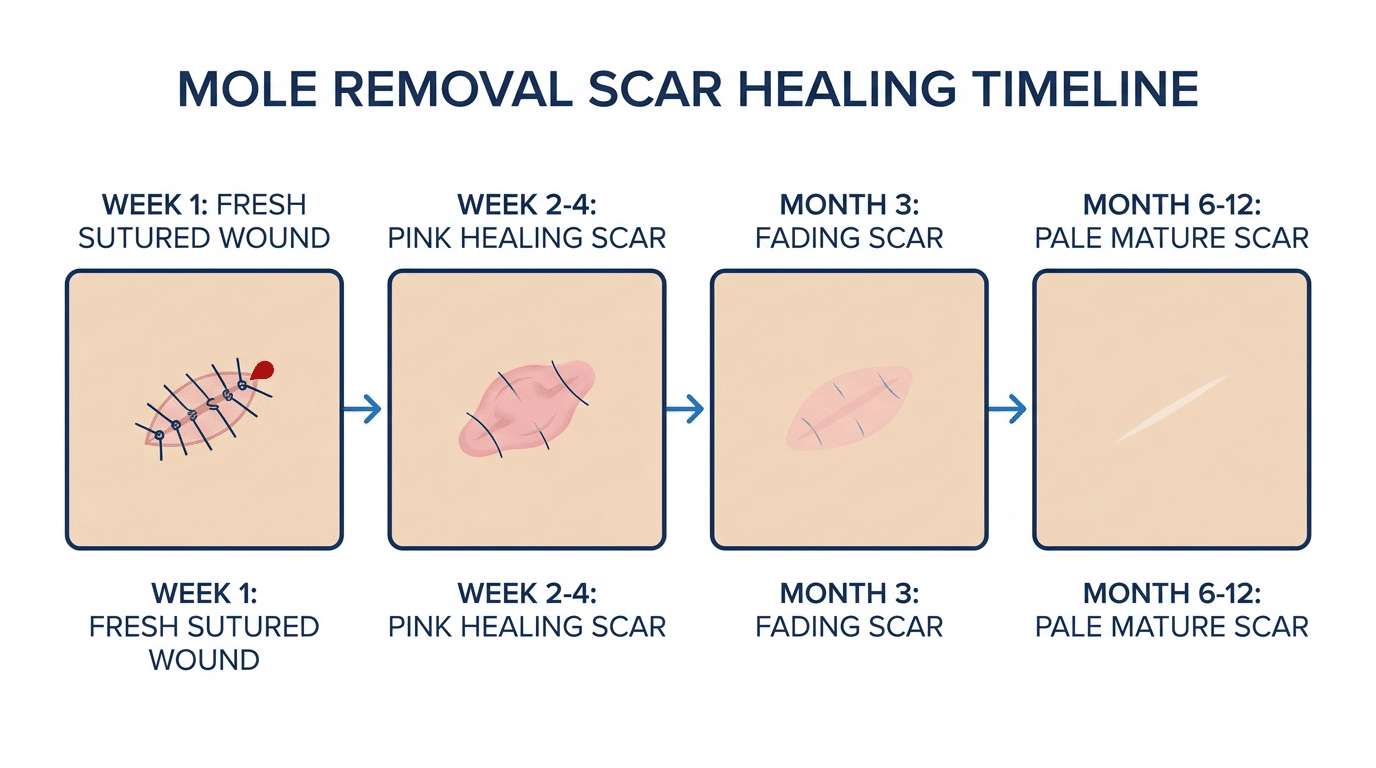
What Does a Mole Removal Scar Look Like at Each Stage?
Week 1
The wound site is fresh and will be covered with a small dressing. Surrounding skin may be slightly puffy and red. The wound itself is closed with sutures or, for very small lesions, left to heal by secondary intention. There is minimal visible scarring at this stage — the concern is wound hygiene and healing rather than scar appearance.
Weeks 2–4
After suture removal, the wound surface has closed. The scar line is typically pink to red and may feel slightly raised or firm. The temptation to pick at any residual crusting should be resisted — doing so can disrupt the healing epidermis and worsen the ultimate scar. Silicone gel or silicone sheets can be introduced at this stage as a first-line scar management measure.
Months 2–3
The scar is at or near its most visible during this period. The pink or red colouration may be pronounced, and the scar may feel firm or slightly raised. This often causes patients to feel concerned, but it is important to understand that this is the normal peak of the proliferative response — not a permanent state. Continued scar massage, silicone use, and sun protection are the most important steps during this period.
Months 4–6
Visible improvement begins to be apparent for most patients. The scar starts to flatten, the redness begins to reduce, and the firmness softens. SPF protection of the scar from UV exposure is particularly important at this stage — UV light can stimulate melanin production in the healing tissue, causing post-inflammatory hyperpigmentation that gives the scar a darker appearance.
Months 6–12
For most patients, this period sees the scar transition from pink to pale. The raised quality largely resolves, and the scar becomes softer and more pliable. By twelve months, many mole removal scars on the face are very difficult to detect against the surrounding skin. Body scars may take longer — up to eighteen months — to reach full maturity.
Beyond 12 Months
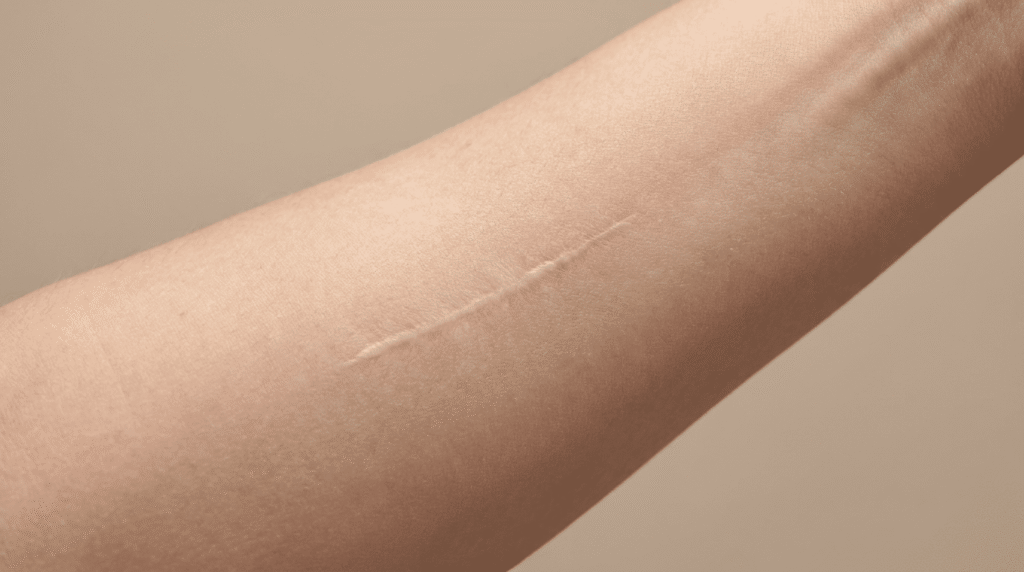
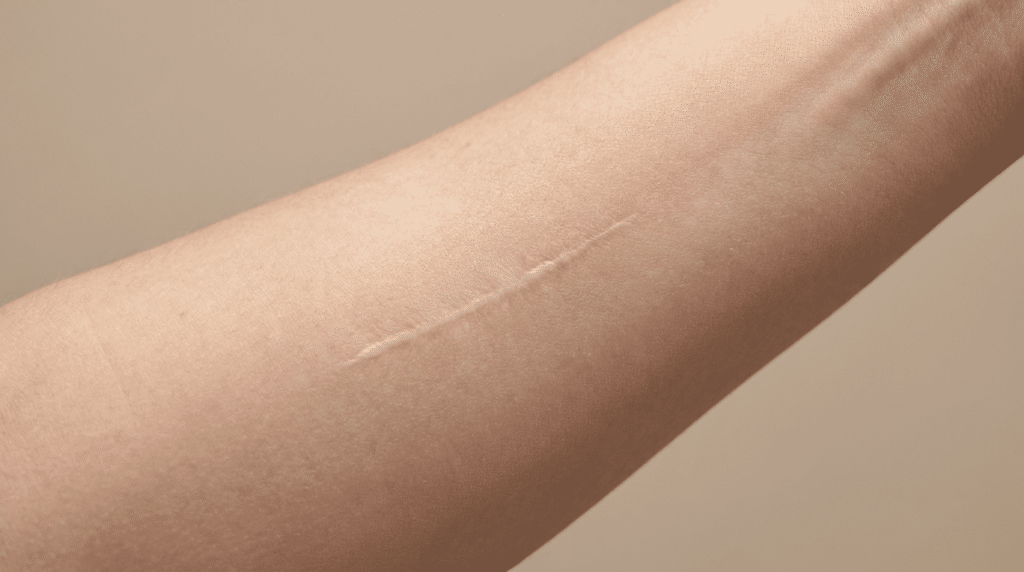
A fully mature mole removal scar is a fine, pale, flat line. In favourable locations — along natural skin creases or in areas of thin, well-healing skin such as the face — the scar may be almost imperceptible. In less favourable locations — the shoulders, chest, or upper back — the scar may remain more visible even at full maturity.
What Factors Affect How Long a Mole Removal Scar Takes to Fade?
Surgical Technique
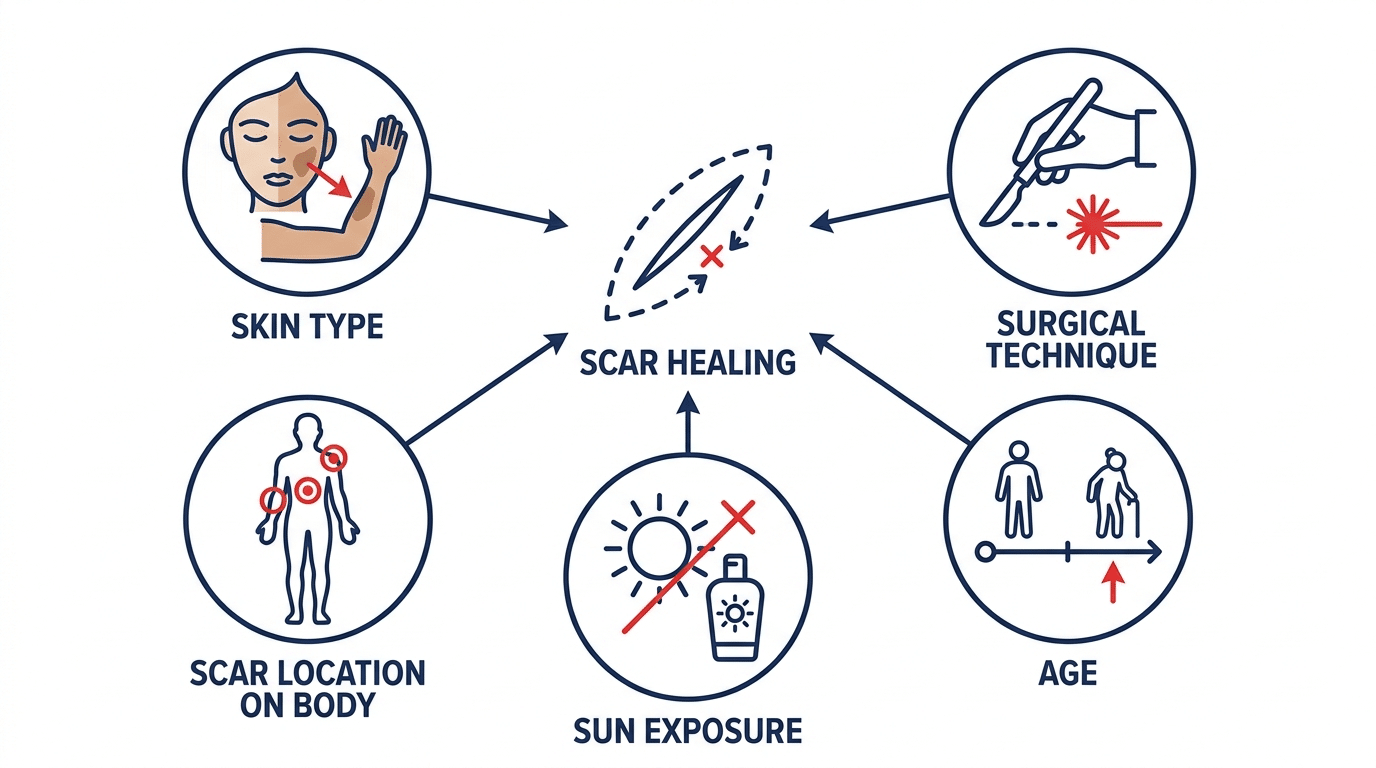
The method of mole removal has the single greatest impact on the resulting scar. Surgical excision with careful closure along the natural lines of skin tension — Langer’s lines — produces a scar that heals with minimal width and tension. Shave excision produces a different type of healing — a flat, circular area that often heals very inconspicuously for raised, non-cancerous lesions. Choosing a plastic surgeon for mole removal ensures that the technique is selected and executed with scar outcome as a primary consideration.
Location on the Body
Facial scars tend to heal better than body scars — the face has an excellent blood supply, thinner skin, and faster cellular turnover. Scars on the back, shoulders, chest, and sternum are consistently the most challenging, as these areas are subject to ongoing movement and skin tension that can widen the scar during healing.
Skin Type and Fitzpatrick Scale
Patients with darker skin types (Fitzpatrick scale III–VI) have a higher baseline risk of post-inflammatory hyperpigmentation — a darkening of the scar area caused by excess melanin production in response to the skin injury. Sun protection is particularly important for these patients. Those with a personal or family history of keloid scarring should inform their surgeon before mole removal so that appropriate preventive measures can be incorporated.
Age
Younger skin heals faster and tends to produce more active scar responses. Older patients sometimes produce less prominent scars because collagen production is slower and less exuberant. The relationship between age and scarring is not simple, but both the speed of healing and the nature of the scar response are influenced by the skin’s intrinsic biological activity.
Sun Exposure
UV exposure of a healing or maturing scar is one of the most avoidable factors that can worsen the outcome. UV radiation stimulates melanocyte activity in the healing skin, causing the scar to become permanently darker than the surrounding tissue. Protecting the scar with a broad-spectrum SPF 50 applied daily, year-round, is one of the most important steps in achieving the best possible scar outcome.
Wound Care Compliance
Patients who maintain daily silicone gel application, gentle massage, and SPF protection consistently throughout the remodelling phase tend to achieve better scar outcomes than those who are intermittent or who stop early.
RELATED: How to Minimise Scars After Mole Removal
How to Help a Mole Removal Scar Fade Faster
Silicone Gel and Silicone Sheets
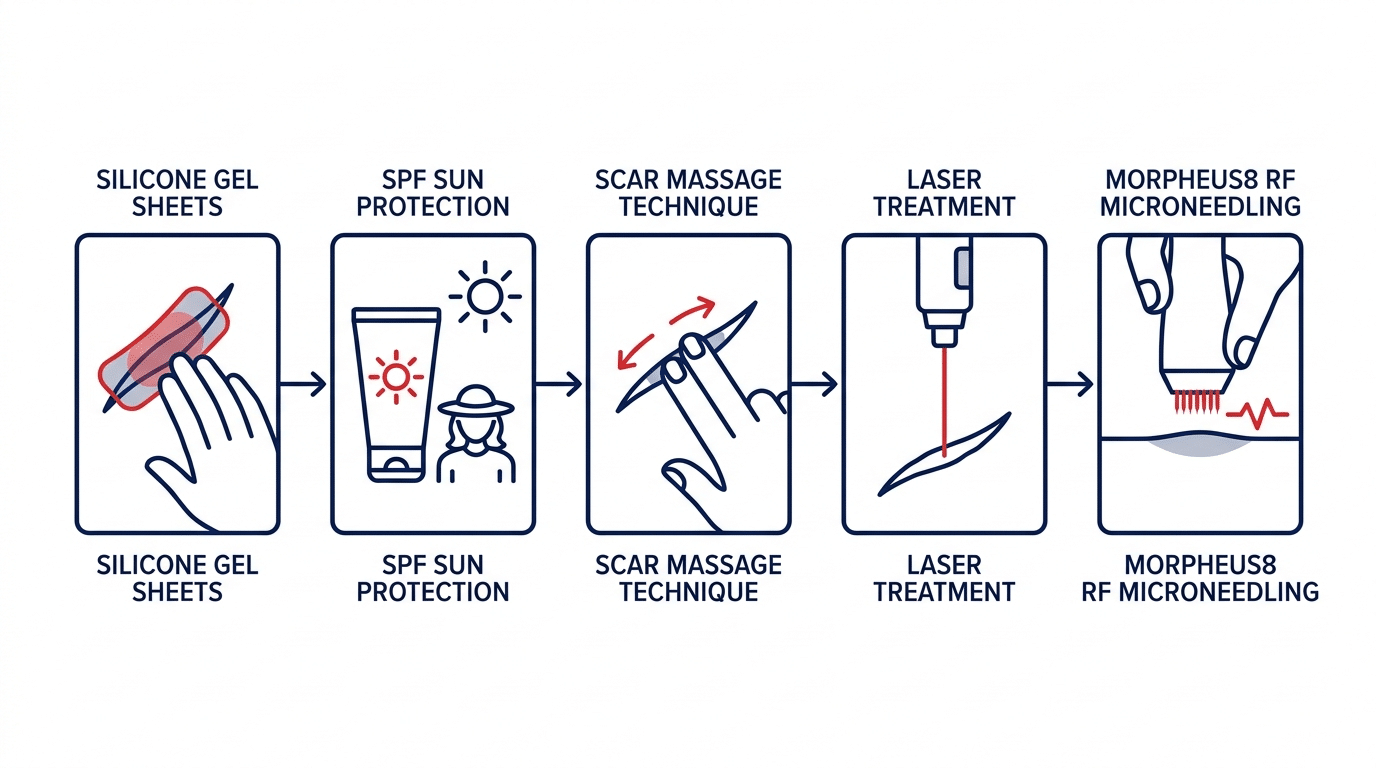
Silicone-based scar management products are the most evidence-backed non-surgical intervention for improving scar appearance. They work by hydrating the stratum corneum of the healing skin, regulating collagen production, and reducing the activity of the proliferative phase. Silicone gel can be applied once the wound surface is fully closed — typically from around three to four weeks post-removal.
Daily SPF Application
Protecting the scar from UV exposure is essential during the entire remodelling phase — which means daily SPF application for at least twelve months following mole removal. A broad-spectrum SPF 50 should be applied to the scar and surrounding skin every morning regardless of the weather or season.
Scar Massage
Gentle circular massage of the healed scar helps to break down the initially disorganised collagen of the early scar, improves blood supply to the area, and promotes the more organised collagen remodelling that results in a softer, flatter scar. Two to three minutes of firm circular massage twice daily, using a moisturiser or oil to reduce friction, is the standard recommendation.
Laser Treatment
For scars that have become red, raised, or persistent beyond the expected timeline, laser treatment is an effective option. Vascular lasers target the abnormal blood vessels of the scar, reducing redness and prompting remodelling. Fractional ablative lasers improve scar texture and surface quality. Both are available at Centre for Surgery as part of our comprehensive scar management offering.
Morpheus8 RF Microneedling
Morpheus8 combines radiofrequency energy with microneedling to stimulate deep collagen remodelling within the dermis. It is particularly effective for improving the texture, firmness, and surface quality of surgical scars, including those following mole removal. Treatment can typically be commenced from around three months following surgery.
When Should I Be Concerned About My Mole Removal Scar?
A scar that continues to grow beyond the boundaries of the original wound may be developing into a keloid or hypertrophic scar. Both benefit from early specialist intervention, including intralesional steroid injections, silicone therapy, and in some cases revision surgery. Any new pigmented area developing within or around the scar site after mole removal should also be assessed — particularly if the original mole was sent for biopsy and any clinical uncertainty existed around the diagnosis.
Frequently Asked Questions
How long does a mole removal scar take to fade?
Most mole removal scars show significant improvement by six months and reach full maturity at twelve to eighteen months. Facial scars typically fade faster than body scars. The final scar is almost always considerably less noticeable than the scar appears at its peak redness at two to three months.
Will a mole removal scar ever completely disappear?
No surgical scar disappears entirely — there will always be some trace of the incision. However, a well-performed mole removal on the face, with optimal post-operative care, can produce a scar that is extremely difficult to detect against the surrounding skin at twelve months.
Is it normal for a mole removal scar to get worse before it gets better?
Yes. The scar typically looks most prominent at around two to three months post-removal, when collagen production is at its most active. Many patients find this alarming, but it is a normal part of the healing process. Consistent scar management during this period produces the best long-term outcome.
Can I use vitamin E oil on my mole removal scar?
Topical vitamin E is widely used and has some evidence for moisturising healing skin, but the evidence base is less robust than for silicone-based products. Silicone gel remains the first-line recommended scar management product.
When can I start applying silicone gel after mole removal?
Silicone gel can typically be commenced from around three to four weeks after surgery, once the wound surface has fully closed and there is no residual scabbing or crusting. Your surgical team will advise on the specific timing for your wound.
Does the size of the mole affect the scar?
Yes — larger moles require wider excision margins and produce correspondingly longer scar lines. However, a longer scar that is well placed along natural skin creases and correctly closed can be less noticeable than a smaller scar in a prominent location or closed under tension.
Mole Removal at Centre for Surgery
Centre for Surgery performs mole removal at our CQC-regulated Baker Street clinic in central London. All procedures are carried out by GMC-registered plastic surgeons experienced in the full range of mole removal techniques. Every excised specimen is sent for histological analysis as standard. Our comprehensive aftercare includes scar management guidance from the day of surgery, with access to the full range of laser and energy-based scar treatments where needed.
If you are concerned about a mole or would like to discuss mole removal and scar management, contact us to arrange a consultation.
Phone: 0207 993 4849 | Email: contact@centreforsurgery.com | Address: 95-97 Baker Street, London W1U 6RN
Finance options including 0% APR are available through our partner Chrysalis Finance — visit our Finance Options page for details.
[contact-form-7 id=”256″ title=”Treatments form”]