If you’ve been thoroughly researching breast enlargement or augmentation surgeries, you’re likely aware that the placement of the implant within the breast is a crucial decision. This isn’t just a one-size-fits-all situation; you have several choices that can make a big difference in the final look and feel of the procedure.
The two most common approaches for implant placement have traditionally been either ‘subglandular’ or ‘submuscular.’ In a subglandular placement, the implant is positioned above the pectoralis muscle, which is the chest muscle, but still under the breast tissue. This option can result in a more natural movement of the breast but may not be ideal for everyone.
RELATED: Best Breast Implant Placement – Over the Muscle, Under the Muscle or Dual Plane?
In contrast, submuscular placement involves inserting the implant beneath the pectoralis muscle itself. This method may offer a more natural appearance for some women and provide additional support for the implant.
But if you’ve been really digging into the nitty-gritty details of breast augmentation, you might have stumbled upon another intriguing option: ‘subfascial’ placement. This is becoming increasingly popular for a variety of reasons. In subfascial placement, the implant is placed beneath the fascia, a connective tissue layer that lies above the pectoral muscle but below the breast tissue. This method aims to combine the benefits of both subglandular and submuscular placements.
RELATED: Choosing the Right Breast Implants for Your Body and Goals
It’s worth noting that many people are considering switching from the more traditional under-the-muscle (submuscular) method to subfascial placement. There are a number of compelling reasons for this. For example, the subfascial method might offer a more natural look, better support, and potentially less postoperative pain. Given these benefits, you might wonder if changing your implants’ position from under the muscle to subfascial is the right choice for you.
RELATED: The Ins and Outs of “Upgrading” Your Breast Implants
What is Subfascial Implant Placement?
Subfascial implant placement is a technique in which the breast implant is inserted between the fascia and the pectoral muscle. The fascia is a thin yet strong layer of connective tissue that covers the chest muscle. Surgeons have discovered that this particular placement can offer the breast a very natural look and movement. Another advantage is that it often reduces the time needed for recovery after breast augmentation surgery.
However, it’s important to emphasise that subfascial placement isn’t the perfect solution for everyone. Each patient is unique, and optimal implant placement depends on several factors, primarily your individual anatomy. Before you go through with breast augmentation, it’s crucial to have an in-depth discussion with your surgeon to decide which method of implant placement is best for you.
At Centre for Surgery, we’ve noticed a growing interest in subfascial breast augmentation. Some patients who have previously had breast augmentation procedures may wonder if it’s possible to change their current implant from a submuscular (under the muscle) to a subfascial placement.
It’s possible to make this switch, but only for good reasons. Any benefits from making the change should clearly outweigh the risks associated with undergoing another surgical procedure.
Why might someone consider switching from submuscular to subfascial placement? There could be several motivating factors. For instance, you might be experiencing discomfort or pain with your current implant placement. Another reason could be a specific aesthetic goal you have in mind that you think would be better achieved with subfascial placement. There might also be complications related to your current placement that could be mitigated by making the switch.
Why change your implants from under the muscle to subfascial?
Switching an implant from a submuscular (under the muscle) to a subfascial (between the fascia and muscle) placement isn’t a decision to be taken lightly. Still, there are several medical or aesthetic reasons why this change might be considered advisable.
Ruptured Implant
If an implant placed under the muscle has ruptured, a surgical intervention will be required to replace it. This can be an opportune time to reconsider the placement and potentially switch to a subfascial position.
Capsular Contracture
This is a condition where scar tissue forms a “capsule” around the implant. While the formation of some scar tissue is normal and part of the healing process, problems arise if this capsule becomes so tight that it puts pressure on the implant, causing it to harden. Changing the placement to subfascial may alleviate this issue.
Inferolateral Malposition
This term refers to a situation where the implants sit too low and too far out to the sides. This could be aesthetically unpleasing and may also cause discomfort. Changing the implant placement could correct this.
Animation Deformity
In some cases, implants placed under the muscle may move or distort when the pectoral muscle is activated, such as during certain exercises or movements. Switching to a subfascial placement can potentially eliminate this problem.
Memory of the Old Inframammary Fold (“Double Bubble”)
Sometimes, the implant may sit lower than the original inframammary crease, creating what is commonly referred to as a “double bubble.” Changing the implant’s placement can help resolve this issue.
Each of these conditions or complications presents its own set of challenges and considerations. It’s crucial to discuss your individual situation with your surgeon to determine whether changing from a submuscular to a subfascial placement would be beneficial for you. The goal is to ensure that any benefits of making the switch clearly outweigh the risks associated with undergoing another surgical procedure.
Changing an Implant from Under the Muscle to Subfascial – What Does it Involve?
Changing an implant from a submuscular (under the muscle) to a subfascial (between the fascia and muscle) placement involves a series of carefully executed steps by your surgeon:
Removal of Old Implant and Capsule
The first step usually involves removing the existing implant. If you’ve experienced issues like capsular contracture, your surgeon may also remove some or all of the capsule or scar tissue surrounding the old implant.
Suturing the Muscle
Once the old implant is removed, the next step is to suture the pectoral muscle back down to the chest wall. This is done to restore its natural position as closely as possible.
Creating a New Pocket
A new pocket is then created between the fascia and the pectoral muscle. This is where the new implant will be placed.
Insertion of New Implant
The new implant is then inserted into this freshly created pocket in the subfascial position. This placement is known to provide more medial cleavage definition.
It’s crucial to reiterate that changing your implant placement is a significant decision and not one to be made hastily. If your current under-the-muscle implants are serving you well and you’re not facing any complications like those mentioned earlier, there’s often no compelling reason to undergo another surgical procedure. If it’s not broken, why fix it?
However, if you are experiencing issues such as pain, capsular contracture, or other complications discussed, it might be worth consulting your surgeon to discuss the potential benefits and risks of switching to subfascial placement. The objective is always to make an informed decision in which the benefits clearly outweigh the risks of additional surgery.
RELATED: Natural vs Augmented Breasts – How to Tell The Difference?
Why Choose Centre for Surgery for Your Cosmetic Procedures?
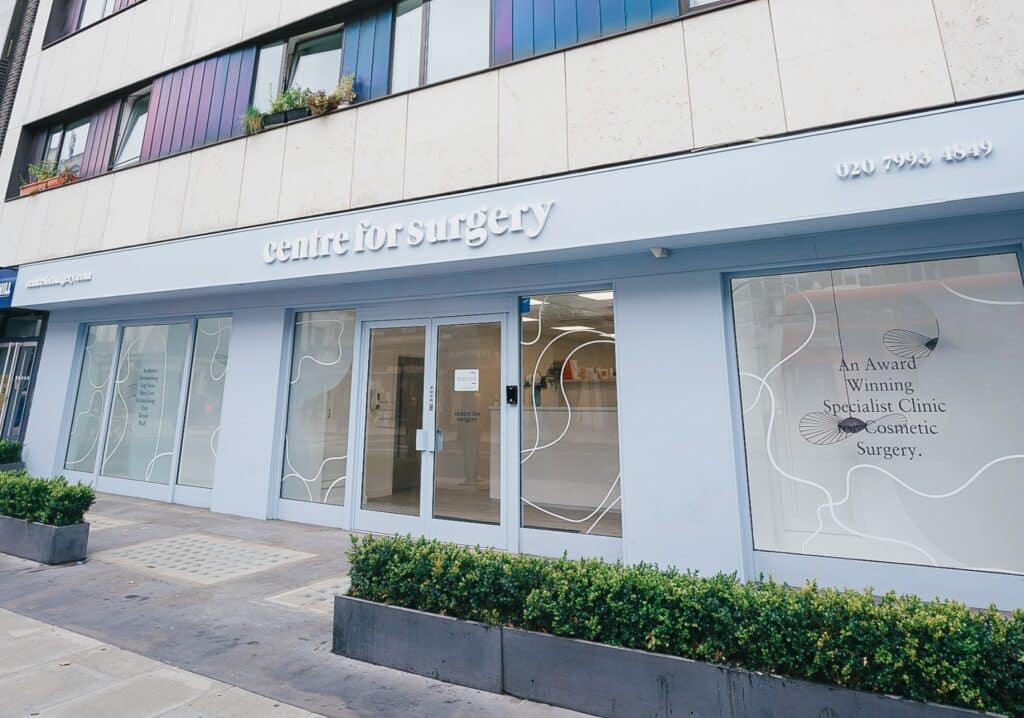
When it comes to making a choice as significant as undergoing cosmetic surgery, you deserve to be in the hands of experts who offer unparalleled skill and genuinely care about your well-being. At Centre for Surgery, located in the heart of London, we pride ourselves on providing just that—a blend of technical expertise and compassionate care.
Here’s what sets us apart:
- Experienced Surgeons: Our team of GMC-registered surgeons brings years of experience in a variety of cosmetic procedures. Their focus on patient care and outcomes has led to Centre for Surgery becoming one of the most sought-after clinics in London.
- Cutting-Edge Technology: We utilise the latest surgical techniques and technologies to ensure you receive the best possible treatment.
- Personalised Care: Every patient is unique, and we treat you as such. From the initial consultation to post-operative care, we offer tailored treatment plans to meet your individual needs.
- Safety First: Our clinic meets the highest safety standards, offering state-of-the-art operating rooms and experienced medical staff to ensure your procedure is as safe as possible.
Ready to Take the Next Step?
We encourage you to book a consultation to discuss your cosmetic goals and surgical options. Here’s how you can reach us:
📞 Phone: 0207 993 4849
📧 Email: contact@centreforsurgery.com
📍 Address: 95-97 Baker Street, London W1U 6RN
Choose Centre for Surgery for a transformative experience that puts your needs and safety first. We look forward to helping you achieve your aesthetic goals.
[contact-form-7 id=”256″ title=”Treatments form”]