What is Breast Ptosis?
Breast ptosis, also known as breast drooping, is common and a natural part of the ageing process, weight loss or pregnancy. The breasts start to droop or sag as they slowly lose their youthfulness and perkiness, causing them to lose their normal position on the chest. The nipples gradually begin to point downwards, and the breasts can often appear deflated.
Breasts are made up of breast tissue, fat, and a special type of supportive tissue called Cooper’s ligaments. These ligaments act like a built-in support system, helping the breasts keep their shape and stay firm. Over time, things like pregnancy, ageing, and weight changes can stretch and weaken these ligaments. When that happens, the breasts can lose their firmness and start to droop. If this is combined with the skin losing its natural stretch and tightness, it can lead to sagging breasts.
Centre for Surgery have years of experience treating breast ptosis. We offer a full range of treatment options for women who want to rejuvenate their breasts. Droopy boobs can be corrected with a breast lift (mastopexy), breast augmentation (with implants), or a combination of both procedures.
RELATED: Breast Lift FAQs – Q&As about Mastopexy Surgery
RELATED: How to get rid of sagging breasts after weight loss
Understanding the Causes of Breast Ptosis
Breast ptosis happens for several common reasons that affect how firm and lifted the breasts look. One of the main causes is getting older — as women age, their skin naturally becomes less firm and stretchy. Gravity also plays a part, as the constant downward pull over many years gradually causes the breasts to droop. Pregnancy and breastfeeding can also change the breasts, as can changes in weight (gaining and losing a lot can stretch the skin, leading to loss of firmness). Genetics matter too — some women are simply more likely to experience sagging because of the natural structure of their skin and breast tissue. Certain lifestyle habits like smoking and excess sun exposure can damage the skin and reduce its elasticity. Menopause also affects the skin, as the body produces less collagen and elastin. Finally, women with larger breasts may notice sagging more, as the extra weight puts more strain on the skin and supportive tissues over time.
How is breast ptosis classified?
Sagging breasts (breast ptosis) can be described in four levels, depending on where the nipple sits and how much of the breast hangs below the natural crease under the breast (called the inframammary fold).
- Grade 1: The nipple is just a little below the crease, but still roughly in the centre of the breast.
- Grade 2: The nipple is lower than the crease but still roughly centred.
- Grade 3: The nipple points downward, and most of the breast tissue hangs below the crease.
- Grade 4: The nipple is at or below the crease, and the whole breast droops downward.
Treatments include a breast lift (mastopexy) or breast augmentation with a lift, and the best choice depends on how much sagging there is and what the woman wants to achieve.
How can you fix sagging breasts with surgery?
There are several surgical options to help improve sagging breasts. The most common types are mastopexy (breast lift) and breast augmentation. The two procedures can also be combined depending on the degree of sagging breasts.
Mastopexy (Breast Lift)
A Mastopexy, or breast lift, is a surgical procedure that removes extra skin and raises the nipples and areolas to a higher, more youthful position. During the surgery, the surgeon makes small cuts around the areola, down the front of the breast, and along the crease under the breast. They remove the extra skin and tighten the remaining skin, reshaping the breast and repositioning the nipples and areolas to a natural, lifted position.
Breast Augmentation with a Lift
Breast augmentation with a lift is a surgery that both adds volume to the breasts through the use of implants and lifts them to a higher, firmer position. During the surgery, the surgeon makes small cuts around the areola, down the front of the breast, and along the crease under the breast. The implants are placed, and the extra skin is removed or tightened, while the nipples and areolas are moved to a natural, lifted position.
Breast Liposuction
Liposuction is a surgery that removes extra fat from the breast area. It can be done on its own or along with other procedures like a breast lift or breast enlargement to improve the look of sagging breasts.
Fat Transfer to Breasts
Fat transfer involves removing fat from one area of the body and injecting it into the breasts to increase their size and restore their shape. This procedure can be performed alone or in combination with other procedures, such as mastopexy, to improve the appearance of sagging breasts.
How can you prevent breast sagging?
Keep a Healthy Weight — Staying at a healthy weight helps take pressure off your breasts and can prevent sagging. Quick weight gain or loss stretches the skin, which can lead to drooping.
Wear a Well-Fitted Bra — A properly fitting bra supports your breasts and reduces strain on the skin and tissue. Make sure to get your bra size checked regularly, as it can change over time.
Protect Your Skin from the Sun — Too much sun can damage your skin and make breasts sag. Wearing protective clothing, a hat, and high-SPF sunscreen can help keep your skin healthy.
Don’t Smoke — Smoking damages the skin, which can make breasts droop.
Exercise Regularly — Working out strengthens chest muscles, which support the breasts and help prevent sagging.
Sleep on Your Back — Sleeping on your side or stomach puts pressure on your breasts which can lead to sagging. Sleeping on your back helps reduce this strain and keeps your breasts supported.
FAQS about Breast Ptosis
Does wearing a bra prevent breast ptosis?
Wearing a bra helps support your breasts and takes some strain off the skin and tissue, but it cannot completely stop them from sagging. Sagging happens due to a mix of factors like ageing, genetics, pregnancy, breastfeeding, and changes in weight. A combination of bra support and healthy habits is the best way to maintain their shape.
Does breast lifting leave a scar?
Yes, a breast lift (mastopexy) usually leaves some scars. The exact size and location depend on how much lifting is needed. Typically, cuts are made around the areola and down the front of the breast. Some scars may fade over time, and in some cases, they can be hidden in natural folds or along the edge of the areola.
Is a breast lift permanent?
A breast lift can give long-lasting results, making the breasts look firmer and more lifted for several years. However, it is not permanent — ageing, weight changes, and other factors can eventually cause breasts to sag again. Maintaining a healthy lifestyle can help keep the results for longer.
Are there non-surgical ways to make saggy boobs perky again?
While surgery gives the most noticeable results, there are non-surgical ways to improve the look of sagging breasts: exercise to strengthen chest muscles, improved posture, supportive bras, massage to boost circulation, and moisturising and protecting the skin from the sun to help maintain elasticity.
RELATED: What is a non-surgical breast lift?
Breast Ptosis Surgery at Centre for Surgery
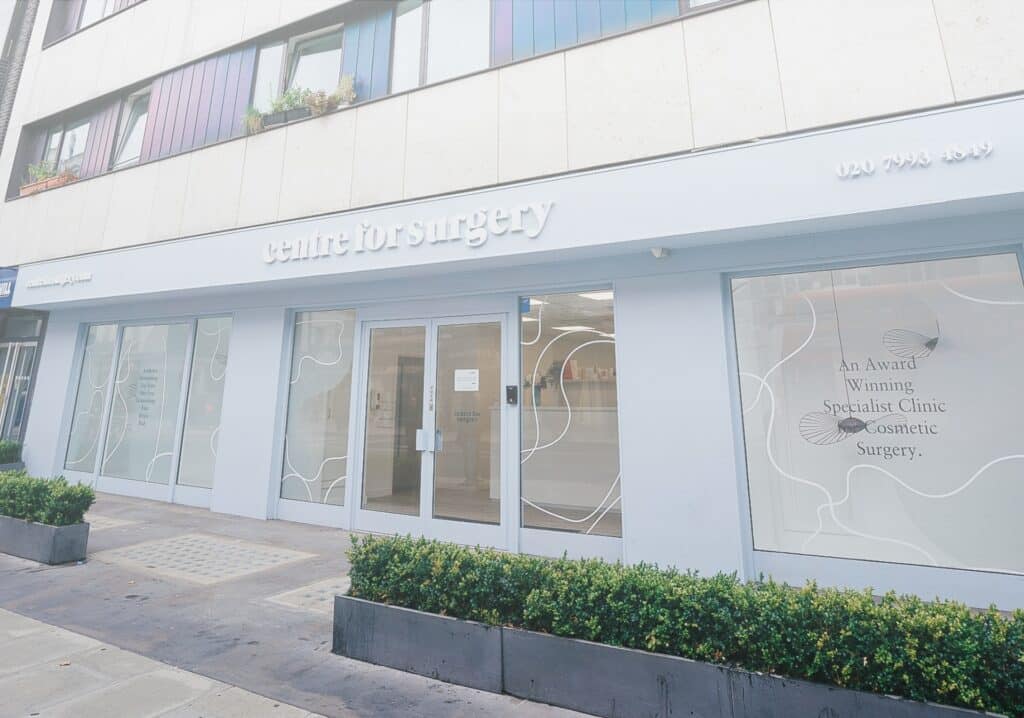
Centre for Surgery is a specialist plastic surgery clinic. Our UK cosmetic surgeons are some of the best in London at treating sagging or droopy breasts. Surgical options include a breast lift, breast enlargement, or a breast lift combined with implants. Another option is fat grafting, which uses your own fat to restore firmness to the breasts.
Call us today to book a consultation with an expert plastic surgeon at our modern Baker Street clinic in Marylebone: 📞 0207 993 4849
RELATED: Should I get a Breast lift with implants?
[contact-form-7 id=”256″ title=”Treatments form”]