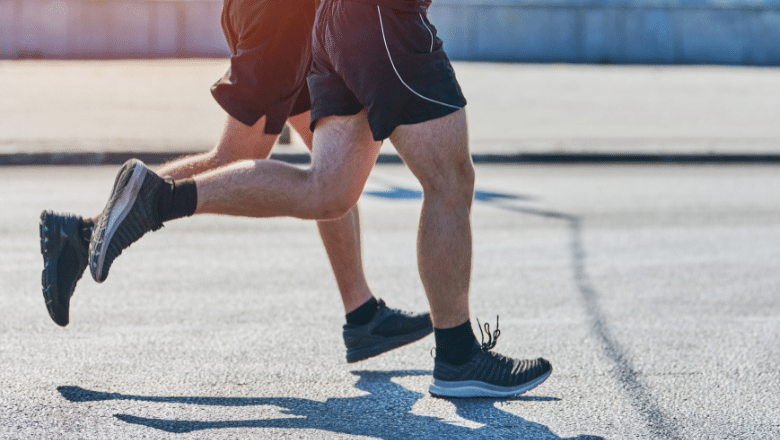
For many people, the lower legs are a persistent source of frustration. The calves are one of the most genetically determined muscle groups in the body — and for a significant proportion of people, no amount of dedicated training will produce the fuller, more balanced leg shape they want. When the calves appear disproportionately thin compared to the thighs or upper body, or when one leg is noticeably smaller than the other due to injury or a medical condition, the impact on body confidence can be real and lasting.
Calf implant surgery addresses this directly. At Centre for Surgery in London, we specialise in advanced calf augmentation procedures for both cosmetic and reconstructive purposes, performed by consultant plastic surgeons with specific expertise in lower limb enhancement. This guide explains who is a suitable candidate, why skinny calves are so difficult to address through exercise alone, what the surgery involves, and what results patients can realistically expect.
RELATED: Calf Augmentation Before & After Photos
Why Some People Cannot Build Calf Muscle Through Exercise
The gastrocnemius and soleus — the two muscles that form the visible calf — are structurally different from most other major skeletal muscles. The gastrocnemius in particular has a high proportion of slow-twitch muscle fibres, which respond less readily to the high-load training that builds mass in muscles like the quadriceps or pectorals. The muscle bellies are positioned relatively high on the lower leg, meaning the shape of the visible calf is largely defined by the length and insertion point of the muscle — characteristics that are entirely genetically fixed and cannot be altered through any training programme.
This is why many people — including dedicated gym-goers, competitive bodybuilders, and athletes — find that their calves remain stubbornly underdeveloped relative to the rest of their physique regardless of effort or consistency. It is not a failure of discipline. It is a structural reality that no exercise programme can overcome. For these patients, calf augmentation with silicone implants is the only reliable route to the more balanced, defined lower leg they are seeking.
Calf Implants for Muscle Imbalance and Medical Conditions
Beyond purely cosmetic concerns, calf implants play an important reconstructive role for patients whose muscle asymmetry has a medical origin. Several conditions result in one or both calves being significantly underdeveloped or asymmetric.
Polio and Post-Polio Syndrome
Paralytic polio can cause permanent muscle wasting in the affected limbs, including the calf musculature. Patients who have experienced poliomyelitis often have one leg that is markedly smaller than the other, creating significant visible asymmetry. Custom-made calf implants designed to match the patient’s specific anatomy can restore a more symmetrical appearance and have a profoundly positive impact on confidence and quality of life. Standard off-the-shelf implants are rarely adequate for these cases — the anatomical variation is too specific — and the CT scanning required for custom implant manufacture is a standard part of the process for reconstructive cases.
Spina Bifida
Spina bifida at lumbar and sacral levels can affect the nerve supply to the lower leg muscles, resulting in reduced muscle mass in the calves and marked left-right asymmetry. Depending on the degree of neurological involvement, patients may have bilateral hypoplastic calves or isolated unilateral wasting. Custom calf implants are particularly valuable here because of the anatomical specificity involved — a bespoke device designed around the individual’s lower leg dimensions is consistently the most effective approach. If you are considering which approach is right for your specific anatomy, our guide to the differences between calf implants and fat transfer may also be helpful background reading.
Congenital Muscle Hypoplasia
Some patients are born with underdeveloped gastrocnemius or soleus muscles — a presentation known as congenital muscle hypoplasia. This may affect one or both sides and can be either isolated or part of a broader syndrome. Calf augmentation in these patients is genuinely reconstructive, creating a more natural and proportionate leg shape that was never achievable through exercise or conservative management.
Injury and Muscle Atrophy
Significant lower limb trauma — including severe fractures, crush injuries, compartment syndrome, or extensive soft tissue loss — can result in permanent reduction in calf muscle bulk. Similarly, prolonged immobilisation following surgery or serious illness can cause muscle atrophy that does not fully reverse with rehabilitation. Where physiotherapy has reached its limits and a meaningful size difference between legs persists, calf implant surgery provides a reliable and permanent solution.
Cosmetic Calf Implants — Who Is an Ideal Candidate?
For patients seeking purely cosmetic improvement to their calf shape and definition, the ideal candidate profile is as follows. You should be in good general health with no significant chronic medical conditions that would increase surgical risk. You should have realistic expectations about what the surgery can achieve — calf implants add volume and definition to the muscle belly, producing a fuller, more athletic appearance, but they do not produce the extreme muscularity of elite bodybuilders. You should have a stable body weight, as significant fluctuations after surgery can affect the appearance of the result. Good skin quality and skin elasticity support the best aesthetic outcome.
Crucially, you should have already explored — and exhausted — exercise-based approaches to calf development. Calf augmentation is most appropriately considered when training has genuinely reached its genetic limit, not as a shortcut around training. Your surgeon will assess all of these factors at your consultation at our Baker Street clinic.
For patients who do have some body fat available for harvest, calf augmentation with fat transfer may also be worth discussing as a natural alternative — though it is better suited to patients seeking subtle volume enhancement rather than the structural definition that implants provide. The cost implications of both approaches are covered in our calf implants cost guide.
What Does Calf Implant Surgery Involve?
Calf augmentation surgery at Centre for Surgery is performed as a day case under TIVA (Total Intravenous Anaesthesia) and typically takes one to two hours for bilateral augmentation — treating both legs in the same session. A small incision is made in the natural crease at the back of the knee, through which the surgeon creates a precise pocket beneath the fascia of the calf muscle (the subfascial technique). The implant is guided into position, symmetry is assessed and adjusted, and the incision is closed with dissolvable sutures. Patients are discharged the same day.
Standard implants suit the majority of cosmetic augmentation cases. For reconstructive cases involving significant muscle absence or asymmetry, custom-made implants are designed from CT scan measurements of the lower leg. Custom implants are manufactured specifically to match each patient’s exact anatomy, producing results that are more natural and proportionate than a standard device could achieve.
Benefits of Calf Implants for Leg Shape and Symmetry
The benefits of calf augmentation extend across both the physical and the psychological. For patients who have struggled with self-consciousness about their lower legs for years — avoiding shorts, swimwear, or activities where the legs are visible — the transformation in confidence that follows successful surgery is frequently described as life-changing.
From a purely physical standpoint, calf implants create a more proportionate lower body by adding volume to the most commonly underdeveloped segment of the leg. For bodybuilders and physique athletes, they address the persistent imbalance between well-developed upper legs and flat calves. For patients with medical asymmetry, they restore the bilateral symmetry that normal gait mechanics and daily confidence both benefit from. Clothing fits differently — shorts and trousers that previously highlighted the asymmetry now look balanced and comfortable.
The results are also long-lasting. Unlike fat transfer, where a proportion of the transferred fat may be reabsorbed over time, silicone calf implants provide a stable, durable volume that does not change with training, diet, or body weight fluctuations. And unlike injectable treatments, there is no need for maintenance or top-up procedures. In the vast majority of cases, calf implants do not need to be replaced unless a specific clinical reason arises.
Recovery After Calf Implant Surgery
Recovery following calf augmentation requires careful adherence to the post-operative guidelines provided by your surgical team. A detailed breakdown of the full calf implant recovery timeline is covered in a dedicated guide. In brief, the first week is the most demanding — the calves will be swollen, tight, and bruised, and walking will feel effortful. Gentle short walks are encouraged from day one to maintain circulation. Compression garments are worn consistently to reduce swelling and support the healing tissue.
By week two most patients are mobile and comfortable enough to return to desk-based work. Strenuous lower-leg exercise — running, cycling, weights — is avoided for five to six weeks until the pocket has fully healed around the implants. The final aesthetic result, with all swelling resolved and the implants fully settled, typically becomes apparent at three to six months post-surgery.
Alternatives to Calf Implants
For patients who prefer a non-implant approach, calf augmentation with fat transfer is an option worth considering. This technique uses fat harvested by liposuction from another part of the body — the abdomen, flanks, or thighs — and reinjected into the calf region to add volume. It avoids the use of a synthetic device and produces results that tend to feel very natural. The trade-off is that fat transfer is better suited to subtle enhancement and carries some unpredictability in final volume due to the natural reabsorption of some transferred fat cells. A full discussion of both approaches, including the factors that make each more or less suitable, is in our guide to calf implants versus fat transfer.
Patients who are troubled primarily by excess fat rather than insufficient muscle — leading to heavy, shapeless calves — may be better served by calf and ankle liposuction, which removes the overlying fat to reveal the muscle structure beneath. Your surgeon will advise which approach best matches your anatomy and goals at consultation.
Frequently Asked Questions
Can calf implants correct one leg that is smaller than the other?
Yes. Asymmetric calf augmentation — placing an implant on one side only, or using different-sized implants on each side — is a well-established approach for correcting calf asymmetry. Custom-made implants are usually the most effective solution for significant asymmetry of medical origin.
Will calf implants look natural?
When placed by an experienced specialist using correctly sized implants suited to the patient’s anatomy, the results look and feel natural. The implants are shaped to mimic the contour of the gastrocnemius muscle belly and are positioned beneath the fascia so the overlying tissue integrates naturally around them.
How long do calf implants last?
Calf implants are designed to be permanent. Unlike some other implantable devices, they carry no routine replacement recommendation. In the absence of complications, most patients keep them indefinitely. Full details are in our guide on whether calf implants need to be replaced.
Can I still exercise normally with calf implants?
Yes. Once recovery is complete — typically at five to six weeks — patients can return to all forms of exercise including running, cycling, and lower-leg resistance training. The implants are securely positioned beneath the fascia and do not impede physical activity.
How much do calf implants cost?
Pricing depends on whether standard or custom implants are used, and whether one or both legs are treated. A full breakdown is available in our calf implants cost guide. Finance options including 0% APR through Chrysalis Finance are available.
Related Guides
RELATED: Calf Implants at Centre for Surgery
RELATED: Calf Augmentation with Fat Transfer
RELATED: Calf Augmentation Before & After Photos
RELATED: How Much Do Calf Implants Cost in the UK?
RELATED: Recovery After Calf Implant Surgery
RELATED: Do Calf Implants Need To Be Replaced?
RELATED: Calf Implants vs Fat Transfer — Which Is Right for You?
RELATED: Calf and Ankle Liposuction — How to Get Rid of Cankles
Calf Implant Surgery at Centre for Surgery
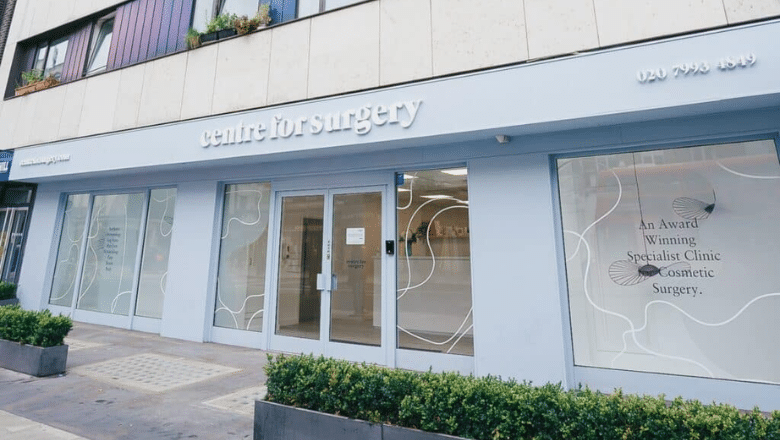
Centre for Surgery is one of London’s leading specialist clinics for calf augmentation, with consultant plastic surgeons who have specific expertise in both cosmetic and reconstructive calf implant procedures. We operate from our purpose-built Baker Street clinic in central London and offer a personalised, consultant-led service from initial consultation through to final post-operative review. Finance options including 0% APR through Chrysalis Finance are available — visit our Finance Options page for details.
📞 0207 993 4849 | 📧 contact@centreforsurgery.com | 📍 95-97 Baker Street, London W1U 6RN
[contact-form-7 id=”256″ title=”Treatments form”]