
Labiaplasty is one of the most frequently requested cosmetic gynaecology procedures in the UK. The procedure has the potential to be genuinely life-changing — relieving physical discomfort, alleviating pain during exercise and sexual intercourse, and restoring a woman’s confidence in her appearance and her body. Given these significant benefits, one of the most common questions we receive from patients is whether labiaplasty surgery is available through the National Health Service.
The straightforward answer is that NHS funding for labiaplasty is extremely restricted and, for the vast majority of women who seek the procedure, it is not available. Understanding why this is the case — and what options are available through private treatment — helps patients make informed decisions about how best to proceed.
RELATED: Labiaplasty FAQs — Q&A About Labia Reduction
The NHS Position on Labiaplasty
The NHS in England operates according to clinical commissioning frameworks that guide what treatments and procedures are funded from the public health budget. Labiaplasty — along with many other cosmetic surgical procedures — is classified as a procedure of low clinical priority. This classification reflects a policy decision that the available healthcare budget should be directed towards treatments that address life-threatening or seriously health-impairing conditions, and that elective cosmetic procedures should in most cases be funded privately by patients who choose to undergo them.
NHS Improvement guidance and local Clinical Commissioning Group (CCG) policies have progressively restricted access to cosmetic procedures over recent years, reflecting increasing pressure on the NHS budget. Labiaplasty is specifically listed among procedures that are not routinely funded, regardless of the degree of physical discomfort or functional impairment the patient may be experiencing. This position has been the subject of debate within the medical community, with many gynaecologists and plastic surgeons arguing that women with clinically significant labial hypertrophy who experience genuine functional impairment deserve access to treatment. However, the current policy position in most parts of England is that NHS funding for labiaplasty is not available.
Are There Any Circumstances Where the NHS Might Fund Labiaplasty?
There are a small number of very specific circumstances in which NHS funding for labiaplasty or related vulval surgery may be available, though these are exceptional rather than routine.
Treatment of Malignant or Pre-Malignant Lesions
Where labiaplasty-type surgery is required to remove malignant tissue — such as in the treatment of vulval carcinoma — or to excise confirmed pre-malignant lesions of the vulva and perianal region, this is considered reconstructive or therapeutic surgery rather than cosmetic surgery, and it would typically be funded by the NHS through oncological or gynaecological pathways. The same applies to treatment of extensive condylomata or other infectious or inflammatory lesions requiring surgical excision for therapeutic purposes.
Congenital Anomalies
In rare cases where labial or vulval abnormality is the result of a congenital condition — such as certain presentations of congenital adrenal hyperplasia or ambiguous genitalia — reconstructive surgery may be available through NHS specialist services. These cases are assessed on an individual basis and typically involve multidisciplinary input from gynaecologists, urologists, and paediatric specialists.
Exceptions Through Individual Funding Requests
In exceptional circumstances, a GP or specialist can make an Individual Funding Request (IFR) to the local NHS commissioner to fund a procedure that is not routinely available. An IFR must demonstrate that the patient’s case is exceptional and that the clinical need exceeds the threshold for standard NHS services. IFRs for labiaplasty are rarely successful given the current policy environment, but they remain a theoretical pathway in cases of exceptional clinical need.
For the overwhelming majority of women seeking labiaplasty — whether for relief of physical discomfort, correction of aesthetic concerns, or both — NHS funding is not a realistic option, and private treatment is the appropriate route.
Does Private Medical Insurance Cover Labiaplasty?
Private medical insurance policies in the UK similarly do not typically cover cosmetic surgical procedures, including labiaplasty. Private health insurance is designed to fund treatment for illness, injury, and medically necessary procedures — not elective cosmetic surgery undertaken primarily for aesthetic improvement or to enhance self-esteem.
In exceptional cases where labiaplasty is required to treat a specific medical condition — such as a pre-malignant or malignant vulval lesion — private health insurance may provide coverage under the relevant diagnostic or surgical category. Patients in this situation should discuss the matter directly with their insurer and obtain written confirmation before proceeding.
Women seeking labiaplasty for cosmetic reasons, for relief of discomfort from labial hypertrophy, or for improvement of sexual function should expect to fund the procedure privately. Our team at Centre for Surgery is experienced in guiding patients through all aspects of self-funded cosmetic gynaecology, including helping them understand the full cost of treatment and the finance options available to them.
RELATED: How Much Does a Labiaplasty Cost? — Full Price Guide
What Are the Cosmetic Reasons Women Choose Labiaplasty?
Most women who seek labiaplasty at Centre for Surgery do so for a combination of aesthetic and functional motivations, and the two are often closely intertwined.
Labial hypertrophy — the clinical term for enlarged labia minora — is the primary driver of most labiaplasty requests. Enlarged labia minora can protrude beyond the labia majora, which many women find aesthetically bothersome and which can also cause practical difficulties. Excess labial tissue can become caught or folded uncomfortably in tight-fitting clothing, sportswear, or swimwear, causing irritation, chafing, and pain. During physical exercise — particularly cycling, horse riding, or high-impact activities — excess labial tissue can be a source of significant and persistent discomfort that discourages participation.
Sexual intercourse can also be affected. Excess labial tissue can cause pain or discomfort during penetrative sex, and many women report that they feel self-conscious about the appearance of their labia in intimate situations, which can undermine sexual confidence and affect the quality of their relationships.
Asymmetry of the labia — where one side is noticeably larger or shaped differently from the other — is another common concern. While some degree of asymmetry is entirely normal, pronounced asymmetry can be a source of both aesthetic concern and practical discomfort, and it can be very effectively addressed through targeted labiaplasty.
RELATED: Everything You Need to Know About Labiaplasty
Medical Reasons for Labiaplasty
Although labiaplasty is classified as cosmetic surgery, many of the reasons women seek it have a genuine and significant medical component. Physical discomfort, pain, recurrent skin irritation, and interference with physical activity are all legitimate health and wellbeing concerns — not merely cosmetic preferences — and the relief that effective labiaplasty provides can be profound.
In the small number of cases where labiaplasty is indicated for genuinely medical reasons — such as removal of pre-malignant tissue or treatment of a congenital condition — the procedure may be accessible through NHS or private health insurance pathways as described above. Most women seeking labiaplasty will not fall into these categories, but where there is any possibility of a medical indication, it is worth discussing the matter with a GP and, if appropriate, requesting a referral to a specialist NHS gynaecologist for assessment before proceeding privately.
What Does Labiaplasty at Centre for Surgery Involve?
At Centre for Surgery, labiaplasty is performed by specialist cosmetic gynaecology surgeons at our Baker Street clinic in central London. The procedure is carried out as a day case — patients arrive on the day of surgery and return home the same day — and takes approximately 60 to 90 minutes depending on the extent of correction required.
The procedure can be performed under local anaesthesia alone, under local anaesthesia combined with oral sedation, or under general anaesthesia (TIVA) depending on the patient’s preference and the complexity of the procedure. Our surgeons are skilled in local anaesthetic labiaplasty techniques, which is an effective, comfortable, and cost-efficient option for most patients undergoing straightforward labia minora reduction.
We offer both the trim (edge excision) technique and the wedge resection technique, and will recommend the approach that is most appropriate for your anatomy and goals at your consultation. The results of labiaplasty at Centre for Surgery are long-lasting — the labial tissue that is removed does not regenerate, and the improvement in size, shape, and symmetry is permanent.
RELATED: Trim Labiaplasty vs Wedge Labiaplasty
What Is Recovery Like After Labiaplasty?
Most women find that recovery from labiaplasty is very manageable. The area will be tender and swollen for the first few days, and it is important to rest as much as possible during this period and keep the area clean and dry. Most patients can return to light activities and office-based work within two to three days, and most return to full work and social activities within one week.
There are several specific restrictions during the recovery period. Sexual intercourse should be avoided for a minimum of six weeks to allow the tissues to heal fully without disruption. Vigorous physical exercise — particularly activities that place direct pressure on the labia, such as cycling — should also be avoided for six weeks. Swimming and use of tampons should be avoided until healing is complete.
Full healing typically takes six weeks, by which point the vast majority of swelling has resolved and the final result becomes visible. Subtle changes may continue to occur for up to three to six months as the scar tissue matures and the tissues settle fully.
RELATED: Recovery After Labiaplasty — Top Tips
Finance Options for Labiaplasty
Centre for Surgery understands that the cost of cosmetic surgery can be a significant consideration. We have partnered with Chrysalis Finance to offer flexible payment options, including 0% APR finance plans that allow you to spread the cost of your labiaplasty over a period of time with no interest charges. Finance is available subject to status and application. Please visit our Finance Options page for full details.
Frequently Asked Questions
Can I get labiaplasty on the NHS?
NHS labiaplasty is not routinely available. The NHS classifies the procedure as one of low clinical priority, and funding is not provided for labiaplasty performed for cosmetic or functional reasons in the vast majority of cases. Exceptional cases involving malignant or pre-malignant conditions may be eligible for NHS funding.
Will my private health insurance cover labiaplasty?
Private medical insurance does not typically cover cosmetic surgical procedures, including labiaplasty. Policies are designed to fund medically necessary treatment rather than elective aesthetic procedures.
How much does labiaplasty cost privately?
The cost of labiaplasty varies depending on the technique, the extent of correction, and whether any additional procedures are combined. Please visit our labiaplasty cost guide for a full overview, and contact us to arrange a consultation for a personalised quotation.
How do I know if labiaplasty is right for me?
The best way to assess whether labiaplasty is appropriate is through a consultation with one of our specialist surgeons. We will examine your anatomy, discuss your concerns, and provide an honest assessment of what surgery can realistically achieve for you.
Is there a waiting list for private labiaplasty?
Private labiaplasty at Centre for Surgery can typically be arranged within a few weeks of your initial consultation, depending on appointment availability. Contact us to enquire about current waiting times.
Explore More About Labiaplasty at Centre for Surgery
RELATED: Labiaplasty at Centre for Surgery
RELATED: Labiaplasty Before & After Photos
RELATED: How Much Does a Labiaplasty Cost?
RELATED: Labiaplasty FAQs — Q&A About Labia Reduction
RELATED: Recovery After Labiaplasty — Top Tips
RELATED: Vaginoplasty — Vaginal Tightening Surgery
RELATED: Clitoral Hood Reduction — Hoodectomy
RELATED: Vaginal Rejuvenation at Centre for Surgery
Why Have Labiaplasty at Centre for Surgery in London?
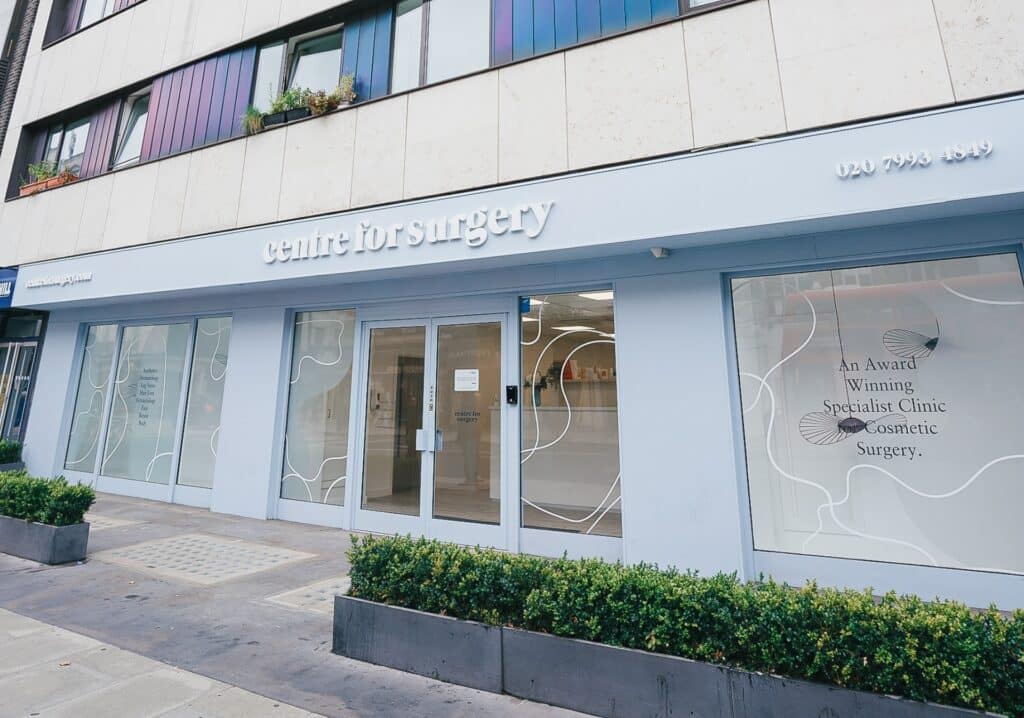
If you are considering labiaplasty and would like expert guidance from a specialist cosmetic gynaecology team, we invite you to book a face-to-face consultation at our state-of-the-art Baker Street clinic in Marylebone. Centre for Surgery is home to some of London’s leading labiaplasty surgeons, with an all-female nursing team and a commitment to discretion, patient safety, and exceptional outcomes. Whether you are seeking labiaplasty for cosmetic or functional reasons, we will provide expert medical advice based on a thorough clinical assessment and a treatment plan tailored to your individual needs.
[contact-form-7 id=”256″ title=”Treatments form”]