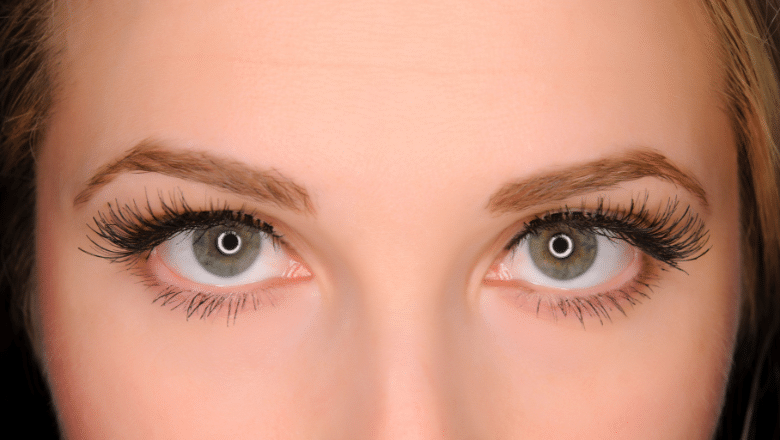

A non-surgical brow lift uses small, precisely placed units of botulinum toxin to relax the muscles that pull the eyebrow downward. With those depressor muscles weakened, the elevator muscle of the forehead (the frontalis) lifts the brow without opposition — producing a subtle upward tilt of one to two millimetres. The change is small but visually significant. It opens the eye area, softens a hooded appearance, and gives the face a more rested look.
This is the right intervention for a specific kind of patient. It will not match the result of a surgical brow lift in patients who need significant elevation, and it cannot reposition heavy or descended tissue. But for the right candidate, it’s a low-cost, low-risk treatment with no downtime.
How the lift works anatomically
Three muscle groups pull the eyebrow down:
Orbicularis oculi — the circular muscle around the eye. Its outer fibres, where they overlap the lateral brow, are the main target for the brow lift technique.
Corrugator supercilii — the muscles that pull the inner brows down and together when frowning.
Procerus and depressor supercilii — small muscles in the glabellar region that pull the medial brow downward.
By placing one to two units of neuromodulator into precise points along the lateral orbicularis oculi (and sometimes into the corrugators), the depressor effect is reduced. The frontalis muscle, unopposed, lifts the brow gently and naturally.
What to expect on the day
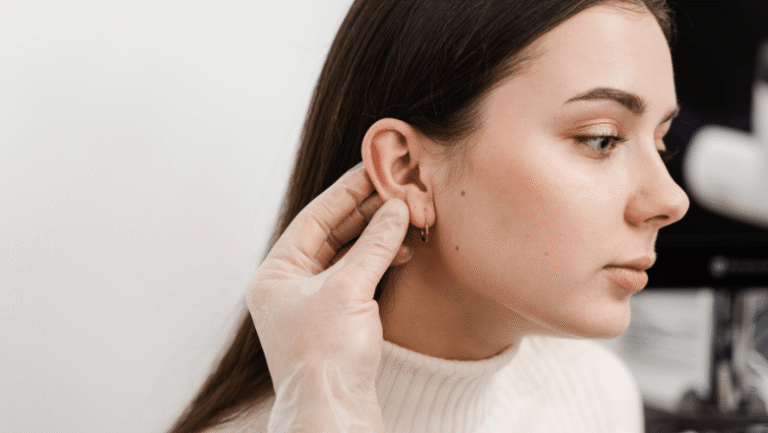
The session takes about ten to fifteen minutes. No numbing cream is needed because the injections are small and superficial. The needle used is very fine.
You’ll feel a brief pinprick at each injection point. There may be a small bump at each site that settles within fifteen minutes. Mild bruising occasionally occurs and resolves over a few days.
You can return to normal activities immediately. Avoid lying flat for four hours after treatment, avoid rubbing or massaging the area for twenty-four hours, and skip strenuous exercise on the day. These precautions reduce the small risk of the product migrating to nearby muscles, which could affect the eyelid. See our full injectables aftercare guide for detail.
When the result appears
The lift starts to develop at days three to five and is fully visible at around two weeks. This delay is part of how the product works — it takes time to interrupt nerve signalling to the muscle.
Patients sometimes worry on day two that the treatment hasn’t worked. It always has — what they’re seeing is the period before the muscle has fully relaxed.
How long it lasts
Most patients see the effect for three to four months. Some experience longer duration, occasionally up to six months, depending on the dose used and how active the muscles are.
Because the brow lift uses very small doses, longevity at this site tends to be shorter than for larger areas like the forehead or glabella. Patients planning to maintain the look typically return every three to four months.
Cost
A non-surgical brow lift at Centre for Surgery starts from £150. The exact price depends on the number of units used and whether the treatment is combined with adjacent areas (forehead, glabella, or crow’s feet) for a more comprehensive result. Combination treatments often work out more cost-effective than treating each area separately.
Finance options through Chrysalis Finance, including 0% APR, are available for those wishing to spread the cost across a treatment plan.
Who is a good candidate
This treatment works best for patients who:
- Have mild to moderate brow descent caused by muscle activity rather than significant skin laxity
- Have mildly hooded upper eyelids that improve when the brow is gently lifted with the fingers
- Want a subtle change without committing to surgery
- Are aware that the result is temporary and requires maintenance
A simple in-clinic test gives a useful preview: lift the lateral end of your brow upward with your fingertip by one to two millimetres. If the result is what you’re hoping for, a non-surgical brow lift will likely give you something close. If you need substantially more lift than that to be happy, surgical brow lift — including the endoscopic brow lift approach — is the more appropriate option.
Who should not have this treatment
– Patients with significant brow descent or true ptosis, who need surgical correction
– Patients with very heavy upper eyelid skin where the underlying issue is excess skin rather than brow position — these patients usually need upper blepharoplasty instead
– Patients with neuromuscular conditions affecting facial muscles (myasthenia gravis, Lambert-Eaton syndrome)
– Patients with known allergy to botulinum toxin or its excipients
– Pregnancy and breastfeeding
– Active skin infection in the treatment area
A consultation with our specialist team — including Dr Spyridon Vlachos — establishes which category you fall into. The honest answer in some cases is that surgery, not injection, will give you the outcome you’re actually hoping for.
RELATED: Eyelid Surgery vs Brow Lift
The hooded eye benefit
Lifting the brow by one to two millimetres also raises the apparent height of the upper eyelid skin. For patients with mild hooding, this can be enough to open the eye visibly and make eye makeup easier to apply. It’s worth understanding the limit: if hooding is severe, the underlying issue is excess upper eyelid skin (dermatochalasis), which only blepharoplasty can address. A brow lift will lift the brow but not solve true hooding caused by lid skin.
Common questions
Can I combine the brow lift with other anti-wrinkle treatments?
Yes — and often the result is better when you do. Treating the forehead, glabella, and crow’s feet together produces a more balanced effect than treating one area in isolation. See our guides on frown lines and forehead wrinkles and anti-wrinkle injection FAQs.
What if I don’t like the result?
There is no way to actively reverse botulinum toxin (unlike filler, which can be dissolved). The effect simply wears off over three to four months. This is one reason starting conservatively matters.
Will my forehead look frozen?
Not when treated by an experienced injector using a small, considered dose. The aim is selective relaxation, not total paralysis. Movement is preserved in the muscles that need to move.
Centre for Surgery · CQC-regulated · GMC specialist-registered surgeons · 95–97 Baker Street, Marylebone, London W1U 6RN · 0207 993 4849 · Book a consultation · Finance from 0% APR