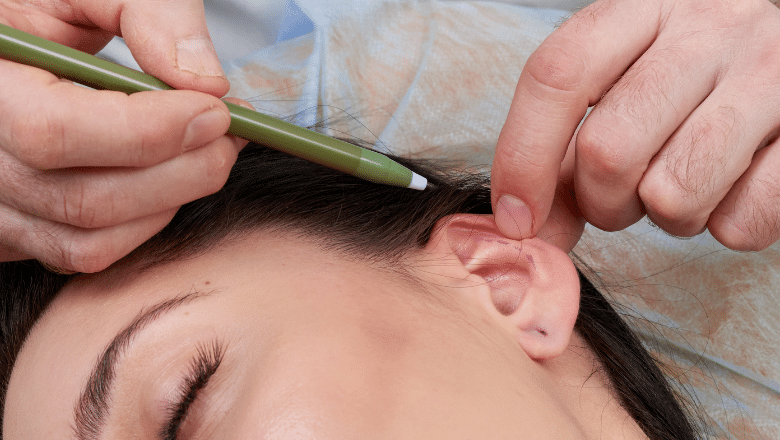
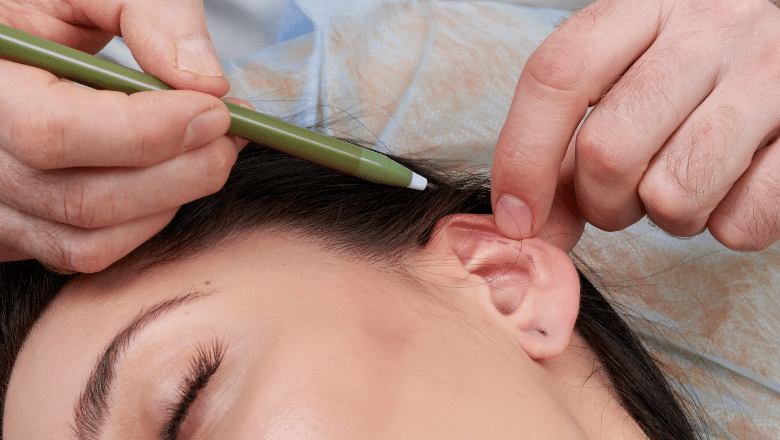
When it comes to physical features, our ears play a significant role, much like our noses and eyes, showcasing a diverse array of shapes and sizes. This diversity, while a testament to human uniqueness, can sometimes be a source of discomfort for individuals who feel their ears don’t complement their overall appearance. Whether it’s due to their prominence, size, or shape, dissatisfaction with one’s ears can lead to a desire for change, prompting a search for solutions that enhance facial harmony and boost self-confidence.
Otoplasty is a specialised surgical procedure designed to address such concerns. Otoplasty provides a transformative solution for individuals seeking to modify the appearance of their ears. Whether it’s pinning back ears that stand out too much, reducing the size of ears that feel too large, or correcting congenital or injury-induced deformities, otoplasty stands as a beacon of hope.
RELATED: Achieving Symmetry and Confidence: Insights into Ear Pinning
At Centre for Surgery, we take pride in our dedicated team of ear surgery specialists, each bringing a wealth of expertise and a gentle touch to the process. We are committed to providing personalised care because each individual’s needs and aspirations are unique.
Different Types of Ear Shapes
The human ear, a remarkable feature of our anatomy, exhibits an incredible variety of shapes and configurations, contributing to the unique appearance of each individual. This diversity is not limited to the ear alone but extends to the earlobe, with each aspect capable of displaying myriad forms.
Protruding Ears
Protruding or prominent ears are defined by their noticeable extension from the side of the head, typically more than 2 centimetres. This distinct feature often results from an underdeveloped antihelical fold, leading the ear to angle away from the head more prominently than usual.
Pointed Ear
Pointed ears, characterised by a sharp point at the top, recall the mythical allure of elves. This trait is sometimes associated with Stahl’s Ear deformity, where an additional fold of cartilage gives the ear its pointed appearance.
Square Ear
The square ear, a less common shape, features a distinctive square-like appearance at the upper part of the ear. It often presents with a pronounced downward slope at the top, transitioning into a pointed shape at the mid-ear.
Free Lobe
The free lobe ear, or round lobe ear, contrasts the attached lobe variant. In this form, the earlobe extends freely, hanging slightly lower than the point where the lower part of the ear connects to the head.
Narrow Ear
A narrow ear is characterised by its slender width and lengthier appearance. This shape can lend a refined, delicate aspect to the facial profile, highlighting the vertical lines of the face.
Attached Lobes
Attached lobes present an earlobe that seamlessly merges with the side of the head, without the distinct separation seen in free lobes. This earlobe type offers a smooth contour along the lower ear, blending elegantly into the facial structure.
Broad Ear
The broad ear is notable for its wide, conspicuous lobe, which adds a distinct volume and texture to the lower part of the ear. This ear shape can enhance overall facial balance by providing a more pronounced ear profile.
Can my ear shape be corrected?
In cosmetic surgery, otoplasty, commonly referred to as pinnaplasty or ear correction surgery, is a transformative procedure designed to alter the position, shape, and size of the ears. This surgical intervention is designed for individuals who are dissatisfied with their ear appearance, providing a pathway to enhanced self-esteem and facial harmony.
Otoplasty can address various concerns, ranging from reducing the prominence of protruding ears to reshaping the ear’s contour for a more aesthetically pleasing look. Whether it’s adjusting the ear’s angle relative to the head, modifying its size for better proportionality, or refining its shape for a more desirable silhouette, otoplasty provides a tailored solution to meet individual needs.
RELATED: Benefits of Ear Reshaping Surgery
Otoplasty Procedure: A Step-by-Step Guide
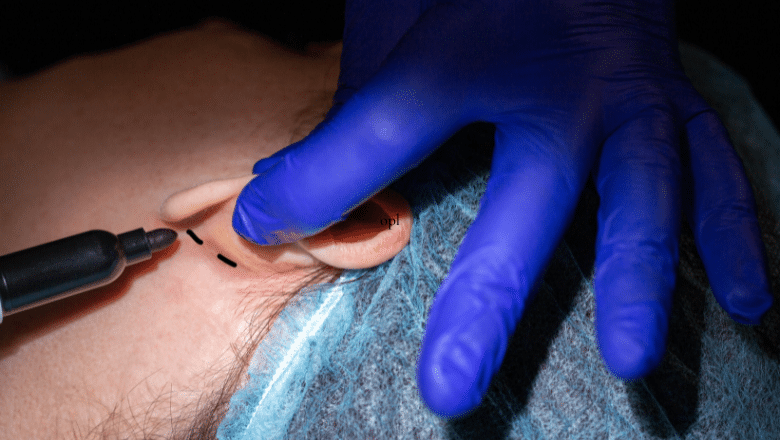
Otoplasty, or ear correction surgery, is a refined surgical technique designed to reshape, resize, or reposition the ears for enhanced aesthetic appeal and symmetry. This procedure caters to individuals seeking to modify the appearance of their ears for reasons ranging from cosmetic preferences to correcting congenital irregularities.
Pre-Procedure Considerations
Otoplasty is typically conducted under local anaesthesia, with the option for sedation upon request, ensuring the patient’s comfort throughout the procedure. In some instances, general anaesthesia may be employed, tailored to the patient’s needs and the complexity of the surgery.
Surgical Process
The duration of an otoplasty typically ranges from 2 to 3 hours. This timeframe depends on the specific techniques the surgeon employs to achieve the desired outcome. The procedure intricately adjusts the ear’s structure, focusing on the cartilage that forms the ear’s shape. Techniques may involve removing or sculpting cartilage to create a more natural-looking contour and positioning the ear closer to the head if necessary.
Postoperative Care and Recovery

One of the advantages of otoplasty is that patients can return home on the same day as the procedure, eliminating the need for an overnight hospital stay. Post-operative care is crucial for a smooth recovery and optimal results. Initially, a head bandage or a supportive garment must be worn for about one week to support the newly shaped ears and facilitate healing. Additionally, patients are advised to maintain an elevated sleeping position for 2 to 4 weeks to minimise swelling and promote proper healing.
RELATED: Otoplasty Recovery – Top Tips after Ear Reshaping Surgery
Returning to Daily Activities
Recovery timelines can vary among individuals, but patients typically resume work within one week after surgery, ensuring minimal disruption to their daily routines. However, it’s advisable to refrain from exercising and strenuous activities for up to 6 weeks to allow the ears to heal properly.
Visualising the Final Outcome
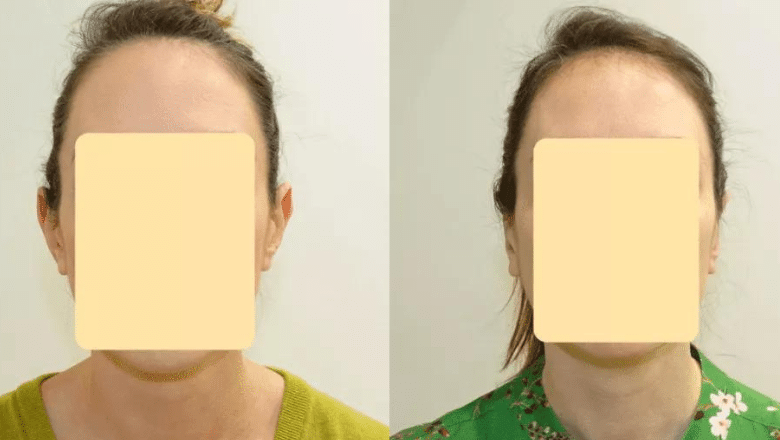
Patience is critical when awaiting the final results of an otoplasty. While immediate changes can be noticeable, the full benefits of the surgery typically emerge after three months. This period allows for the resolution of any swelling and the settling of tissues into their new position.
Transforming Earlobes: Options for Reshaping and Repair
Earlobe surgery, a procedure specifically designed to alter the appearance of earlobes, is becoming increasingly popular among individuals seeking to correct or enhance the shape and size of their earlobes.
RELATED: Earlobe Reduction
Split Earlobe Correction
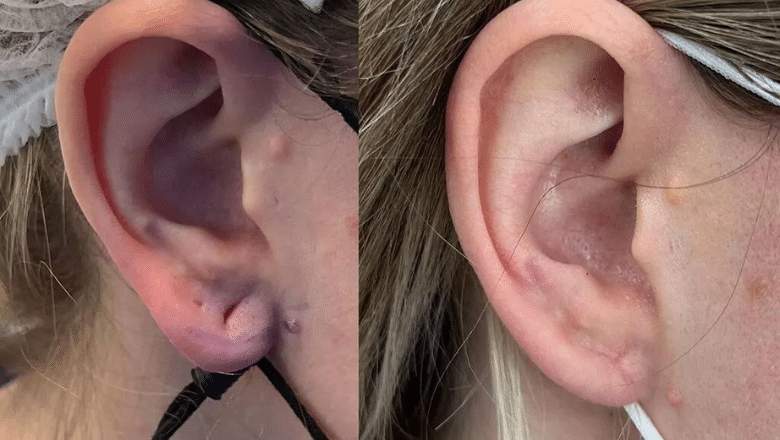
One of the most common reasons for earlobe surgery is to repair a split earlobe. This condition often arises when the piercing site is subjected to stress, such as from heavy earrings, or suffers trauma, leading to a complete tear. Split earlobe surgery meticulously repairs the tear, restoring the earlobe’s natural appearance.
Tribal Earlobe Surgery
For individuals with stretched earlobes resulting from earlobe stretching or the use of heavy gauges, tribal earlobe surgery provides a path to restoration. This procedure is particularly sought after by those who wish to restore their earlobes to a more conventional size and shape. Tribal earlobe surgery involves surgically removing the stretched portion of the earlobe and carefully reshaping the remaining tissue to achieve a more proportionate appearance in relation to the rest of the face.
Both split and tribal earlobe surgeries are conducted with precision and care, tailored to the individual’s specific needs and aesthetic goals.
RELATED: Earlobe Surgery Near Me
Otoplasty at Centre for Surgery
At Centre for Surgery, we pride ourselves on being a leading provider of cosmetic surgery and advanced non-surgical treatments. With years of dedicated experience in medical cosmetic procedures, we have established ourselves as a beacon of excellence in the industry. Our commitment to achieving outstanding patient outcomes is reflected in our multi-award-winning status and the world-class expertise of our ear specialist surgeons.
World-Class Ear Specialist Surgeons at Your Service
Our team of ear specialist surgeons is renowned for their exceptional skills and comprehensive approach to ear surgery. With a deep understanding of the ear’s intricate anatomy, they employ the latest surgical techniques to deliver results that enhance facial harmony and boost self-confidence.
Personalised Consultations in the Heart of Marylebone
Located at our Baker Street clinic in the prestigious Marylebone area, Centre for Surgery offers personalised consultations tailored to your unique needs and aesthetic goals. During your consultation, our specialists will listen to your concerns, evaluate your condition, and discuss the most suitable treatment options to achieve your desired outcome.
Exceptional Patient Satisfaction and Trust
Our dedication to patient care and satisfaction is evident in our impressive accolades, including a Trustpilot 5-star rating and a 98% patient recommendation rate. These achievements demonstrate our unwavering commitment to delivering the highest standard of care and support throughout your cosmetic journey.
Dedicated Aftercare and Support
Understanding that the journey doesn’t end after surgery, we offer dedicated aftercare to ensure a smooth and comfortable recovery. Our 24-hour helpline is available to address any concerns you may have after surgery, providing you with peace of mind and support when needed.
Informative Resources at Your Fingertips
We provide a wealth of informative resources to further support our patients’ journeys, including our comprehensive Otoplasty FAQs. Additionally, our Otoplasty before and after photos offer a glimpse into the transformative results achieved by our skilled surgeons.

[contact-form-7 id=”256″ title=”Treatments form”]