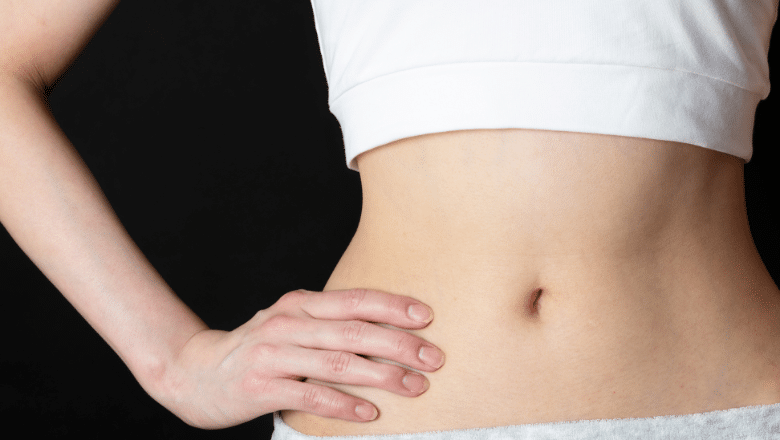
Your navel, often called your belly button, is known medically as the umbilicus. It sits in the middle of your abdomen as a small dip or scar. It marks the spot where the umbilical cord connected you to your mother before you were born.
After you are born, the cord is clamped and cut. The small opening then heals over. When the remaining stump dries and falls away, the navel is what remains.
The navel no longer has a job to do after birth. However, it is still a very noticeable feature on the abdomen. Some navels sit deeper, some are flatter, and some form an “outie”. Differences like these are completely normal, but if your navel looks very different from what you expect, it can affect how you feel about your body.
If you are feeling self-conscious about your navel, you might:
- Feel uneasy about your stomach being seen in intimate situations.
- Avoid certain clothes, especially fitted gym wear, crop tops, or swimwear.
- Recall teasing or comments, which can leave lasting self-consciousness.
- Find yourself comparing your body to other people more than you would like.
RELATED: Body Dysmorphia and Cosmetic Surgery: What You Need to Know
There is no single “right” belly button. Most variation is entirely normal. If the appearance of your navel is bothering you enough to change how you dress or how confident you feel, a consultation with a Specialist Plastic Surgeon at Centre for Surgery can help you explore what can be done and what result is realistic for you.
What factors can affect the shape of the navel?
You cannot control the natural shape or size of your navel at birth. Navel formation is often described as unpredictable. That said, your navel can change over time. Several factors can influence its shape and position.
Pregnancy
Pregnancy can change how your navel looks, usually from the middle of pregnancy onwards. As your abdomen expands, your belly button may start to pull wider, lose its usual depth and look flatter, or pop out, turning an “innie” into more of an “outie”. After delivery, many navels gradually look more like they did before.
Rapid changes in weight
Large weight loss, or cycles of losing and regaining weight, can change the look of your belly button. After major weight loss, fat reduces faster than skin tightens, which can make the navel look wider, shallower, or slightly pulled out of position.
Scarring
Scar tissue in or around the navel can change how it looks and sits. This is most often linked to a belly button piercing, or can happen after surgery or an injury.
Hernia
An umbilical hernia happens when the abdominal wall around the belly button weakens, allowing fat, tissue, or part of the bowel to push forward. You may notice a soft lump on or next to the navel that becomes more obvious when you cough or strain. If you think you may have an umbilical hernia, book a medical assessment promptly.
Medical conditions
Umbilical granuloma
An umbilical granuloma is a small, moist lump of overgrown tissue inside the navel, most common in newborns but possible at any age. A clinician can usually treat or remove it.
Bacterial or fungal infections
The navel can trap sweat, dead skin, and moisture, creating a good environment for bacteria or fungi to grow. Infections can cause redness, swelling, discharge, or a bad smell.
Ascites
Ascites is a build-up of tissue fluid inside the abdomen, most often linked to advanced liver disease. As pressure builds, the belly button can flatten or start to protrude.
What are the different navel shapes?
Belly buttons vary a lot. If you are thinking about belly button reshaping, it helps to understand how clinicians describe navel appearance. You may hear surgeons refer to the SHAPE classification — covering shape, hood, adiposity, protrusion and position, and external piercing.
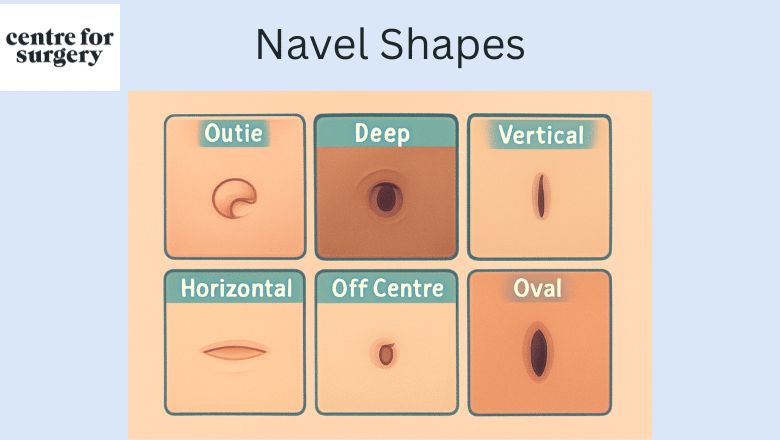
Outie Navel
An outie sits proud of the abdominal wall instead of dipping in. Some people have this shape from childhood. In adults, a change towards an outie can follow pregnancy, significant weight change, scarring, or weakening of the abdominal wall.
Deep Navel
A deep belly button forms a pronounced hollow with a relatively narrow opening. A deep navel can trap sweat, lint, and dead skin, which may cause odour, irritation, or infections if moisture sits in the fold.
Vertical Navel
A vertical belly button looks like a slim oval or slit running up and down. Some vertical navels have a small “hood” of skin at the top. This shape often stays relatively stable over time but can widen after pregnancy or major weight changes.
Horizontal Navel
A horizontal belly button looks wider than it is tall, with less depth and a softer edge definition. This shape is commonly linked to skin laxity, repeated stretching in pregnancy, or weight fluctuations.
Off-centre Navel
An off-centre belly button sits slightly left or right of the midline. Mild asymmetry is very common. More noticeable off-centring can occur with abdominal muscle separation, previous surgery, or uneven scarring.
Oval Navel
An oval belly button has a smooth rounded outline. Oval navels can be shallow or moderately deep. Scarring from a piercing or past inflammation can disrupt the smooth rim, making the oval look uneven or puckered.
What is the best-looking navel shape?
There is no single “most attractive” belly button. Navel shape is individual to each person. If you are considering a procedure to change your navel, your surgeon will assess your anatomy during your consultation and explain the most appropriate options for your body.
Can I change the shape of my navel?
Yes. Several treatments can improve navel shape and definition. The right option depends on what is causing the change, your skin quality, and whether there is any underlying issue such as a hernia.
Umbilicoplasty
Umbilicoplasty is surgery to reshape the belly button. It can correct outie navel protrusion, stretched or distorted shape after pregnancy or weight loss, and scarring from piercings or previous surgery. The procedure usually takes up to 2 hours and can be done under local or general anaesthetic. Most people recover steadily over 3 to 4 weeks.
Abdominoplasty (Tummy Tuck)
If you want to improve the overall look of your abdomen as well as your belly button, an abdominoplasty (tummy tuck) may be a better option than navel reshaping alone. This procedure suits people with loose, stretched skin after pregnancy or weight loss. You can also read more in our tummy tuck FAQs.
Hernia repair
Hernia repair treats an umbilical hernia by fixing the weakness in the abdominal wall around the belly button.
RELATED: Combining Tummy Tuck and Hernia Repair Surgery
Some patients choose to combine hernia repair with umbilicoplasty. This can improve the belly button’s shape at the same time.
FAQs
What is the medical term for the belly button?
The navel is commonly called the belly button. The medical term is the umbilicus. Procedures on the belly button are referred to as umbilicoplasty or umbilical surgery.
What is a belly button, and why do we have one?
Your navel is essentially a small scar marking where the umbilical cord was attached and then cut shortly after birth. After birth, the navel does not have a practical role.
Can the shape of the belly button cause medical problems?
For most people, belly button shape is simply a normal anatomical difference. Some shapes can make certain issues more likely due to friction or trapped moisture. If you notice a new lump, pain, discharge, or a sudden change in appearance, you should seek a clinical assessment promptly.
Why choose Centre for Surgery for your umbilicoplasty?
At Centre for Surgery, you will be assessed and treated by a Specialist Plastic Surgeon with a focus on safe planning and natural-looking results. We check for underlying causes before discussing cosmetic reshaping, and every surgical plan is personalised to your anatomy. Your procedure takes place in our Baker Street hospital under theatre-grade safety protocols. We offer flexible finance options and comprehensive aftercare throughout your recovery.
[contact-form-7 id=”256″ title=”Treatments form”]