
The female body is wonderfully diverse, and the appearance of intimate areas varies greatly from person to person. One of the most unique aspects of a woman’s anatomy is the labia, the folds of skin surrounding the vaginal opening. Despite the common assumption that there is a standard or “normal” appearance, labia come in many different shapes, sizes, and textures. Some women naturally have smaller or more asymmetrical labia, while others have larger or more prominent ones.
Though these variations are entirely natural, some women experience discomfort or self-consciousness due to the size or shape of their labia. For those who experience physical irritation or wish to alter their labia for personal reasons, labiaplasty offers an effective solution.
Structure and Function of the Labia
The external female genitalia, collectively known as the vulva, consist of two sets of labia — the labia majora and the labia minora. The labia majora are the outer folds of skin, typically covered with pubic hair, while the labia minora are the thinner inner folds that surround the vaginal opening and urethra. The size, shape, and colour of both the labia majora and minora vary significantly between individuals.
These folds of skin play an important role in protecting the vaginal opening from bacteria, reducing friction during movement, and providing sensitivity during sexual activity. While there is no medical standard for what labia should look like, personal and cultural perceptions often influence how women feel about their own bodies. Some women embrace their natural anatomy, while others may seek aesthetic or functional changes.
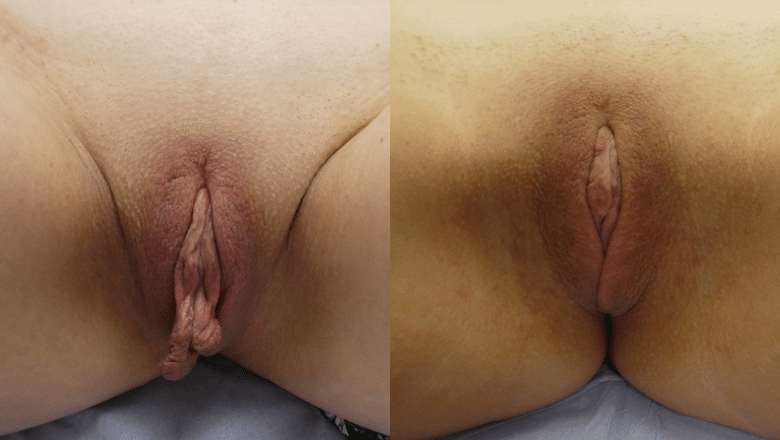
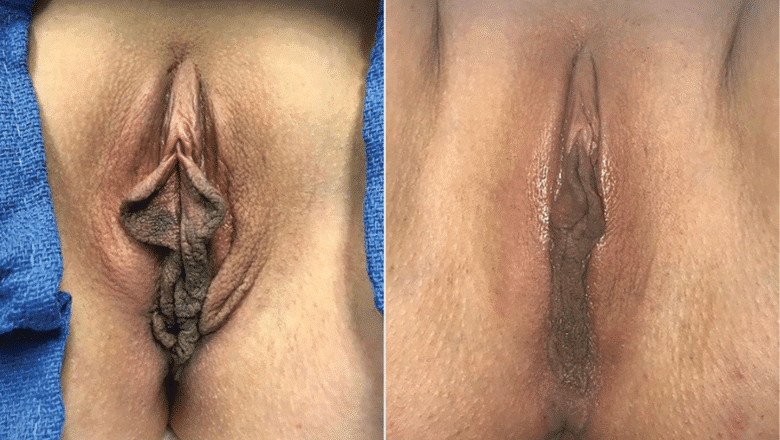
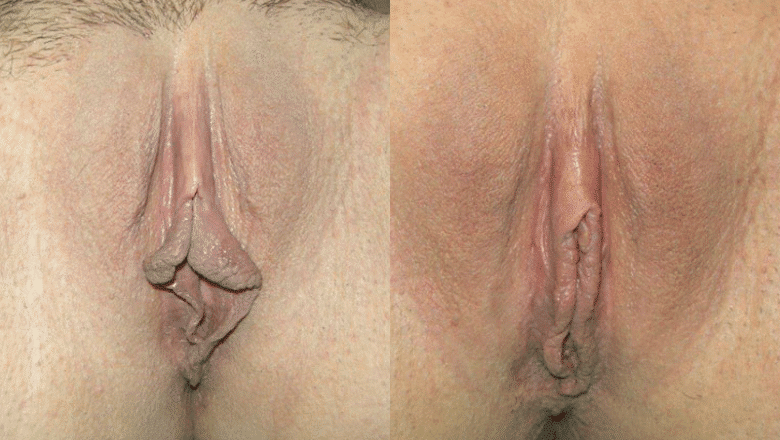
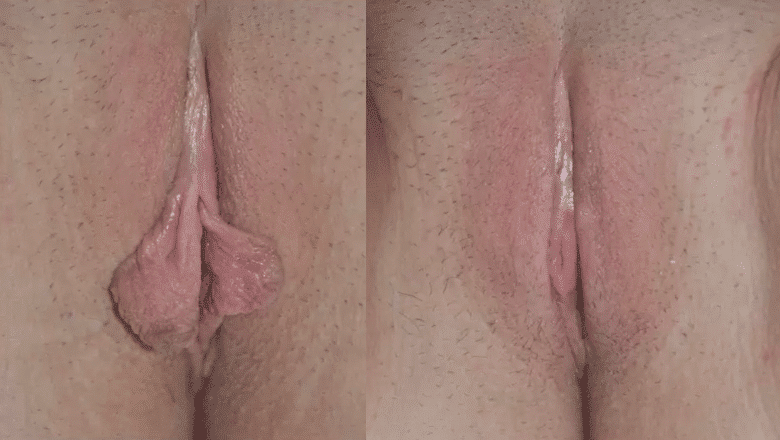
RELATED: Can Large Labias Be Reduced In Size?
Common Labia Shapes
Labia come in many different forms, and no two women are exactly alike. Although there is no universal classification system, certain shapes are commonly observed. Understanding these natural variations can help normalise differences and reassure women that there is no “right” or “wrong” shape.
Asymmetrical Labia
Many women have one labia minora that is slightly longer or shaped differently than the other. This is entirely normal and rarely causes physical issues, though some women may feel self-conscious about the unevenness.
Protruding or Extended Labia Minora
Sometimes, the labia minora extend beyond the labia majora, making them more visible. While this is a common trait, some women may experience discomfort when wearing tight clothing or engaging in physical activities. The extended labia minora can also irritate due to friction.
Curved or Petal-Shaped Labia
Some women have labia minora that curve outward or have a petal-like appearance. This shape is entirely natural and does not typically cause any physical discomfort.
Wrinkled or Ruffled Labia
Both the labia majora and minora can have a naturally wrinkled or textured appearance. This is due to the skin’s elasticity and natural folds. Some women may feel self-conscious about this texture, but it is a common trait.
Hidden or Small Labia Minora
In some cases, the labia minora are barely visible because they are tucked beneath the labia majora. Some women naturally have this shape, while others may notice this occurring due to age-related changes or hormonal fluctuations.
Prominent Labia Majora
For some women, the labia majora may be fuller or more pronounced. This is influenced by genetics, body fat distribution, and hormonal factors. Some prefer a fuller appearance, while others may feel self-conscious about it, especially in fitted clothing.
Thin or Less Defined Labia Majora
On the other end of the spectrum, some women have less prominent labia majora, leading to a flatter appearance. This can be natural or occur due to ageing and changes in body composition.
RELATED: Deflated Labia Majora: Causes & Solutions
Reasons Some Women Consider Labiaplasty
While labia shape and size are purely aesthetic for many, others experience physical discomfort or emotional distress related to their anatomy. Labiaplasty is a surgical procedure designed to reshape or reduce the size of the labia minora or majora. Women choose to undergo labiaplasty for various reasons, including:
- Physical Discomfort: Enlarged or extended labia minora can cause irritation, chafing, and discomfort during exercise, cycling, or sexual activity.
- Self-Confidence: Some women feel self-conscious about the appearance of their labia, particularly when wearing tight clothing or swimwear.
- Hygiene Concerns: Larger labia may make hygiene more challenging, increasing the risk of irritation or infections.
- Post-Pregnancy Changes: Childbirth can cause the labia to stretch or change shape, leading some women to seek corrective procedures.
- Ageing-Related Changes: Over time, hormonal changes and reduced collagen production can lead to sagging or thinning of the labia, which some women wish to correct.
RELATED: What Conditions Can Vaginal Rejuvenation Target?
How Labiaplasty Works

Labiaplasty is a relatively straightforward surgical procedure that typically takes one to two hours. It is performed under local or general anaesthesia, depending on the patient’s preference and the surgeon’s recommendation. The goal is to reshape or reduce the labia while maintaining a natural appearance.
There are several techniques used in labiaplasty:
Trim Method
This involves removing excess tissue along the edges of the labia minora to create a neater, more even shape.
Wedge Method
A central portion of the labia is removed while maintaining the natural edges, preserving the natural contour.
RELATED: Trim Labiaplasty vs Wedge Labiaplasty
Labia Majora Reduction
If the labia majora are excessively large, excess skin and tissue can be removed to achieve a more proportionate look.
RELATED: What is Labia Majora Reduction?
The recovery process after labiaplasty is usually smooth, with most women returning to their normal activities within a few days. However, it is important to avoid strenuous activities and sexual intercourse for several weeks to allow proper healing. Swelling and mild discomfort are common initially but subside as healing progresses.
The Importance of Choosing a Skilled Surgeon
Choosing a highly experienced and qualified surgeon is crucial for women considering labiaplasty. A well-performed procedure can significantly improve comfort and confidence, but an inexperienced surgeon may not achieve the desired results. Consulting with a specialist in aesthetic and reconstructive gynaecology ensures that the procedure is performed with precision, prioritising both function and aesthetics.
RELATED: How to Choose the Best Labiaplasty Surgeon
A good surgeon will provide a thorough consultation, discussing expectations, potential risks, and the best approach for each individual case. They will also ensure that the results look natural and harmonious with the rest of the body.
Is Labiaplasty Worth It?
Labia shape varies greatly among women, and there is no single standard of what is “normal” or “ideal.” Each woman’s anatomy is unique, and differences in shape, size, and texture are entirely natural. While some women are comfortable with their labia as they are, others may experience discomfort or feel self-conscious about their appearance.
For those who experience physical irritation or wish to enhance their self-confidence, labiaplasty offers a safe and effective solution. Whether for functional reasons or personal preference, this procedure can provide lasting improvements in both comfort and aesthetics. By choosing a qualified surgeon and understanding the procedure, women can make informed decisions about their bodies and achieve the results they desire.
Are There Non-Surgical Options for Correcting Uneven Labia?
If the asymmetry isn’t severe, non-surgical approaches might help manage discomfort. Wearing loose, breathable clothing and choosing underwear made from soft, natural fabrics can reduce irritation. For those involved in sports or activities that cause friction, using protective padding or barrier creams might help.
In cases where dryness or skin irritation is a concern, moisturisers or prescribed topical treatments can provide relief. For emotional distress, speaking with a certified clinical psychologist can help address body image concerns and improve self-confidence.
However, it’s important to note that non-surgical options don’t change the physical structure of the labia. They can alleviate symptoms but won’t alter the appearance.
About Centre for Surgery
Centre for Surgery is a leading cosmetic and plastic surgery clinic in London, specialising in a wide range of surgical and non-surgical procedures. Our highly experienced surgeons are experts in aesthetic and reconstructive procedures, including labiaplasty. We are committed to providing the highest level of care, ensuring natural-looking results and the best possible patient experience.
Our state-of-the-art facilities on Baker Street are equipped with cutting-edge technology, providing a seamless patient journey from consultation to recovery. We understand that labiaplasty is a deeply personal decision, which is why we offer a compassionate approach, focusing on patient wellbeing and outstanding results.
- Expert Surgeons: Our team consists of highly qualified plastic surgeons with specialised training in labiaplasty. You can learn more about our experienced team on our Meet the Team page.
- Personalised Care: Every patient receives a bespoke treatment plan tailored to their specific goals, ensuring natural-looking, aesthetically pleasing results.
- Flexible Finance Options: We offer a range of finance options, including 0% APR, making labiaplasty more accessible and affordable.
To book a consultation, contact us: 📞 0207 993 4849 | 📧 contact@centreforsurgery.com | 📍 95-97 Baker Street, London W1U 6RN
For more information, visit our About Us page, read our Plastic Surgery Blog, or check our Clinic FAQs.

[contact-form-7 id=”256″ title=”Treatments form”]