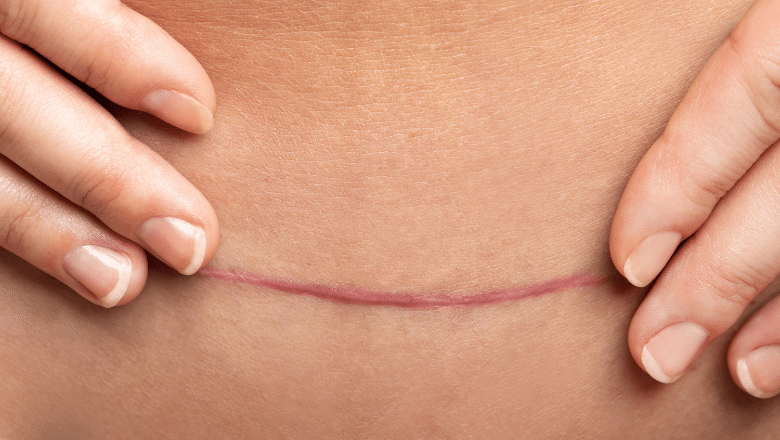
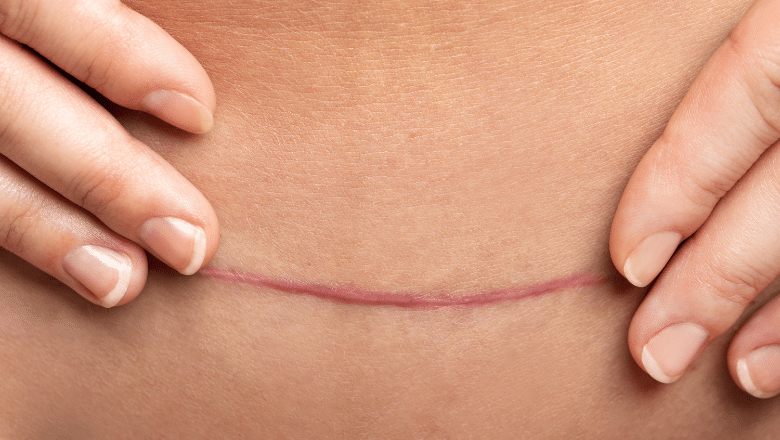
The honest answer is yes — most hypertrophic scars do improve substantially over time, and many continue to flatten and fade for 12 to 24 months after the original injury. But “go away” is a strong phrase. A hypertrophic scar that has reached maximum maturity typically becomes much less raised, less red, and less obvious than it was at 6 to 8 weeks post-injury. It does not completely disappear. What it becomes is a fine, pale, mature scar that is far easier to live with than the active raised scar.
Whether you should simply wait for natural improvement or actively treat the scar depends on several factors: how the scar is behaving at each stage, your skin type, the anatomical location, and how much the scar is bothering you. Early intervention often prevents a hypertrophic scar from establishing in the first place — which is meaningfully different from trying to revise a mature one.
For background on the full range of scar types and how each forms, start with different types of scars. For the wider service, see scar revision at Centre for Surgery’s CQC-regulated Baker Street private hospital.
What is a hypertrophic scar?
A hypertrophic scar is a raised, firm, often red or pink scar that stays within the boundaries of the original wound. It forms when the body produces more collagen than was needed for repair. The excess collagen sits in disorganised bundles that thicken the scar and lift it above the surrounding skin.
The key distinguishing feature: a hypertrophic scar stays within the lines of the original injury. It can be raised, firm, sometimes itchy or tender — but it does not grow into previously healthy skin. This is the most important difference from a keloid, which extends beyond the original wound boundary into healthy tissue and rarely improves spontaneously.
Hypertrophic scars are most common:
- On the chest, shoulders, upper back, and over joints (high-tension areas)
- After burn injuries
- After surgical incisions that healed under tension
- In patients with darker skin types
- In patients with a history of poor scarring
- After wounds that became infected during healing
If you’re unsure whether your scar is hypertrophic or keloid, the rule of thumb is geographic: does the scar end at the line of the original injury (hypertrophic), or has it grown beyond it (keloid)? This distinction matters because the treatment approach and the expected natural history differ.
Why hypertrophic scars often improve on their own
Hypertrophic scars peak in intensity at around 6 to 12 weeks after the injury — this is the point at which the body’s collagen production is highest. After that point, the body’s remodelling machinery begins to break down some of the excess collagen and reorganise the rest into a more normal pattern. Over 12 to 24 months, most hypertrophic scars:
- Become less raised
- Fade from red to pink to pale
- Soften from firm to flexible
- Stop being itchy or tender
- Become substantially less noticeable
The natural history is the reason surgical revision is usually deferred for at least 12 months — many scars that look concerning at 6 weeks will look much better at 12 months without any intervention at all.
That said, “wait and see” isn’t always the right answer. Active non-surgical treatment during the maturation window can substantially accelerate improvement and may prevent the scar from becoming established in the first place. The best results typically come from combining patience with appropriate early intervention.
The standard treatment approach
Treatment of a hypertrophic scar is layered. The first-line interventions are non-surgical and started early; surgical revision is reserved for the minority of scars that don’t respond.
Silicone gel and silicone sheeting
The single intervention with the strongest evidence base. Silicone applied to a fully closed wound:
- Reduces scar redness and thickness
- Eases itch and tingling
- Lowers the risk that a maturing scar becomes hypertrophic in the first place
- Continues to help during the 12–18 month maturation period
Practical use: start once the wound has closed (around 2 weeks). Gel applied twice daily, or sheeting worn for 12+ hours a day. Continue for at least 3 months — ideally 6. For dedicated discussion see do silicone strips help scars heal better?
Intralesional steroid injection
Triamcinolone steroid injected directly into the scar tissue is the workhorse treatment for established hypertrophic scars. The mechanism is suppression of fibroblast activity and reduction of collagen overproduction. Given as a course every 4–6 weeks for 3–6 sessions, intralesional steroid produces measurable flattening and softening in the majority of cases.
Steroid injection works best when started early — once a scar is showing concerning raised, firm, red features at 6–8 weeks post-operation. Catching the scar at this stage often prevents it from establishing fully. Intervention on a mature 12+ month hypertrophic scar still helps but requires more sessions and produces less dramatic results.
Laser treatment
Several laser modalities help hypertrophic scars:
- Pulsed-dye laser (PDL) — targets the small blood vessels within a red, raised scar. Reduces redness, softens texture, and eases itch. Particularly useful for early hypertrophic scars in the first 6 months.
- Fractional non-ablative laser — stimulates collagen remodelling. Useful for mature hypertrophic scars where the redness has faded but the texture remains.
- Fractional ablative laser (erbium/CO2) — most aggressive option for textural improvement. Reserved for mature scars where less aggressive approaches haven’t been enough.
Morpheus8 radiofrequency microneedling
Morpheus8 combines microneedling with deep radiofrequency energy to remodel scar tissue at depth. For hypertrophic scars it produces collagen reorganisation and progressive flattening over a course of 3–4 sessions. Particularly useful where the scar is over a larger area, or for patients with skin types where ablative laser carries more pigmentation risk.
Pressure therapy
Sustained mechanical pressure (typically 24+ kPa) applied to a scar reduces collagen production and can flatten an established hypertrophic scar. Used as:
- Pressure earrings for earlobe scars
- Compression garments worn for months after burn injury
- Targeted pressure dressings for hand or limb scars
Pressure therapy is less commonly used after standard cosmetic surgery because compression garments don’t fit usefully over typical incision sites — but for the right anatomical location it remains an evidence-based option.
Combination treatment
The best results often come from combining modalities. A common protocol for a developing hypertrophic scar at 8 weeks post-operation:
- Intralesional steroid injection every 4–6 weeks for 3 sessions
- Daily silicone gel throughout
- Pulsed-dye laser for residual redness
- Diligent sun protection
For most scars, this combined approach produces substantial improvement within 4 to 6 months and avoids the need for surgical revision.
When is surgical revision considered?
Surgical excision of a hypertrophic scar is rarely the first-line approach. The reason: cutting out the scar and re-closing the area in the same place often produces another hypertrophic scar — because the underlying factors that caused the first one (anatomical tension, skin type, individual healing pattern) are still present.
Surgical revision is considered when:
- The scar is fully mature (12+ months) and remains substantially raised despite a full course of non-surgical treatment
- The scar can be relocated to a less visible site or oriented along better tension lines using techniques like Z-plasty
- The scar is causing functional problems such as restricted movement
- The underlying cause is addressable — for example, a hypertrophic scar from an earlobe piercing infection that has resolved
Where surgical revision is appropriate, it is almost always combined with post-operative intralesional steroid injection and intensive silicone treatment to prevent the new scar from going hypertrophic again. See scar revision surgery FAQs for full discussion.
Hypertrophic scars by anatomical location
The risk of developing a hypertrophic scar — and the natural history once one has formed — varies considerably by where on the body the wound is.
- Face and neck — low risk of hypertrophic scarring; rich blood supply produces good healing. Where hypertrophic scars do form on the face, they respond well to early intervention.
- Chest and sternum — high risk. Skin is under constant tension from breathing and movement, and the area is prone to hypertrophic and keloid scarring.
- Shoulders and upper back — high risk. Similar tension dynamics to the chest.
- Earlobes — particular risk, especially after piercing. Often respond well to pressure earrings and intralesional steroid.
- Over joints — high risk because skin is repeatedly stretched and contracted. Joint scars also risk contracture in addition to hypertrophic features.
- Abdomen — moderate risk, varying with tension and patient factors.
- Limbs — variable, depending on tension and individual factors.
Knowing the risk profile of the anatomical site informs how aggressively the scar should be managed from the start.
How long until a hypertrophic scar matures?
A typical maturation timeline for a hypertrophic scar:
- Weeks 0–2 — wound healing; scar not yet hypertrophic
- Weeks 2–6 — early scar formation; first signs of raised, red, firm texture
- Weeks 6–12 — peak hypertrophic features; scar at its most raised and red
- Months 3–6 — gradual improvement begins; some softening and fading
- Months 6–12 — substantial improvement; scar may be approaching final mature state
- Months 12–18 — final mature appearance; further change after this point is slow
- Months 18–24 — some scars continue improving slowly; others are stable
This is the timeline without intervention. With early silicone use, appropriate steroid injection, and adjunctive laser or Morpheus8, the trajectory is shifted favourably — the scar becomes less raised earlier and reaches a better final endpoint.
Hypertrophic vs keloid: the practical difference
The two are often confused. Both are raised, firm, sometimes red and itchy. The practical distinctions:
- Hypertrophic scar — stays within the original wound boundary; usually improves over 12–24 months; responds well to non-surgical treatment
- Keloid scar — grows beyond the original wound into healthy skin; rarely improves spontaneously; needs active treatment
If your scar is extending into previously healthy skin, that’s a keloid pattern and warrants different management. See how to get rid of a keloid on a piercing for piercing-related keloids, and discuss directly with a plastic surgeon for any keloid affecting a sensitive area such as the chest or earlobe.
What we don’t recommend
- Waiting passively for a hypertrophic scar to “go away” — most do improve, but active early treatment produces a substantially better endpoint than waiting alone.
- Surgical excision as a first response — re-cutting and re-closing the same area in the same way often produces another hypertrophic scar. Non-surgical treatment should be tried first in almost all cases.
- Vitamin E oil applied to the scar — weak evidence, meaningful risk of contact dermatitis. Silicone is the better-evidenced topical.
- Self-administered steroid injection — needs medical training to administer safely. Wrong placement or wrong concentration can cause skin atrophy and worse cosmetic outcome.
- Sun exposure on the maturing scar — UV during the first 12 months can permanently darken the scar. Daily SPF 50 essential.
- Smoking around the time of any procedure — measurably worsens scarring. Stop for the perioperative period.
- Starting laser treatment too aggressively too early — pulsed-dye laser can be used early, but ablative laser is generally held until the scar has had a chance to mature.
- Ignoring a scar that is rapidly growing or spreading — that’s keloid behaviour, not hypertrophic, and needs prompt assessment.
- Picking at scabs during the wound healing phase — directly worsens the resulting scar.
Frequently asked questions
How long does a hypertrophic scar take to go away?
“Go away” overstates what happens. Most hypertrophic scars improve substantially over 12 to 24 months — becoming less raised, less red, less obvious. They do not completely disappear. With appropriate treatment, the endpoint is a fine pale mature scar that is much easier to live with.
Will a hypertrophic scar come back after treatment?
Hypertrophic scars treated non-surgically (silicone, steroid, laser) rarely come back in the same way once flattened — the underlying collagen has been reorganised. Surgical revision without combined post-operative treatment has a higher recurrence rate, which is why combined approaches are standard.
What is the fastest way to flatten a hypertrophic scar?
Intralesional steroid injection produces the most rapid and reliable flattening. A course of 3–4 injections every 4–6 weeks typically shows clear improvement within 2 to 3 months. Combined with silicone and sun protection, the results are better still.
Can a hypertrophic scar be removed completely?
No scar can be removed completely — the underlying skin structure has been permanently altered. What treatment can achieve is making the scar significantly less raised, less red, and less obvious. For many patients, the end result is a fine pale line that’s hard to see without close inspection.
Does Morpheus8 work for hypertrophic scars?
Yes — Morpheus8 produces collagen remodelling that gradually flattens and softens hypertrophic scarring over a course of 3–4 sessions. Particularly useful for larger areas, scars on darker skin types, and as an adjunct to steroid injection.
Are hypertrophic scars dangerous?
They are not dangerous in the medical sense — there is no risk of malignant change or systemic harm. They can cause itch, tenderness, restricted movement (when over joints), and significant cosmetic distress. These are legitimate reasons to seek treatment.
Will I always have hypertrophic scars after surgery?
Not necessarily. Even patients with a history of one hypertrophic scar can have other procedures heal cleanly with appropriate planning — incisions in lower-tension anatomical sites, careful technique, and intensive post-operative scar management. The risk is real but it isn’t an automatic outcome.
Can hypertrophic scars from earlobe piercings be treated?
Yes — typically very well. Pressure earrings, intralesional steroid injection, and (occasionally) surgical removal with post-operative steroid are the mainstays. Earlobe piercing scars respond particularly well to early treatment.
How much does hypertrophic scar treatment cost?
Intralesional steroid injection sessions typically £150–250 each. Laser sessions £350–600. Morpheus8 courses from £900. Surgical revision £1,500–4,000+. Finance from 0% APR available. For full cost discussion see how much does laser scar removal cost in the UK?
When should I see a plastic surgeon about a hypertrophic scar?
The earlier the better. A scar showing raised, firm, red features at 6–8 weeks post-injury is the ideal time for first assessment — early intervention prevents the scar from becoming fully established. Don’t wait for the scar to “settle” if it’s going in the wrong direction.
Hypertrophic scar treatment at Centre for Surgery
Centre for Surgery is a CQC-regulated plastic surgery clinic at 95–97 Baker Street, Marylebone. We offer the full range of treatments for hypertrophic scars — silicone management, intralesional steroid injection, pulsed-dye and fractional laser treatment, Morpheus8 radiofrequency microneedling, and where appropriate surgical scar revision. All performed by GMC-registered consultant plastic surgeons. No GP referral required.
For related guides, see different types of scars, scar revision surgery FAQs, scar management after cosmetic surgery, how to treat piercing keloids, and do silicone strips help scars heal better?
Centre for Surgery · CQC-regulated · GMC specialist-registered surgeons · 95–97 Baker Street, Marylebone, London W1U 6RN · 0207 993 4849 · Book a consultation · Finance from 0% APR


