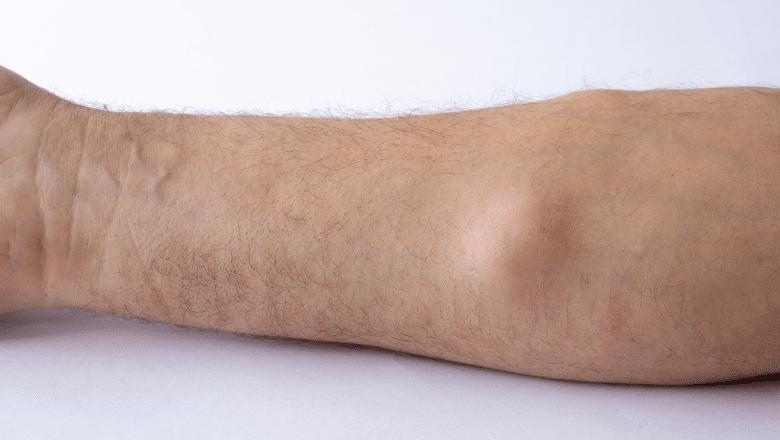

One of the most common questions patients ask before lipoma removal is whether the lump is likely to return. The short answer is that lipoma recurrence after complete surgical excision is uncommon — the great majority of patients have a single procedure and never see the same lump again. There are, however, a small number of situations where recurrence does happen, and understanding why helps patients know what to expect and how to choose the right surgical technique.
This guide covers the actual recurrence rates after lipoma removal, what causes recurrence when it does occur, how technique influences the result, and what to expect at lipoma removal at Centre for Surgery’s CQC-regulated Baker Street private hospital.
What a lipoma actually is
A lipoma is a benign tumour made up of mature fat cells, enclosed within a thin fibrous capsule. It develops within the subcutaneous fat layer, sits just beneath the skin, and feels distinctly soft — often described as doughy or rubbery. The overlying skin is usually entirely normal, with no surface feature like a cyst’s punctum.
Lipomas are extremely common — they affect approximately one in every hundred people. They most often appear on the shoulders, upper back, neck, upper arms, and thighs, though they can develop almost anywhere with subcutaneous fat. Most are solitary, but some patients develop multiple lipomas (lipomatosis) over time.
Understanding the capsule matters because it is central to the question of recurrence. The capsule is a thin membrane that defines the boundary of the lipoma — complete excision means removing this membrane along with the fatty contents. Leaving any portion of the capsule behind is the single most common reason for recurrence.
Actual recurrence rates after surgical excision
Published surgical literature on solitary subcutaneous lipoma recurrence after complete capsule excision puts the recurrence rate in the low single digits — typically reported as 1–4 percent. In practical terms, this means that for the great majority of patients, a properly performed lipoma excision is a one-time procedure.
The recurrence rate does depend on several factors:
- Surgical technique — complete capsule excision has very low recurrence; partial excision or “squeezing out” the contents leaving the capsule behind has substantially higher recurrence.
- Lipoma type — typical subcutaneous lipomas have low recurrence; deeper or infiltrating variants have higher rates.
- Initial removal method — surgical excision has the lowest recurrence; liposuction-only approaches have higher rates because the capsule is left behind.
- Patient factors — patients with multiple lipomas may develop new lipomas elsewhere, but this is not the same as recurrence of the original lesion at the same site.
What causes recurrence when it happens
Incomplete capsule excision
By far the most common reason a lipoma returns at the same site is that not all of the capsule was removed. Any residual capsule contains the fat-producing cellular lining that allowed the original lipoma to form. Left in place, this lining can continue to produce fat tissue, and a new lipoma forms in the same location over months to years.
The surgical principle: identify the capsule, dissect around it, and remove the lipoma intact. Incising into the capsule, scooping out the fatty contents, and closing the wound without removing the membrane is faster and produces a smaller scar — but it leaves behind exactly the structure that allows recurrence. Complete excision is the slower but definitive approach.
Liposuction-only removal
Some clinics offer lipoma “removal” using liposuction. The technique works by inserting a fine cannula and suctioning out the fatty contents of the lipoma. The advantage is that the scar is much smaller — typically a 3–4mm puncture wound rather than a linear incision. The disadvantage is that the capsule is invariably left behind, and recurrence rates from liposuction-only lipoma treatment are meaningfully higher than from formal surgical excision. For most patients seeking definitive treatment, surgical excision is the better choice.
Lipomas in difficult locations
Deep lipomas — those that extend beneath the fascia into the muscle layer (intramuscular lipomas) — are more difficult to remove completely, and recurrence rates from these are higher than for typical subcutaneous lipomas. Similarly, infiltrating lipomas that extend into surrounding tissues without a clear capsule are harder to excise definitively.
Patient-specific factors
Patients with multiple lipomas (lipomatosis) often develop new lipomas at new locations over time. This is part of the underlying condition rather than recurrence of the original lipoma. The new lesions are not regrowth — they are independent lipomas at different sites — but it can feel similar to the patient.
Some inherited conditions — including familial multiple lipomatosis and Dercum’s disease — predispose to multiple lipomas. Patients with these conditions need a long-term management plan rather than a one-off operation.
How surgical excision is performed
The standard technique at Centre for Surgery is open surgical excision with complete capsule removal. The procedure:
- Local anaesthetic infiltration — the area around the lipoma is fully numbed. The patient is awake but feels nothing during the procedure.
- Incision — a small linear incision is made over the lipoma, oriented along natural skin tension lines to minimise the eventual scar. The incision length is typically just smaller than the diameter of the lipoma.
- Dissection — the lipoma is carefully separated from surrounding tissues. The surgeon identifies the capsule, dissects around it, and frees the entire lipoma from its attachments. This is the critical step that determines whether the procedure is definitive.
- Removal — the lipoma is delivered through the incision intact, with the capsule entirely encompassing the contents.
- Haemostasis — any small bleeding vessels are addressed.
- Closure — the wound is closed in layers using fine absorbable sutures in the deep tissues and either absorbable or non-absorbable sutures at the skin surface, depending on the location.
- Dressing — a simple dressing covers the wound for the first few days.
The whole procedure typically takes 20–45 minutes depending on size and location. The patient leaves the clinic within an hour of arrival. For full detail on the recovery, see how long does lipoma removal take to heal?
The excised lipoma is sent for histological analysis to confirm the diagnosis and rule out the very rare possibility of an atypical lipomatous tumour or liposarcoma.
Histology — and why it matters even for lipomas
The overwhelming majority of soft, mobile, slow-growing subcutaneous lipomas are entirely benign. A small minority of fatty soft tissue lumps, however, turn out on histology to be something else:
- Atypical lipomatous tumour — a lesion that looks like a lipoma but has cellular features warranting closer monitoring or further intervention.
- Spindle cell lipoma — a benign variant with characteristic histological features.
- Hibernoma — a rare benign tumour of brown fat.
- Liposarcoma — a malignant soft tissue tumour that can occasionally present similarly to a benign lipoma, particularly when large or deep.
For this reason, every surgically excised lipoma at Centre for Surgery is sent for histological analysis as standard. Liposarcoma is rare, but the histological assessment provides certainty that the lump removed was what it was clinically presumed to be.
Concerning clinical features that warrant particular care include: rapidly growing lumps, hard rather than soft lumps, fixed rather than mobile lumps, lumps deeper than the typical subcutaneous lipoma, and lumps in unusual locations such as the retroperitoneum or deep muscle compartments.
What happens if a lipoma does come back
If a lipoma recurs at the same site, the standard approach is repeat surgical excision with a more meticulous dissection — taking a slightly wider margin and ensuring complete removal of all residual capsule and any associated fibrous tissue. Recurrence after a properly performed re-excision is uncommon.
The histology of a recurrent lipoma is usually reviewed alongside the original specimen to confirm the diagnosis and look for any atypical features that might have been missed.
What about new lipomas at different sites?
Patients who develop new lipomas at new locations are showing the natural pattern of multiple lipomatosis rather than a failure of the original procedure. These can be addressed as they arise, and many patients with multiple lipomas have several removed over the course of years. For patients with many lipomas, same-day removal of multiple lipomas in a single session is offered where appropriate.
Patients with patterns suggesting an underlying condition (familial multiple lipomatosis, Dercum’s disease, Madelung’s disease) may benefit from referral for further investigation alongside surgical management.
How recurrence rates compare across removal techniques
| Technique | Capsule removed? | Typical recurrence | Scar |
|---|---|---|---|
| Open surgical excision (complete) | Yes | Low (1–4%) | Linear scar approximately the length of the lipoma diameter |
| Open enucleation (squeeze out) | Partial | Higher | Smaller incision |
| Liposuction-only | No | Substantially higher | Small puncture wounds |
The trade-off is clear: smaller scar means higher recurrence; complete excision means a slightly longer scar but a definitive procedure. For most patients seeking certainty that the lump will not return, complete excision is the right choice.
Where the scar ends up
For typical subcutaneous lipomas, the scar after complete excision is a fine linear mark approximately the diameter of the lipoma. With careful incision planning along natural skin tension lines and layered closure, the scar matures over 6–12 months to a pale, often barely visible line. For more on what lipoma scars look like and how they mature, see will a lipoma removal leave a scar?
Patients particularly concerned about scarring on visible areas — face, neck, decolletage — should have the procedure performed by a plastic surgeon with experience in fine cosmetic closure. The scar from a poorly closed lipoma excision is generally worse than the scar from a well-planned and well-executed one, regardless of the size of the original lump.
What we don’t recommend
- DIY lipoma removal at home — never appropriate. Risks include incomplete removal (and therefore recurrence), infection, scarring, and damage to underlying structures. Some lipomas sit close to nerves or blood vessels that should not be approached without surgical training.
- Liposuction-only “lipoma removal” for definitive treatment — leaves the capsule behind and has substantially higher recurrence than open excision. May be reasonable for very large lipomas where minimising scar matters more than recurrence risk, but should be a considered choice rather than a default.
- “Squeezing out” the lipoma through a small incision without capsule removal — quick and produces a smaller scar but predictably recurs in a meaningful proportion of cases.
- Topical creams or oils claiming to dissolve lipomas — none work. Lipomas are tumours of fat tissue with a fibrous capsule; they do not respond to topical treatment.
- Skipping histology to save cost — every excised lump should be sent for analysis. Liposarcoma is rare but real, and the consequences of missing one are serious.
- Watching a rapidly growing or hard fatty lump indefinitely — the typical lipoma is soft, mobile, and slow-growing. Anything outside this pattern warrants prompt assessment.
Frequently asked questions
How often do lipomas come back after surgical removal?
After complete surgical excision with capsule removal, recurrence rates are low — typically reported as 1–4% in the surgical literature. With incomplete excision (capsule left behind) or liposuction-only removal, recurrence rates are higher.
If my lipoma comes back, what happens next?
Repeat surgical excision with more meticulous dissection is the standard approach. The recurrent specimen is sent for histology along with review of the original.
Can lipomas spread?
No. Lipomas are benign — they do not metastasise or spread elsewhere in the body. A patient who develops a new lipoma at a different site has a new independent lipoma, not a spread of the original.
Why do I have more than one lipoma?
Multiple lipomas (lipomatosis) is a recognised condition, sometimes familial. Each lesion is independent and benign. Each can be removed individually if symptomatic or cosmetically bothersome.
Can lipomas turn into cancer?
Benign lipomas do not transform into cancer. However, some fatty soft tissue tumours that look clinically similar to lipomas are actually atypical lipomatous tumours or liposarcomas from the outset. This is why every excised lipoma is sent for histological analysis.
Does removal hurt?
The local anaesthetic injection produces a brief sting. The procedure itself is painless. Mild soreness for 1–2 days is normal and well managed with paracetamol.
How big a scar should I expect?
The scar is approximately the length of the lipoma diameter — typically 1–4cm depending on the lump’s size. With layered closure and natural tension line orientation, the final scar is a fine pale line that fades over 6–12 months.
Can multiple lipomas be removed at the same time?
Yes — same-day removal of multiple lipomas in one session is available. See same-day lipoma removal for more detail.
Is the procedure available on the NHS?
NHS criteria for lipoma removal are restrictive — funding is generally limited to lipomas that are large, symptomatic, or in functionally compromising locations. Most cosmetic or peace-of-mind lipoma removal is no longer NHS-funded.
Lipoma removal at Centre for Surgery
Centre for Surgery is a CQC-regulated plastic surgery clinic at 95–97 Baker Street, Marylebone. Lipoma removal is performed by GMC-registered consultant plastic surgeons under local anaesthetic as day-case procedures. Complete capsule excision is standard. Every excised lipoma is sent for histological analysis. No GP referral is required.
For related guides, see will a lipoma removal leave a scar?, how long does lipoma removal take to heal?, lipoma vs cyst, same-day lipoma removal, and our broader guide to common skin lumps and bumps.
Centre for Surgery · CQC-regulated · GMC specialist-registered surgeons · 95–97 Baker Street, Marylebone, London W1U 6RN · 0207 993 4849 · Book a consultation · Finance from 0% APR