Silicone gel sheets — often called silicone strips — are the most evidence-supported scar treatment available without prescription, and the international consensus first-line option for both prevention of abnormal scarring and improvement of established scars. The supporting evidence spans more than 30 years, multiple randomised controlled trials, and successive editions of the international clinical recommendations on scar management published in Plastic and Reconstructive Surgery.
This guide explains how they work, when to use them, how to apply them correctly, and where they fit alongside other scar treatments.
What silicone strips are
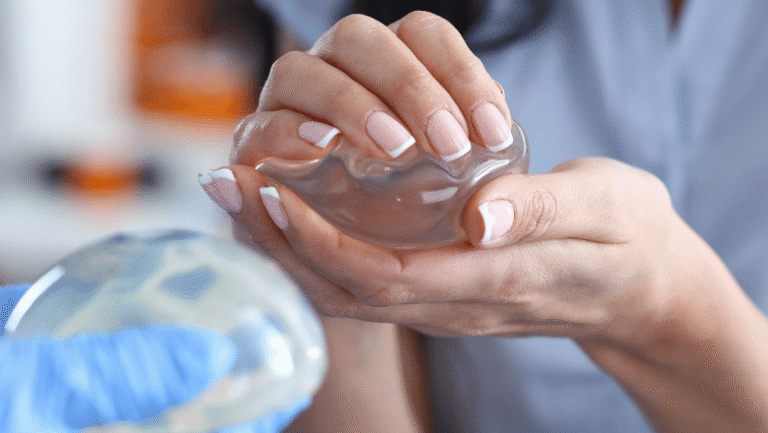
Silicone gel sheets are thin, flexible sheets of medical-grade silicone designed to adhere to the skin over a scar. They are self-adhesive — no tape or dressing is needed — and are washable, so a single sheet can typically be reused over a 1 to 2 week period before needing replacement. Common sizes range from small strips for facial scars and small body scars to larger sheets cut to fit longer scars (abdominoplasty, breast reduction, brachioplasty).
Topical silicone gel is the same active material in a different format: a liquid silicone preparation applied as a thin layer and allowed to dry. The choice between sheets and gel is mostly practical — sheets work best on flat, smooth body areas; gel is more practical for facial scars, curved areas, joints, and small or awkwardly shaped scars.
How they work
The exact mechanism is not fully agreed on, but several effects are documented:
- Hydration. Silicone occlusion prevents transepidermal water loss from the immature scar, maintaining hydration in the outer skin layers. The hydrated environment modulates fibroblast activity and reduces excess collagen deposition.
- Reduced wound tension. The sheet transfers some mechanical tension from the scar edges, reducing the stretching forces that contribute to widened scars.
- Modulation of inflammatory mediators. Hydrated scar tissue produces less of the cytokines that drive excessive fibroblast activity and over-deposition of collagen.
- Possible electrostatic effects. The static charge between silicone and skin may influence collagen fibre alignment, though this mechanism is less well established.
The clinical effect is that scars treated with silicone tend to be thinner, paler, and softer than equivalent untreated scars over the same timeframe. Manufacturer claims of specific percentage improvements (often quoted as 80%+ reductions in scar height or colour) are from selected trial populations and shouldn’t be taken as guaranteed outcomes — but the direction and magnitude of effect is consistent across the published literature.
When to start
The standard timing is from approximately 2 to 4 weeks after surgery, once:
- The wound is fully closed with no remaining scabs or open areas.
- There is no discharge or signs of infection.
- Sutures (where used) have been removed, or fully dissolved.
- Your surgeon has confirmed at the routine follow-up that wound healing is progressing as expected.
Starting too early risks irritating an immature wound. Starting too late means missing the window where silicone is most effective — the first 3 months post-operatively, when scar collagen is being actively deposited.
For older scars (months or years post-operatively), silicone is still useful, particularly for hypertrophic or persistently red scars, although the magnitude of improvement is smaller than when treatment starts during the active maturation phase.
How to apply silicone strips correctly
The protocol that matches published trial evidence is:
- Clean and dry the skin over and around the scar before applying. Avoid lotions, oils, or sunscreen directly under the strip.
- Cut to size if needed. Most sheets come in standard sizes that can be trimmed to fit the scar with a small margin (1cm) of healthy skin around it.
- Apply with the adhesive side directly on the scar. Smooth out any air bubbles.
- Wear for 12 to 24 hours per day. Most evidence supports continuous 24-hour wear, removed only for daily washing of the skin and the strip itself. A practical minimum is 12 hours per day; less than this produces noticeably weaker results.
- Wash the strip daily with mild soap and water, allow it to air dry, and reapply. Each strip typically lasts 1 to 2 weeks before adhesion deteriorates and a replacement is needed.
- Continue for at least 3 months, ideally 6 months. For larger or higher-risk scars (abdominoplasty, breast reduction, brachioplasty, thigh lift), 12 months of treatment is appropriate.
- Combine with sun protection. Silicone treatment does not replace the need for SPF 50 on the scar — both are needed.
What results to expect, and when
Visible improvement typically takes 2 to 3 months of consistent use to become noticeable. The realistic timeline:
- Weeks 0 to 4 of treatment: the scar may still be reddening and thickening as it goes through the proliferative phase. Silicone use is laying the groundwork for what follows.
- Months 1 to 3: early visible improvement — slight reduction in redness and beginning of flattening.
- Months 3 to 6: the bulk of measurable improvement. Scars treated consistently are noticeably paler, flatter, and softer than untreated controls would have been.
- Months 6 to 12: continued gradual improvement. The scar continues to mature regardless, but the trajectory is shifted favourably by silicone use.
- Beyond 12 months: scars usually plateau in appearance. Further significant improvement is unusual without active intervention.
Stopping treatment early — at 6 weeks or 8 weeks — is one of the most common reasons patients report disappointing results. The visible difference at 2 months is modest; the visible difference at 6 months is substantial. Consistency over months is what produces the effect.
Which scars benefit most
Silicone is particularly effective for:
- Hypertrophic scars — raised, red scars that stay within the boundary of the original incision. The most common abnormal scar pattern, and the one silicone treats best.
- Keloid scars — scars that grow beyond the original wound boundary. More common in patients of African, Caribbean, and some Asian ancestry, and on certain anatomical locations (chest, shoulders, earlobes). Silicone helps but is often combined with steroid injections for established keloids.
- Surgical scars at risk of becoming hypertrophic. Prophylactic silicone use from 3 weeks post-operatively reduces the rate of hypertrophic scar formation, even in patients without a known tendency.
- Burns and trauma scars, once fully healed.
Silicone is less effective on:
- Atrophic scars — depressed scars where the issue is tissue loss rather than excess collagen. These respond better to laser, microneedling, or filler approaches.
- Pigmentation alone — silicone has modest effect on isolated hyperpigmentation without raised tissue. Sun protection plus dermatological treatments work better here.
- Very thin, well-healed scars at 6 weeks — these will fade well without silicone. Some patients use it anyway as prevention; the upside is small in this group.
Practical limitations
Silicone strips have real practical drawbacks worth understanding before committing:
- Cost. Reasonable-quality silicone sheets run roughly £25 to £40 per pack, with a typical 6-month course requiring 6 to 12 packs depending on scar size. Topical gel is similar in total cost.
- Adherence requires effort. The patients who get good results are the ones who wear the sheets consistently. Forgetting for a few days at a time noticeably reduces effectiveness.
- Adhesion problems in some locations. Joint areas (knee, elbow) and high-movement areas (face, hands) lose adhesion quickly. Topical gel is often more practical here.
- Occasional skin irritation. A small minority of patients develop mild contact irritation under the sheet. Switching to topical gel usually resolves this; rarely the patient has a true silicone sensitivity and needs to stop.
- Visibility. Sheets are usually flesh-coloured but visible in close inspection. For exposed scars (face, neck, hands) this can be socially limiting, and topical gel is preferred.
What about silicone alongside other treatments?
Silicone is compatible with several other scar approaches and is often combined:
- Sun protection. Always alongside silicone — they address different mechanisms.
- Scar massage. Gentle massage from 4 to 6 weeks alongside silicone use is reasonable.
- Steroid injections. For established hypertrophic or keloid scars, intralesional steroid injections combined with silicone improve outcomes versus either alone.
- Pressure garments. For larger body scars, particularly after major surgery, compression and silicone work together.
- Laser scar revision (for mature scars). Generally used at 12+ months for residual scar concerns. Silicone use before, between, and after laser sessions supports the overall outcome.
FAQs
Can I start while my sutures are still in? No. Wait until sutures are removed and the wound is fully closed.
How often do I replace the strip? Typically every 1 to 2 weeks, when adhesion deteriorates. Wash daily to extend usable life.
Can I shower with the strip on? Most strips are designed to be removed for showering, washed, dried, and reapplied. Check the specific product instructions.
What if I forget for several days? Resume from where you left off. Don’t try to “make up” time by leaving the strip on longer; the daily wear duration is what matters.
Can I use it on the face? Yes, but topical gel is usually more practical than sheets. Apply once or twice daily, allow to dry, and continue for 6 months.
Is it safe during pregnancy and breastfeeding? Silicone has no systemic absorption and is generally regarded as safe in these situations.
Will it remove an old scar entirely? No. It can improve appearance — sometimes substantially — but does not eliminate scars. No topical treatment does.
Does cheaper silicone work as well as branded products? The medical-grade silicone in major brands is reliable. Very cheap unbranded products sometimes contain inadequate silicone concentration or poor adhesives. Stick to recognisable brands available at pharmacies.
Booking and follow-up
If you are post-operative and would like specific scar care advice, raise it at your follow-up appointment. Our clinical team can recommend brands and confirm whether you are ready to start treatment. For consultations, call 0207 993 4849 or use the contact form.
Related reading
- How to minimise scars after cosmetic surgery
- The effects of tanning on cosmetic surgery scars
- Lifestyle changes that protect your cosmetic surgery results
Centre for Surgery · CQC-regulated · GMC specialist-registered surgeons · 95–97 Baker Street, Marylebone, London W1U 6RN · 0207 993 4849 · Book a consultation · Finance from 0% APR