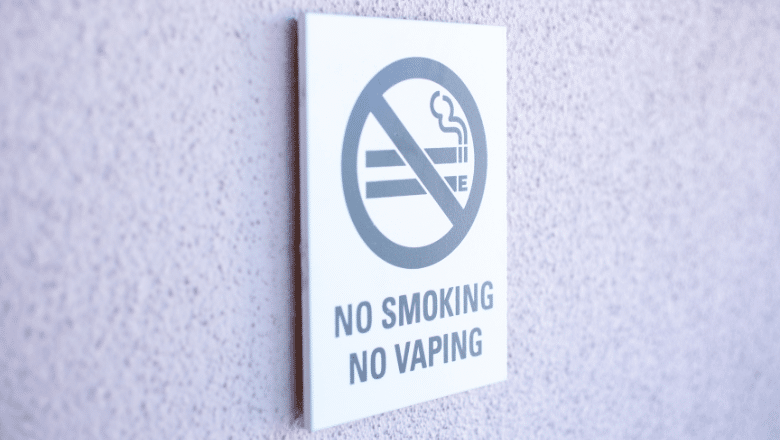
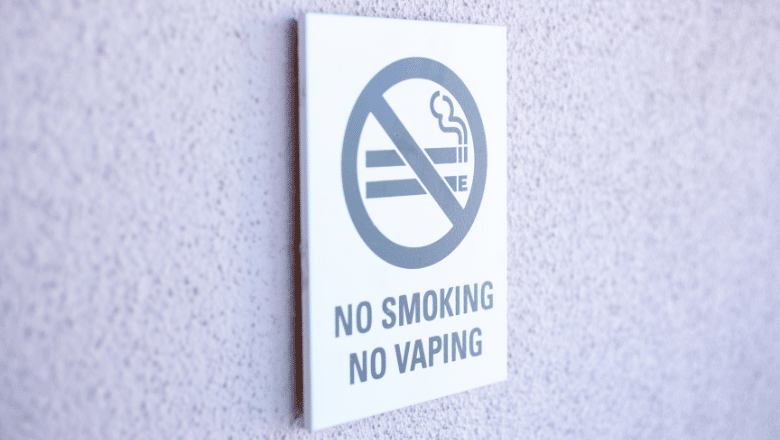
The honest clinical position is that vaping is not a safe alternative to smoking around surgery. The mechanism that causes most smoking-related surgical complications is nicotine’s effect on blood vessels, not the combustion products of tobacco — and most vape products deliver nicotine in doses comparable to or higher than traditional cigarettes. The patients we see for cosmetic surgery who continue vaping into the perioperative period have measurably higher rates of poor wound healing, skin necrosis, infection, and revision surgery. The advice we give vaping patients is the same as the advice we give smokers: stop completely for a defined period before and after surgery.
This guide explains why, sets out the recommended timing windows, and addresses common questions about vaping in the run-up to cosmetic procedures.
Why nicotine specifically matters around surgery
Nicotine causes peripheral vasoconstriction — the small blood vessels in the skin and subcutaneous tissues narrow. This is the same vessel network that supplies oxygen and nutrients to surgically-elevated tissue flaps during procedures like facelift, abdominoplasty, breast reduction, and breast lift. When the supply is compromised at the moment when tissues most need it, the consequences are predictable:
- Skin necrosis — death of skin at the margin of incisions or in elevated flaps. Worst case scenarios include T-junction necrosis in breast lift, central flap necrosis in abdominoplasty, and ear or hairline necrosis in facelift.
- Wound dehiscence — incisions separating after closure because the tissue edges have inadequate blood supply to knit together.
- Delayed healing — incisions that eventually close but take much longer, producing worse final scar quality. See our discussion of scar healing for the broader picture.
- Increased infection risk — both directly (impaired immune function) and indirectly (devitalised tissue is more vulnerable to bacterial colonisation).
- Suboptimal aesthetic result — even where major complications are avoided, the final result is often inferior. Scars are wider and more visible, swelling persists longer, and contours are less crisp.
Beyond vasoconstriction, nicotine impairs immune function, increases systemic inflammation, and reduces collagen synthesis at healing wound sites. The combined effect on tissues recovering from surgery is significant — measurable in published outcome studies as a several-fold increase in complication rates compared with non-nicotine users.
The vaping-versus-smoking question
Patients often assume that switching from cigarettes to vaping reduces surgical risk. The available evidence does not support this assumption.
- Nicotine delivery from vaping is comparable to cigarettes. Modern vape products — particularly pod-based devices and disposable vapes — deliver nicotine at concentrations matching or exceeding traditional cigarettes. The vasoconstrictive effect on small blood vessels is essentially identical whether nicotine is inhaled as combustion smoke or as e-cigarette aerosol.
- The aerosol itself causes airway irritation. Although the constituents differ from cigarette smoke, vape aerosol still irritates the respiratory tract, which raises the airway risk under general anaesthesia. See our guide to cosmetic surgery with respiratory issues for the airway implications.
- Many vape liquids contain unknown additives. Flavourings, propylene glycol, vegetable glycerin, and other carrier compounds vary across products. The systemic effects of these on healing tissue are not fully characterised in published research, which is itself a reason for caution.
- Zero-nicotine vapes are less harmful than nicotine vapes in this specific context, but the airway irritation and additive concerns remain. They are a better option than nicotine vapes but not a fully neutral choice.
The clinical bottom line: switching from smoking to vaping before surgery is not the same as stopping nicotine. If you have switched to vaping in the months before surgery believing it was a step toward quitting, you need to also stop the vaping for the perioperative period.
How long should you stop?
Standard advice across UK cosmetic surgical practice is to stop all forms of nicotine — cigarettes, vapes, nicotine patches, nicotine gum, snus, chewing tobacco — for a defined window around surgery.
Pre-operatively:
- Minimum 4 weeks for most cosmetic surgical procedures.
- 6 weeks for higher-risk procedures involving large skin flaps — facelift, deep plane facelift, abdominoplasty, breast lift, body lift procedures.
- 8 weeks is preferable where the patient can manage it, particularly for major body contouring after weight loss where wound healing margins are tighter.
Post-operatively:
- Minimum 4 weeks after surgery for most procedures, allowing the critical early healing window to complete on a nicotine-free baseline.
- 6 weeks or longer for procedures with extensive flap dissection, where late necrosis risk persists into the second month.
Some surgeons advocate stopping longer (12 weeks pre-operatively) to allow full recovery of the small blood vessel network. The evidence for this longer window is less robust than the 4-6 week window, but for high-risk procedures it is worth considering.
What happens if you don’t stop
Surgeons routinely encounter patients who underreported their nicotine use at pre-operative assessment and then presented with complications that were predictable given the omission. The standard scenarios:
- A facelift patient who continued vaping into the perioperative period presenting with delayed healing at the temporal incisions, sometimes with visible necrosis of the skin in front of the ear.
- An abdominoplasty patient with central flap necrosis at the lower abdomen, requiring delayed wound care for weeks or months and resulting in a worse final scar.
- A mummy makeover patient with both abdominal and breast wound healing complications, extending the recovery substantially and worsening the final result.
- A breast reduction patient with T-junction necrosis, fat necrosis, or nipple compromise, all directly related to compromised blood supply.
These complications often require revision surgery — sometimes multiple revisions — at the patient’s own cost, with results that never match what would have been achieved through nicotine cessation alone. Surgeons usually decline to perform certain higher-risk procedures (facelift, abdominoplasty, body lift) on patients who will not stop nicotine, because the predicted complication rate is unacceptable.
Practical strategies for stopping vaping before surgery
For patients who genuinely want to stop but find it difficult, several approaches are evidence-based:
- Set the stop date well before surgery — at least 6 weeks ahead, ideally longer. Stopping a week before is too late; nicotine effects on tissue persist for weeks after the last dose.
- Behavioural support. NHS smoking cessation services (also available for vaping) provide structured behavioural support that significantly improves quit rates compared with stopping unsupported. The service is free and accessible through GP referral or self-referral.
- Apps and digital support. Smoke Free, Quit Genius, and the NHS Smokefree app provide tracking, motivational content, and timed support during the difficult early weeks.
- Nicotine replacement therapy (NRT) — patches, gum, lozenges, sprays — is a valid option for the early weeks of cessation but should itself be stopped at least 2-4 weeks before surgery. NRT still contains nicotine, so it still produces vasoconstriction; the rationale is that it bridges the worst of the withdrawal while you transition off completely. Discuss timing with your surgeon and GP.
- Varenicline and bupropion are prescription medications that can support cessation. These are typically initiated by a GP and used for 12 weeks. Discuss with your surgeon whether continued use into the perioperative period is appropriate; the answer varies by procedure.
- Identify your triggers. Many vapers reach for the device automatically at specific moments — driving, after meals, with coffee, during stress. Pre-planning alternative responses to these moments substantially improves the chance of sustained abstinence.
Nicotine testing
Some surgeons routinely test for cotinine (a nicotine metabolite) in urine or saliva at the pre-operative assessment, particularly for higher-risk procedures. Cotinine is detectable for 7-14 days after the last nicotine exposure, which means a test taken at the pre-operative assessment 1-2 weeks before surgery can verify that the patient has stopped within the recommended window.
Patients sometimes ask whether they can vape “occasionally” and pass the test. The honest answer is that occasional vaping still produces measurable cotinine and still affects healing — the test is detecting what is happening biologically, not catching the patient out. Surgery proceeds based on the biological reality, not the cover story.
If the cotinine test is positive at the pre-operative assessment, the surgery is typically postponed by 2-4 weeks rather than cancelled, allowing time for genuine cessation before the new date.
Procedure-specific risks
The risk of nicotine-related complications varies by procedure. The highest-risk procedures — where surgeons are most likely to insist on documented cessation — are:
- Facelift and related neck lift procedures. Large skin flaps dissected from underlying tissue depend on the small vessel network that nicotine compromises.
- Abdominoplasty, especially extended (fleur-de-lis) or post-weight-loss variants. The central abdominal flap has the longest blood supply route and is the most vulnerable.
- Breast lift and combined breast lift with augmentation. The T-junction at the bottom of the vertical incision is particularly prone to healing problems.
- Body lift procedures after major weight loss.
- Brazilian butt lift — fat survival depends on the recipient site blood supply, which nicotine compromises.
Lower-risk procedures — where the risk is still real but less catastrophic — include blepharoplasty, rhinoplasty, labiaplasty, and small-volume liposuction. Even for these procedures, we recommend cessation, but the consequences of non-compliance are less severe.
Common questions
How long before surgery should I stop vaping? A minimum of 4 weeks for standard procedures, 6 weeks for facelift, abdominoplasty, breast lift, and body lift. Longer is better.
What about zero-nicotine vapes? Less harmful than nicotine vapes but not a neutral choice — airway irritation and additive concerns remain. The clean answer is to stop everything.
How long is nicotine detectable in my blood? Nicotine itself clears within a few days, but cotinine (the test marker) is detectable for 7-14 days after the last exposure.
Will my surgery be cancelled if I’m still vaping? Likely postponed rather than cancelled, with a new date 2-4 weeks ahead to allow proper cessation.
What if I started vaping recently to quit smoking? Welcome news from a long-term health perspective, but for surgical timing you still need to stop the vape. Plan the surgery for 6+ weeks after stopping the vape, not 6 weeks after switching from cigarettes.
When can I vape again after surgery? At minimum 4 weeks after surgery, longer for higher-risk procedures. The honest recommendation is to use the surgical window as the opportunity to stop completely — many of our patients do.
Is nicotine replacement therapy safer than vaping pre-surgery? NRT is preferable for the early weeks of cessation, but still needs to be stopped 2-4 weeks before surgery because it also delivers nicotine.
Booking a consultation
If you vape and are considering cosmetic surgery, raise it openly at consultation. We will discuss what cessation timeline is appropriate for your specific procedure, what support is available, and how the timing fits with your surgical date. Call 0207 993 4849 or use the contact form to arrange a consultation at our Baker Street clinic.
Related reading
- Smokers and cosmetic surgery: the impact of smoking
- Can you have cosmetic surgery with a cold?
- Pre-operative nutrition: what to eat before cosmetic surgery
Centre for Surgery · CQC-regulated · GMC specialist-registered surgeons · 95–97 Baker Street, Marylebone, London W1U 6RN · 0207 993 4849 · Book a consultation · Finance from 0% APR