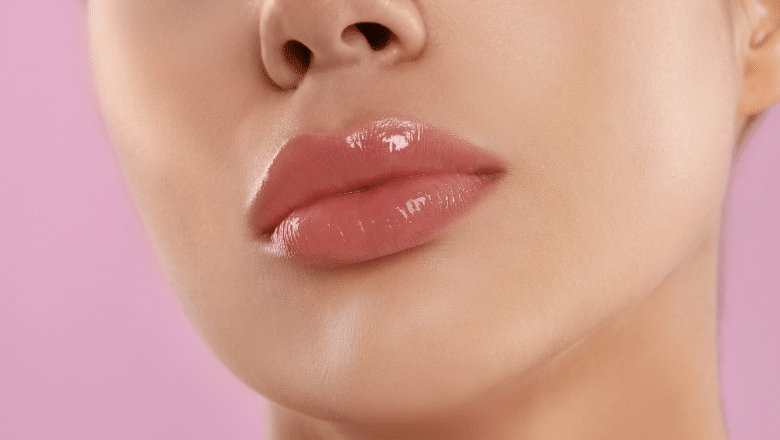
The Cupid’s bow — the distinctive double curve at the centre of the upper lip — is one of the most visually defining features of the face. A well-defined Cupid’s bow contributes significantly to perceived attractiveness and lip definition. A flattened or undefined Cupid’s bow gives the upper lip a softer, less prominent appearance. Lip filler can enhance and define an existing Cupid’s bow effectively — but it can’t create one where the underlying anatomy doesn’t support it.
This guide explains exactly what the Cupid’s bow is, how filler enhances it, the technical approach involved, who’s a good candidate, and the honest limitations on what filler can and can’t change. For the broader context of lip filler treatment generally, see our hub guide on current lip filler techniques.
What the Cupid’s bow actually is
The Cupid’s bow is the anatomical feature at the centre of the upper lip — named for its resemblance to the bow of Cupid, the Roman god of love. It’s formed by three distinct components:
Two upper peaks. The vermillion border curves upward at two points on either side of the central upper lip, forming the M-shape that defines the bow.
The central dip (philtral dip). Between the two peaks sits a small downward curve where the upper lip is slightly lower than at the peaks. This dip aligns with the philtrum above.
The philtral columns. Two subtle vertical ridges running from the base of the nose down to each peak of the Cupid’s bow. These framing ridges contribute significantly to overall lip definition.
The prominence and definition of the Cupid’s bow varies dramatically between individuals. Some patients have very pronounced, sharply defined Cupid’s bows from birth. Others have softer, less defined upper lip borders. Both are normal variations of human lip anatomy.
How the Cupid’s bow changes with age
With age, the Cupid’s bow typically softens and becomes less defined. Several processes contribute:
Loss of collagen at the vermillion border. The crisp definition between lip tissue and surrounding skin depends on collagen at the border. As collagen production declines with age, this transition becomes less distinct.
Atrophy of the philtral columns. The framing ridges thin and flatten as underlying soft tissue deflates.
Weakening of the connections between lip tissue and surrounding skin. The vermillion border becomes less sharp, producing a softer, more diffuse lip outline.
Loss of volume in the central upper lip tubercle. The slight protrusion of tissue just below the philtral dip flattens, reducing the three-dimensional contour that gives the Cupid’s bow its appearance.
Philtrum lengthening. As the philtrum lengthens with age, the relationship between the nose and the Cupid’s bow changes — the bow appears lower on the face and less prominent. For more on this anatomical change, see our guide on how long does a lip lift last.
These changes can be addressed with carefully placed filler, restoring the definition and proportion of a younger Cupid’s bow.
How filler enhances the Cupid’s bow
The technique focuses on the specific anatomical landmarks that define the Cupid’s bow, rather than adding volume to the lip body as a whole:
1. Vermillion border refinement. Small amounts of soft hyaluronic acid filler placed precisely along the vermillion border of the central upper lip sharpen the M-shape of the Cupid’s bow. This is the foundation of the technique — restoring crispness to the edges that age has softened.
2. Peak enhancement. Targeted micro-droplets at each of the two upper peaks heighten and define them. The aim is to restore the natural double-peak shape without exaggerating it.
3. Central tubercle volume. A small amount of filler in the central upper lip just below the Cupid’s bow restores three-dimensional contour. This is what gives the Cupid’s bow its characteristic “lifted” appearance from the side.
4. Philtral column support. In some cases, very fine filler placement along the philtral columns helps frame the Cupid’s bow and contribute to overall lip definition.
The total volume used is typically modest — often 0.3 to 0.5ml for Cupid’s bow enhancement specifically. This is significantly less than for general lip volume enhancement.
The key technical principle: filler stays within the lip and at the vermillion border itself. Filler placed above the vermillion border (into the cutaneous skin between the nose and lip) is the cause of filler migration and the “duck pout” appearance. See our guide on lip filler migration for more on this critical distinction.
What filler can and can’t do
What filler CAN do:
- Sharpen an existing but softened Cupid’s bow
- Restore Cupid’s bow definition lost with age
- Enhance modest natural Cupid’s bow definition
- Address subtle asymmetry between the two peaks
- Add definition to the philtral columns alongside the bow
- Combine with overall lip volume enhancement for comprehensive results
What filler CAN’T do:
- Create a Cupid’s bow where the underlying anatomy is genuinely flat. Patients with no natural Cupid’s bow definition cannot have one constructed entirely with filler — attempts to do so produce unnatural-looking results.
- Address an elongated philtrum that’s making the entire upper lip recede. For this, a lip lift is the appropriate procedure.
- Permanently change the lip shape. Filler is temporary — typically 6 to 12 months per treatment.
- Make the lip dramatically larger while sharpening the Cupid’s bow. The two goals are sometimes in tension — aggressive volume enhancement often blunts rather than sharpens the Cupid’s bow.
The honest counsel: filler enhances what’s there, it doesn’t construct what isn’t. Patients without a natural Cupid’s bow definition are typically better served by other lip treatments or by accepting their natural lip shape.
Who’s a good candidate?
The ideal candidate has:
- Some existing Cupid’s bow definition, even if softened with age
- A specific desire to sharpen the bow rather than dramatically increase overall lip volume
- Realistic expectations about the magnitude of change — refinement, not transformation
- Comfortable with ongoing maintenance (every 6 to 12 months)
- No significant tissue distortion from previous filler treatments
- No active perioral skin conditions or recent dental work in the area
The treatment is less suitable for:
- Patients with genuinely flat upper lip borders — better candidates for accepting their natural anatomy or for a lip lift if their concern is overall lip prominence
- Patients who’ve already had filler placed too superficially and developed migration above the vermillion — these patients need dissolving with hyalase before any further treatment
- Patients seeking primarily volume enhancement rather than definition — better served by general lip filler distributed across the lip body
- Patients with very thin perioral skin where filler at the vermillion border may show visibly
A consultation with our specialist team — including Dr Spyridon Vlachos — establishes which approach matches your specific anatomy and goals.
How the procedure works
The Cupid’s bow enhancement procedure takes approximately 30 minutes including consultation, marking, and treatment.
Step 1: Detailed assessment. Examination of your natural Cupid’s bow shape, any existing asymmetry, the philtrum length, and the overall lip anatomy. Discussion of realistic goals.
Step 2: Marking. Pre-treatment marking of the planned injection points on the vermillion border and lip body. This is done while you’re sitting upright in natural light.
Step 3: Topical anaesthetic. A numbing cream is applied to the lips for approximately 15 to 20 minutes before treatment. The filler itself contains lidocaine for additional comfort during injection.
Step 4: Injection. Precise micro-injections at the planned points using either a fine needle or microcannula depending on the area. Each injection is a small volume — typically 0.05 to 0.1ml at each point.
Step 5: Assessment and refinement. Examination of the result, gentle moulding if needed, and small additional injections if a particular area needs more definition.
Step 6: Aftercare instructions. Discussion of the next two weeks of care to minimise complications and optimise the result.
Most patients are back to normal activities immediately. Some bruising or swelling at the injection sites is normal for 3 to 5 days.
For comprehensive aftercare detail, see our lip filler aftercare guide.
How long the result lasts
Cupid’s bow enhancement filler typically lasts 6 to 12 months. The duration depends on:
Patient metabolism. Younger patients and those with faster metabolisms break down HA filler more quickly. Older patients sometimes see longer duration.
The specific area treated. Filler at the vermillion border is in a relatively low-movement area compared with the body of the lip, which can extend duration somewhat.
Smoking and UV exposure. Both accelerate filler breakdown. Daily SPF on the lips (in a balm or stick form) extends results.
Repeated treatment over time. Many patients find that subsequent treatments last longer than the first, as tissue adapts to the consistent placement.
Most patients return for top-up treatment every 6 to 12 months. The 2-week follow-up review after the initial treatment is included in the cost — small refinements at this point produce the best long-term consistency.
The relationship between Cupid’s bow and lip lift surgery
For patients whose main concern is that their Cupid’s bow doesn’t show prominently because of an elongated philtrum, lip lift surgery is sometimes a more appropriate treatment than filler.
The honest distinction:
- If your Cupid’s bow itself is well-defined but sits too low on your face → consider a lip lift to elevate the entire upper lip including the Cupid’s bow
- If your Cupid’s bow itself is softened or undefined but the lip position is otherwise good → filler enhancement of the bow is appropriate
- If both apply → a lip lift first, then conservative filler enhancement of the elevated bow afterwards
For the detailed comparison of surgical lip options, see our guides on lip lift longevity and bullhorn vs corner lip lift.
Combining with other treatments
Cupid’s bow enhancement is often part of a broader lip filler plan:
+ Overall lip volume. Modest additional filler in the body of the lips for patients wanting both definition and volume. Treated in the same session.
+ Lip flip. Botulinum toxin to the upper lip muscle enhances the visibility of the Cupid’s bow by allowing the upper lip to evert slightly. The lip flip + Cupid’s bow filler combination is a refined approach for patients wanting subtle but visible enhancement. See our guide on the lip flip treatment.
+ Mouth corner treatment. For patients also concerned about downturned mouth corners, treatment of both areas in a single session produces comprehensive lip rejuvenation. See lifting the corners of the mouth with filler.
+ Perioral line treatment. For older patients with smoker’s lines around the upper lip, addressing these alongside Cupid’s bow enhancement produces a more comprehensive result. See our guide on smoker’s lines treatment.
A consultation establishes which combinations are appropriate for your specific concerns.
Risks and what to expect
Common (mild and self-limiting):
- Swelling at the injection sites for 2 to 3 days
- Small bruises at injection points (lasting 3 to 7 days)
- Tenderness when smiling or eating for a few days
- Small palpable lumps that smooth out as the filler integrates
Less common:
- Asymmetry — typically addressed at the 2-week follow-up
- Filler lumps that don’t soften — addressable with massage or hyalase
- Cold sore activation in patients prone to them — prophylactic antivirals can be prescribed for high-risk patients
Rare but serious:
- Vascular occlusion — filler entering or compressing a blood vessel. Signs include unusual skin discolouration around the lips, severe pain, or skin that feels cold. Immediate hyalase reversal is required.
- Infection — uncommon with sterile technique; requires antibiotic treatment if it occurs.
Centre for Surgery keeps hyalase on-site for immediate use if needed. Any concerning symptoms — call 0207 993 4849 immediately.
For more on managing complications, see our guide on lip filler bruising.
Cost
Cupid’s bow enhancement at Centre for Surgery is priced per syringe of filler used. Most patients need only a small volume (0.3 to 0.5ml) for this specific treatment, so cost reflects partial-syringe use.
For patients combining Cupid’s bow enhancement with other lip work, the full syringe is typically used efficiently across multiple areas. This is more cost-effective than treating each area separately.
Finance options through Chrysalis Finance, including 0% APR, are available across treatment plans.
Common questions
Can I make my Cupid’s bow more pronounced if I don’t have one?
Honestly, no — at least not in a natural-looking way. Patients with genuinely flat upper lip borders can’t have a sharp Cupid’s bow constructed entirely with filler. Attempts to do so look artificial. The best approach is to accept your natural lip shape or to consider a different intervention (lip lift) that addresses overall lip prominence rather than specifically creating a bow.
How quickly will I see the result?
Initial change is visible immediately. Some swelling makes the lip look fuller than the final result for 2 to 5 days. Final assessment at the 2-week mark once swelling has fully resolved.
Will my Cupid’s bow look obviously enhanced or natural?
With conservative volumes and good technique, the change looks natural — sharpened and more defined rather than artificially constructed. The aim is to restore or enhance, not to transform.
How does this compare with general lip filler for volume?
Cupid’s bow enhancement focuses on definition at specific landmarks rather than overall lip volume. Different aesthetic goal, different volumes used, different placement strategy. Many patients combine the two for comprehensive lip enhancement.
What if I want my Cupid’s bow even more defined than the result I got?
Top-up treatment after 2 to 4 weeks can add additional definition if needed. Going significantly larger isn’t usually advisable — pushing beyond natural anatomical limits is where unnatural-looking results begin.
Can I have this treatment if I’ve had filler before?
Yes — but if your previous filler has migrated above the vermillion border, the right answer is usually to dissolve the existing filler with hyalase before adding new treatment. Adding new filler on top of migrated filler usually worsens the existing problem.
Will dissolving filler return my Cupid’s bow to its original shape?
Yes — hyalase dissolves only HA filler. Your underlying natural anatomy isn’t affected. If you’ve had previous Cupid’s bow enhancement and want to start fresh, dissolving the existing filler returns the lip to its pre-filler state.
Does this treatment combine with a lip flip?
Yes — the combination is increasingly popular. Lip flip allows the upper lip to evert slightly, which enhances the visibility of the Cupid’s bow. The combination is particularly effective for patients with subtle natural Cupid’s bow definition.
What if I’m thinking about a lip lift instead?
A lip lift is a different intervention. If your underlying concern is that your Cupid’s bow sits too low on your face because of an elongated philtrum, a lip lift addresses the root anatomy. If your Cupid’s bow itself is softened or undefined, filler is more appropriate. A consultation establishes which (or both, in sequence) is right for you.
Centre for Surgery · CQC-regulated · GMC specialist-registered surgeons · 95–97 Baker Street, Marylebone, London W1U 6RN · 0207 993 4849 · Book a consultation · Finance from 0% APR