
Recovery is the question that decides most laser resurfacing consultations. Patients understand that laser skin resurfacing will deliver smoother texture, finer lines and brighter tone — what they want to know is how many days they need to clear from work, when they can wear makeup, when they can be seen in public, and when the final results will appear.
The honest answer depends on which laser protocol you have. This guide breaks down the realistic recovery timeline week by week, explains what you’ll see at each stage, and covers the aftercare that makes the difference between an average result and an excellent one.
The two recovery profiles
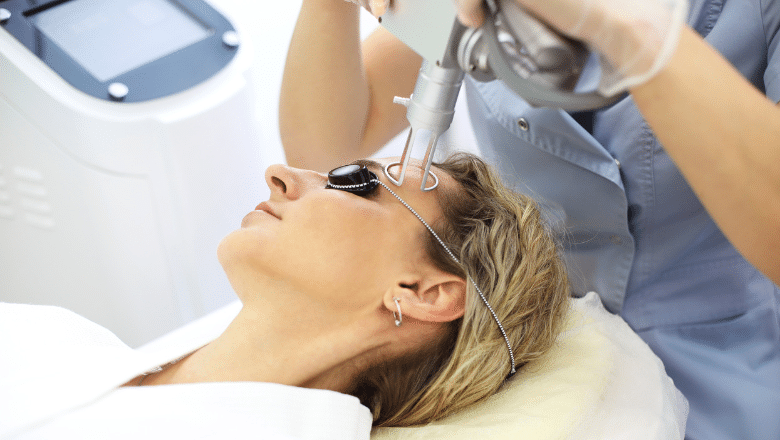
At Centre for Surgery we use the Fotona SP Dynamis Pro erbium YAG laser for all erbium laser resurfacing. The platform supports two distinct treatment modes, each with its own recovery curve:
- Fractional ablative resurfacing — laser energy delivered in microscopic columns that leave intact skin between treated zones. Healing is faster because the surrounding skin acts as a bridge for re-epithelialisation. Recovery: 5 to 7 days of visible downtime.
- Fully ablative resurfacing — uniform passes across the entire treatment area, removing the surface layer in full. More dramatic single-session results, longer recovery. Recovery: 10 to 14 days of visible downtime.
Non-ablative SMOOTH® treatments — including Fotona 4D and SmoothEye — operate on a different principle entirely. They deliver thermal energy without removing the skin surface, so downtime is essentially nil. This guide focuses on ablative resurfacing, where genuine recovery is involved.
For the broader question of how Er:YAG compares to CO₂ resurfacing, including aggregate recovery for each, see our guide on Erbium Laser vs CO₂ Laser resurfacing.
Day-by-day recovery: what to expect
Days 0–2: peak inflammation
Immediately after treatment your skin will look red, feel hot and tight, and may weep a clear fluid. This is normal — your skin has been precisely ablated and is in active wound-healing mode. Swelling peaks at 24 to 48 hours, particularly around the eyes if the periocular area was treated. Cool compresses applied for short intervals, frequent occlusive ointment, and sleeping with your head elevated all help.
You’ll likely want to be at home and unseen during this window. Most patients describe the sensation as a moderate to severe sunburn — uncomfortable but manageable with paracetamol. Our guide to pain after laser resurfacing covers what to expect in more detail.
Days 3–5: crusting and re-epithelialisation
The weeping subsides and small crusts form across the treated area. Fresh epidermis is migrating in from sweat glands and hair follicles to recover the surface. The skin feels tight, itchy and looks like a fading sunburn with patchy crusting. This is the most important phase for aftercare discipline — picking, scratching or peeling crusts manually risks scarring and pigmentation change.
Keep the area thoroughly moist with the prescribed occlusive ointment. Gentle cleansing with lukewarm water and a fragrance-free non-foaming cleanser — fingertips only, no washcloths. Pat dry with a soft towel.
Days 5–7: surface is closed (fractional) / still healing (fully ablative)
For fractional protocols, the surface is largely closed by now. The skin is pink, sometimes described as a “new baby skin” appearance — uniformly fresh and slightly tender. Most patients are presentable for work and short outings, though may want to wait a few more days before social events. Mineral makeup can usually go on around day 7 — see our dedicated guide on when you can apply makeup after laser skin resurfacing.
For fully ablative protocols, you’re still mid-recovery. Crusting continues, redness is pronounced.
Days 7–14: pinkness fades (fractional) / surface closes (fully ablative)
Fractional patients see steady fading of pinkness. By day 14 most look essentially normal under SPF and light cosmetics, though skin remains photosensitive.
Fully ablative patients reach the equivalent of “fractional day 7” around now — surface closed, pink, tender, mineral makeup tolerated. The recovery is just shifted later by a week.
Weeks 2–6: residual erythema
Persistent pinkness — clinicians call it residual erythema — fades steadily but can take six weeks or more to resolve fully. It’s easily concealed with mineral makeup. Some patients notice their skin looks unusually clear and bright during this window as residual sun damage continues to slough.
Months 1–6: collagen remodelling
This is where the underlying results emerge. New collagen is laid down in the dermis, thickening and tightening the skin from underneath. Fine lines refine, scars soften, tone evens out. Most patients see continued improvement for six months after treatment. The skin you have at six months is generally the result of the laser session.
Aftercare that makes the difference
Sun protection — non-negotiable
Freshly resurfaced skin is acutely photosensitive. Unprotected sun exposure during the first three months is the single biggest cause of poor outcomes — pigmentation changes, prolonged redness, sometimes hyperpigmentation that’s difficult to reverse. Strict daily SPF 50 mineral sunscreen, broad-brimmed hat outdoors, and avoiding peak sun hours from day one of recovery onwards.
Sun protection isn’t just a recovery measure — it’s how you preserve the results. For more on UV damage and how to address its effects, see our guide on five signs of sun damage and how to address them.
Moisturisation
The prescribed ointment goes on the treated area frequently — typically every two to three hours during waking hours for the first week, then less often as the surface closes. The aim is to keep the wound moist, which speeds re-epithelialisation and reduces scarring risk.
Gentle cleansing only
Lukewarm water, fragrance-free non-foaming cleanser, fingertips. No exfoliants, no acids (glycolic, salicylic, retinoids), no vitamin C serum, no scrubs. These can resume on your clinician’s say-so, usually around weeks four to six.
No active heat or sweat
Skip the gym, sauna, hot bath, steam room and any vigorous exercise for the first week. Sweat irritates healing skin and increases infection risk.
Don’t pick
The single most common cause of self-inflicted scarring after resurfacing. Crusts will fall off on their own as the skin re-epithelialises underneath. If you find yourself picking unconsciously, keeping the area thoroughly moisturised helps remove the trigger.
Cold sore prophylaxis
If you have a history of perioral herpes, mention it at consultation. We routinely start antiviral prophylaxis a few days before treatment and continue through the early healing window.
Factors that affect your healing time
Within the typical recovery ranges, individual healing varies based on several factors. Faster healing tends to track with: younger age, non-smokers, good general health, adequate sleep and nutrition during recovery, and disciplined aftercare. Slower or more complicated healing tends to track with: smoking (impairs every aspect of wound healing), recent or current isotretinoin use, diabetes or other conditions affecting skin healing, immunosuppression, history of poor scarring, and active skin conditions at the treatment site.
If any of these apply we’ll discuss them in detail at consultation and adjust the protocol or timing as appropriate. In some cases — particularly recent isotretinoin use — we’ll defer treatment until healing capacity is restored.
What we don’t recommend
- Pre-paid social events within two weeks — even for fractional protocols, give yourself realistic margin. Skin doesn’t read calendars.
- Resuming active skincare too early — retinoids, acids and vitamin C all delay healing and increase irritation. Wait for your clinician’s approval.
- “Quick recovery” promises from any laser clinic — true ablative resurfacing requires real recovery. If a clinic promises significant resurfacing with no downtime, the protocol is almost certainly too superficial to deliver meaningful results.
- Sun exposure during recovery for “vitamin D” or “to fade the pink” — both are myths. UV during the healing window causes pigmentation problems, not faster fading.
Frequently asked questions
When can I go back to work?
Fractional Er:YAG: most patients return to office or home-based work after 5 to 7 days. Customer-facing roles may want 7 to 10 days. Fully ablative: typically 10 to 14 days.
When can I exercise again?
Light walking from day three. Gentle exercise from day seven. Full intensity, sweat-inducing exercise from week two onwards. Saunas and steam rooms from week four.
When will I see the final result?
You’ll see surface improvements by week two as the new skin emerges. Collagen-driven tightening continues for six months. Most patients feel the result is “finished” around month three to four.
How long does redness last?
Pink colour fades steadily over two to six weeks. For fully ablative, residual pinkness can persist a little longer. Mineral makeup conceals it easily from week two onwards.
Can I combine resurfacing with other treatments?
Yes, but with appropriate spacing. Morpheus8 is often staged a few weeks before or after; Profhilo and anti-wrinkle injections can resume once the skin has fully healed. Plan combinations during your consultation.
Why choose Centre for Surgery
Our laser resurfacing is delivered on the Fotona SP Dynamis Pro by clinicians experienced in tailoring protocol depth to each patient’s skin and downtime tolerance. Aftercare is written, structured and supported — you leave with everything you need to navigate the recovery successfully, plus direct contact for any questions during healing.
Centre for Surgery · CQC-regulated · GMC specialist-registered surgeons · 95–97 Baker Street, Marylebone, London W1U 6RN · 0207 993 4849 · Book a consultation · Finance from 0% APR