As people enter the middle-aged part of their life, it often becomes much easier to accumulate extra weight around the midsection, particularly excess belly fat. This phenomenon is usually known as the ‘midlife spread’. This problem can affect both women and men, although women may find they have an extra propensity to develop belly fat during this phase of life. This is why removing resistant belly fat is one of the most essential weight loss goals for many people.
There are two types of abdominal fat, with visceral fat being the more dangerous type as it is often associated with certain medical conditions such as type two diabetes and ischaemic heart disease. The risk of breast cancer is increased in women with large amounts of visceral fat. Reducing the risk of developing these conditions means that people should eliminate belly fat as one of the best ways to improve overall health and well-being.
The proportion of people who develop excessive belly fat increases yearly due to an increasingly sedentary lifestyle, and getting rid of belly fat can be challenging. We present the most effective strategies to eliminate belly fat and prevent its recurrence.
Healthy diet
Eating a healthy and balanced diet is essential for achieving optimal health. The most effective way to lose weight is to follow a calorie-restricted diet that reduces carbohydrate and fat intake. If this is followed, you may start noticing a reduction in excess belly fat and a generalised decrease in overall body fat, making you appear slimmer.
The best way to start a healthy diet is to avoid foods high in refined sugar. This includes sweetened fizzy drinks, cakes, biscuits and other confectionery. Scientific research has shown a link between consuming a high amount of sugar and the development of abdominal excess fat. Visceral fat can increase with an accumulation of fat surrounding the liver. Eliminating sweetened foods will help reduce belly fat. Many people are unaware that many sports drinks and fruit juices contain high amounts of sugar, which need to be reduced. Excessive alcohol consumption is linked with weight gain and the development of belly fat, and people should try to drink less than 14 units of alcohol per week.
Overall carbohydrate intake should be reduced as this will encourage your body to metabolise its stores of fat. Abdominal fat and visceral fat are the most harmful types of fat and are linked with many severe medical conditions, such as type two diabetes. You should increase your lean protein intake and focus on eating whole-grain foods, which will help you stay fuller for longer and, therefore, help burn stomach fat. The overall principle of any successful diet is to reduce your overall food intake. Most nutritionists recommend a daily calorie deficit of 500-800 calories to stimulate weight loss.
Physical exercise
Healthy eating habits should be combined with regular physical exercise to lose weight and improve overall well-being. Combining different types of activity, with aerobic exercise and resistance training as the most effective, is best for achieving simultaneous fat loss and muscle gain. Cardiovascular exercise is very effective for weight loss and includes jogging, swimming and rowing. NHS guidelines recommend we engage in at least 150 minutes of physical activity, divided into 30-minute blocks. Spreading physical exercise over a prolonged period will help promote effective weight loss and prevent belly fat from returning. Any exercise routine should be realistic and achievable to ensure you exercise regularly. If you were to stop exercising, you would be more likely to regain weight.
Belly fat is one of the most challenging types of body fat to eliminate, so focus on exercises that increase your heart rate for prolonged periods to stimulate fat burning. Sometimes, despite regular physical activity and healthy eating, many people are unable to lose belly fat, and this is where other treatments can be effective in getting rid of it permanently.
Liposuction for getting rid of belly fat
Liposuction is the ideal treatment for people with significant areas of excess fat in the abdominal area or any other body part where exercise and diet have failed to produce results. Stomach liposuction is a minimally invasive body-contouring procedure performed by our expert plastic surgeons to permanently remove fat cells using specialised aspiration cannulas connected to a vacuum suction device. Eliminating belly fat results in a more contoured and flatter stomach. Tummy liposuction involves breaking up fat cells with specially shaped aspiration cannulas inserted via small incisions. The loosened fat cells are then removed with gentle suction. Power-assisted liposuction is the most common technique for eliminating belly fat at Centre for Surgery. Once fat cells are removed, they do not regenerate. Liposuction should be viewed as a permanent method for removing belly fat. Liposuction, however, is not a weight-loss method and should not be considered a replacement for eating healthily and exercising regularly.
Patients who continue to eat an unhealthy diet with lots of junk food and do not exercise may notice their belly fat recur. You should maintain a healthy lifestyle after your liposuction for belly fat to ensure your results are sustained over time.
Stomach liposuction is one of the most effective methods to get rid of a ‘muffin top’. A muffin top is an extra prominence of fat that is often noticeable, bulging outward over the top of tight-fitting trousers.
RELATED: Stomach Liposuction (Tummy Lipo)
Gastric balloon
Sometimes, if weight loss proves impossible with diet and exercise alone, you may be an appropriate candidate for fitting a gastric balloon.
Weight loss procedures are usually reserved for people who are clinically obese and need early treatment to avoid or minimise the impact of certain obesity-related diseases, including Type II diabetes and high blood pressure. Most patients should have a body mass index (BMI) of 40 or higher to qualify for weight loss treatment. Alternatively, patients with a BMI between 35 and 40 and a weight-related condition may be suitable candidates for weight-loss surgery. Patients should ensure they are prepared to continue following a healthy diet and lifestyle after undergoing weight-loss surgery to achieve the maximum benefit.
Weight-loss surgery encompasses four procedures, each with pros and cons. The least invasive weight loss procedure is a gastric balloon. A gastric balloon involves the insertion of an air-filled or saline-filled balloon into the stomach via an endoscope. The intended effects include feeling fuller after eating smaller portions. Over time, patients will lose weight due to a lower food intake. A gastric balloon is fully reversible, and the balloon remains in the stomach for no more than 6 to 9 months, after which it is removed via an endoscope.
Gastric band surgery involves placing an adjustable silicone band around the upper portion of the stomach. The band will require several adjustments to ensure the resulting stomach pouch leads to safe and effective weight loss. A gastric band is also fully reversible.
Gastric bypass and gastric sleeve surgery are major types of weight loss surgery and involve permanent surgical alterations to the size of the stomach. Gastric bypass surgery consists in altering the route through which food passes to the small intestine. Gastric sleeve surgery reduces the size of the stomach so that people feel full after eating smaller amounts of food.
Weight loss surgery can lead to significant weight loss, including the removal of stubborn belly fat. It is essential to remember that both gastric bypass and gastric sleeve surgery are major surgical procedures and are irreversible. We recommend conducting thorough research to explore the four treatment options, including their advantages and disadvantages, before proceeding with weight-loss surgery.
Belly Fat Removal at Centre for Surgery
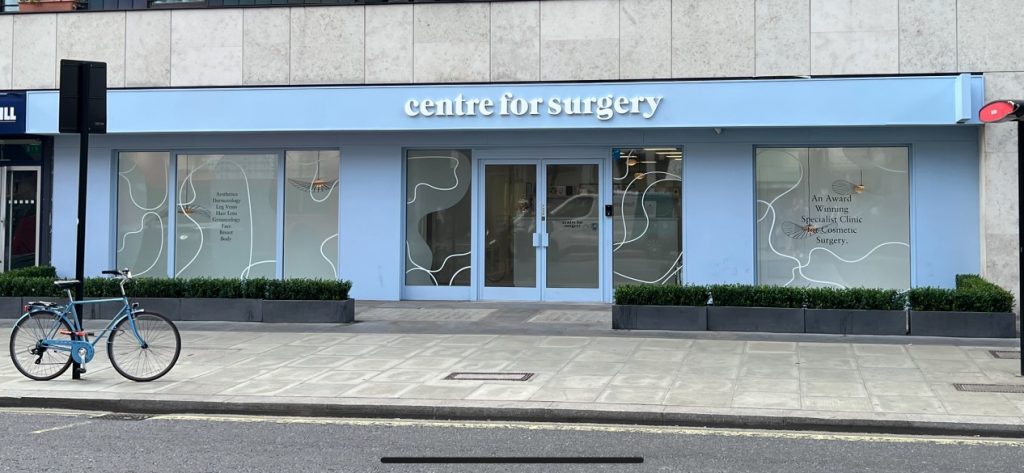
At Centre for Surgery, we offer a full range of treatments, including liposuction and weight loss surgery. If you want to find out the best option for you, contact us at 0207 993 4849 to book a face-to-face consultation with an expert surgeon at our Baker Street clinic in Marylebone.
[contact-form-7 id=”256″ title=”Treatments form”]