One of the most important questions to ask before any laser treatment is how it behaves on your skin type. Fotona 4D has a strong reputation for versatility — but “versatile” doesn’t mean “identical for everyone”. The honest answer is that Fotona 4D can be performed safely across the full Fitzpatrick spectrum, but the protocol has to be calibrated to your skin, and that calibration matters more for darker tones than lighter ones.
This guide explains how skin type interacts with laser energy, what we adjust for each Fitzpatrick category, and the safety protocols that make Fotona 4D appropriate for the majority of patients.
What Fotona 4D is
Fotona 4D is a four-step non-surgical laser facial that combines two complementary wavelengths — Nd:YAG (1,064 nm) and erbium YAG (2,940 nm) — across four sequential modes:
- SmoothLiftin™ — intraoral Er:YAG to tighten the mid-face and perioral region from beneath
- FRAC3® — fractional Nd:YAG addressing pigmentation, fine lines and deeper texture
- PIANO® — long-pulsed Nd:YAG delivering uniform deep heating to stimulate collagen
- SupErficial™ — light Er:YAG peel to refine the surface and even tone
For a deeper look at how the four steps deliver non-surgical tightening, see Can Fotona 4D really tighten skin without surgery?
Why skin type matters in laser treatments
Skin type is measured on the Fitzpatrick scale, a six-point classification based on melanin content and UV response:
- Type I — very fair, always burns, never tans
- Type II — fair, burns easily, tans minimally
- Type III — medium, sometimes burns, tans gradually
- Type IV — olive, rarely burns, tans well
- Type V — brown, very rarely burns, tans deeply
- Type VI — dark brown to black, never burns
The relevance to laser is melanin. Lasers deliver energy that’s absorbed by chromophores in the skin — water, haemoglobin and melanin. The more melanin present, the more laser energy is absorbed in the epidermis rather than reaching the deeper dermis where the therapeutic work happens. If settings aren’t adjusted for higher melanin, the epidermis can be overheated, causing post-inflammatory hyperpigmentation, hypopigmentation, or in rare cases blistering and scarring.
Fotona 4D’s design makes it well suited to wider skin-type ranges than many laser systems. The Nd:YAG wavelength (1,064 nm) passes through melanin more efficiently than shorter wavelengths, delivering its energy at depth where it’s needed. But “more forgiving” still requires careful adjustment for darker tones.
Fotona 4D on lighter skin (Fitzpatrick I–III)
For fair to medium complexions, Fotona 4D is well tolerated with the standard protocol. Lower melanin means less competing absorption in the epidermis, so the laser delivers its full energy to the target depth with minimal risk of pigmentary side effects. Mild post-treatment redness for a few hours is the typical extent of any visible reaction.
Patients in this group can usually proceed straight to a full course of treatments without patch testing. Sun avoidance remains essential — even fair skin develops pigmentation if exposed to UV in the days following treatment — but the safety margin is wide.
Fotona 4D on olive skin (Fitzpatrick IV)
Olive complexions sit at the threshold where careful protocol adjustment becomes important. We typically:
- Start with conservative energy settings and increase across sessions as tolerance is confirmed
- Use the PIANO® mode at adjusted parameters to deliver heat without driving surface inflammation
- Pay particular attention to the SupErficial™ step, sometimes reducing or omitting it for the first session
- Reinforce strict sun avoidance for two weeks pre- and post-treatment
With these adjustments, olive skin patients respond very well to Fotona 4D — many in this group have particularly thick, collagen-rich skin that produces excellent tightening responses.
Fotona 4D on brown and black skin (Fitzpatrick V–VI)
The treatment can be performed safely on darker skin types when protocols are properly calibrated. Our approach for V–VI:
- Patch testing — a small test area is treated at planned settings before any full session. We wait 7 to 14 days to assess healing and any pigment response before proceeding.
- Conservative initial energies — we build up across multiple sessions rather than starting at maximum tolerated settings
- Modified SupErficial™ step — the light peel component is often reduced or omitted to minimise surface inflammation
- Extended sun avoidance — strict UV protection for three to four weeks around treatment, longer than the standard recommendation
- Adjuvant care — pre- and post-treatment skincare to support pigment stability, sometimes including a melanin-modulating regimen ahead of the course
For diffuse pigmentation concerns in darker skin specifically, dedicated laser pigmentation treatment with Nd:YAG at appropriate settings is often a better starting point than full Fotona 4D.
Side effects and how we manage them
The main potential side effects across all skin types:
- Mild redness and warmth — universal, resolves within hours
- Light swelling — particularly around the eyes, settles within 24 to 48 hours
- Transient dryness or fine peeling — usually resolves within a week with moisturisation
- Post-inflammatory hyperpigmentation — more likely on darker skin types if protocols are too aggressive or sun protection fails; minimised by conservative protocols, patch testing and strict aftercare
- Hypopigmentation — rare, more associated with aggressive ablative resurfacing than with Fotona 4D’s non-ablative-dominant protocol
- Cold sore reactivation — if you have a history of perioral herpes, mention it at consultation; antiviral prophylaxis is straightforward
The single most preventable cause of disappointing outcomes is post-treatment sun exposure. Daily SPF 50 mineral sunscreen, broad-brimmed hat outdoors, no peak-hour sun for at least two weeks (longer for darker skin types). This isn’t optional.
Who should avoid Fotona 4D
Specific contraindications:
- Active skin infection or open wound in the treatment area
- Recent sunburn or significant tanning
- Pregnancy or breastfeeding
- Active isotretinoin treatment or within six months of finishing
- History of keloid or hypertrophic scarring
- Severe active acne (treat the acne first)
- Photosensitising medications without medical review
- Certain autoimmune conditions affecting skin
- Recent injectable treatments in the treatment area — usually we wait two weeks
None of these are absolute lifetime exclusions — most are temporary. A consultation will identify whether timing or protocol adjustments allow safe treatment.
What to expect during and after
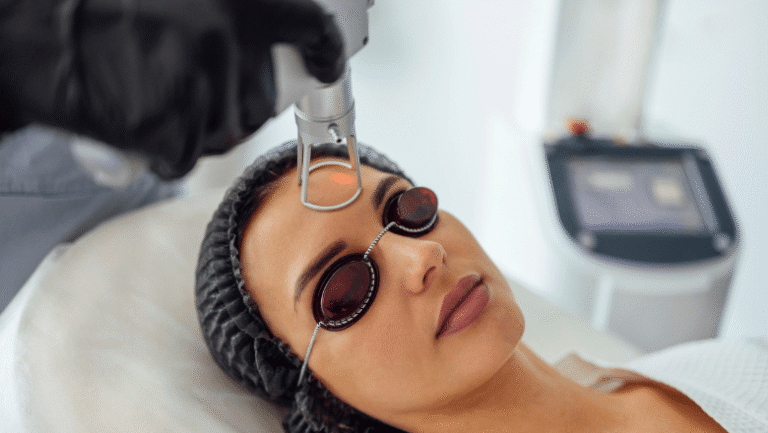
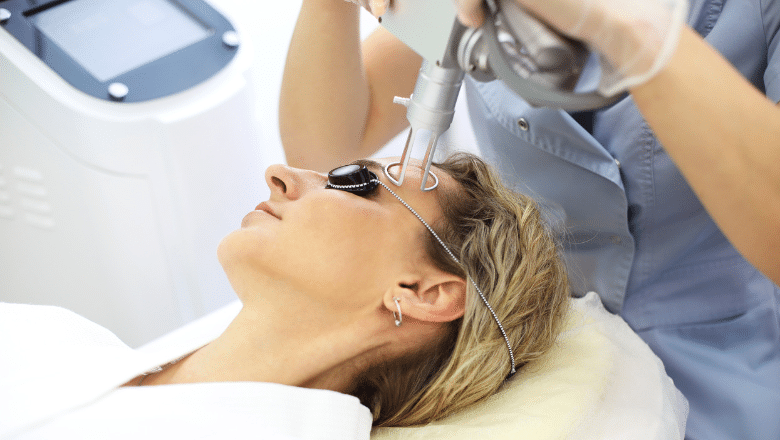
You’ll arrive without makeup, having avoided retinoids, acids and tanning for one to two weeks beforehand. Protective eyewear is fitted. The intraoral SmoothLiftin™ step opens the sequence — a small retractor holds the lip open while the laser handpiece works inside the mouth. The external FRAC3® and PIANO® passes follow. The SupErficial™ peel closes the session.
Total session time: 45 to 60 minutes. Sensation: warmth and mild tingling, occasionally a brief snap during FRAC3® passes. No anaesthesia required. Immediately afterwards your skin will look pink and feel warm — like a moderate sunburn that resolves within hours.
For best results, expect a course of three to four sessions spaced three to four weeks apart. Results build over two to three months as collagen remodels.
What we don’t recommend
- Standardised settings regardless of skin type — Fotona 4D is safer than many lasers across the Fitzpatrick range, but “safer” still requires calibration. Treatment-by-numbers is not the right approach for V–VI skin.
- Skipping patch testing on darker skin — the small time investment in testing is straightforwardly worthwhile.
- Treatment during active tanning or recent sun exposure — increased epidermal melanin temporarily makes pigmentation problems much more likely, regardless of baseline Fitzpatrick type. We routinely defer treatment.
- Lay-clinic treatment for V–VI skin — protocols for darker tones require both equipment and operator experience. Choose a clinic with documented experience in your skin type.
Frequently asked questions
Can I have Fotona 4D if I have a darker skin tone?
Yes, with appropriate protocol calibration and patch testing. Most Fitzpatrick V–VI patients respond very well — the Nd:YAG wavelength is among the more skin-tone-tolerant laser options available.
Do you patch test before treatment?
For darker skin tones (V–VI) and case-by-case for IV, yes. For I–III, generally not required unless there’s a relevant history.
Is there any difference in results across skin types?
The tightening and collagen-stimulating mechanism works equivalently across types. The pace at which you can advance the protocol may differ, with darker skin often benefiting from slightly more sessions at slightly more conservative settings.
How does Fotona 4D compare with other laser tightening for darker skin?
The Nd:YAG-dominant approach makes Fotona 4D one of the better-tolerated non-ablative platforms for V–VI. For more surface-focused work, see Erbium Laser vs CO₂ Laser resurfacing — in this comparison, Er:YAG is far safer than CO₂ for darker skin.
What if I’ve had a previous bad experience with laser?
Mention it at consultation. Often the issue was protocol or operator rather than the technology itself. We may patch test even for Fitzpatrick I–III patients in this situation to confirm safe parameters.
Why choose Centre for Surgery
Our clinicians have extensive experience treating the full Fitzpatrick range on the Fotona SP Dynamis Pro at our Baker Street private hospital. Every treatment plan is individualised — there’s no fixed-recipe Fotona 4D at our clinic. Treatments are delivered in a CQC-regulated environment with the safety infrastructure of a full private hospital.
Centre for Surgery · CQC-regulated · GMC specialist-registered surgeons · 95–97 Baker Street, Marylebone, London W1U 6RN · 0207 993 4849 · Book a consultation · Finance from 0% APR