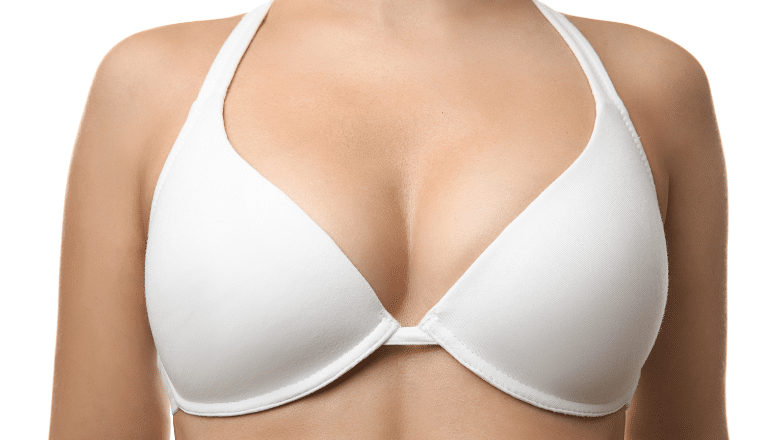
Breast size and shape can have a powerful effect on confidence, posture, and the way clothes fit. It’s no surprise that many people look for ways to enhance volume without going under the knife. You’ll see bold claims about creams, supplements, hormones, devices and “targeted” exercises. The promise is tempting. The truth is different. There is no proven, reliable, or lasting non-surgical method that enlarges breast tissue.
Centre for Surgery is a leading private plastic surgery hospital in London. We provide safe, tailored breast enlargement surgery with natural-looking results delivered by experienced consultant plastic surgeons.
This in-depth guide explains why non-surgical promises fall short, how breast anatomy limits what you can achieve without an operation, and which surgical options genuinely increase size.
RELATED: How can I Enlarge My Breasts?
Can You Enlarge Your Breasts Without Surgery?
In short, no. Non-surgical methods cannot create new breast tissue or reliably increase volume. Exercise strengthens the pectoral muscles behind the breast, which may slightly lift the chest wall and improve posture. That can make the upper body look perkier, but the breast itself is mostly fat and glandular tissue. Muscle work does not increase this tissue. Weight gain may increase breast size for some people, but it is unpredictable and affects the whole body.
Topical creams and herbal pills do not alter breast structure. Even products that claim to use plant oestrogens cannot safely or predictably increase breast size. Devices that create suction may cause temporary swelling, but once the effect fades, the breast looks the same. If your goal is a noticeable, measurable, and lasting change, surgery is the only proven route.
Breast Anatomy Explains The Limits Of Non-Surgical Methods
Understanding what the breast is made of helps explain why non-surgical enlargement methods are often ineffective. The breast sits on the pectoral fascia and consists of lobules, ducts, supportive ligaments and fat. It is not a muscle you can train, nor a structure you can remodel with topical agents. The ligaments give the breast shape but cannot be “tightened” by creams. Because the components that determine size are biological and passive, only surgical intervention can reliably change volume and projection.
Why Non-Surgical Claims Fall Short
Marketing tends to blur lines between firmness, shape, lift and true enlargement. Supplements are not regulated as medicines and are not clinically proven to grow breast tissue. Hormonal manipulation outside medical supervision is risky and inappropriate for cosmetic goals. Vacuum devices may cause temporary oedema, which some people misread as growth. When the swelling settles, the effect disappears.
RELATED: Do Breast Enlargement Creams and Supplements Really Work?
The Options That Do Work: Surgical Breast Enlargement
Surgical breast enlargement, also called breast augmentation, is the gold-standard solution for predictable and durable volume. It allows precise control of size, shape, and proportions. There are three main pathways: implants, fat transfer, and combined techniques. Each has indications, benefits and limitations.
Breast Implant Surgery
Breast implant surgery remains the most effective way to achieve a noticeable and controllable increase in size. The operation involves placing an implant beneath the breast tissue or muscle. Silicone gel implants are most commonly used in the UK because they feel soft and natural. Modern silicone implants contain a cohesive gel that keeps its shape while still feeling pliable.
Choosing the right implant is a collaborative process. Size is measured in millilitres rather than cup sizes because bra sizing is inconsistent. Projection and base width are matched to your chest to keep proportions balanced. Round implants tend to enhance upper-pole fullness, producing a lifted, glamorous look. Anatomical, or teardrop, implants are shaped to mimic a gentle slope, often preferred when a soft, natural contour is the priority. Your surgeon takes chest wall measurements and reviews photographs to select an implant that harmonises with your frame.
Placement matters. A subglandular pocket (located above the muscle) may be suitable for patients with adequate existing tissue. A submuscular or dual-plane pocket (partially under the muscle) can reduce visible edges and rippling in slimmer patients. Incisions are most commonly made in the breast crease for accurate pocket control and discreet scarring. The procedure usually takes one to two hours under a general anaesthetic.
Fat Transfer Breast Augmentation
Fat transfer to breasts uses your own fat to enhance breast volume. It is ideal when you want a modest, natural increase and contour improvement in donor areas such as the abdomen, flanks or thighs. First, liposuction removes fat through tiny incisions. The fat is purified and then injected into the breast in fine layers to encourage good blood supply and long-term survival. The technique can soften edges, improve cleavage and refine symmetry. It is not a replacement for implants when a significant volume change is requested, and the final size increase is usually up to one cup, sometimes less.
Recovery after fat transfer is often quicker in the chest, but remember, you are also recovering from liposuction. You will wear compression garments on donor areas to control swelling and shape.
Augmentation Mastopexy
If the breast has significant droop due to pregnancy, breastfeeding, weight changes, or ageing, adding volume alone will not restore its shape. An augmentation mastopexy combines implants with a lift. The lift tightens the skin envelope and repositions the nipple-areola complex to a more youthful height. The implant then restores volume and upper-pole contour. Incisions vary from an areolar circle to a lollipop or anchor pattern, depending on the degree of lift required.
Hybrid Augmentation: Implants Plus Fat
Hybrid augmentation utilises a smaller implant to secure the desired base volume and projection, while layering fat around the edges to soften transitions, conceal rippling, and enhance cleavage. This approach is particularly helpful for patients with slim builds or those with mild asymmetry.
Choosing Size, Profile And Aesthetic Style
A beautiful result is not only about absolute size but about proportion. Your chest width, shoulder line, waist, and height are assessed together. During sizing, surgeons may use three-dimensional planning, in-clinic sizers, and before-and-after galleries to help you visualise the result. There is no single right choice; there is only the right choice for you, made with clear measurements and realistic expectations.
Safety, Risks And How Surgeons Reduce Them
Any operation has risks. With breast augmentation, these can include bleeding, infection, delayed healing, changes in nipple sensation, asymmetry, implant malposition, rippling and capsular contracture. A capsule is the normal scar tissue your body forms around an implant. In some cases, it thickens and tightens, altering the appearance and texture of the breast. Choosing a CQC-registered hospital, an experienced specialist, and following aftercare advice are the most important safety steps you can control.
Longevity, Maintenance and Revision
Implants are long-lasting but not lifetime devices. Many people enjoy their results for well over a decade. Some individuals may choose or require revision due to changes in size, pregnancy-related alterations, weight fluctuations, or issues such as capsular contracture. Ongoing breast health screening should continue in line with NHS guidance, and you should tell the radiographer you have implants so the correct views can be taken.
RELATED: How Long Do Breast Implants Last?
Preparing For Surgery: Practical Steps That Improve Outcomes
Preparation starts at the consultation. Your medical history is reviewed and your goals clarified. Smoking and vaping impair healing; stopping well before and after surgery makes a real difference. You will be advised on medication adjustments, such as pausing certain supplements or anti-inflammatories that increase the risk of bleeding. Stable weight helps produce a stable result.
Anaesthesia And The Day Of Surgery
Breast enlargement is performed under a general anaesthetic by an anaesthetist focused on your comfort and safety. You arrive at the Baker Street clinic, meet your surgeon for final markings and a last review of the plan, and the team guides you through each step. The procedure typically lasts one to two hours. After surgery, you wake in recovery with a nurse by your side, wearing your support bra.
Recovery Timeline And Aftercare
The first forty-eight hours usually bring a feeling of pressure and tightness, especially with submuscular placement. Swelling peaks in the first week and then eases. Most people return to desk work after a week, sometimes sooner, with fat transfer alone. Lifting, reaching overhead and high-impact exercise are paused until week four to six. You will wear a support bra day and night for several weeks.
Cost Considerations And Finance
The cost of breast augmentation in London varies depending on the implant type, surgical complexity, whether a lift or fat transfer is included, and the aftercare requirements. Clear, transparent pricing helps you plan with confidence. Many patients spread the cost with finance options after an eligibility check.
Who Is A Good Candidate?
A good candidate is healthy, at a stable weight, and has realistic expectations. You may be naturally small-breasted, feel deflated after breastfeeding, or notice a size difference between sides. If your breast sits low on the chest or the nipple points downward, a lift may be advised with or without an implant. If you prefer a subtle change and have areas suitable for liposuction, fat transfer might suit you. If you want a significant increase or a precise change in shape and projection, implants are usually best. Your surgeon will guide you honestly toward the technique that matches your goal.
Breast Enlargement After Pregnancy, Weight Loss And Ageing
Pregnancy and breastfeeding often reduce upper-pole fullness and can stretch skin. Weight loss can cause the breasts to deflate and reveal laxity. In these settings, an implant alone may not restore youthful shape; an augmentation mastopexy is often more appropriate. You can breastfeed with implants, although it is not guaranteed, as breastfeeding ability depends on many factors.
Breast Enlargement FAQs
Can exercise make my breasts larger?
Exercise strengthens the chest muscles beneath the breasts, which can improve upper-body posture and enhance the appearance of your bust in clothing. It does not increase breast tissue, so it will not make the breasts themselves larger.
Do creams, serums or herbal supplements work for breast growth?
There is no clinical evidence that topical products or supplements increase breast size. They may hydrate the skin or create temporary plumping, but they do not produce new breast tissue or lasting volume.
Is fat transfer as effective as implants for size?
Fat transfer provides a subtle, natural enhancement and is ideal for softening contours and enhancing symmetry. It is not suited to large increases in cup size. If you want a bigger change in volume, implants are the more predictable option.
How long does breast implant surgery take and when can I go home?
Most procedures take one to two hours under a general anaesthetic. Many patients go home the same day once comfortable, eating and drinking, and safely mobile, with full aftercare instructions.
What is the recovery like after implants?
Expect tightness and swelling in the first week. Most people return to desk work after about seven days. Gym work and heavy lifting are avoided for four to six weeks, then added gradually as advised by your surgeon.
How long do breast implants last?
Modern implants are designed to be long-lasting. Many people keep their implants for well over a decade. Some will choose or need revision over time due to lifestyle changes, preference, or capsule-related issues.
Will I still be able to have mammograms?
Yes. You should continue breast health screening as recommended and tell the radiographer you have implants so the correct imaging technique is used.
Can I breastfeed after augmentation?
Breastfeeding is often possible after augmentation, particularly with inframammary incisions and careful technique, but it cannot be guaranteed because breastfeeding depends on several personal factors.
What are the main risks of breast augmentation?
Risks include bleeding, infection, delayed healing, changes in sensation, asymmetry, implant malposition, rippling and capsular contracture. Your surgeon will explain how these risks are minimised and how they are managed if they occur.
How do I choose the right size?
The right size is based on accurate chest measurements, your desired look, and how you live. Sizing with measured implants, photographs and careful consultation helps you choose a proportionate result that suits your frame.
Why Choose Centre For Surgery
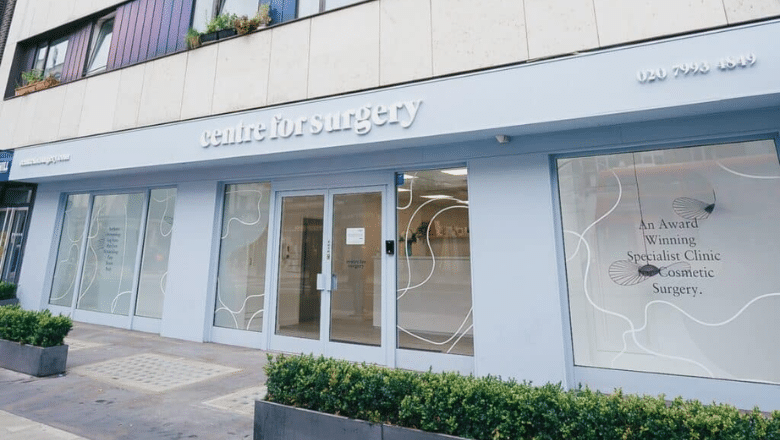
Centre for Surgery is a CQC-registered private plastic surgery hospital at 95–97 Baker Street, London W1U 6RN. Our consultant plastic surgeons specialise in breast enlargement surgery and perform high volumes of implant, fat transfer, hybrid and augmentation-mastopexy procedures each year. Your treatment plan is tailored to your anatomy and goals. Pre-operative assessments are clear and methodical, anaesthesia is consultant-delivered, and aftercare is structured, responsive and personal.
To book a consultation, get in touch today. You can call 0207 993 4849 or email contact@centreforsurgery.com. Our hospital is at Centre for Surgery, 95–97 Baker Street, London W1U 6RN, with convenient transport links and a discreet, welcoming environment.
[contact-form-7 id=”256″ title=”Treatments form”]