
The short answer is no — fine lines and wrinkles are the same phenomenon at different stages. Fine lines are the earliest visible signs of skin ageing, typically shallow and only visible when the face moves. Wrinkles are deeper, set into the skin, and visible at rest. Clinically there is no sharp boundary between the two; one becomes the other as the underlying collagen and elastin scaffolding weakens.
This matters because the treatment that’s appropriate depends on which stage the line is at.
What causes them
Three factors do most of the work: genetics, sun exposure, and repeated muscle movement.
Genetics set the baseline — how quickly your skin loses collagen, how thin the dermis is, how the underlying bone supports the face. This is fixed.
UV exposure is the largest modifiable factor. Ultraviolet light breaks down collagen and elastin directly and accelerates the visible ageing process by years. Consistent daily SPF use is the single most effective long-term preventative step anyone can take.
Repeated muscle movement causes dynamic lines — the “elevens” between the brows, forehead lines, crow’s feet. Over time these dynamic lines etch into the skin and become static, visible even when the face is at rest. That transition from dynamic to static is the point at which a fine line becomes a wrinkle.
Smoking is the second-largest modifiable factor after UV. It restricts blood supply to the dermis and accelerates collagen breakdown — the characteristic perioral lines of long-term smokers are caused by both the chemical effect and the repeated muscle action of drawing on a cigarette. Sleep position contributes to one-sided wrinkling on the face that habitually presses into the pillow. Chronic dehydration makes existing lines look deeper because plumped, well-hydrated skin reflects light evenly. Significant weight fluctuation stretches and recoils the skin repeatedly, weakening its elastic recoil.
Where wrinkles appear, by facial zone
Different areas of the face wrinkle in characteristic patterns because the underlying muscles and skin thickness differ. Each zone has its own treatment approach.
Forehead lines are horizontal and caused by the frontalis muscle — the only elevator of the eyebrow. Patients with a habit of raising their brows develop these earliest.
Glabellar lines (“the elevens” between the brows) are vertical, caused by the corrugator and procerus muscles when frowning or concentrating. See our dedicated guide on treating frown lines and forehead wrinkles.
Crow’s feet radiate outward from the outer corner of the eye and are caused by the orbicularis oculi muscle. Because the skin around the eye is the thinnest on the face, these lines often appear first.
Bunny lines are diagonal wrinkles on the sides of the nose caused by the nasalis muscle. They become prominent in patients who have had upper-face anti-wrinkle treatment, because the nose muscle compensates for the relaxed forehead.
Perioral lines (smoker’s lines or barcode lines) run vertically above the upper lip, caused by the orbicularis oris muscle. These are mechanical lines amplified by smoking and pursing.
Marionette lines run downward from the corners of the mouth and are mostly caused by volume loss in the lower cheek and jowl area pulling the corner of the mouth down — not directly by muscle activity.
Neck lines (necklace lines) are horizontal lines across the front of the neck, caused by repeated head flexion and thinning of the dermis over years.
The tear trough hollow, while not strictly a wrinkle, often shows up alongside fine lines around the eye and is one of the earliest signs of facial volume loss.
What ageing typically looks like by decade
A rough planning guide — individual genetics vary enormously, but most patients track loosely against this pattern.
20s: mostly invisible damage accumulating in the dermis. Dynamic lines may be visible when the face moves, but the skin smooths fully at rest. The most effective intervention is daily SPF.
30s: fine lines begin to remain faintly visible at rest, usually at the crow’s feet and glabella first. This is when preventative anti-wrinkle injections start to make sense for patients concerned about progression.
40s: wrinkles become static. Volume loss starts in the temples, mid-cheek, and tear trough. Skin quality changes — pore size increases, texture roughens. Treatment shifts from prevention to active management with both injectables and energy-based devices like Morpheus8.
50s and beyond: structural changes dominate. Skin laxity in the jawline and neck, deeper static lines, more significant volume loss. Conversations shift toward fillers, biostimulators like Profhilo and polynucleotides, and — where laxity is significant — surgical options including facelift and neck lift.
How to treat them, by stage
Skincare for prevention and early fine lines
Daily broad-spectrum SPF, topical retinoids, and vitamin C are the three skincare interventions with the most robust evidence behind them. Retinoids (including prescription tretinoin) thicken the dermis and increase collagen turnover. Vitamin C provides antioxidant protection and supports collagen synthesis. None of these reverse established wrinkles, but they slow the rate at which fine lines deepen.
Energy-based treatments for fine to moderate lines
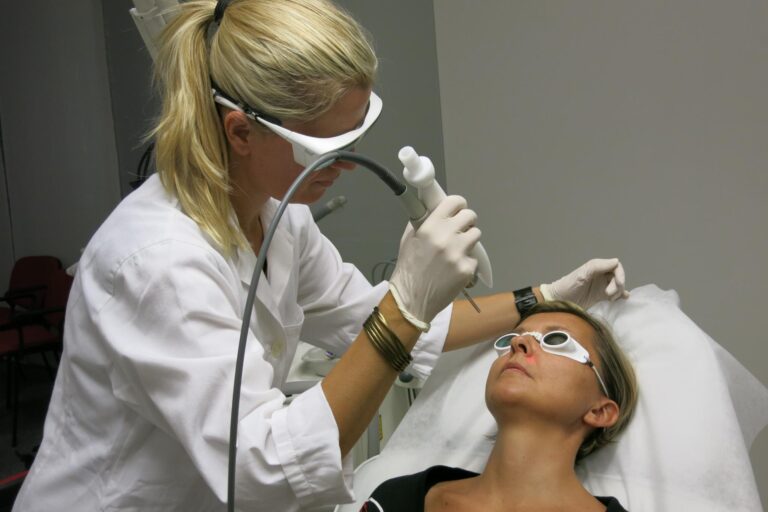
Fotona 4D stimulates collagen production across four sequential laser modes with no downtime, and works well on diffuse fine lines and skin texture. Non-ablative fractional lasers cause a few days of redness and improve skin quality over a series of sessions. Ablative laser resurfacing removes the top layer of skin and prompts a stronger remodelling response — recovery is 10 to 14 days but the result is more pronounced.
Anti-wrinkle injections for dynamic lines
The right time to consider anti-wrinkle injections is when a line is starting to remain visible at rest after the muscle relaxes. Treating a dynamic line before it sets prevents it from becoming a deep static wrinkle later. A small, conservative dose used preventatively is a different strategy from chasing established lines with larger volumes.
RELATED: Anti-Wrinkle Injections FAQs | Injectables Aftercare
Dermal fillers for deeper static wrinkles and volume loss
Dermal fillers address what anti-wrinkle injections cannot: deep set wrinkles, lost volume in the cheeks and temples, and the structural changes that come from the underlying fat pads thinning with age. Fillers are appropriate for marionette lines, nasolabial folds, tear troughs, and cheek replenishment.
Common misconceptions
“Will moisturiser get rid of my wrinkles?”
Moisturiser temporarily plumps the surface of the skin and makes fine lines look less prominent, but it does not affect the underlying collagen structure. The improvement disappears within hours of stopping.
“If I start anti-wrinkle injections, won’t my skin become dependent on them?”
No. Treated muscles return to their original strength when treatment stops. What patients sometimes interpret as “dependency” is that having seen the smoother result, they prefer it.
“Are wrinkles caused by drinking water?”
Hydration affects how lines look — well-hydrated skin reflects light more evenly and appears smoother. But drinking water does not reverse collagen loss or remove established wrinkles. Skincare and clinical treatment do the structural work.
The practical takeaway
The earlier the intervention, the more conservative it can be. Prevention with daily SPF and basic actives in your twenties and early thirties delays the need for energy-based or injectable treatment. Once dynamic lines start setting, small doses of anti-wrinkle injections prevent them deepening. By the time wrinkles are static and deep, the conversation shifts to filler, lasers, or — for significant skin laxity — surgical options like facelift or brow lift.
A consultation with one of our specialist plastic surgeons, including Dr Spyridon Vlachos, lets us assess which stage your skin is at and recommend the lightest effective intervention rather than the most aggressive.
Centre for Surgery · CQC-regulated · GMC specialist-registered surgeons · 95–97 Baker Street, Marylebone, London W1U 6RN · 0207 993 4849 · Book a consultation · Finance from 0% APR