Hyperpigmentation and melasma are often confused, but they’re not the same condition. Hyperpigmentation is the umbrella term for any darkening of the skin caused by excess melanin production or uneven distribution. Melasma is a specific type of hyperpigmentation with distinct triggers, distinct depth of pigment, and a distinct treatment ladder. The most common clinical mistake — both at home and at less experienced clinics — is treating melasma as if it were a sunspot, which usually makes it worse.
This guide explains what melasma is, what drives it, how it differs from other forms of hyperpigmentation, and the treatments we use at Centre for Surgery — including the dedicated melasma treatment protocol at our CQC-regulated Baker Street private hospital.
What hyperpigmentation actually is
Hyperpigmentation is a broad term for any condition in which patches of skin appear darker than the surrounding area. It can be triggered by a wide range of factors — cumulative sun exposure, post-inflammatory response from acne or eczema, hormonal influences, certain medications, or skin injury. The visible manifestations vary just as widely:
- Small speckles resembling freckles
- Larger flat dark spots known as sun spots or age spots
- Diffuse, larger patches such as those seen in melasma
- Brown marks left in areas of previous acne or other inflammation
- Generalised darkening following certain medications
The right treatment depends on identifying which type you have. For the full breakdown of hyperpigmentation types and the distinct treatments each requires, see our companion guide on what causes hyperpigmentation.
What melasma is
Melasma is a specific form of hyperpigmentation that typically presents as diffuse, blotchy, darkened patches on the face. The classic distribution is across the forehead, cheeks, upper lip, chin and nasal bridge — usually symmetrical, with both sides of the face affected in mirror-image patterns.
What makes melasma clinically distinct from other forms of hyperpigmentation is the depth of pigment. Melasma can involve both the superficial epidermal layer and deeper dermal layers of the skin. Many cases are mixed epidermal-dermal, with pigment sitting at multiple depths simultaneously. Dermal pigment is significantly harder to clear than epidermal pigment, which is part of why melasma is so resistant to treatment.
Melasma most commonly affects women between the ages of 20 and 40, particularly those with darker skin types (Fitzpatrick types III to VI). Only around 10% of melasma cases occur in men. The condition is significantly more prevalent in those of Asian, Middle Eastern, African, Hispanic and Mediterranean origin — populations with naturally higher baseline melanin activity that respond more strongly to hormonal and UV stimulation.
What causes melasma
The exact cellular mechanism is not fully understood, but several well-recognised factors are known to drive the condition:
UV and visible light exposure
Ultraviolet radiation is the primary external trigger for melasma in most patients. UV light generates oxidative damage and stimulates melanocytes to produce excess melanin. What’s less widely appreciated is that visible light — including blue light from screens and indoor lighting — also stimulates melasma in susceptible skin. This is one reason melasma can persist or worsen in people who feel they spend most of their time indoors.
People with melasma typically notice their pigmentation worsens during summer months and improves slightly in winter. Sun exposure that’s barely enough to tan most people can trigger meaningful melasma flares in susceptible skin.
Hormonal influences
Hormonal changes play a central role. There is strong evidence linking melasma to:
- Pregnancy — where it’s sometimes called chloasma or the “pregnancy mask,” typically appearing in the second or third trimester
- Combined oral contraceptive pill — particularly preparations with higher oestrogen content
- Hormone replacement therapy — particularly oestrogen-only or combined formulations
- Thyroid disorders — both hyper- and hypothyroidism have been associated with increased melasma risk
- Other endocrine influences — PCOS, hormonal IUDs, fertility treatments
The hormonal mechanism appears to involve oestrogen and progesterone sensitising melanocytes to UV stimulation. The combination of hormonal influence and UV exposure produces much more pigmentation than either alone.
Genetic predisposition
While melasma isn’t strictly hereditary in a single-gene sense, there’s a clear genetic predisposition. First-degree relatives of melasma sufferers have a much higher risk of developing the condition themselves. The genetic component appears to involve melanocyte sensitivity to triggers — patients with this genetic background tend to develop melasma in response to relatively modest hormonal or UV inputs that wouldn’t trigger it in others.
Other contributors
- Certain medications — some antibiotics, anticonvulsants and hormone-altering drugs can trigger melasma in susceptible patients
- Cosmetic products — fragrance-containing products and some skincare ingredients can sensitise the skin, increasing photodamage risk
- Heat exposure — chronic heat (saunas, hot showers, cooking) can drive melasma flares independent of UV
- Chronic stress — through cortisol and other hormonal pathways
- Prolonged exposure to artificial light — particularly blue light from screens for some susceptible patients
How melasma differs from other forms of hyperpigmentation
Sun spots (solar lentigines)
Sun spots are flat, well-defined brown areas that develop from cumulative UV exposure over years. They’re most common in people over 40, typically appearing on the face and backs of the hands. The pigment is purely epidermal and treatments that fade sunspots in one or two sessions (Q-switched laser, ablative resurfacing) can drive melasma into worse flares.
Post-inflammatory hyperpigmentation (PIH)
PIH occurs after skin trauma or inflammation — most commonly acne, but also injuries, burns or surgical scars. PIH appears as brown or darkened patches in areas where the skin has previously been inflamed. It’s particularly common in darker skin types and can be slow to resolve without treatment.
The key differences from melasma: PIH follows a previous inflammatory pattern (round/oval if from acne lesions, linear if from scratches), whereas melasma is symmetrical and diffuse. PIH usually resolves over time once the underlying inflammation is controlled; melasma is chronic.
Freckles (ephelides)
Freckles develop in childhood, are smaller, fade in winter, and are most common in fair-skinned patients with red or blonde hair. Melasma develops in adulthood, doesn’t fade significantly with season, and is more common in darker skin tones.
For the full taxonomy and treatment matrix across all hyperpigmentation types, see what causes hyperpigmentation.
Treatments for melasma at Centre for Surgery
Because melasma sits at multiple depths and is hormonally driven, single-modality treatment is rarely sufficient. Our approach combines several modalities tailored to your skin type, severity and active triggers.
Prescription topical regimens
Topical therapy is the foundation of melasma treatment. The most evidence-based options:
- Triple combination therapy — hydroquinone (4%), tretinoin and a topical corticosteroid, often used in cycles to minimise side effects. This combination (“modified Kligman formula”) remains the gold-standard topical regimen for moderate-to-severe melasma.
- Azelaic acid — 15–20% formulations, well tolerated and effective particularly when hydroquinone isn’t appropriate
- Topical tranexamic acid — newer option showing good results, particularly in dermal-component melasma
- Cysteamine — newer non-hydroquinone option for patients who can’t tolerate hydroquinone
- Vitamin C and niacinamide — adjunctive antioxidants supporting other actives
The Obagi Nu-Derm System
For comprehensive prescription-grade topical management, the Obagi Nu-Derm system is designed to treat skin discolouration at the cellular level. It works by increasing cell turnover and reducing melanin overproduction, making it effective for mild to moderate melasma. Results develop over several months of consistent use, and it’s particularly useful as a maintenance regimen alongside in-clinic treatments.
Chemical peels
We offer specialist medical-grade chemical peels that can be customised to suit your skin type and address pigmentation concerns including melasma. Light peels remove the outer layers of skin containing excess pigment, brightening the complexion. Medium-depth peels reach deeper pigment but carry more downtime and need careful selection in darker skin types where the risk of PIH from the peel itself must be carefully managed.
Dermamelan peel
The Dermamelan peel is a specialist intervention developed specifically for melasma and stubborn hyperpigmentation. It uses a combination of skin-lightening agents to inhibit tyrosinase (the enzyme controlling melanin production) and reduce existing pigment. For details on what’s involved and what to expect, see our guide on the Dermamelan peel.
Fotona laser treatment
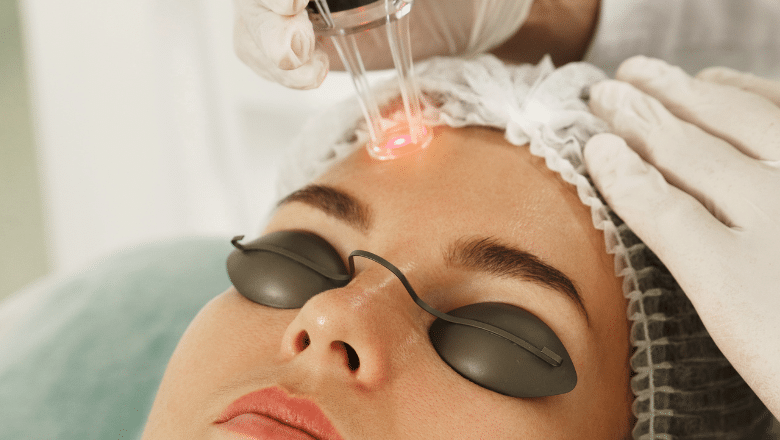
Fotona laser resurfacing has proven effective in treating melasma when used at the right settings for the right patients. Our practitioners use non-ablative low-fluence settings with the Fotona Er:YAG system, which targets pigmented skin cells with precision while minimising heat delivery to surrounding tissue. This approach is particularly appropriate for patients with darker skin types, where ablative CO₂ lasers carry a significant risk of inducing post-inflammatory hyperpigmentation that worsens the original problem.
For melasma specifically, we avoid heat-based protocols and high-fluence laser settings. The general principle: less is more, more often. Multiple gentle sessions usually outperform fewer aggressive ones.
Oral tranexamic acid
For moderate-to-severe melasma not responding adequately to topical and laser therapy, oral tranexamic acid (250 mg twice daily) has good evidence of efficacy. It works by modulating the plasminogen pathway involved in melanocyte stimulation. Treatment runs for several months under specialist supervision; contraindications include thromboembolic disease history and certain other medical conditions.
Preventing melasma and reducing flares
Prevention is essential — both for those who haven’t yet developed melasma but have risk factors, and as the foundation of long-term management for those who already have it. The non-negotiable measures:
Comprehensive sun protection
This is the single most important step. Use a broad-spectrum sunscreen with an SPF of at least 30 (we recommend 50) every day, including overcast days, and reapply every two hours when outdoors. For melasma specifically, choose products containing iron oxide, which blocks visible light as well as UV — most standard mineral sunscreens don’t. Wear wide-brimmed hats, use UV-protective clothing for prolonged outdoor activity, and avoid direct sunlight between 10am and 4pm.
Avoid hormonal triggers where possible
If you’re prone to melasma and using hormonal contraception, it’s worth discussing alternatives with your GP or dermatologist. Some patients find that switching contraceptive methods (or moving to a non-hormonal IUD) significantly reduces their melasma. Similarly, if HRT is contributing, dose adjustment or formulation change can help.
Gentle skincare
Products that sting, burn, or cause irritation can worsen melasma. Avoid harsh exfoliants, alcohol-heavy toners, and aggressive actives, and stick to a gentle, non-irritating routine. Any product causing skin reactions should be discontinued immediately — irritation drives the inflammation that can worsen pigmentation.
Manage heat exposure
Saunas, hot showers, prolonged cooking heat exposure and similar can drive melasma flares independent of UV. Cooler showers, breaks from heat sources, and awareness of this trigger help.
Healthy lifestyle
A diet rich in antioxidants supports skin resilience against oxidative damage. Regular exercise improves circulation and contributes to overall skin health. Adequate sleep and stress management both reduce the cortisol-driven inflammatory load that can worsen melasma.
Avoid waxing in affected areas
Waxing causes skin inflammation that can trigger or worsen melasma and PIH in susceptible individuals. Alternative hair removal methods should be considered for facial hair in melasma-prone patients.
Seek specialist advice early
If you’re prone to hyperpigmentation or melasma, early consultation allows a prevention and treatment plan to be put in place before the condition becomes more established. Once dermal melasma develops, treatment is significantly harder than at the epidermal stage.
What we don’t recommend
- IPL and aggressive laser for melasma — heat-based treatments often drive paradoxical worsening. Reserve these for sunspots and unrelated pigmentation.
- Q-switched laser at standard sunspot settings — too aggressive for melasma. Low-fluence protocols only, and never as a first-line approach.
- Unregulated skin-lightening creams — particularly products bought online from outside UK regulation. Many contain unlabelled high-percentage hydroquinone, mercury, or steroids that cause significant skin damage with prolonged use.
- Aggressive at-home protocols layering multiple actives — usually drives barrier damage and inflammation, which makes pigmentation worse.
- Treatment without sun protection commitment — pointless. Any treatment result will regenerate with continued UV and visible-light exposure.
- Microdermabrasion as a melasma treatment — surface mechanical abrasion doesn’t reach dermal pigment and can drive inflammation. Not part of our offering.
- Promises of permanent cure — melasma is chronic. Anyone promising permanent elimination is overpromising.
Frequently asked questions
Will my melasma go away on its own after pregnancy?
Postpartum melasma often improves over several months as hormone levels normalise. However, complete resolution is uncommon, and many women find their melasma persists or recurs with subsequent pregnancies, hormonal contraception or other triggers. Postpartum treatment is generally safer than during pregnancy (when most laser and many topicals are avoided).
How long does melasma treatment take to show results?
Topical regimens: 8 to 12 weeks for visible benefit; full effect over 6 months. Chemical peels and laser: visible improvement after a few sessions, with continued progress over months. The total treatment programme often runs 6 to 12 months for established melasma.
Will my melasma come back?
Often, yes — without ongoing trigger control and maintenance, melasma reliably recurs. With proper sun protection (including iron-oxide-containing SPF), trigger avoidance and periodic maintenance treatments, recurrence can be substantially reduced. The result is management rather than cure.
Is melasma laser treatment painful?
No — at the low-fluence settings appropriate for melasma, the sensation is mild warmth rather than pain. Topical anaesthetic isn’t typically needed.
Can I treat melasma while pregnant?
Treatment options are restricted during pregnancy. Most laser treatments and many topicals (particularly hydroquinone and retinoids) are avoided. Mineral SPF, gentle skincare, avoiding triggers and using azelaic acid are acceptable pregnancy options. Active treatment can resume after pregnancy and breastfeeding.
What’s the difference between Dermamelan and standard topical treatments?
Standard topical treatments work gradually over months. Dermamelan is an intensive in-clinic peel that delivers a concentrated dose of skin-lightening agents in one session, followed by an at-home maintenance regimen. It’s more powerful than standard topicals but also more involved. See our Dermamelan peel guide for full details.
How much does melasma treatment cost?
Pricing varies significantly by treatment modality and length of programme. Topical regimens are the most affordable; Dermamelan and laser courses involve higher upfront costs. A consultation provides an exact quote for your situation. Finance from 0% APR is available through Chrysalis Finance.
Why choose Centre for Surgery
Our melasma programmes combine prescription topical regimens (including the Obagi Nu-Derm system), specialist Dermamelan peels, carefully calibrated low-fluence Fotona laser treatment, and oral tranexamic acid when appropriate — under one clinical team at our CQC-regulated Baker Street private hospital. Every plan is built around the recognition that melasma is chronic and needs sustained management, not one-off intervention.
Centre for Surgery · CQC-regulated · GMC specialist-registered surgeons · 95–97 Baker Street, Marylebone, London W1U 6RN · 0207 993 4849 · Book a consultation · Finance from 0% APR