Excessive underarm sweating — clinically termed axillary hyperhidrosis — affects a substantial minority of the population and can be a source of significant daily discomfort and social anxiety. Standard management options range from prescription antiperspirants to anti-sweat injections to surgical sweat gland removal. Morpheus8 offers a middle-ground option that’s more permanent than injections but less invasive than surgery, delivering meaningful long-term sweat reduction through fractional radiofrequency microneedling applied directly to the underarm sweat glands.
This guide covers how Morpheus8 treats hyperhidrosis, who’s a good candidate, what results to expect, how it compares to alternatives, and where it fits in the broader hyperhidrosis treatment ladder at Centre for Surgery’s CQC-regulated Baker Street private hospital.
What is axillary hyperhidrosis?
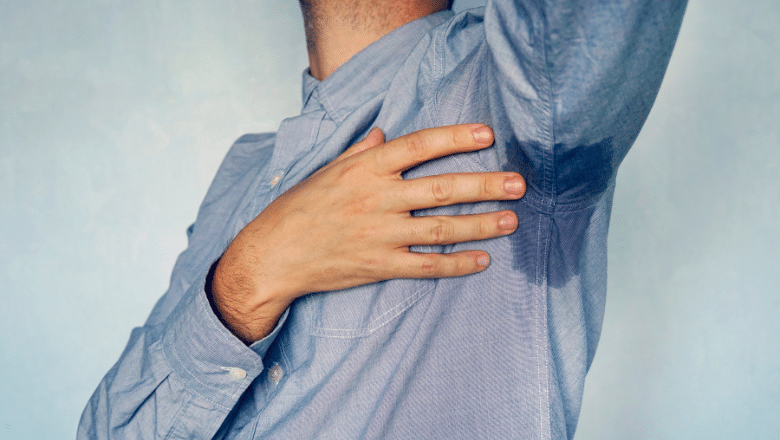
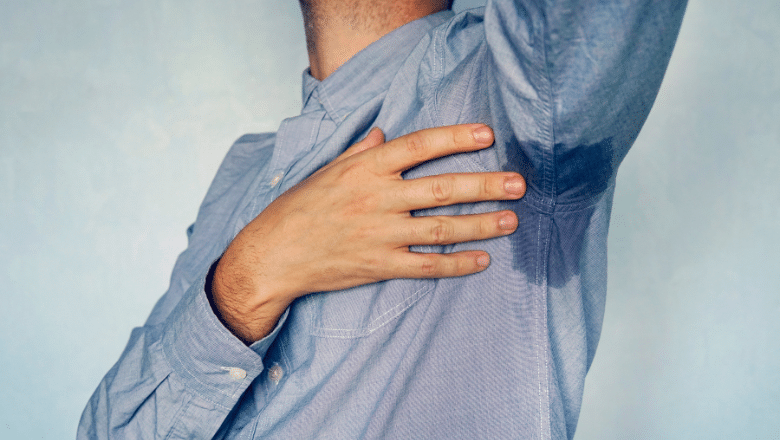
Axillary hyperhidrosis is excessive sweating in the underarm area beyond what’s needed for normal temperature regulation. The condition affects approximately 2–3% of the population and typically begins in adolescence or early adulthood. It’s a recognised medical condition, not just a nuisance — patients often:
- Change clothes multiple times a day
- Avoid certain fabrics or colours (light blues, greys, anything that shows sweat patches visibly)
- Limit social and professional situations (public speaking, intimate occasions, dating)
- Use multiple antiperspirants daily without adequate control
- Experience significant psychological impact — anxiety, embarrassment, reduced self-confidence
- Develop skin problems (chronic moisture leading to fungal or bacterial issues)
The condition runs in families — about two-thirds of patients have a family history. It can be primary (no underlying cause) or secondary (related to thyroid disorders, certain medications, or other medical conditions). Generalised hyperhidrosis affecting the whole body needs broader medical assessment to rule out systemic causes; localised axillary hyperhidrosis is typically primary.
How Morpheus8 treats hyperhidrosis
Sweat glands sit in the dermis and upper subcutaneous layer of the skin — relatively superficial in anatomical terms but beyond the reach of topical treatments. Morpheus8’s fractional radiofrequency microneedling delivers controlled thermal energy directly at the depth where these glands sit (typically 2–4mm beneath the skin surface).
The mechanism is straightforward thermal ablation:
- Microneedles penetrate the skin to the depth of the sweat glands
- RF energy delivers heat at the needle tips, raising local tissue temperature beyond what sweat glands can survive
- Targeted glands are thermally damaged, reducing their functional capacity
- The body clears the damaged glands over the following weeks
- Sweat production drops proportionally to the number of glands affected
Unlike anti-sweat injections (which temporarily block the chemical signal that activates sweat glands), Morpheus8 produces structural reduction in gland function. This is why the results are typically much longer-lasting than injection-based treatment.
The insulated needle technology delivers RF heat at depth without thermal damage to the surface skin, which keeps the recovery short and side effects minimal. The treatment is safe across all Fitzpatrick skin types because the epidermis isn’t directly heated.
What to expect during treatment
Preparation
You arrive at our Baker Street clinic with clean, shaved underarms (shaving 24+ hours before, not immediately before). A strong topical anaesthetic cream is applied to both underarms and left in place for 45–60 minutes. For deeper protocols or pain-sensitive patients, local anaesthetic injection can be added.
The treatment
Once numbing is complete, the clinician applies the Morpheus8 handpiece across the underarm area in overlapping passes, treating the entire sweat-bearing zone. Treatment depth is typically 2–4mm — deep enough to reach the sweat glands but not into deeper tissue. The active treatment takes 20–30 minutes for both underarms combined.
The sensation is similar to facial Morpheus8 — warm prickling with the topical numbing in place. The underarm area can be more sensitive than facial skin, which is why we offer enhanced anaesthesia when needed.
Immediately after
Mild redness and warmth in the treated areas, with minor pinpoint bleeding spots. The clinician applies a soothing balm and provides aftercare instructions. You leave the clinic immediately and can drive home.
How many sessions do I need?
Most patients benefit from 2–3 sessions, 4–6 weeks apart. The exact number depends on the severity of your hyperhidrosis:
- Mild-to-moderate hyperhidrosis — 2 sessions typically sufficient
- Moderate-to-severe hyperhidrosis — 3 sessions for optimal control
- Severe cases or patients with high BMI — 3–4 sessions may be needed; some patients benefit from additional top-up sessions over time
Each session reduces the active sweat gland population further. Like facial Morpheus8, the response is cumulative — each session builds on the previous one.
What results to expect
The pattern of sweat reduction develops over weeks following treatment:
- Week 1 — initial inflammation in treated area; sweat reduction not yet apparent
- Weeks 2–4 — early sweat reduction beginning as treated glands are cleared by the body
- Weeks 6–8 — meaningful sweat reduction visible after the first session; planning second session
- After 2 sessions — substantial reduction in sweat output for most patients
- After 3 sessions — peak result; typically 60–80% reduction in sweat output
- Long-term — results sustained for several years; occasional top-up sessions for patients with regrowth
Most patients describe the result as “still sweating like a normal person rather than not at all” — which is the appropriate clinical goal. Complete elimination of sweating in the underarms isn’t desirable (sweating helps with temperature regulation) and isn’t what Morpheus8 aims to achieve. The treatment normalises rather than eliminates.
How does Morpheus8 compare to other hyperhidrosis treatments?
Vs anti-sweat injections (botulinum toxin)
Anti-sweat injections deliver botulinum toxin to the sweat glands, temporarily blocking the chemical signal that triggers sweat production. The treatment is effective but temporary — typically lasting 4–6 months before needing repeat injection. Many patients find the recurring cost and need for re-treatment a significant ongoing commitment.
Morpheus8 typically delivers a comparable level of sweat reduction but with results lasting years rather than months. Higher upfront cost, more recovery, but better long-term value for patients who want a more permanent solution.
Vs laser hyperhidrosis treatment
Laser hyperhidrosis treatment is a more invasive surgical procedure using a laser fibre inserted through small incisions in the underarm. It permanently destroys sweat glands — the most definitive treatment available. Results are typically more dramatic and longer-lasting than Morpheus8.
The trade-off: laser treatment is a surgical procedure under local anaesthesia with longer recovery (1–2 weeks of restricted arm movement, mild swelling, small surgical scars). Morpheus8 is less invasive but somewhat less definitive.
Vs prescription antiperspirants
Prescription-strength antiperspirants (aluminium chloride hexahydrate) are first-line treatment for mild hyperhidrosis. They work for many patients but are inadequate for moderate-to-severe cases. Morpheus8 is appropriate when prescription antiperspirants have failed or are inadequate.
Vs oral medications
Anticholinergic medications (glycopyrrolate, oxybutynin) reduce sweating systemically but have side effects (dry mouth, blurred vision, constipation, urinary retention). Useful for generalised hyperhidrosis but generally not first-choice for localised axillary sweating.
Vs surgery (endoscopic thoracic sympathectomy)
Surgical sympathectomy permanently divides the nerves controlling sweating to the underarms. Most effective option but invasive — requires general anaesthesia, has potential complications (compensatory sweating elsewhere on the body in 20–30% of patients), and is reserved for severe cases that haven’t responded to other treatments. Morpheus8 sits at a much earlier point in the treatment ladder.
The hyperhidrosis treatment ladder
At Centre for Surgery, we offer three main options for axillary hyperhidrosis, suited to different severity levels and patient preferences:
| Option | Type | Duration | Best for |
|---|---|---|---|
| Anti-sweat injections | Non-surgical, temporary | 4–6 months | Mild–moderate, those wanting to try treatment first |
| Morpheus8 | Minimally invasive, semi-permanent | 2–3+ years | Moderate cases, preference for longer-lasting result without surgery |
| Laser hyperhidrosis treatment | Surgical, permanent | Permanent | Severe cases, definitive solution desired |
The right choice depends on severity, lifestyle factors, financial commitment preference, and tolerance for procedure invasiveness. Many patients start with anti-sweat injections to confirm whether reducing sweating produces the lifestyle improvement they’re hoping for, then progress to Morpheus8 or laser treatment for permanent results.
What does Morpheus8 hyperhidrosis treatment cost?
Underarm Morpheus8 treatment is priced as a single-area protocol. A typical course of 2–3 sessions is bundled at consultation. Finance from 0% APR through Chrysalis Finance is available to spread the cost.
For comparison:
- Anti-sweat injections — repeat costs every 4–6 months; total ongoing expense over years is substantial
- Morpheus8 — higher upfront cost but typically no further treatment needed for several years
- Laser hyperhidrosis treatment — single-time cost (priced higher than Morpheus8) for permanent result
For full pricing context, see our Morpheus8 cost guide.
Recovery from underarm Morpheus8
Recovery from underarm Morpheus8 is generally similar to facial Morpheus8 with some specifics:
- Day of treatment — mild redness, warmth, pinpoint bleeding spots; mild tenderness when raising arms
- Days 1–3 — pinkness fading; mild tenderness continuing; avoid antiperspirant during this window
- Days 4–7 — surface healing largely complete; can resume normal underarm care
- Week 2+ — return to normal activity including exercise
Specific aftercare points:
- Avoid shaving the underarms for 7 days post-treatment
- Skip antiperspirants for 5 days (use plain moisturiser if needed)
- Wear loose, breathable clothing in the first week
- Avoid heat exposure (saunas, hot baths) for 5 days
- Limit intense exercise for 3–5 days to reduce friction and heat
Who’s a good candidate?
You’re likely to benefit from Morpheus8 for hyperhidrosis if:
- You have moderate-to-severe underarm sweating affecting daily life
- Prescription antiperspirants haven’t given adequate control
- You want longer-lasting results than injection-based treatment
- You prefer minimally invasive over surgical options
- You’re prepared for 2–3 treatment sessions
- You’re in general good health, not pregnant or breastfeeding
- You don’t have active skin infection in the treatment area
You may need other options if:
- Your hyperhidrosis is generalised rather than localised (broader medical assessment needed)
- You have very severe symptoms with significant impact (laser treatment or surgery may be more appropriate)
- You have an underlying medical condition causing sweating (thyroid, infection) — treat that first
- You’re not prepared for any visible recovery time
What we don’t recommend
- Single sessions as a definitive solution — meaningful results need 2–3 sessions minimum
- Morpheus8 for generalised hyperhidrosis — only targeted axillary treatment. Generalised sweating needs systemic treatment.
- Skipping antiperspirant trial first — for mild hyperhidrosis, prescription antiperspirants are first-line and substantially cheaper
- Using antiperspirant in the first 5 days post-treatment — irritates healing skin
- Shaving immediately post-treatment — wait 7 days for surface healing to complete
- Treatment without identifying underlying causes — some hyperhidrosis is secondary to medical conditions. Rule out thyroid issues, infections, or medication side effects first.
Frequently asked questions
How long do Morpheus8 hyperhidrosis results last?
Typically 2–3 years or longer for most patients. Some patients see permanent improvement; others benefit from occasional top-up sessions. Significantly longer than anti-sweat injections.
Will I sweat from other body areas more if my underarms are treated?
Mild compensatory sweating can occur in some patients but is much less common with Morpheus8 than with surgical sympathectomy. The body has many sweat glands across the body and reducing one area doesn’t dramatically increase others.
Is the treatment painful?
Comfortable with topical anaesthesia and optional local injection. Underarm skin can be slightly more sensitive than face, which is why enhanced numbing is often offered.
Does Morpheus8 stop sweating completely?
No — the goal is normalising sweat to typical levels rather than eliminating it entirely. Most patients see 60–80% reduction, which brings sweat levels into the normal range.
Can men have Morpheus8 for sweating?
Yes — and many men find this treatment particularly valuable given that hyperhidrosis can affect professional and personal situations significantly.
What about sweating on other body areas (palms, feet, scalp)?
Palmar and plantar hyperhidrosis (palms, feet) is typically treated with iontophoresis, injections or surgery rather than Morpheus8. Scalp hyperhidrosis is harder to address and may need oral medication. We discuss appropriate options at consultation.
Can I have Morpheus8 if I’m on hormone therapy?
Yes, generally. Hormone-related sweating may benefit from the treatment but the underlying hormonal cause should also be addressed where appropriate.
Is the treatment FDA-approved for hyperhidrosis?
Morpheus8 is FDA-approved for soft tissue coagulation and remodelling, which encompasses sweat gland treatment. The application for hyperhidrosis is well-established in clinical practice.
Why choose Centre for Surgery
We offer the full hyperhidrosis treatment ladder under one clinical team — anti-sweat injections, Morpheus8 underarm treatment, and laser hyperhidrosis treatment — meaning your consultation establishes which approach suits your specific situation rather than recommending whatever single treatment a single-modality clinic offers. Morpheus8 is delivered on genuine InMode equipment by GMC-registered medical practitioners at our CQC-regulated Baker Street private hospital. Course pricing is all-inclusive with follow-up reviews included.
For more, see our Morpheus8 service page, anti-sweat injections, and laser hyperhidrosis treatment service.
Centre for Surgery · CQC-regulated · GMC specialist-registered surgeons · 95–97 Baker Street, Marylebone, London W1U 6RN · 0207 993 4849 · Book a consultation · Finance from 0% APR