Natural vs Augmented Breasts — Understanding the Differences
Breast augmentation is one of the most commonly performed cosmetic procedures in the UK. Patients choose surgery for a range of reasons — restoring volume after pregnancy or weight loss, correcting asymmetry, reconstructing after mastectomy, or simply to alter their proportions. Whatever the reason, it helps to understand what genuinely distinguishes natural breast tissue from a surgically augmented breast.
This article looks at how breast augmentation works, the natural variation in breast shape and size, and the visual and tactile differences between natural and augmented breasts. The goal is a clear, practical overview rather than a marketing piece.
RELATED: Natural vs Augmented Breasts — What Sets Them Apart?
How Breast Augmentation Works

Breast augmentation increases breast size, alters shape, or restores fullness. The procedure can use either implants or autologous fat transfer.
There are two main implant types. Silicone implants are filled with cohesive silicone gel and are favoured by most patients and surgeons because they more closely replicate the feel of breast tissue. Saline implants are filled with sterile salt water; if a saline implant ruptures, the body absorbs the saline harmlessly, though they tend to feel firmer than silicone.
Fat transfer to the breasts is the alternative. Fat is harvested from another area of the body via liposuction, processed, and reinjected into the breast. Results feel very close to natural tissue because the material is the patient’s own fat, but the volume increase per procedure is more modest, and some of the transferred fat is reabsorbed by the body. Patients seeking a significant size increase may need more than one round of fat transfer.
RELATED: Breast Implants vs Fat Transfer
Like any operation, breast augmentation carries risks — infection, bleeding, capsular contracture, and changes in breast or nipple sensation. These risks are minimised with appropriate patient selection, an experienced surgical team, and structured aftercare.
What Distinguishes Natural Breast Anatomy
Natural breasts vary considerably from person to person, but a few characteristics are consistent.
Most natural breasts are not perfectly symmetrical. One is usually slightly larger than the other, and the nipple position may differ between sides. This is normal anatomy rather than a defect.
The nipple-areolar complex itself varies widely in size, shape, and pigmentation. There is no single “normal” appearance.
Natural breasts move fluidly with body movement and respond to gravity and posture. The tissue itself is soft, made up of glandular tissue, fat, and supportive ligaments.
As with all body tissue, breasts age — volume changes, skin elasticity decreases, and the overall shape evolves over time. Pregnancy, breastfeeding, and weight changes accelerate these changes.
RELATED: What Are the Most Natural-Looking Breast Implants?
Visual Differences Between Natural and Augmented Breasts
Modern implants and surgical techniques have narrowed the visual gap between augmented and natural breasts considerably. With careful patient selection, appropriate implant sizing, and skilled surgical technique, results can be very subtle. That said, several characteristics differ.
Position and Shape
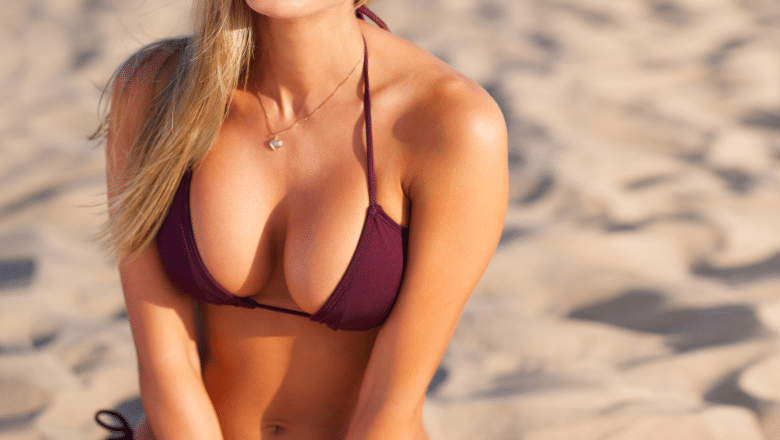
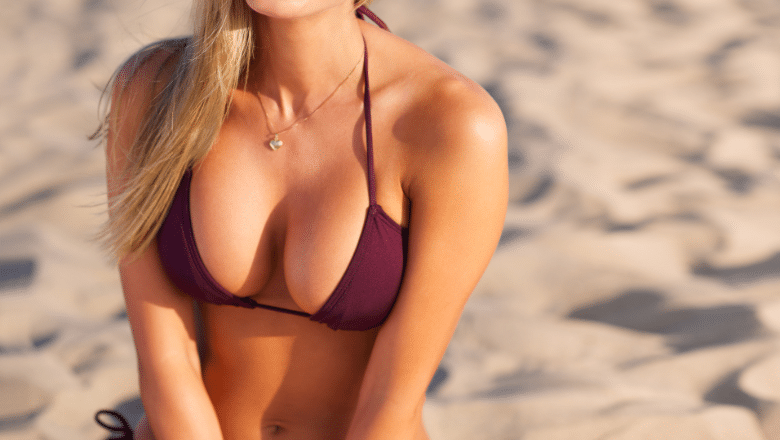
Augmented breasts often sit higher on the chest with more upper-pole fullness. Natural breasts tend to have a teardrop profile, with the majority of volume in the lower half. Implant choice and surgical placement directly influence this — round implants produce more upper-pole fullness, while teardrop (anatomical) implants more closely mimic the natural slope.
Symmetry
Natural breasts are rarely fully symmetrical. Augmented breasts can be made more symmetrical, although perfect symmetry isn’t a realistic surgical goal — the underlying chest wall, rib cage, and existing tissue all influence the final outcome.
Cleavage
Augmented breasts often produce more defined cleavage, particularly with submuscular implant placement and larger implant volumes. Natural cleavage varies with weight, hormonal status, and posture.
RELATED: Can Breast Augmentation Enhance My Cleavage?
Movement
Natural breasts move with the body in a particular way determined by their fat and glandular composition. Implants — especially firmer ones or those placed under the muscle — move differently. The difference is often visible during exercise or when lying down.
Implant Edge Visibility
In thinner patients or with larger implants, the edge of the implant can occasionally be felt or, less often, seen through the skin. This is why surgeons assess soft tissue coverage carefully during planning.
Tactile Differences
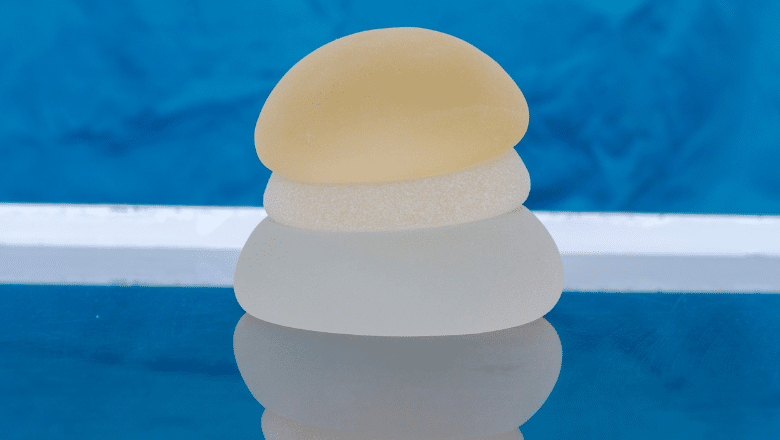
Natural breast tissue feels soft and fluid, with a mix of fat and glandular tissue that gives slight density variation across the breast. Modern cohesive silicone gel implants come closer to this feel than any earlier generation, but they remain slightly firmer than natural tissue. Saline implants feel firmer still, with a more uniform consistency.
Fat transfer breast augmentation produces a tactile result that is very close to natural tissue, since the material is the patient’s own fat. This is one of the main reasons fat transfer is increasingly popular.
RELATED: Silicone vs Saline Breast Implants
Surgical Options for Natural-Looking Results
Breast Augmentation
Breast augmentation with implants allows control over size, shape, profile, and placement. The most natural-looking results generally come from conservative implant sizing, teardrop or moderate-profile shapes, and careful attention to existing tissue and frame.
RELATED: Breast Augmentation FAQs
Fat Transfer to the Breasts
Fat transfer is the most natural option in terms of tactile result. It also has the secondary benefit of contouring the donor area through liposuction. The trade-off is a more modest volume increase per procedure.
Breast Lift (Mastopexy)
A breast lift repositions the breast tissue and nipple-areolar complex without changing volume. It can be combined with augmentation (augmentation-mastopexy) for patients who want both lift and additional volume, or with reduction for patients who want a lift with smaller breasts.
Breast Reduction
Breast reduction removes excess breast tissue and skin. It addresses both aesthetic concerns and physical symptoms — back pain, shoulder grooves from bra straps, and skin irritation under the breast.
Implants Used at Centre for Surgery
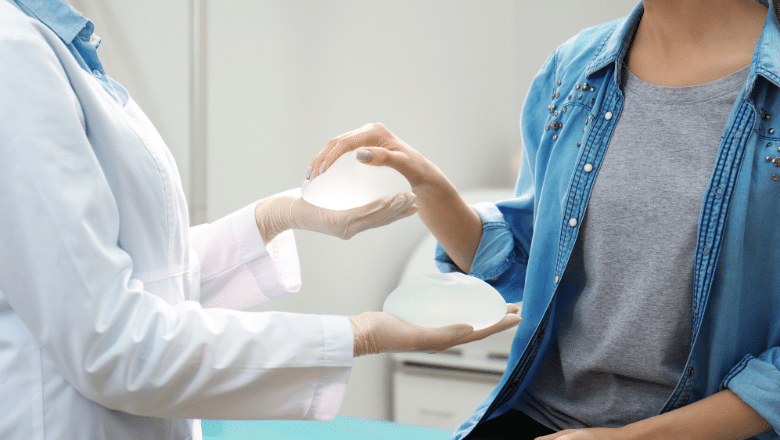
Centre for Surgery uses Mentor and Motiva implants. Both are FDA-approved, both have long safety records, and both come with comprehensive manufacturer warranties.
Mentor implants are widely used and have one of the longest clinical track records of any implant on the market. Motiva implants use a smoother NanoSurface texture that is associated with lower rates of capsular contracture in published studies, and each implant has an embedded RFID chip for traceability.
The choice between them is made during consultation based on patient anatomy, desired outcome, and surgeon recommendation.
RELATED: Mentor vs Motiva Breast Implants
Choosing the Right Implant for a Natural Result
Three decisions most influence whether a result looks natural: size, shape, and placement.
Size

Implant size should be appropriate to the patient’s frame, existing tissue, and skin envelope. Oversized implants relative to a patient’s frame are the single most common cause of an “obviously augmented” appearance. A skilled surgeon will guide patients toward sizing that complements their proportions rather than maximising volume.
RELATED: Choosing the Right Implant Size
Shape
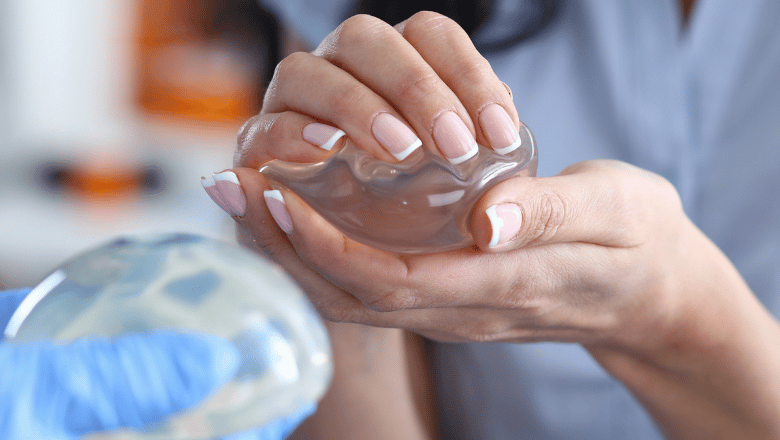
Round implants give more upper-pole fullness, which some patients want and others don’t. Teardrop (anatomical) implants mimic the natural slope of the breast, with more volume in the lower pole. Neither is “better” — the right choice depends on what the patient wants their result to look like.
RELATED: Round vs Teardrop Implants
Placement
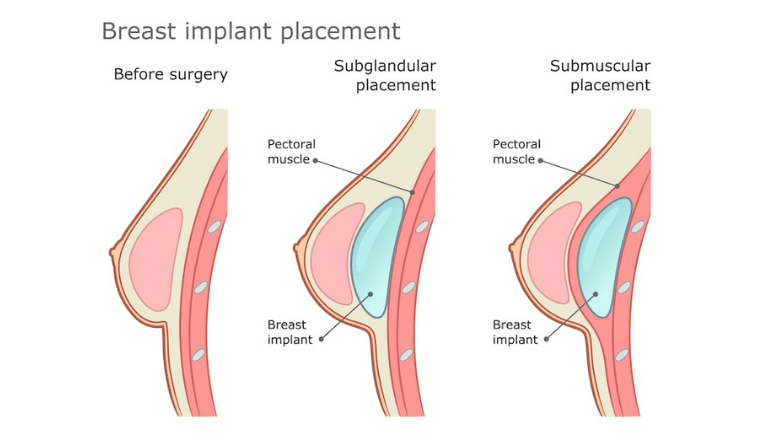
Implants can be placed above the pectoral muscle (subglandular), under the muscle (submuscular), or in a dual-plane position that combines both. Submuscular placement provides better implant coverage in patients with thinner soft tissue, which can produce a more natural result, but recovery is slightly longer.
RELATED: Best Breast Implant Placement
Common Misconceptions
A few persistent myths are worth addressing.
The first is that augmented breasts always look obviously augmented. With appropriate sizing and modern implants, results can be very subtle — often unnoticeable to anyone other than the patient.
The second is that breast augmentation is purely cosmetic. For many patients, the procedure addresses asymmetry, post-pregnancy volume loss, or reconstruction following mastectomy.
The third is that implants need replacing every 10 years as a matter of course. Modern implants don’t have a fixed expiry date. They should be monitored periodically, but routine replacement isn’t required unless there’s a specific clinical indication.
Frequently Asked Questions

How much does breast augmentation cost?
UK breast augmentation typically costs between £4,500 and £8,000. At Centre for Surgery, prices start from £5,200. Finance is available through Chrysalis Finance with 0% APR options.
RELATED: How Much Does Breast Augmentation Cost?
What are the main options for breast enhancement?
Implants (silicone or saline) and fat transfer. Implants offer a wider size range; fat transfer offers the most natural feel but a more modest volume increase per procedure.
Are there non-surgical options?
Treatments like dermal fillers, laser skin tightening, or Morpheus8 can improve skin quality or produce minor volume changes, but they cannot produce a comparable size increase to surgery and are not a substitute for augmentation.
Will the result look and feel natural?
The naturalness of the result depends on implant choice, surgical technique, and existing tissue. Patients with adequate native breast tissue and conservative implant sizing tend to achieve the most natural-looking outcomes.
RELATED: What Are the Most Natural-Looking Breast Implants?
What is the recovery time?
Most patients return to desk-based work within 7 to 14 days. Strenuous exercise should be avoided for 4 to 6 weeks. Final implant settling continues for around 3 months.
RELATED: Breastfeeding After Breast Augmentation
What scars should I expect?
Three incision approaches are commonly used: inframammary (under the breast), periareolar (around the areola), or transaxillary (in the armpit). The right choice depends on the implant type, size, and patient anatomy. With proper aftercare, scars typically fade significantly over 12 to 18 months.
What are the risks?
The main risks are infection, bleeding, capsular contracture, changes in breast or nipple sensation, and rarely the need for revision surgery. Most risks can be minimised with appropriate patient selection, surgical technique, and aftercare.
Do implants need replacing?
Modern implants are not designed to expire on a fixed timeline. Many last 15 to 20 years or longer without issue. Periodic monitoring is sensible, but routine replacement isn’t required without a clinical reason.
Is breast augmentation available on the NHS?
Cosmetic breast augmentation is not funded by the NHS. The NHS may fund breast surgery for reconstructive reasons — for example, after mastectomy for breast cancer, or for significant developmental asymmetry.
RELATED: Can You Get Breast Enlargement on the NHS?
Choosing a Surgeon
The surgeon’s experience matters more than almost any other variable in breast augmentation outcomes. When researching options, look for:
GMC specialist registration in plastic surgery (verifiable on the GMC website). A substantial volume of breast augmentation cases — not just general plastic surgery experience. A clear before-and-after portfolio showing consistent results in patients with similar anatomy to your own. CQC-regulated facilities for the procedure itself. Honest discussion during consultation about what surgery can and cannot deliver, and whether you are a suitable candidate.
A second consultation is always reasonable if you have any uncertainty after the first.
Centre for Surgery
Centre for Surgery is a CQC-regulated cosmetic surgery clinic at 95–97 Baker Street, London W1U 6RN. All breast augmentation procedures are performed by GMC specialist-registered consultant plastic surgeons in our purpose-built day surgery facility. Finance is available through Chrysalis Finance, with 0% APR options.
To arrange a consultation, call 0207 993 4849 or email contact@centreforsurgery.com.

[contact-form-7 id=”256″ title=”Treatments form”]