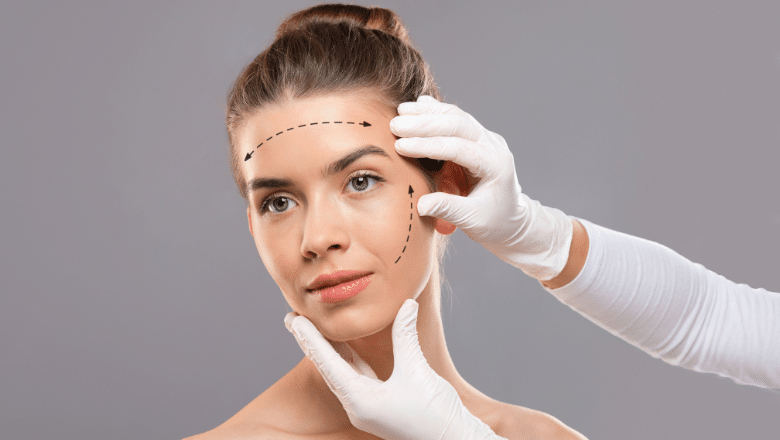
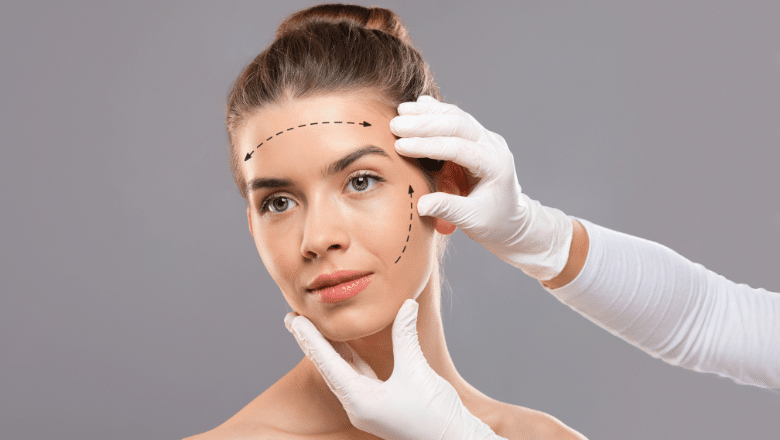
A “non-surgical facelift” isn’t a single procedure — it’s an approach that combines several different non-surgical treatments to deliver facial rejuvenation without surgery. The result is more subtle than a true surgical facelift, the duration shorter, and the candidacy different. Done well, it produces a refreshed and natural-looking improvement for patients who aren’t yet ready for surgery — or who don’t need it. Done badly, it accumulates filler and energy treatments year after year without ever delivering the result the patient is actually hoping for.
This is the comprehensive hub guide to non-surgical facelift options at Centre for Surgery: what each treatment does, how they combine, who they suit, who they don’t, what they cost, and the honest assessment of when surgery is the right answer instead.
What a “non-surgical facelift” actually is
The term covers any combination of non-surgical treatments designed to improve facial skin laxity, restore lost volume, smooth lines and wrinkles, and refresh facial contour. There’s no single procedure called a “non-surgical facelift” — the phrase describes a treatment philosophy, not a specific intervention.
The most common component treatments are:
Energy-based skin tightening — Fotona 4D, Morpheus8, and laser resurfacing. These work by stimulating new collagen and elastin production in the dermis, gradually tightening the skin and improving texture.
Volume restoration with dermal filler — restoring the volume that ageing has thinned in the cheeks, temples, and mid-face. Often delivered as the liquid facelift (8-point lift), which uses HA filler at eight key facial anchor points to lift descended tissue back toward its youthful position.
Muscle relaxation with anti-wrinkle injections — softening the dynamic lines of the upper face (forehead, glabella, crow’s feet) that contribute to a tired or aged appearance.
Bioremodelling with skin boosters — Profhilo and polynucleotides for overall skin quality.
The “non-surgical facelift” is the planned combination of these into a coherent treatment plan for a specific patient.
The component treatments in detail
Fotona 4D laser facelift
Fotona 4D uses two laser wavelengths in four sequential treatment modes, including an intra-oral pass that delivers heat to the deeper tissues of the lower face from inside the mouth. The combination tightens skin, stimulates collagen and elastin production, and addresses surface skin quality.
What to expect: sessions take 45 to 60 minutes. There’s a warm sensation during treatment but no significant pain. Mild redness for a few hours afterwards, occasionally lasting into the next day. No downtime.
Timeline: initial tightening within a week, with the meaningful change developing over weeks 4 to 12 as new collagen forms. A course of three to four sessions four weeks apart produces the most consistent result.
How long it lasts: 12 to 24 months from a completed course. Annual maintenance sessions extend the result.
Cost: from £600 per session.
Morpheus8 radiofrequency microneedling
Morpheus8 combines microneedling with fractional radiofrequency energy delivered into the deeper layers of the dermis. It produces stronger tightening than non-ablative laser, but with longer recovery — typically 4 to 7 days of pinkness and tiny scabs.
What to expect: topical anaesthetic for about 45 minutes. The procedure takes 30 to 45 minutes. There’s a heat-and-pressure sensation during treatment.
Timeline: visible tightening from 3 to 4 weeks. The skin continues remodelling for up to 3 months. Most patients see optimal results from a series of three treatments spaced 4 to 6 weeks apart.
How long it lasts: 12 to 24 months from a completed course, with maintenance recommended annually.
Cost: from £650 per session for the face.
For more on how these compare for neck-specific tightening, see our guide on how to tighten neck skin without surgery.
Erbium laser skin resurfacing
Erbium laser resurfacing uses ablative energy to remove the outer layers of damaged skin, prompting strong collagen remodelling underneath. Recovery is longer (10 to 14 days) but the result for established lines and skin texture is more pronounced than non-ablative alternatives. Often the right answer for patients with significant established lines who want a single treatment with substantial improvement.
Liquid facelift (8-point lift)
The liquid facelift is a specific filler technique that places HA at eight key anchor points across the face — including the lateral cheekbone, the tear trough, the nasolabial junction, the corner of the mouth, the jawline, and the chin. The technique uses the structural support provided by filler at these anchor points to lift descended tissue back toward its youthful position.
What to expect: treatment takes 30 to 90 minutes. Fine needle or cannula technique depending on the area. Filler product contains lidocaine for comfort.
Timeline: results visible immediately, with continued improvement over 2 to 3 weeks as the product integrates and any initial swelling settles.
Recovery: mild bruising or swelling at injection sites for 48 to 72 hours. Patients return to normal activities immediately; exercise can resume the next day.
How long it lasts: 6 to 24 months depending on the areas treated. Filler around the mouth typically needs topping up at 6 months, while filler in the cheeks may last 12 months or more.
Cost: at Centre for Surgery, a liquid facelift starts from £1200, with the exact cost depending on the number of areas treated and the volume of product used.
Dermal fillers — area-specific treatment
Beyond the 8-point liquid facelift, individual areas can be treated with dermal filler for specific concerns. Common areas include:
- Cheek filler for mid-face volume restoration
- Tear trough filler for under-eye hollows
- Marionette line and nasolabial fold filler for the lower face
- Chin and jawline contouring
For a deeper look at the volume vs. line distinction, see our guide on marionette lines.
Anti-wrinkle injections
Anti-wrinkle injections using botulinum toxin relax the muscles producing dynamic upper-face lines — forehead, glabella, and crow’s feet. They’re nearly always part of the non-surgical facelift package because dynamic lines often dominate the visual impression of an ageing upper face. Effect lasts 3 to 4 months, with maintenance every 3 to 4 months.
For more, see our anti-wrinkle injections FAQ and our companion guide on anti-wrinkle injections vs dermal fillers.
Profhilo and other biostimulators
Profhilo bioremodels skin from within, improving overall skin quality, crepiness, and elasticity over weeks following treatment. Polynucleotide treatments work similarly. Both are useful additions to a non-surgical facelift plan when skin quality is a concern alongside laxity and volume loss.
SmoothEye for the eye area
The skin around the eye is too thin for many facial laser settings. SmoothEye uses the Fotona Er:YAG laser in a periorbital-specific protocol to address fine lines, crepiness, laxity, and mild hooding around the eyes — often combined with other treatments as part of a full-face plan. For more, see our guide on crow’s feet without injections.
How combinations work in practice
A typical non-surgical facelift plan combines several of the above. A few example combinations:
Early signs of ageing (late 30s, early 40s): anti-wrinkle injections for the upper face, Profhilo for overall skin quality, with cheek filler if mid-face volume loss has begun. Annual maintenance.
Moderate ageing (40s to early 50s): liquid facelift (8-point lift) for structural volume, anti-wrinkle injections for the upper face, plus Morpheus8 or Fotona 4D for skin tightening across the face and neck. Maintenance every 12 months.
More advanced ageing without significant skin laxity (50s+): liquid facelift plus Morpheus8 plus laser resurfacing, with anti-wrinkle injections continued. The combined approach can produce a meaningful refreshment, though by this stage the conversation often shifts toward surgical assessment.
Post-surgical maintenance: patients who’ve had facelift or mini facelift surgery often use a non-surgical facelift package as ongoing maintenance — annual Morpheus8 plus AWI plus occasional filler. The combination keeps the surgical result fresh.
The combinations aren’t fixed. A good consultation tailors the plan to the specific patient’s anatomy, concerns, and lifestyle.
Who is a good candidate?
The ideal candidate for a non-surgical facelift has:
- Mild to moderate skin laxity — the skin still has reasonable elasticity, and the underlying soft tissue hasn’t significantly descended
- Good skin quality — texture and pigmentation are reasonably preserved
- Specific concerns rather than global ageing — volume loss in specific areas, dynamic lines, surface texture changes
- Realistic expectations — understanding that the result is a refreshment rather than a transformation, and that maintenance is needed
- Lifestyle compatibility with maintenance treatment — willing to return for sessions every 6 to 12 months indefinitely
The non-surgical facelift particularly suits patients in their late 30s through their 50s who aren’t yet at the stage where surgery would deliver substantially better results.
Who is not a good candidate?
Patients with significant skin laxity. Sagging skin, jowl formation, and descent of the lower face don’t respond meaningfully to non-surgical treatment. Filler can mask, lasers can tighten modestly, but neither can excise excess skin or reposition descended tissue. A surgical facelift, mini facelift, or mini neck lift is more appropriate for these patients.
Patients with significant volume loss in the temples, mid-face, and lower face. While filler can address mild to moderate volume loss, very significant deflation often needs more product than is sensible to inject and is more cost-effectively addressed with fat transfer as part of a surgical plan.
Patients with photosensitive skin conditions. Active rosacea, lupus, and other photosensitive conditions are reasons to avoid or modify laser-based treatments. Alternative approaches can usually be substituted.
Patients who’ve already accumulated significant filler over years. Patients sometimes present after years of layered filler treatment that has produced a heavy, puffy, or unnatural appearance. The right answer is often to dissolve the existing product with hyalase and reset before considering further treatment.
Patients with body dysmorphic concerns. Repeat treatment in this group rarely produces satisfaction, regardless of which modality is used.
A consultation establishes which group you fall into and recommends accordingly.
When surgery is the right answer
Our surgeons perform more than 75 facelift operations each year, and we recommend surgery when it’s the right tool — not as a default. The honest indicators that a surgical facelift is more appropriate than continued non-surgical maintenance:
- Significant skin laxity that springs back slowly when stretched
- Visible jowling along the jawline
- Pronounced platysmal banding in the neck
- Significant descent of the mid-face below the cheekbones
- Diminishing returns from previous non-surgical treatment — each round produces less visible benefit
- Increasing total cost of non-surgical treatment that approaches or exceeds the cost of surgery
A modern facelift performed by an experienced surgeon produces a result that typically lasts 10 to 15 years — and during that period, ongoing maintenance can be limited to skin quality work rather than chasing structural change with filler. For patients reaching the point where surgery makes sense, the conversation often produces relief: a single, definitive intervention rather than perpetual cycles of injections.
For more on surgical options, see deep plane facelift, SMAS facelift, neck lift, and mini neck lift — each appropriate for different patterns of facial ageing.
Cost summary
- Fotona 4D: from £600 per session (course of 3-4)
- Morpheus8: from £650 per session for the face (course of 2-3)
- Liquid facelift (8-point lift): from £1200, varies with product volume
- Anti-wrinkle injections: from £200 (single area) to £400 (three areas)
- Profhilo: from £350 (face) to £700 (face, neck, décolletage) per session
- Individual area dermal filler: from £250 per area, £400 per ml for cheek/jawline
Finance options through Chrysalis Finance, including 0% APR, are available across all treatment types.
A useful financial consideration: a patient maintaining a comprehensive non-surgical facelift plan typically spends £3,000-£5,000 per year. Over 5 to 10 years, this is comparable to or exceeds the cost of a single surgical facelift that would deliver a longer-lasting structural result. For patients at the threshold of needing surgery, the economic argument often favours surgery.
The consultation
The consultation for a non-surgical facelift includes:
- Anatomical assessment of skin quality, laxity, volume distribution, and dynamic vs static lines
- Discussion of your goals — what you want to look like, what’s bothering you, what you’ve already tried
- Realistic discussion of what’s achievable with non-surgical treatment versus surgery
- A bespoke treatment plan with specific recommendations, sequencing, and timing
- Costs broken down by component, including maintenance projections
- An honest recommendation — including, in some cases, “you’re better served by surgery” or “you don’t yet need treatment at all”
At Centre for Surgery, you can have non-surgical treatments performed by our specialist aesthetic practitioners on the same day as your consultation if you choose to proceed — though some treatments (laser resurfacing in particular) may require skin preparation over several weeks before treatment.
A 2-week follow-up after injectables allows for assessment and a top-up “tweakment” if needed.
Common questions
Can I have all of these treatments at the same time?
Some combinations work in a single visit (AWI plus filler, for example). Others need to be spaced — typically energy-based treatments and biostimulators are separated from same-day filler work, with 2-week gaps. Your treatment plan will sequence the components appropriately.
How quickly will I see the result?
Filler-based results are visible immediately. AWI develops over 2 weeks. Energy-based treatments and biostimulators develop over weeks to months. The full result of a multi-modal plan typically takes 2 to 3 months to mature.
How long until I need to start again?
AWI every 3 to 4 months. Filler 6 to 12 months depending on area. Energy treatments 12 to 24 months. Profhilo every 6 to 9 months. A maintenance schedule typically includes appointments every 3 to 4 months for AWI alongside the longer-cycle treatments.
Will I look obviously “done”?
Not when treatment is delivered conservatively and the plan is structured rather than additive. The “done” look usually comes from years of layered filler in single areas — most commonly cheeks, lips, and tear troughs — accumulated without an overall plan. Coherent multi-area treatment by experienced practitioners typically looks like rest and refreshment rather than intervention.
Can I combine non-surgical work with planned surgery?
Yes. Many patients use Profhilo, energy-based treatment, and AWI in the months before surgery to optimise skin quality going in. Filler is usually paused for at least 3 to 6 months before surgical facelift, sometimes longer.
Is the result really comparable to a surgical facelift?
For mild to moderate ageing, a well-executed non-surgical facelift produces an honest improvement. For significant skin laxity or substantial descent, no combination of non-surgical treatments matches what surgery can do. The honest threshold is whether the underlying problem is something filler and lasers can address (volume loss, skin quality, dynamic lines) or whether it’s structural descent and excess skin (surgery territory).
Centre for Surgery · CQC-regulated · GMC specialist-registered surgeons · 95–97 Baker Street, Marylebone, London W1U 6RN · 0207 993 4849 · Book a consultation · Finance from 0% APR