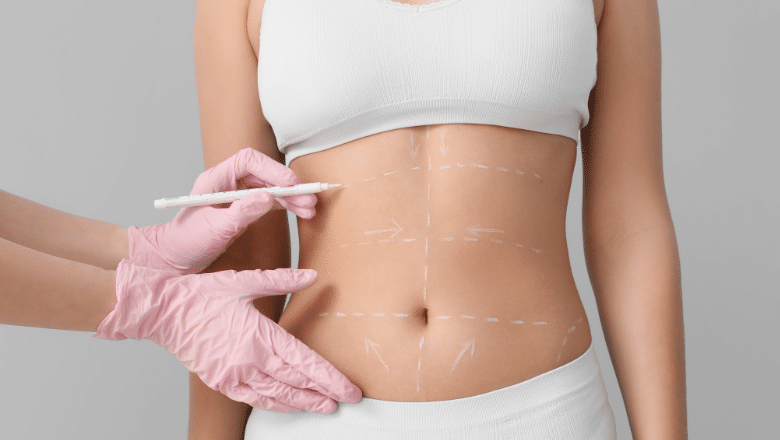
A Fleur de Lis tummy tuck is a more extensive abdominoplasty designed for patients with significant excess skin — typically after major weight loss or multiple pregnancies. The defining feature is the addition of a vertical midline incision to the standard horizontal incision, which allows the surgeon to remove tissue from the waist as well as the lower abdomen and produces a more contoured result for patients who have skin laxity in both directions.
Because the procedure removes more tissue and involves longer incisions than a standard tummy tuck, recovery takes longer and requires more careful pacing. This article covers what to expect at each stage of recovery and the practical steps that genuinely help healing.
RELATED: Post Weight Loss Surgery
How Fleur de Lis Differs from a Standard Tummy Tuck
A standard tummy tuck uses a single horizontal incision low on the abdomen, hidden by underwear. A Fleur de Lis tummy tuck adds a vertical incision running from the breastbone to the pubic area, creating a T-shaped or anchor-shaped scar.
The vertical incision allows tissue to be removed from the waist itself, narrowing the midsection. This is the right operation for patients who have:
Significant horizontal skin laxity that a standard tummy tuck cannot address. Substantial weight loss (often 30+ kg) that has left loose skin around the waist as well as the lower abdomen. Pre-existing midline abdominal scarring (e.g. from previous open surgery) that the vertical incision can incorporate.
The trade-off is the more visible vertical scar, which doesn’t fully hide under clothing. For the right patient, the contour improvement justifies it; for patients with mostly lower-abdominal laxity, a standard tummy tuck is the better choice.
The First Week After Surgery
The first week is the most demanding part of recovery. Expect:
Significant abdominal tightness, particularly when standing or walking. Most patients walk in a slightly hunched posture for the first week to avoid stretching the incisions. Swelling and bruising across the abdomen, often extending down towards the groin. Drains in place for the first 5 to 10 days to remove excess fluid; these are removed at a follow-up appointment. Compression garment worn 24 hours a day to reduce swelling and support the healing tissues.
Pain is managed with prescribed analgesia. Most patients no longer need strong pain relief after the first 5 to 7 days and can transition to paracetamol or similar.
Short, gentle walks every couple of hours are important from day one — not for fitness, but to maintain circulation and reduce the risk of deep vein thrombosis. Beyond gentle walking, no exertion at all in the first week.
RELATED: Bruising After Fleur De Lis Surgery
Weeks Two to Four
By the second week, pain and tightness ease noticeably. Drains are usually out by this point and the first follow-up appointment will have happened. Most patients can stand fully upright by the end of week two, though it may still feel uncomfortable.
Patients with desk-based work typically return between 14 and 21 days. Anyone whose job involves lifting, prolonged standing, or physical activity needs longer — usually 4 to 6 weeks.
Swelling continues to fluctuate during this period. It’s often worse in the evening and after walking, better in the morning. The compression garment is still worn most of the time.
Avoid anything that strains the abdominal muscles — no lifting more than 5 kg, no abdominal exercise, no bending at the waist if it can be avoided.
Weeks Five to Eight
By six weeks, most patients feel close to normal in daily activities. Swelling has reduced significantly, the compression garment may be transitioned to part-time wear or stopped (depending on your surgeon’s advice), and gentle exercise can usually resume.
Walking, stationary cycling, and light yoga are typically the first activities cleared. Running, abdominal-specific exercise, and any high-impact activity should still wait.
Scar care becomes important at this stage. Once the incisions are fully healed (no scabs, no openings), silicone gel or sheets, taping, and consistent sun protection start to make a meaningful difference to long-term scar appearance.
Three to Twelve Months
The full result of a Fleur de Lis tummy tuck takes 9 to 12 months to settle. The contour continues to refine as residual swelling resolves and the tissues fully heal.
Scars go through a predictable maturation process: red and raised at 6 weeks, gradually fading and flattening over the following 6 to 12 months. By the 12-month mark, most patients’ scars are pale and significantly less noticeable than they were at 3 months. Adherence to scar care during the first 6 months has a significant effect on the final scar quality.
Heavy lifting and high-impact exercise can usually resume at 3 months, though your surgeon’s clearance is the deciding factor.
What Genuinely Helps Recovery
A few things make a measurable difference. Most “recovery tips” lists are generic and unhelpful — these are the ones that actually matter:
Stop smoking before surgery and stay stopped through recovery. Nicotine constricts small blood vessels and significantly increases the risk of wound healing problems and skin necrosis. This is the single biggest modifiable factor in tummy tuck recovery. Stopping at least 6 weeks pre-op and 6 weeks post-op is the minimum; longer is better.
Wear the compression garment as instructed. Patients who skip the garment have more swelling, more discomfort, and slower healing. It isn’t optional.
Walk regularly from day one. Short, gentle walks reduce DVT risk and help swelling resolve. Sitting still for long periods slows recovery.
Eat enough protein. Wound healing is protein-intensive. Aim for at least 1.2g per kg of body weight per day for the first 6 weeks.
Sleep with your upper body elevated for the first 2 to 3 weeks. Reduces swelling and reduces tension on the abdominal incision.
Stay hydrated. Helps swelling resolve and reduces constipation, which is common after abdominal surgery and the prescribed pain relief.
Don’t compare your recovery to others. Recovery timelines vary widely based on body type, age, smoking history, and the specific extent of surgery. Slower recovery isn’t a sign of a problem — it’s normal variation.
RELATED: Is a Fleur de Lis Abdominoplasty Worth It?
When to Contact the Clinic
Contact the clinic urgently if you experience any of the following:
Increasing redness, warmth, or swelling around the incisions (signs of infection). Fever above 38°C. Significant pain that isn’t controlled by your prescribed analgesia. Discharge from the wound that is yellow, green, or foul-smelling. Sudden severe abdominal pain. Calf pain, swelling, or breathlessness (possible signs of DVT or pulmonary embolism — call 999 if breathless).
Out-of-hours, the clinic’s 24/7 support line is available, and any concerning symptoms should be flagged immediately rather than waiting for a routine appointment.
FAQs
What can I expect immediately after surgery?
Swelling, bruising, abdominal tightness, and discomfort. Drains are usually in place for 5 to 10 days. Pain is managed with prescribed analgesia. Most patients are discharged the same day or after one overnight stay.
How do I care for the incisions?
Keep them clean and dry, follow the dressing protocol provided, and avoid baths or swimming until your surgeon confirms the wounds are fully healed. Once healed, silicone-based scar treatment and sun protection make a meaningful difference to long-term scar appearance.
How long does full recovery take?
Most patients are back to desk-based work in 2 to 3 weeks and to most normal activities by 6 weeks. Heavy lifting and high-impact exercise can resume from 3 months. The full aesthetic result settles over 9 to 12 months.
What activities should I avoid?
In the first 6 weeks: no lifting over 5 kg, no abdominal exercise, no high-impact activity. After 6 weeks, gradual return to exercise based on your surgeon’s clearance.
Will the vertical scar always be visible?
The vertical scar is more visible than a standard tummy tuck scar and doesn’t fully hide under most clothing. With good scar care and time, it usually fades to a thin pale line over 12 to 18 months. Patients accept this trade-off because of the significant waist contour improvement that the procedure delivers — but it’s an important consideration before booking surgery.
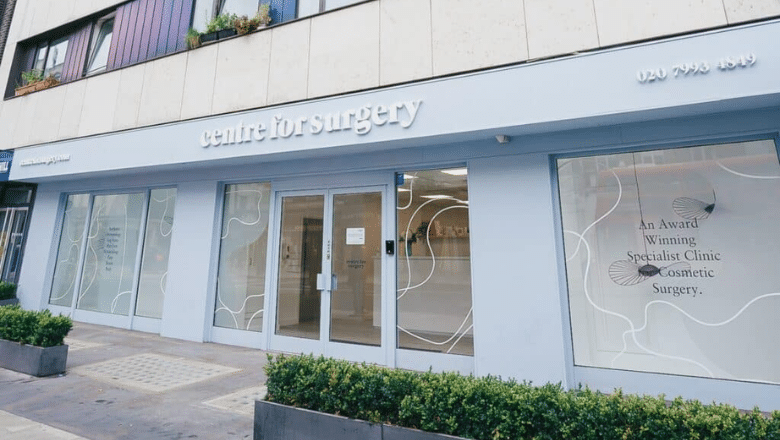
Centre for Surgery
Centre for Surgery is a CQC-regulated cosmetic surgery clinic at 95–97 Baker Street, London W1U 6RN. Fleur de Lis tummy tuck is performed by GMC specialist-registered consultant plastic surgeons with experience in post-weight-loss body contouring.
Finance is available through Chrysalis Finance, with 0% APR options.
To arrange a consultation, call 0207 993 4849 or email contact@centreforsurgery.com.
[contact-form-7 id=”256″ title=”Treatments form”]