Before-and-after photographs are one of the most useful tools for understanding what Morpheus8 can realistically achieve. The visual evidence shows what words and statistics struggle to convey — the actual degree of skin tightening, scarring improvement, and texture refinement that the treatment delivers across a course of sessions.
This page presents a selection of Morpheus8 before-and-after results from patients treated at Centre for Surgery’s CQC-regulated Baker Street private hospital. Each image documents real progress across the treatment course, photographed under consistent lighting and from comparable angles for accurate comparison. Results vary by individual, but the patterns visible across multiple patients show what’s typical and what to realistically expect.
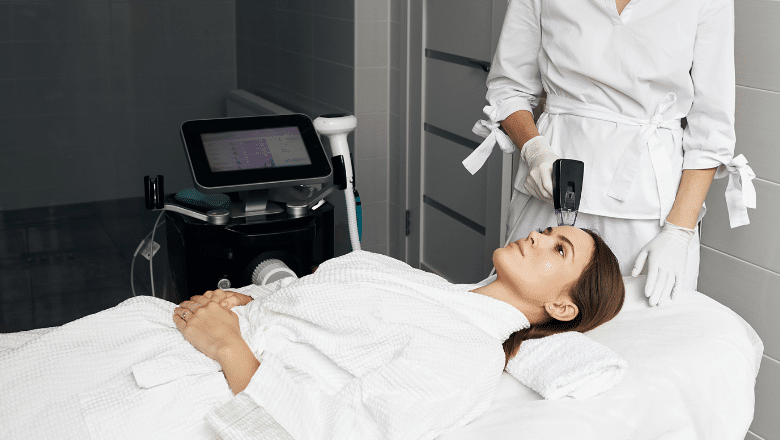
Facial Morpheus8 results
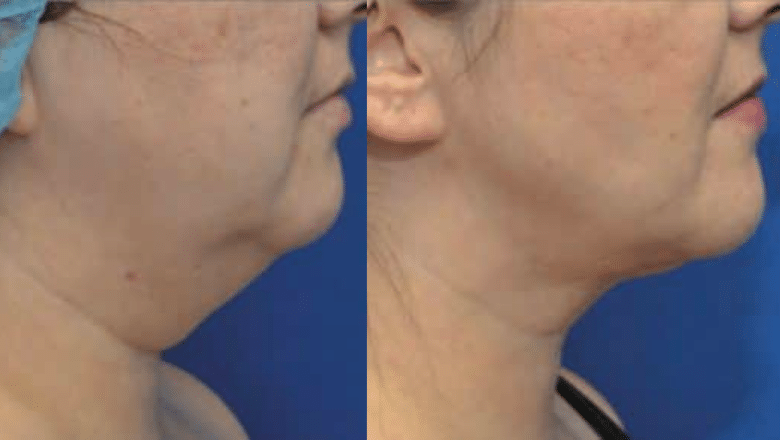
Facial Morpheus8 results typically show:
- Improved jawline definition
- Reduction in early jowling
- Smoother skin texture across cheeks and forehead
- Tightening of perioral area
- Reduced fine lines and surface irregularities
- More refined pore appearance
- Brighter, more even skin tone
The before-and-after comparison is photographed at the same angle, with consistent lighting, makeup-free, and approximately 3–6 months after the final session — when collagen remodelling has consolidated. The visible difference reflects the cumulative effect of typically 3 sessions plus the months that follow.
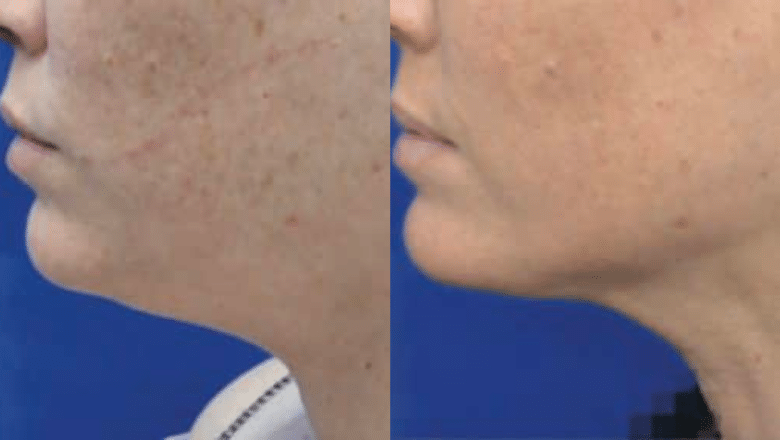
For the dedicated facial treatment guide and what each step achieves, see what is Morpheus8 Face?
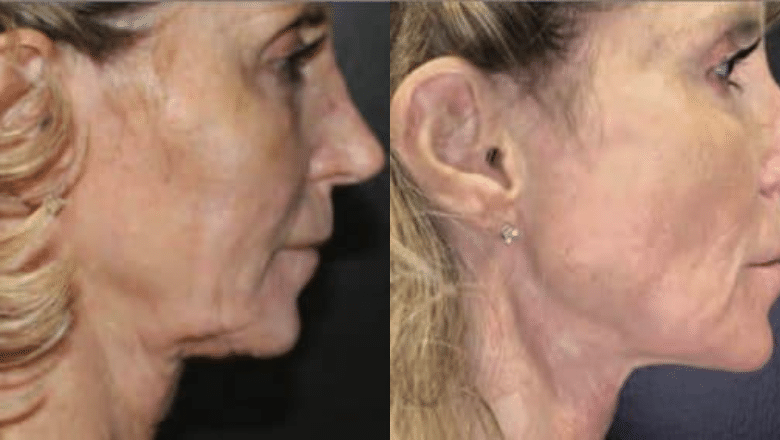
Acne scar treatment results

Acne scar improvement from Morpheus8 typically shows:
- Reduction in scar depth and visibility
- Smoother surface texture across the treated area
- Better light reflection (scarred skin scatters light unevenly; smoother skin reflects more uniformly)
- Improved tone across previously scarred zones
- Surrounding skin quality improvement (not just the scars themselves)
Realistic improvement is typically 50–70% across atrophic acne scarring. Deep ice-pick scars improve less than rolling or boxcar scars; mild-to-moderate scarring often shows the most dramatic relative change. For detailed information on acne scar treatment specifically, see does Morpheus8 help treat acne scars?
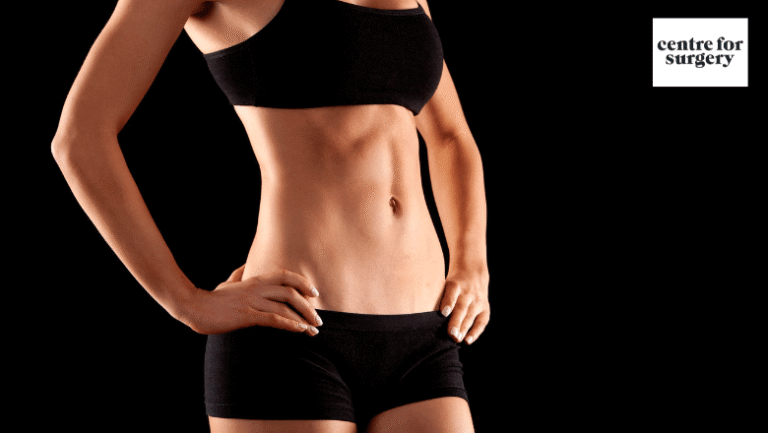
Morpheus8 body before and after results

Body Morpheus8 results show:
- Visible skin tightening across treated areas (abdomen, thighs, arms, knees)
- Improved skin texture and tone
- Reduction in cellulite appearance
- Softening of stretch marks
- Subtle contour improvement from small fat pocket remodelling
- More uniform skin surface
Body results develop more slowly than facial results — visible improvement typically takes 6–8 weeks after the first session, with peak result at 3–6 months after the final session. Body Morpheus8 protocols typically use 3–4 sessions versus 3 for face.
For full information on body treatment, see Morpheus8 Body and what areas of the body can Morpheus8 treat?
Combined Morpheus8 + FaceTite results
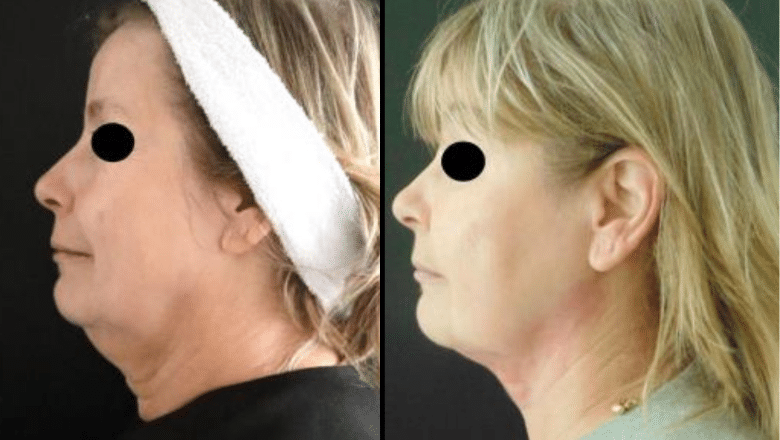
For patients with moderate skin laxity, combining Morpheus8 with FaceTite produces stronger tightening than Morpheus8 alone. The combination protocol typically delivers:
- Significant jawline redefinition
- Substantial reduction in moderate jowling
- Neck tightening alongside facial work
- Combined surface quality improvement and deep structural tightening
- Results closer to a mini facelift than either treatment alone
For detailed comparison and when each is appropriate, see Morpheus8 or FaceTite?
How to read before-and-after photos honestly
Cosmetic before-and-after photography is sometimes misleading. Here’s what to look for to evaluate results honestly:
Consistent angle
Both photos should be taken from the same angle. Different angles can dramatically change apparent results without reflecting genuine improvement. The most useful before-and-after comparisons show the patient facing the camera directly with identical head position.
Consistent lighting
Lighting from below or strongly side-lit photos accentuate lines, sagging and texture; lighting from above or front softens them. Honest before-and-after photos use the same lighting setup for both shots — typically front-facing, soft, neutral.
No makeup
Foundation and concealer hide the surface concerns being treated. Reliable before-and-after photos show makeup-free skin in both shots.
Same skin condition (no recent treatments)
Photos taken immediately after other treatments (recent peels, fresh fillers) can artificially exaggerate or minimise apparent Morpheus8 results.
Appropriate time point
“After” photos taken at 3–6 months post-final session reflect the peak result. Photos taken too early (just after a session) capture mid-treatment appearance rather than the final outcome.
Appropriate distance and zoom
Photos taken from very close up exaggerate texture and pores; photos from too far obscure detail. Mid-range distance with consistent zoom shows the most accurate picture.
What results aren’t shown in before-and-after photos
Several aspects of treatment results don’t photograph well but matter to patients:
- Skin firmness on touch — feels different but doesn’t show in photos
- Pore size in close-up — typically improves but requires specific angled lighting to show
- Subtle texture refinement — feels smoother but doesn’t always photograph
- Confidence and how you feel about your appearance — the subjective experience that often matters most
- Reduction in maintenance routine — many patients use less concealer and makeup post-treatment, but the photo comparison is makeup-free
This is why patient satisfaction often exceeds what photos alone suggest. The “before” photo captures a moment; the post-treatment improvement captures the daily experience over months and years.
What does the typical “good result” look like?
Realistic expectations for a successful Morpheus8 course:
For facial tightening
- Noticeable jawline definition improvement
- Subtle but meaningful tightening of cheek and lower face area
- Smoother skin texture overall
- Better light reflection (less mottled, more uniform)
- The kind of improvement friends notice without being able to identify what’s changed
For acne scarring
- 50–70% improvement in scar visibility
- Substantial surface smoothing
- Better tone across previously scarred areas
- Surrounding skin quality improvement
For body treatment
- Visible firming of treated areas
- Softening of stretch marks
- Reduction in cellulite appearance
- Smoother skin texture
For the full breakdown of session-by-session expectations, see how many Morpheus8 sessions will I need?
What doesn’t show up well — realistic limitations
Even excellent results have limits. Morpheus8 doesn’t:
- Fully eliminate deep ice-pick scars (50–70% improvement is typical)
- Replace facelift surgery for significant skin laxity
- Completely erase older silver stretch marks (improvement, not elimination)
- Remove significant skin excess after weight loss or pregnancy
- Address dynamic wrinkles from facial expression (anti-wrinkle injections do this)
- Restore deep facial volume loss (filler does this)
Patients expecting “perfect skin” or surgical-level transformation will be disappointed despite genuinely good clinical outcomes. Realistic expectations are the difference between satisfied patients and disappointed ones with comparable physical results.
How long after treatment do you photograph results?
Standardised photography for accurate before-and-after comparison:
- Before — taken at consultation or session 1, prior to any treatment
- Interim — typically photographed 6–8 weeks after session 1 to assess early response
- After session 3 — 6 weeks post-final session for course assessment
- Final result — 3–6 months post-final session for peak collagen response
- Long-term — 12 months for durability assessment
The most meaningful before-and-after comparison is the 3–6 month post-final-session photo against the pre-treatment baseline. This shows what the treatment has actually delivered after collagen remodelling has completed.
Will my results look like the photos?
Individual variation in response to Morpheus8 is significant. Factors that affect your specific outcome:
- Starting condition — patients with more pronounced concerns often show more dramatic relative change
- Age — younger patients with healthier baseline collagen production typically respond strongly
- Skin condition — sun-damaged, smoker’s, or significantly aged skin may respond less dramatically
- Specific concerns being treated — different concerns respond differently
- Number of sessions completed — full course delivers substantially more than partial
- Sun protection adherence — affects how durably results last
- Overall health and lifestyle — smoking, diet, sleep all influence collagen renewal
Most patients see meaningful improvement that aligns broadly with the kinds of results shown in before-and-after photographs, though individual variation means some patients see more dramatic changes and others see more subtle ones. We discuss realistic expectations specific to your skin at consultation.
What we don’t recommend
- Choosing a clinic based on social media photos alone — selected best results don’t reflect typical outcomes. Personal consultation matters more than highlighted images.
- Comparing your results to before-and-after photos at the wrong time point — final result emerges at 3–6 months post-final session, not immediately
- Expecting photographic perfection — even excellent results aren’t transformation; they’re meaningful improvement
- Disregarding patient-specific factors — your starting condition, age, and skin matter more than averaged outcomes
- Manipulating your own before/after photos — taking photos at different angles or with different lighting can mislead yourself about your actual progress
- Demanding photo session immediately post-treatment — the early “after” photo shows recovery, not result
Frequently asked questions
How long until I see results comparable to before-and-after photos?
Initial improvement visible within 2–4 weeks; meaningful improvement at 6–8 weeks; peak result at 3–6 months post-final session.
Will my results look as dramatic as the patient photos?
Individual variation is significant. Most patients see meaningful improvement; some see more dramatic results; others see more subtle changes. Honest consultation establishes realistic expectations for your specific situation.
Can I see my own before-and-after photos during treatment?
Yes — we take consistent photographs at each session for clinical tracking. You can review these at follow-up reviews to track your specific progress.
What time of day is best for self-monitoring photos?
Morning, before applying any skincare or makeup, in consistent lighting (natural daylight from a window, or consistent indoor lighting). Take from the same angle each time.
Why do some before-and-after photos look more dramatic than others?
Genuine individual variation, but also lighting, angle, makeup, and timing all affect apparent results. Standardised photography produces more accurate comparisons than casual snapshots.
Do all patients see visible improvement?
The vast majority do. Genuine non-response is uncommon. If you’re not seeing expected improvement at 8–12 weeks after a session, talk to us — we can adjust the protocol or assess whether different treatments would suit better.
How quickly does swelling resolve enough to see real results?
Initial swelling resolves within 3–5 days. True post-treatment baseline is around 2 weeks post-session. The cumulative result of a full course is visible at 3–6 months.
Can I have professional photos taken before and after?
Yes — we can arrange standardised clinical photography as part of your treatment course documentation.
Why choose Centre for Surgery
Our Morpheus8 treatments are documented with consistent before-and-after photography across the treatment course, allowing accurate assessment of your specific results. Treatment uses genuine InMode equipment with single-use sterile tips, delivered by GMC-registered medical practitioners at our CQC-regulated Baker Street private hospital. Honest consultation establishes realistic expectations specific to your skin and concerns.
For more, see our main Morpheus8 service page, cost guide, and pros and cons of Morpheus8 for honest treatment assessment.
Centre for Surgery · CQC-regulated · GMC specialist-registered surgeons · 95–97 Baker Street, Marylebone, London W1U 6RN · 0207 993 4849 · Book a consultation · Finance from 0% APR