A seroma is the most common complication following tummy tuck surgery. Despite being common, it is poorly understood by most patients before they undergo the procedure — and that gap in understanding can turn a manageable, straightforward post-operative issue into a source of genuine anxiety. Knowing what a seroma is, why it happens, how to recognise it, and what the treatment options are will help you navigate your recovery with far greater confidence.
At Centre for Surgery in London, our surgeons perform abdominoplasty as one of the most frequently requested body contouring procedures at our Baker Street clinic. We take a proactive approach to seroma prevention — including the routine use of progressive tension sutures and, where indicated, closed suction drains — and our post-operative care pathway is specifically designed to detect and manage seromas early if they do develop.
What Is a Seroma?
A seroma is a collection of serous fluid — a clear or pale yellow protein-rich liquid — that accumulates in the space beneath the skin following surgery. It forms in what surgeons call a “dead space”: a cavity created when tissue planes are separated during the operation. In a tummy tuck, the skin and subcutaneous fat of the abdominal wall are elevated and separated from the underlying fascia across a large surface area. This dissection is necessary to allow the skin to be advanced, tightened, and the underlying muscle fascia to be repaired — but it creates exactly the kind of dead space in which fluid accumulates.
The fluid itself comes primarily from disrupted lymphatic vessels and capillaries in the separated tissue layers. The lymphatic system — which normally drains excess tissue fluid — is disturbed during the dissection, and the cut lymphatic channels leak their contents into the potential space beneath the raised skin flap. The result is a localised pocket of fluid that the body has not yet been able to reabsorb.
Seromas are not infections and they are not blood clots. A seroma contains no blood (that would be a haematoma) and no bacteria (which would indicate infection). Left untreated, small seromas often resolve on their own. Larger seromas typically require drainage.
Why Is Seroma So Common After Tummy Tuck?
Seroma is considerably more common after abdominoplasty than after most other cosmetic surgery procedures, and there are specific anatomical and technical reasons for this.
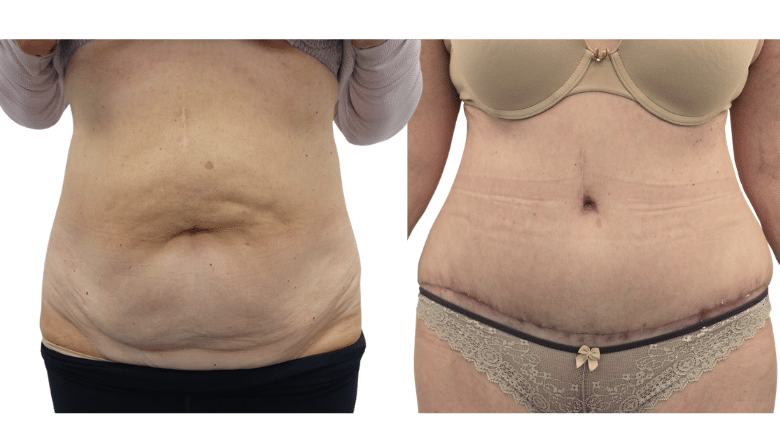
The area of dissection in a standard full tummy tuck is large — typically extending from the pubic region to the costal margins and across the full width of the abdomen. This creates a correspondingly large area of raw tissue surface where fluid can accumulate. In a mini tummy tuck, the dissection area is significantly smaller, and seroma rates are correspondingly lower.
When a tummy tuck is combined with liposuction — which is common at Centre for Surgery — the additional disruption of lymphatic channels across the liposuctioned areas can further increase the risk of seroma formation. This does not mean the combination is inadvisable; the two procedures complement each other effectively and the combined result is consistently superior. It simply means that the post-operative surveillance for seroma needs to be correspondingly attentive.
Similarly, patients who undergo a Fleur de Lis abdominoplasty — which involves both a horizontal and a vertical incision to address more extensive skin excess — have a larger total area of dissection and a proportionally higher seroma risk than standard abdominoplasty patients.
How Common Is Seroma After Tummy Tuck?
Seroma is reported in the published literature as occurring in between 5% and 30% of tummy tuck patients, depending on the surgical technique used, whether drains are employed, and whether liposuction was combined. When progressive tension sutures — internal sutures that obliterate the dead space — are used routinely, seroma rates fall significantly. Our approach at Centre for Surgery incorporates evidence-based technical steps specifically designed to minimise the risk, including progressive tension sutures as a standard feature of all abdominoplasty procedures.
It is important to contextualise this: seroma, while common, is not dangerous in the way that deep vein thrombosis or pulmonary embolism are dangerous. It does not threaten life. It is an inconvenience that can delay full recovery, require additional clinic visits for drainage, and if neglected, lead to chronic seroma or secondary infection — but when managed promptly and correctly, it resolves fully without any impact on the long-term outcome.
What Are the Symptoms of a Seroma After Tummy Tuck?
Seromas typically develop in the first two to six weeks following surgery, though they can occasionally appear later. The most important symptoms to recognise are:
Localised Swelling or Bulging
A fluid-filled seroma produces a visible localised swelling or bulge in the abdominal area — most commonly in the lower abdomen, near the incision line, or in areas where dissection was most extensive. The swelling may appear gradually over several days or emerge more suddenly. It is distinct from the generalised swelling that affects the whole abdomen in the first weeks of recovery — a seroma creates a focal, localised bulge rather than diffuse firmness across the whole abdomen.
A Sensation of Fluid Movement
Patients often describe the sensation of fluid sloshing or shifting when they move or press on the affected area. This is sometimes called fluctuance — a clinical sign surgeons test for during examination. If you press gently on a swollen area and feel fluid moving beneath your hand, this is strongly suggestive of a seroma.
Tenderness or Pressure Sensation
A seroma can produce a sensation of tightness, pressure, or mild tenderness in the affected area. The discomfort is generally not severe — it tends to feel like a full, pressurised sensation rather than acute pain. If the discomfort is severe or increasing, this may suggest secondary infection and warrants urgent review.
A Change in the Contour of the Abdomen
Patients who are monitoring their recovery carefully may notice a change in the shape of the abdomen — perhaps a new asymmetry, a focal soft area that was not there before, or a bulge that appears to worsen rather than improve as general post-operative swelling should be declining.
Clear or Pale Yellow Fluid from the Wound
In some cases, particularly if a seroma is under tension, fluid may leak through the incision or drain site. Serous fluid is clear to pale yellow in colour. If the leaking fluid is cloudy, thick, malodorous, or accompanied by redness and warmth at the wound edges, this raises the possibility of infection and should be reviewed by your surgical team promptly.
When Should I Contact My Surgeon?
Contact your Centre for Surgery team promptly if you notice any of the following: a new localised swelling or bulge that has appeared or changed noticeably in size; a sensation of fluid movement beneath the skin; fluid leaking from the incision or drain site; increasing rather than decreasing discomfort in a specific area; any signs of infection — redness, warmth, or discharge at the wound; or a fever above 38°C in the days following surgery.
Never hesitate to contact us because you think something is minor or that you are being over-cautious. Early identification and drainage of a seroma produces a much better outcome than delayed presentation. All Centre for Surgery patients have direct access to a 24-hour emergency line throughout their recovery.
How Is a Tummy Tuck Seroma Diagnosed?
Diagnosis is primarily clinical — based on the history, the timing, and the physical examination findings. A surgeon who finds fluctuance, localised swelling, and the absence of infection signs can diagnose a seroma with confidence without additional investigation in most cases.
Where the extent of the fluid collection is uncertain, or where the swelling is deep and not clearly fluctuant on examination, an ultrasound scan is used to confirm the diagnosis, define the size and location of the collection, and guide drainage. Ultrasound-guided aspiration is a safe and highly accurate technique for both confirming and treating a seroma in a single procedure.
How Is a Seroma Treated?
Conservative Management for Small Seromas
Small, asymptomatic seromas — particularly those identified early in the recovery period — are sometimes managed conservatively with close observation, continued compression garment use, and activity restriction. By maintaining external pressure against the abdominal wall, the compression garment reduces the dead space available for fluid to accumulate and can help collapse smaller collections. Conservative management is appropriate only for genuinely small seromas where the collection is clearly not under significant tension.
Needle Aspiration
Needle aspiration — drawing the fluid out using a syringe and needle — is the standard first-line treatment for most clinically significant seromas. The procedure is quick, performed in the clinic, and requires no anaesthesia in most cases. Depending on the size of the seroma, it may need to be repeated at intervals over several weeks as the collection refills before eventually resolving. Some seromas resolve after a single drainage; others require multiple aspirations over four to eight weeks. Patience is important — repeated aspiration is preferable to surgical intervention and does not indicate a poor overall outcome.
Sclerosing Agents
For seromas that prove persistently recurrent despite repeated aspiration — so-called chronic seromas — sclerotherapy can be considered. A sclerosing agent is introduced into the seroma cavity after aspiration, causing an inflammatory response that obliterates the cavity walls and prevents further fluid accumulation. This approach is reserved for persistent cases rather than used routinely.
Surgical Drainage
In rare cases of large, persistent, or infected seromas that have not responded to repeated aspiration, a return to theatre may be indicated. The cavity is opened, the fluid and any fibrous debris are removed, the walls are sutured together, and a closed suction drain is placed to prevent reaccumulation. This is uncommon and represents a last resort after simpler measures have been exhausted.
What Happens If a Seroma Is Left Untreated?
Small, resolving seromas may not require active treatment. However, leaving a significant seroma unaddressed creates several risks. A chronic seroma can develop, where the fluid collection becomes walled off by a fibrous capsule that no longer resolves spontaneously and may eventually require surgical excision. A seroma under tension can also act as a culture medium for bacterial colonisation, leading to secondary infection that significantly complicates recovery. Persistent seromas can also distort the final contour of the abdomen, creating an area of firmness or irregular texture if not addressed.
These complications are all avoidable with timely identification and appropriate management. If you suspect a seroma, contact your surgical team — do not wait.
How Is Seroma Prevented?
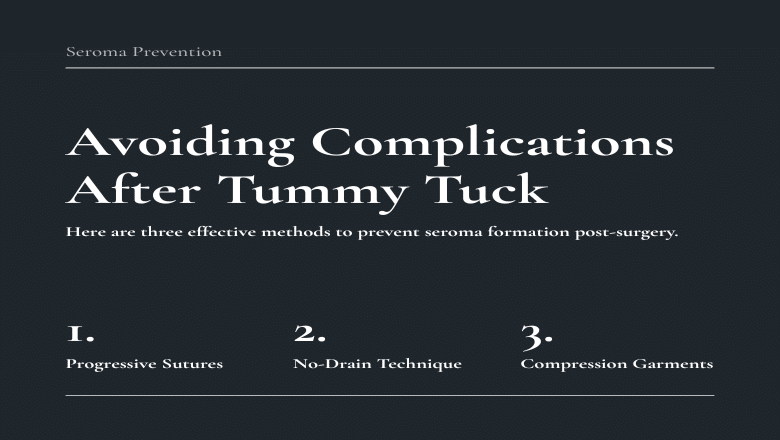
Progressive Tension Sutures
Progressive tension sutures are internal stitches placed between the elevated skin flap and the underlying fascia at intervals across the dissection area. By tacking the flap down at multiple points, they eliminate the dead space in which fluid would otherwise collect. Multiple prospective studies have demonstrated that their routine use significantly reduces seroma formation rates in abdominoplasty. At Centre for Surgery, they are a standard component of all full abdominoplasty procedures.
The No-Drain Technique
Traditional abdominoplasty involved the routine use of closed suction drains to actively remove fluid during the first days of recovery. The development of the no-drain tummy tuck technique — in which progressive tension sutures and careful surgical dissection together sufficiently eliminate dead space — allows the procedure to be performed without routine drain placement in carefully selected patients, with comparable or better seroma rates and a markedly improved recovery experience.
Compression Garments
Post-operative compression garments are an important part of both the prevention and the treatment pathway. Worn consistently for the recommended six weeks, they maintain external pressure against the abdominal wall, reduce the dead space available for fluid accumulation, and provide structural support to the healing tissues. Removing the garment prematurely or wearing it inconsistently increases the risk of seroma formation.
Does Seroma Affect the Final Result of My Tummy Tuck?
When identified and managed promptly, a seroma does not affect the long-term cosmetic outcome. Once fully resolved, the abdominal contour settles as it would have in the absence of the complication. The final result is the same.
Patients sometimes express concern that needing seroma drainage means something has gone wrong with their surgery. This is not the case. Seroma is a recognised and expected possible outcome of any large-area dissection — it reflects the physiology of wound healing rather than a surgical error. What matters is how it is managed, and at Centre for Surgery, our structured post-operative follow-up pathway is specifically designed to identify and address it early. For a broader overview of what recovery involves, see our guide to the benefits and realities of tummy tuck surgery.
Frequently Asked Questions
How soon after a tummy tuck does a seroma develop?
Most seromas present between one and four weeks following surgery, though they can occasionally appear later. The first post-operative review appointment at Centre for Surgery — typically at five to seven days — includes specific assessment for early fluid accumulation.
Is aspiration of a seroma painful?
Most patients find aspiration to be quick and well-tolerated. The needle is fine and the abdominal skin in the area is often still partially numb from the surgical dissection. The relief of pressure from the fluid being removed is frequently described as immediately comfortable.
Can I prevent a seroma myself?
You can support prevention by wearing your compression garment consistently for the full recommended period, avoiding strenuous activity during the early recovery weeks, keeping all follow-up appointments, and reporting any new swelling or change in your abdomen to your surgical team promptly.
Does having a seroma mean I need a second operation?
In the vast majority of cases, no. Most seromas are fully resolved with needle aspiration in the outpatient clinic setting. Surgical intervention is reserved for rare cases of large, persistent seromas that have failed to respond to repeated aspiration.
Can seroma happen after a mini tummy tuck?
Yes, though the risk is lower because the area of dissection is smaller. The principles of recognition, monitoring, and treatment are identical regardless of which variant of abdominoplasty was performed.
Will a seroma leave a permanent mark?
No. A seroma managed appropriately resolves completely without leaving any visible or palpable trace. The needle puncture from aspiration heals invisibly within days.
Tummy Tuck at Centre for Surgery
Centre for Surgery is one of London’s leading specialist clinics for abdominoplasty surgery. Our consultant plastic surgeons perform tummy tucks at high volume, applying the most advanced techniques — including progressive tension sutures and the no-drain approach — to minimise complications and optimise outcomes for every patient. Our Baker Street clinic is CQC-regulated, our surgeons are GMC-registered specialists, and every patient benefits from a structured, consultant-led care pathway from initial consultation through to final post-operative review.
If you are considering a tummy tuck or have questions about recovery following surgery, contact us to book a consultation. Finance options including 0% APR are available through our partner Chrysalis Finance — visit our Finance Options page for details.
Phone: 0207 993 4849 | Email: contact@centreforsurgery.com | Address: 95-97 Baker Street, London W1U 6RN
[contact-form-7 id=”256″ title=”Treatments form”]