One of the most common questions patients ask during a facelift consultation — often after they have already decided they want surgery — is what their face will look like years down the line. Will the results last? Will they age naturally? Could they end up looking worse than if they had never had surgery at all?
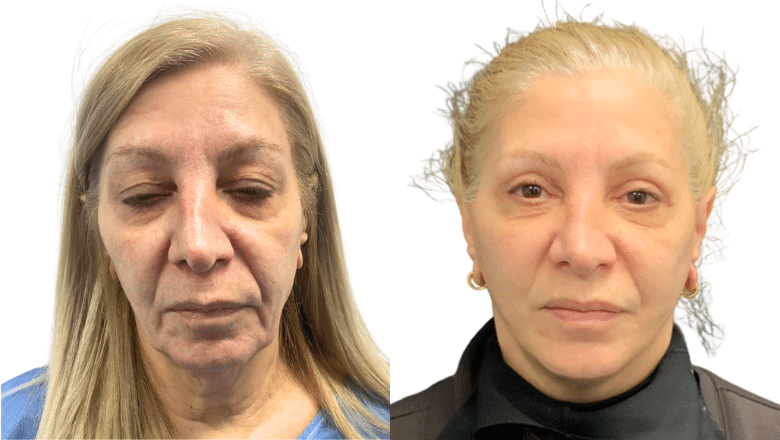
These are entirely reasonable questions, and they deserve a direct, honest answer. The short version is this: a well-performed facelift produces results that last — typically between seven and fifteen years depending on the technique and the individual — and when ageing continues after surgery, it does so from a younger starting point. The face does not revert to how it looked before surgery, and it does not age faster than it would have done without surgery. What patients see at ten years is almost always a face that looks significantly younger than it would have without intervention, but naturally and gracefully older than it did immediately post-operatively.
Understanding why this is the case — and what specific factors influence how well results hold — is one of the most valuable things a prospective patient can know before committing to surgery.
What a Facelift Actually Does — and Does Not Do
Before exploring the long-term picture, it is important to be clear about what a facelift addresses. A facelift at Centre for Surgery is a structural procedure. It addresses the SMAS — the Superficial Musculoaponeurotic System, a fibromuscular layer that lies beneath the skin of the face — repositioning and tightening this deeper layer to restore definition to the jawline, reduce jowling, and lift the lower and mid face. The overlying skin is then re-draped over the improved structural framework, and a modest amount of excess skin is removed.
What a facelift does not do is stop the biological processes of ageing. Collagen continues to break down. The skin continues to lose elasticity over time. Fat compartments in the face continue their long-term redistribution and volume loss. Bone density changes slowly with age. These processes are ongoing and universal — they are not halted by surgery, only reset to an earlier point on the timeline. The result is that the clock is effectively turned back, but it continues to tick from that new position.
This distinction — between turning the clock back and stopping it — is fundamental to setting realistic expectations about what facelift results look like a decade on.
The Trajectory of Results Over Time
In the weeks immediately following a facelift, the result is partially obscured by swelling and bruising, and the tissues are still in the process of settling. The most visible improvement typically emerges at around six to eight weeks, as swelling resolves and the skin begins to conform naturally to the repositioned underlying structures. At three to six months, the result has largely matured — though subtle changes continue for up to a year.
From that point, the result evolves gradually rather than dramatically. In the first three to four years following surgery, most patients notice very little change. The structural work performed during surgery is stable, and the repositioned SMAS layer maintains its new position as the surrounding tissue heals around it. The face looks refreshed, natural, and consistently younger than it would have without surgery.
Between five and eight years post-operatively, some patients begin to notice the very early signs of continued ageing — mild recurrence of skin laxity, subtle softening of the jawline, or a slight return of fullness in the jowl region. For most patients these changes are minor at this stage and do not significantly affect the overall rejuvenated appearance. Many people at this point still look noticeably younger than their chronological age.
At ten years, the honest picture is this: most patients look significantly better than they would have done without surgery, but they look older than they did at one or two years post-operatively. The face has continued to age from its surgically rejuvenated starting point. Whether this ten-year result is still considered fully satisfactory depends on the individual patient’s expectations, the technique used, and the various biological and lifestyle factors discussed below.

Does the Technique Make a Difference to Longevity?
Yes — substantially. The depth at which a facelift operates is the single most important technical determinant of how long the result lasts.
Skin-only or cutaneous facelifts — which tighten only the superficial skin layer without addressing the deeper SMAS — produce results that are rarely satisfactory beyond three to five years. The skin has inherent elasticity and will stretch back over time if the underlying structural support has not been repositioned. Centre for Surgery does not perform skin-only facelifts for this reason.
The SMAS facelift — which is the standard approach at Centre for Surgery — operates on the structural layer beneath the skin. By addressing the deeper SMAS, the procedure creates a more durable foundation for the overlying skin to rest on. SMAS facelifts typically produce results that hold for ten years or more in most patients. The skin is also placed under considerably less tension than in a skin-only lift, which means the scarring is minimal and the result looks more natural throughout its lifespan.
The deep plane facelift goes further still, releasing and repositioning the SMAS together with the overlying soft tissue as a composite flap. This deeper dissection allows correction of the nasolabial folds and mid-face in a way that SMAS-only techniques cannot achieve as comprehensively. Deep plane results are widely reported to last longer than standard SMAS facelifts — with many patients maintaining satisfying results for twelve to fifteen years or more. For patients who want the most durable possible outcome, or who have more advanced facial ageing including significant nasolabial fold depth and mid-face descent, the deep plane approach offers a meaningful longevity advantage.
The Role of Fat Transfer in Long-Term Results
One of the most important developments in facelift surgery over the past decade is the increasing integration of facial fat transfer as a complement to the lifting component. Facial ageing is not purely a matter of tissue descent — it also involves volume loss. The fat compartments of the face deflate progressively with age, contributing to hollowing of the temples, flattening of the cheeks, deepening of the tear troughs, and loss of definition in the perioral region.
A facelift alone addresses the laxity and descent components of ageing but does not replace lost volume. When performed without fat grafting, the result can occasionally look tight or over-operated rather than naturally youthful. Combining fat transfer with facelift surgery addresses both dimensions simultaneously — lifting the descended structures and restoring the volume that has been lost. At Centre for Surgery, the majority of facelift patients benefit from some degree of fat grafting as part of their procedure, and the results consistently reflect this more comprehensive approach.
From a longevity perspective, the transferred fat that integrates permanently into the facial tissue provides a lasting volumetric improvement that does not change significantly over the years following surgery. This means that even as the lifting component of the facelift gradually ages, the volumetric restoration remains — contributing to a result that continues to look natural and full rather than gaunt or flat at the ten-year mark.
What Continues to Change After a Facelift
Even after an excellent facelift, several aspects of facial ageing continue to evolve. Understanding these helps patients maintain realistic expectations and plan any future maintenance appropriately.
Skin Quality
The intrinsic properties of the skin — its texture, tone, pigmentation, and surface quality — continue to change with age, sun exposure, and lifestyle. A facelift does not improve skin quality, and patients who smoke heavily, have significant UV damage, or have inherently thinner skin will notice the surface quality of their skin continuing to change even as the structural improvement from surgery is maintained. Maintaining a consistent skincare regimen — including daily SPF, retinoids, and appropriate medical-grade treatments — is one of the most impactful things a facelift patient can do to preserve the visible quality of their result over time.
Volume Loss
As discussed, the fat compartments of the face continue to reduce with age following surgery. Patients who did not have fat transfer as part of their facelift may notice progressive hollowing — particularly in the mid-face and temples — as the years pass. This can be addressed with dermal fillers or with a secondary fat transfer procedure.
Brow and Upper Face
A standard facelift addresses the lower two-thirds of the face. The brow, forehead, and upper eyelid region are not directly addressed unless a brow lift or blepharoplasty is performed simultaneously or subsequently. Patients who notice that their upper face is ageing disproportionately to their lower face a decade after facelift surgery may benefit from these complementary procedures at that stage.
Neck
The neck is one of the areas most noticeably affected by continued ageing after a facelift. Patients who did not have a simultaneous neck lift performed at the time of their facelift may find that the neck ages more visibly than the face in subsequent years, creating a mismatch between the two. Including a neck lift as part of the original facelift procedure — which is standard practice at Centre for Surgery — addresses this from the outset and produces a more harmonious long-term result.
Does Ageing Look Normal After a Facelift?
This is one of the questions patients most often ask — and the concern behind it is understandable. Nobody wants to end up looking like they have had surgery, or to age in a way that looks unnatural or distorted. The reassuring answer is that when a facelift is performed well, the face ages naturally in the years after surgery.
The key to natural ageing post-facelift is appropriate tension. A facelift that places excessive tension on the skin — attempting to achieve a dramatically tight result — will not age gracefully. The skin stretched under tension will stretch back unevenly over time, and the distorted appearance that results is precisely what gives some older facelift patients their characteristic operated look. By contrast, a facelift that works on the deeper structural layer and re-drapes the skin without placing it under excessive tension produces a result that maintains natural movement and expression, and ages smoothly.
At Centre for Surgery, our surgeons — including Dr Spyridon Vlachos, who has over 25 years of experience in facial aesthetic surgery — take a structural approach that prioritises natural movement and long-term result quality over short-term tightness. The goal is always a result that looks like a naturally younger version of the patient rather than a surgically altered one.

Can You Have a Second Facelift?
Yes. Revision or secondary facelift surgery is a realistic option for patients whose initial result has aged significantly. The majority of patients who have had a well-performed primary facelift find that if they choose to have further surgery a decade or more later, the secondary procedure is technically more straightforward than having had no surgery at all, as the underlying tissues are already in an improved structural position. A secondary facelift effectively resets the clock again from the current position.
Not every patient chooses to have revision surgery. Many are entirely satisfied with their result at ten years — they look younger than their peers who did not have surgery, feel confident in their appearance, and have no desire for further intervention. The decision is always personal and should be based on the individual patient’s expectations and aesthetic goals rather than any fixed timeline.
For patients who want to extend the life of their result without returning to surgery, non-surgical options including dermal fillers, anti-wrinkle injections, Morpheus8, and Fotona4D can all play a useful maintenance role, addressing volume, skin quality, and minor laxity without the commitment of further surgery. These are best viewed as complementary to the facelift result rather than as alternatives to revision surgery when significant structural ageing has returned.
Lifestyle Factors That Affect Long-Term Results
Beyond surgical technique, several lifestyle factors have a material impact on how well facelift results hold over time.
Smoking is the most damaging. It impairs wound healing in the immediate post-operative period, increases the risk of complications, and accelerates skin ageing through its effects on collagen and microvascular blood flow. Patients who smoke consistently look older at ten years post-facelift than non-smoking patients with identical surgical results. Stopping smoking permanently — not just in the perioperative period — produces a measurable difference in long-term outcome.
Sun exposure is the second most impactful factor. UV radiation degrades collagen, causes pigmentation changes, and accelerates skin laxity. Wearing broad-spectrum SPF 30 or higher daily, year-round, is one of the most practical and cost-effective ways to preserve the quality of the skin overlying a facelift result. This applies regardless of the British weather — UV radiation causes cumulative damage even on overcast days.
Weight stability also matters. Significant weight gain after a facelift can cause recurrence of jowling and facial heaviness. Significant weight loss can cause hollowing that unmasks structural ageing. Maintaining a stable, healthy weight produces the most consistent long-term aesthetic result.
Frequently Asked Questions
Does a facelift look good after 10 years?
In most cases, yes — patients at ten years still look meaningfully younger than they would have without surgery. The face will have continued to age from the rejuvenated starting point, but the structural improvement from surgery means the overall appearance remains more youthful than it would otherwise be. The quality of the result at ten years is strongly influenced by the technique used and lifestyle factors in the intervening period.
How long does a facelift last?
A SMAS facelift typically lasts between seven and twelve years before significant recurrence of ageing changes. A deep plane facelift generally lasts longer — commonly twelve to fifteen years. These figures represent the point at which most patients might consider revision rather than the point at which the result disappears entirely.
Does your face look worse after a facelift wears off?
No. This is one of the most persistent myths about facelift surgery. When a facelift result ages, it does so from a younger starting point — meaning the face at ten or fifteen years post-surgery looks younger than it would have at that age without surgery. The result does not reverse past the pre-surgical starting point.
Can you maintain facelift results without further surgery?
Non-surgical treatments — including fillers, anti-wrinkle injections, and skin-tightening procedures — can usefully extend and complement facelift results, particularly for volume maintenance and skin quality. They cannot, however, replicate structural lifting, and significant structural ageing ultimately requires surgical revision if correction is desired.
Is it better to have a facelift earlier or later?
There is no single correct answer. Earlier surgery — typically in the forties or early fifties — means operating on tissues with better elasticity and less pronounced ageing, which can produce a more durable result. Later surgery may produce a more dramatic visible transformation. At Centre for Surgery, the timing recommendation is always individualised based on the patient’s anatomy, goals, and the degree of ageing present rather than on a fixed age threshold.
Facelift Surgery at Centre for Surgery
Dr Spyridon Vlachos is one of Centre for Surgery’s most experienced facial plastic surgeons, with over 25 years of specialist experience in facelift, neck lift, blepharoplasty, and rhinoplasty. He is a recognised specialist on the GMC’s plastic surgery register, holds the European Plastic Surgery Board qualification, and is a member of the International Society of Aesthetic Plastic Surgeons. His philosophy centres on natural, long-lasting results that enhance the patient’s appearance without an operated look.
If you are considering a facelift and would like to understand what results are realistically achievable and how they will hold over time, contact us to arrange a consultation at our Baker Street clinic.
Phone: 0207 993 4849 | Email: contact@centreforsurgery.com | Address: 95-97 Baker Street, London W1U 6RN
Finance options including 0% APR are available through our partner Chrysalis Finance — visit our Finance Options page for details.
[contact-form-7 id=”256″ title=”Treatments form”]