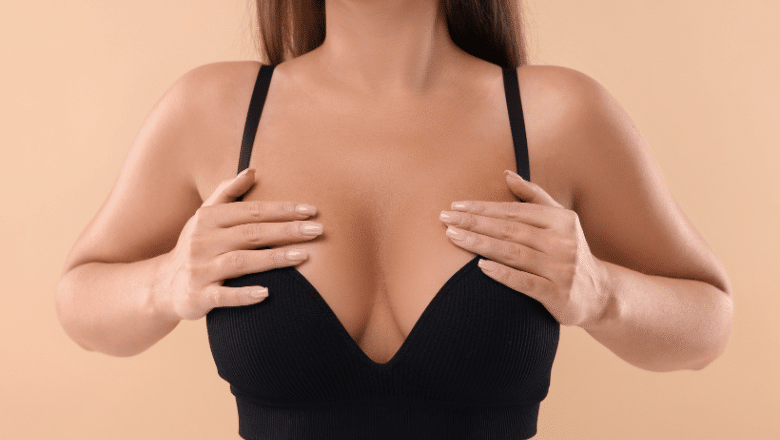
Symmastia is a condition that affects the natural appearance of the breasts. It occurs when the tissue or implants in the chest cross over the breastbone, removing the natural gap between the breasts. Instead of a defined cleavage, the breasts look joined together in the centre of the chest. This creates the appearance of a single, merged breast mound that people often describe as a “uniboob”.
Although rare, symmastia can be a distressing condition. Some individuals are born with it, which is known as congenital symmastia. Others develop it after breast augmentation, when implants move or when the surgical pocket for the implant has been placed too far towards the midline. In these cases, the term iatrogenic symmastia is sometimes used.
At Centre for Surgery in London, our surgeons regularly see patients who are unhappy with how their breasts look after previous surgery. Symmastia is one of the more complex breast implant complications, but with careful surgical planning, it can be corrected. Our consultants bring years of experience in advanced revision procedures, giving patients confidence that their results can be restored and their natural anatomy redefined.
RELATED: Breast Implant Revision
Understanding what causes symmastia, how it can be recognised, and what surgical options are available is essential both for women who already have the condition and for those considering breast augmentation and wishing to reduce their risk.
Understanding The Basics Of Symmastia
The breasts normally sit on either side of the sternum, separated by skin, connective tissue and the underlying bone. This midline boundary defines cleavage and creates the space that allows bras and clothing to sit naturally.
When symmastia develops, this division is disrupted. The breast tissue, skin or implant pocket extends too far into the middle of the chest, eliminating the visible gap. In congenital cases, this is because the breast tissue itself has developed across the sternum. In acquired cases, the disruption occurs as a result of surgery, with implants stretching or pushing through tissues that should have remained intact.
The condition is uncommon, but when it appears, it can cause both cosmetic concerns and practical difficulties. Many women with symmastia find it hard to wear bras comfortably. Sports bras in particular may not provide support because the breasts no longer sit in separate cups. For others, swimwear and fitted clothing may highlight the problem, increasing self-consciousness.
Causes Of Symmastia After Breast Augmentation
Most modern cases of symmastia are linked to breast augmentation. Although highly effective for enhancing breast size and shape, augmentation requires careful planning and precise surgical execution. Several factors can increase the likelihood of symmastia developing after surgery.
Implant Size And Proportions
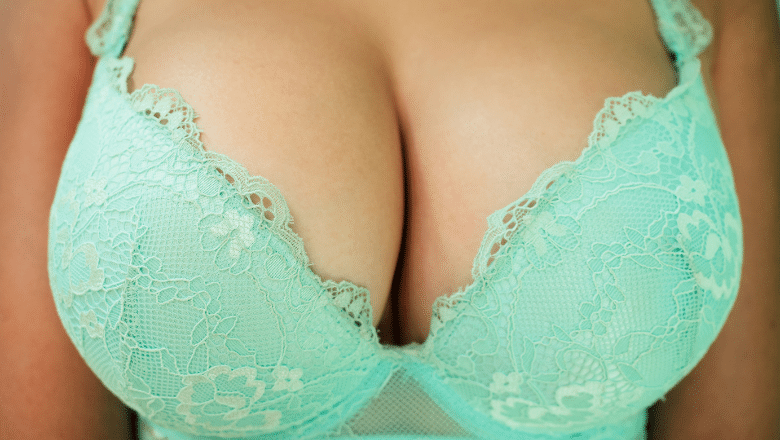
Using implants that are too large for a patient’s natural chest dimensions is one of the most common causes. When the implant width exceeds the chest width, the pressure created by the implant can stretch tissue and force the pocket closer to the sternum. This constant pressure over time may lead to gradual migration, with the implants shifting together in the centre of the chest.
Surgical Dissection Technique
The surgical pocket must be carefully created to fit the implant. If dissection extends too far medially, the natural barrier between the breasts can be compromised. Even a few millimetres too much dissection can destabilise the tissue, allowing implants to drift towards one another.
Pre-existing Tissue Weakness
Patients with naturally thin breast tissue, a narrow sternum or weak connective tissue have less structural support to keep implants in position. This weakness increases the risk of symmastia developing even if the surgery itself was carried out correctly.
Postoperative Healing And Capsule Formation
All implants form a capsule of scar tissue around them. This is a normal part of the body’s healing process. However, if the capsule becomes stretched, asymmetrical, or too weak to contain the implant securely, the implants may begin to move medially, producing symmastia.
Recognising The Symptoms Of Symmastia
The earliest signs of symmastia are often subtle. Patients may notice their cleavage looks less defined or that bras do not fit as well as they once did. Over time, the symptoms become more noticeable.
RELATED: Can Breast Augmentation Enhance My Cleavage?
A key indicator is the disappearance of the natural gap between the breasts, replaced by a soft tissue bridge across the midline. In severe cases, the breasts appear as one continuous mound from side to side. Patients may feel the implants moving together when they lie down or roll to the side. This mobility can make the chest feel unstable.
Some patients experience physical discomfort. While symmastia itself is not typically painful, bras may dig into the wrong areas of the chest, and exercise can feel awkward or uncomfortable. The psychological effects, however, are often much stronger than the physical ones.
Emotional And Psychological Effects
For many women, breast augmentation is a positive and empowering decision. When complications like symmastia occur, the disappointment can be significant. Instead of feeling more confident, patients may feel unhappy with their results, reluctant to wear low-cut tops, or anxious about how their breasts look in swimwear or lingerie.
The condition can also affect intimacy and self-image. Many women report avoiding situations where their chest would be visible. The sense of regret that often accompanies symmastia can be difficult to manage, particularly when the surgery was something they looked forward to.
Corrective surgery does more than restore anatomy. It restores confidence, helping patients feel comfortable in their own skin again.
Clinical Diagnosis And Assessment
When a patient presents with suspected symmastia, a consultation with an experienced plastic surgeon is vital. The examination focuses on chest anatomy, implant type and size, and the position of the implant pocket.
The surgeon will evaluate how far implants have migrated across the sternum, whether the tissue between the breasts remains intact, and whether the implants are appropriately sized for the patient’s frame. In complex cases, imaging such as ultrasound or MRI may help confirm implant position and capsule quality.
Understanding whether the case is congenital or acquired is also important. Congenital symmastia requires a slightly different surgical approach because the tissue itself has developed abnormally rather than being disrupted by an implant pocket.
Treatment Options For Symmastia
Non-Surgical Measures
There are no non-surgical treatments that can reverse true symmastia. While supportive bras or compression may provide some improvement in appearance, they cannot restore the natural midline or correct the implant pocket. Surgery is the only effective long-term solution.
Symmastia Correction Surgery
Revision surgery is designed to restore separation between the breasts, re-establishing a natural cleavage and securing implants in the ccorrect position.
Common techniques include:
-
Pocket repair with sutures: The over-dissected pocket along the sternum is closed with internal sutures, recreating a firm boundary.
-
Internal bra techniques: Specialised mesh or biologic materials are used to reinforce tissue, providing additional support to maintain the repair in the long term.
-
Implant exchange: Oversized implants are often replaced with smaller ones more suited to the patient’s anatomy.
-
Pocket repositioning: If implants were placed above the muscle, they may be moved below the muscle for added stability.
The procedure is carried out under general anaesthesia and typically takes several hours. Recovery depends on the complexity of repair and whether implants are exchanged or repositioned.
Recovery After Symmastia Repair
Following symmastia repair, patients wear a supportive surgical bra to maintain implant position and protect the new repair. Swelling and bruising are expected but gradually resolve over several weeks.
During the first two weeks, most patients limit activity to light tasks and avoid raising arms above shoulder height. Gentle mobility is encouraged, but exercise and heavy lifting should be avoided for at least six weeks.
Follow-up visits are scheduled regularly to ensure the surgeon can monitor the patient’s healing progress. In some cases, additional imaging may be used to confirm implant stability. Most women return to work within two weeks, although full healing and final results may take several months to appear.
Preventing Symmastia During Breast Augmentation
Prevention relies on precise surgical planning and execution. Choosing implants that match the chest width is critical. Oversized implants that exceed the patient’s frame dramatically increase risk.
The surgeon must respect the natural midline and avoid over-dissection of the pocket. Using advanced techniques and a careful approach, the risk of pocket merging can be minimised.
Patients contribute to prevention by following postoperative advice. Wearing a surgical bra, avoiding heavy exercise during healing, and attending follow-up appointments all support optimal recovery and reduce complications.
Long-Term Results Of Symmastia Repair
The outcomes of symmastia correction are generally excellent when performed by a skilled surgeon. Most patients regain a natural cleavage, improved breast shape and renewed confidence.
The use of reinforcement materials, smaller implants, or repositioning below the muscle helps reduce recurrence. However, results vary depending on individual tissue quality and the severity of the condition. Some patients may require additional revision if the tissue proves too weak to hold implants in place long-term.
Despite these challenges, the majority of women experience lasting and stable improvements.
FAQs About Symmastia
How rare is symmastia?
It is relatively rare, particularly congenital cases. Acquired symmastia is uncommon but more likely after oversized implants or poor surgical technique.
Can mild cases of symmastia correct themselves over time?
No, true symmastia does not resolve naturally. Once tissue has stretched or implants have shifted, surgery is necessary to correct the issue.
Does symmastia always require implant replacement?
Not always, but many women benefit from changing implant size or shape to reduce risk of recurrence.
Is recovery from symmastia repair painful?
Most patients describe recovery as similar to breast augmentation, with discomfort managed by pain relief and supportive garments.
Can symmastia return after correction?
Recurrence is possible, particularly in patients with weak tissue, but modern reinforcement techniques significantly reduce this risk.
Does symmastia affect health beyond appearance?
It is primarily a cosmetic issue. While it can cause discomfort with bras or exercise, it does not usually affect overall health.
Can men have symmastia?
Although very rare, men with congenital chest wall abnormalities can develop a form of symmastia.
About Centre For Surgery
Centre for Surgery is a leading cosmetic and plastic surgery clinic based on Baker Street in London. Our purpose-built private hospital is dedicated to delivering outstanding patient care in a safe and modern environment. With consultant plastic surgeons who specialise in complex revision procedures, we provide advanced treatments for breast, body and facial concerns.
Symmastia correction is one of the specialist revision surgeries we perform, combining surgical precision with a focus on natural, long-lasting outcomes. At Centre for Surgery, patient safety and satisfaction are at the heart of every procedure, helping individuals achieve results that restore both appearance and confidence.
[contact-form-7 id=”256″ title=”Treatments form”]