At Centre for Surgery, otoplasty is performed only on adults aged 18 and over. This is a deliberate clinic policy. While otoplasty is technically possible from around five or six years of age — once the ears have reached approximately 90% of their adult size — paediatric ear surgery sits outside our scope of practice and is better delivered through specialist paediatric ENT or plastic surgery services within the NHS.
For adults, there is no upper age limit. Otoplasty can be performed at any point in adult life, and most patients at our clinic are between 18 and 45.
RELATED: Otoplasty FAQs – Q&A About Ear Reshaping Surgery
Does otoplasty make the ears smaller?
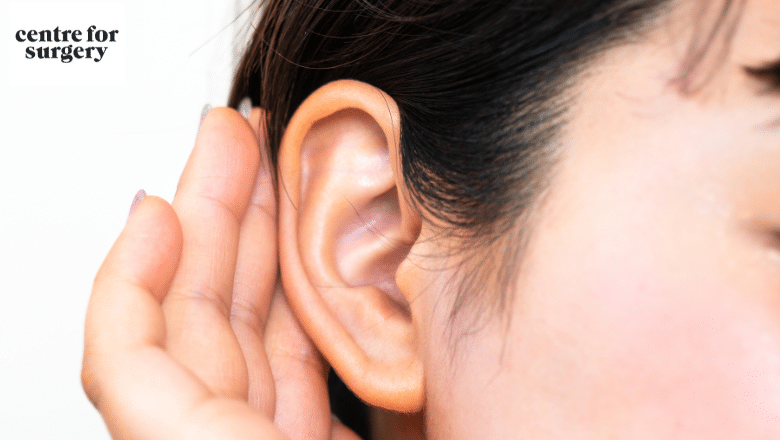
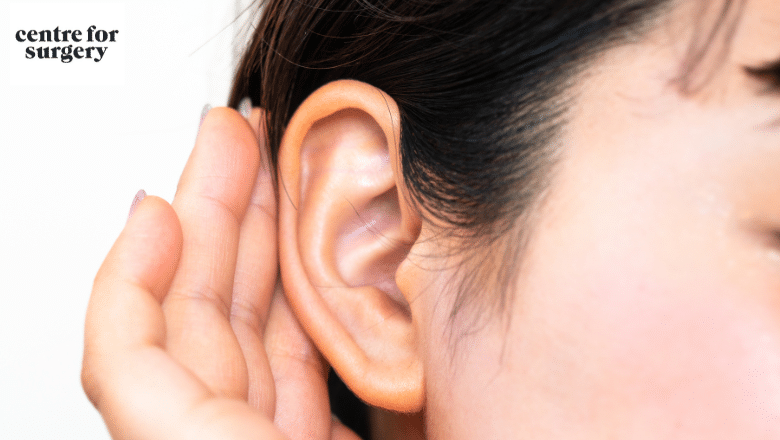
Otoplasty repositions the ears closer to the head — it does not reduce their size. The procedure addresses two specific anatomical features that cause prominent ears:
The antihelix is the curved fold in the middle of the ear. When this fold is poorly developed or absent, the upper ear flares outward. Surgical scoring or suturing of the cartilage creates a sharper antihelical fold, which folds the ear back toward the head.
The conchal bowl is the deep central depression of the outer ear. An overly deep or wide conchal bowl pushes the entire ear away from the skull. Either suturing the bowl back to the mastoid bone (Furnas technique) or excising a strip of conchal cartilage reduces the projection.
For patients who genuinely want smaller ears — long earlobes, oversized helical rims, or macrotia — different techniques are used. Earlobe reduction trims excess lobe tissue. Helical rim reduction reshapes the upper ear curve. These can be combined with otoplasty in the same operation.
RELATED: Can Otoplasty Reduce the Size of Large Ears?
Recovery

Otoplasty is a day-case procedure. A protective head bandage is worn for the first 48 hours, then replaced with a sports headband worn day and night for two weeks and at night only for a further four to six weeks. The headband prevents accidental folding of the ears during sleep, which can disrupt the sutures.
Most patients return to office work after 5–7 days. Sutures behind the ear are usually dissolvable. Contact sports and any activity that risks ear trauma should be avoided for six weeks.
Some swelling and asymmetry are normal in the first month. The final ear position settles around three months post-op.
RELATED: Otoplasty Recovery
Is the result permanent?
Long-term, yes — but with caveats. The cartilage is reshaped using either permanent (non-absorbable) sutures, scoring techniques that weaken the cartilage on one side to produce a controlled bend, or both. Once the cartilage has healed in its new position, the result is stable.
The most common cause of partial relapse is a single suture giving way in the first six months, which can allow part of the ear to spring back. This is uncommon but not rare — published series report a 5–10% rate of minor revision. Wearing the headband as instructed during early recovery substantially reduces this risk.
RELATED: Revision Otoplasty
Cost

Otoplasty at Centre for Surgery starts from £3,000 under local anaesthesia and rises to around £5,000 for general anaesthesia or IV sedation. The choice of anaesthetic adds anaesthetist fees and theatre time but is generally more comfortable for patients who would find lying still under local difficult.
RELATED: How Much Does Otoplasty Cost In The UK?
Booking a consultation
For an otoplasty consultation at our Baker Street clinic, call 0207 993 4849 or email contact@centreforsurgery.com. Finance options including 0% APR are available through Chrysalis Finance.
[contact-form-7 id=”256″ title=”Treatments form”]