One of the most common questions patients ask before committing to liposuction surgery is whether they are the right age. It is a completely understandable concern — and an important one. Liposuction is a body contouring procedure, not a one-size-fits-all treatment, and age plays a meaningful role in candidacy, skin response, and long-term results.
At Centre for Surgery, we perform hundreds of liposuction procedures every year at our Baker Street clinic in London, across a wide range of patients and body types. In this guide, we cover everything you need to know about age and liposuction — from the youngest suitable candidates to older patients considering surgery later in life. If you are just starting your research, our liposuction service page is also a useful starting point.

Is There a Minimum Age for Liposuction?
In the UK, liposuction is not performed on anyone under the age of 18. This is both a regulatory requirement and a clinical one. The body continues to develop and change throughout the teenage years and into early adulthood, and the fat distribution patterns that concern a patient at 17 or 18 may shift significantly in their early twenties as the body reaches full maturity. Performing liposuction before this natural settling process is complete risks producing results that look disproportionate as the body continues to change.
Beyond legal and regulatory considerations, maturity of judgement matters too. Liposuction is an elective surgical procedure with a meaningful recovery period and long-term lifestyle commitments attached to maintaining results. Patients should be at a point in their lives where they can make a fully informed, considered decision — and where their expectations are grounded in a realistic understanding of what surgery can and cannot achieve. Our liposuction FAQs cover many of the questions that arise at this early stage of research.
What Is the Ideal Age Range for Liposuction?
Most liposuction surgeons would agree that the sweet spot in terms of age-related candidacy falls broadly between the mid-twenties and mid-fifties — though this is a guideline rather than a rule. What matters far more than chronological age is the individual patient’s skin quality, health status, body composition, and goals. That said, there are reasons why certain age brackets tend to produce the most consistently excellent results. Browsing our liposuction before and after photos gives a useful sense of the range of outcomes achievable across different patients.
Late Twenties to Late Thirties
For many patients, the late twenties to late thirties represents the optimal window for liposuction. By this point, the body has fully matured and fat distribution has stabilised. Skin elasticity — the ability of the skin to retract and tighten after fat is removed — tends to be at or near its peak, which is one of the most important factors in achieving smooth, natural-looking results. Patients in this age group also typically have the physical resilience to recover well and the lifestyle stability to maintain their results over the long term.
It is worth noting that liposuction is not a treatment for weight loss — it is a body contouring procedure designed to remove stubborn, localised fat deposits that do not respond to diet and exercise. The best candidates at any age are those who are at or near their ideal weight. You can read more about liposuction and weight loss in our dedicated guide, and understand how much fat can realistically be removed in a single session.
Forties
Patients in their forties represent a significant proportion of those who undergo liposuction at Centre for Surgery. By this decade, many people have achieved career and lifestyle stability, have a clear sense of their body and what they would like to change, and are motivated to maintain results through healthy habits. Skin elasticity begins to decline from the mid-thirties onwards, but for the majority of patients in their forties with reasonable skin tone, liposuction continues to deliver excellent outcomes.
The forties are also a decade when hormonal changes — particularly in women approaching perimenopause — can cause stubborn fat to accumulate in areas such as the abdomen, flanks, and inner thighs despite maintained diet and exercise habits. Liposuction can be highly effective in addressing this type of hormonally influenced fat distribution. Those wondering whether liposuction can address cellulite at the same time will find a dedicated guide on this topic.
Fifties and Beyond
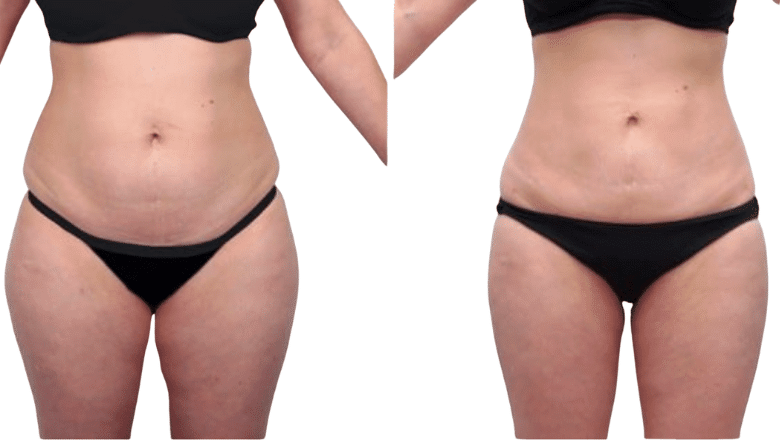
Liposuction can absolutely be appropriate for patients in their fifties and beyond, but the assessment of candidacy becomes more nuanced. The key consideration at this stage is skin elasticity — or more precisely, what remains of it. When skin has sufficient tone and elasticity, it will contract around the treated area after fat removal, producing a smooth, contoured result. When skin laxity is significant, removing fat without also addressing the overlying skin can leave a patient with an improved contour but looser, less toned skin in the treated area.
For patients in this age group where skin laxity is a concern, your surgeon may recommend combining liposuction with a skin tightening procedure — such as a tummy tuck combined with liposuction for the abdomen, or a thigh lift combined with thigh liposuction for the inner or outer thighs. This combined approach addresses both the fat and the skin simultaneously, producing a more complete result. Your surgeon will assess your skin quality thoroughly at consultation and advise on whether liposuction alone, or a combination approach, is most appropriate for your individual anatomy.
General health considerations also become more relevant with age. Patients should be in good overall health and free from conditions that would increase surgical or anaesthetic risk. Understanding your anaesthetic options for liposuction is also worth exploring ahead of your consultation.
Why Skin Elasticity Matters More Than Age
If there is one principle that guides our surgeons’ thinking on age and liposuction more than any other, it is this: skin elasticity is a better predictor of outcome than chronological age. Two patients of the same age can have very different skin quality depending on genetics, lifestyle, sun exposure history, smoking history, and weight fluctuation history. A 50-year-old with excellent skin tone may be a better liposuction candidate than a 30-year-old with poor skin elasticity following significant weight loss.
During your consultation, your surgeon will assess your skin quality in the areas you wish to treat — gently pinching and examining the texture, tone, and degree of natural recoil — to form a view on how your skin is likely to respond to fat removal. Reading about the features of a good liposuction result is useful context for understanding what excellent skin retraction can achieve, and what to expect when elasticity is more limited.
Which Areas of the Body Can Liposuction Treat at Any Age?
Liposuction is one of the most versatile body contouring procedures available, and the areas that can be treated are broadly the same regardless of age — though skin quality assessment in each area is always essential. Common treatment areas include the abdomen, flanks, inner and outer thighs, upper arms, back, chest, and chin and neck. For men specifically, the chest and flanks are particularly common areas of concern. For women, the abdomen, inner thighs, hips, and arms tend to be the most frequently requested areas.
For patients interested in neck and jawline definition, our guide on neck liposuction vs chin augmentation covers the options in detail. For those considering facial liposuction, our guide to facial liposuction explains what is possible and where the limitations lie. And for patients exploring high-definition body sculpting, our guide on ultrasonic liposuction vs regular liposuction outlines the different techniques available.
Liposuction for Men: Age Considerations
Men and women typically seek liposuction for different reasons and in different areas, but the age-related considerations are broadly similar for both sexes. Skin quality and elasticity considerations apply equally, and the general principle — that the late twenties through to the early fifties represents the most commonly optimal window — holds for both. Our guide on plastic surgery for men in London covers the full range of body contouring options available to male patients.
What Are the Most Important Candidacy Factors Beyond Age?
Age is one factor in liposuction candidacy, but it is far from the only one. At Centre for Surgery, our surgeons assess the full picture at consultation. The most important candidacy criteria include the following.
Stable weight is essential. Liposuction is most effective — and results are most durable — when performed on patients who have maintained a consistent weight for at least three months prior to surgery. You can read more about whether fat can return after liposuction and how to maintain your liposuction results in our dedicated guides.
Localised, stubborn fat is the ideal target. Liposuction works best on specific, defined areas that have proven resistant to diet and exercise. It is not suited to diffuse, generalised obesity. Understanding how much fat can be removed during liposuction will help set realistic expectations about what the procedure can achieve in a single session.
Good general health and non-smoking status improve both surgical safety and healing quality. Patients who smoke are strongly advised to stop well in advance of any procedure. Understanding what liposuction feels like and the potential side effects of liposuction will also help you prepare realistically for the procedure.
Realistic expectations are fundamental. Viewing our liposuction before and after photos is a useful way to calibrate expectations. Reading about whether liposuction is permanent is also important for understanding long-term commitment.

Liposuction After Significant Weight Loss
A specific age-adjacent scenario worth addressing is liposuction following significant weight loss — whether through lifestyle changes or bariatric surgery. Patients who have lost a large amount of weight often find that stubborn pockets of fat remain despite their overall transformation. Weight should be stable for at least three to six months before liposuction is considered, and the skin assessment becomes particularly important. Read more about liposuction after weight loss in our dedicated guide, and about how to prepare for liposuction surgery once you are ready to proceed.
Book a Liposuction Consultation at Centre for Surgery
The best way to determine whether you are the right age — and the right candidate — for liposuction is through a face-to-face consultation with one of our GMC-registered specialist surgeons at Centre for Surgery, Baker Street, London. Your consultation will include a thorough assessment of your skin quality, body composition, and goals, and will result in an honest, personalised recommendation — with no pressure and a two-week cooling-off period as standard.
We offer 0% APR finance through our partnership with Chrysalis Finance, making surgery accessible without financial compromise. Full pricing is available on our liposuction cost page.
Frequently Asked Questions
What is the minimum age for liposuction in the UK?
The minimum age for liposuction in the UK is 18. At Centre for Surgery, all patients must be 18 or over to be considered for liposuction surgery.
Is there a maximum age for liposuction?
There is no absolute maximum age for liposuction, but candidacy is assessed individually. As patients age, skin elasticity declines and general health considerations become more relevant. Older patients with good skin tone and good general health can achieve excellent results. Your surgeon will advise on whether liposuction alone, or a combination with skin-tightening surgery, is the most appropriate approach.
What is the best age to have liposuction?
Most surgeons consider the late twenties to early fifties to be the most commonly optimal age range, primarily due to skin elasticity. However, the best age for any individual patient depends more on their skin quality, health status, and stability of weight than on their chronological age. A thorough consultation is the only way to determine individual suitability.
Can I have liposuction in my fifties?
Yes. Many patients in their fifties undergo liposuction successfully at Centre for Surgery. The key considerations are skin elasticity and general health. Where skin laxity is significant, your surgeon may recommend combining liposuction with a skin tightening procedure for optimal results.
Does age affect liposuction recovery?
Recovery timelines are broadly similar across age groups, though older patients may find healing takes slightly longer in some cases. The most important recovery factors apply at every age. You can read more in our liposuction recovery guide and our detailed guide on how to prepare for liposuction surgery.
Does age affect liposuction results?
Age affects skin elasticity, which in turn affects how smoothly the skin contracts after fat removal. Younger patients with high skin elasticity tend to achieve very smooth, tight results. Older patients with reduced elasticity may see slightly less skin retraction, and in some cases may benefit from combined skin tightening procedures. Our liposuction before and after gallery showcases results across a wide range of patients and age groups, and our guide on the features of a good liposuction result explains what to look for.
Is liposuction permanent?
The fat cells removed by liposuction are permanently gone — they do not regenerate. However, remaining fat cells can expand if significant weight is gained after surgery. Maintaining a stable weight is the key to long-lasting results. Read more in our guide on whether liposuction is permanent and our tips on how to maintain your liposuction results.
How do I know if I’m a good candidate for liposuction?
The best candidates are adults who are at or near their ideal weight, have localised areas of stubborn fat resistant to diet and exercise, have reasonable skin elasticity in the areas to be treated, are in good general health, and have realistic expectations. Our liposuction FAQs cover many more common questions, and our liposuction service page is ideal for those just starting to explore their options.