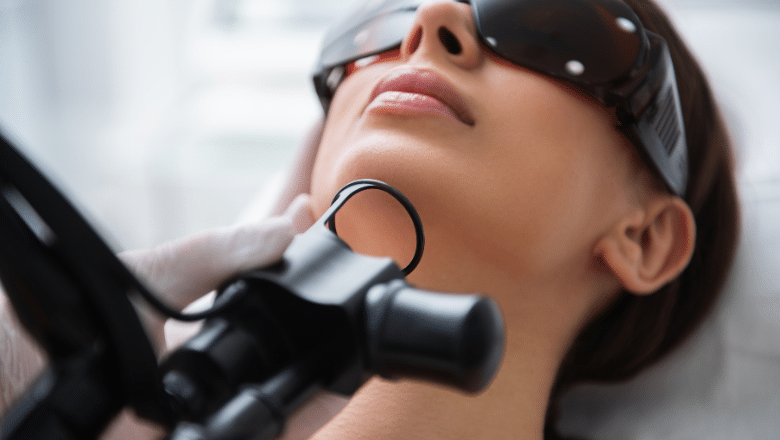
The short answer is day 10 to 14 for fully ablative laser skin resurfacing, around day 7 for fractional protocols, and the day after treatment for non-ablative Fotona SMOOTH® sessions — but only mineral makeup, only once the skin has fully re-epithelialised, and only with strict daily SPF underneath.
The longer answer matters because applying makeup too early on healing skin is one of the most common preventable causes of post-laser complications — infection, irritation, prolonged redness and patchy pigmentation. This guide explains the timing for each laser protocol, what to use when you do resume makeup, and how to manage the visible redness during the gap between treatment and full cosmetic recovery.
Why the wait matters
After ablative laser resurfacing, the outer skin layer (epidermis) has been precisely vaporised. Underneath, the skin is in active wound-healing mode: fresh epidermis migrates from sweat glands and hair follicles to recover the surface over five to fourteen days. During that window, the treated area is functionally an open wound — soft, weeping, then crusted, then pink and tender — and applying anything other than the prescribed aftercare products risks introducing bacteria, irritating chemicals or particulate matter into the healing tissue.
The risks of applying makeup too early are real:
- Infection — bacteria from makeup brushes, sponges and fingers can enter healing skin
- Contact dermatitis — fragrances, preservatives and pigments that the intact barrier normally tolerates can cause significant irritation on healing skin
- Pigmentation — some makeup pigments can stain temporarily into compromised skin, with patchy patterns that take weeks to fade
- Slowed healing — anything occlusive or irritating extends recovery and increases scarring risk
The wait is short. The downside of impatience is long.
Timing by laser protocol
The right timing depends on which laser you’ve had. For background on each, our benefits of the erbium laser guide covers the technology.
Fully ablative erbium YAG resurfacing
Mineral makeup: day 10 to 14. The full-thickness epidermal removal needs time to re-epithelialise. By day 10, most patients have a closed surface with pink fresh skin — at this point a gentle mineral foundation is safe. Conventional liquid foundations and concealers wait until at least week three when residual pinkness has faded.
Fractional erbium YAG resurfacing
Mineral makeup: day 7. The fractional protocol leaves intact skin between treated zones, so re-epithelialisation is faster. Most patients are presentable with a light mineral foundation around the one-week mark. Conventional makeup at two weeks.
Non-ablative Fotona SMOOTH® treatments
This includes Fotona 4D, SmoothEye, LipLase and similar SMOOTH®-based protocols. The skin surface isn’t ablated, so the rules are much more permissive. Mineral makeup: the next day. Some patients apply makeup the same evening if redness has settled — generally fine for SMOOTH® treatments where no surface disruption has occurred.
CO₂ laser resurfacing
If you’ve had CO₂ resurfacing (less common in our clinic, where erbium is the default — see erbium vs CO₂ for the comparison), the timing is later: typically day 14 to 21 for mineral makeup, with persistent redness sometimes requiring concealer for weeks beyond that.
What to use when you resume makeup
Not all makeup is equal in the recovery window. The key principles:
- Mineral over conventional for the first two weeks of makeup wearing. Mineral pigments are inert and unlikely to irritate or stain fresh skin.
- Fragrance-free across all products applied to treated areas. Fragrance is the single most common cause of contact dermatitis on healing skin.
- Non-comedogenic formulations. Heavy or pore-blocking formulas slow healing and can trigger breakouts in compromised skin.
- Clean tools. Brushes and sponges accumulate bacteria. Use fresh, washed tools — preferably disposable applicators for the first week or two of makeup wearing.
- Gentle removal. Use micellar water on a cotton pad or a fragrance-free cleansing balm — no rubbing, no exfoliating wipes, no oil-stripping cleansers.
Managing visible redness in the gap
The hardest part of laser recovery for most patients isn’t the discomfort — it’s the social downtime. The skin looks visibly pink to red for several days, and the temptation to cover it is intense. Here’s how to manage the gap between treatment and being able to use makeup:
- Days 0–7 (fractional) or 0–10 (fully ablative): don’t use makeup. Use the prescribed ointment frequently, wear a wide-brimmed hat outdoors, and plan to be at home. Tinted SPF can be used very carefully from around day 5 to 7 if it’s specifically marketed for post-procedure use and is fragrance- and preservative-free.
- Days 7–14: introduce mineral foundation once the surface is closed. A loose mineral powder gives lightweight coverage; a pressed mineral foundation provides more coverage if needed.
- Weeks 2–6: gradually return to your usual products. Residual pinkness fades steadily. Keep up daily SPF 50 — the new skin is photosensitive for at least three months.
For the full week-by-week recovery arc, see our companion guide on how long it takes to heal after laser skin resurfacing. For what the actual procedure feels like, see is laser skin resurfacing painful?
Sunscreen first, makeup second
Whatever stage of recovery you’re at, daily SPF 50 mineral sunscreen goes on before any makeup. Fresh post-laser skin is highly photosensitive — unprotected sun exposure during the first three months is the single biggest preventable cause of pigmentation problems. Mineral (physical) sunscreens with zinc oxide or titanium dioxide are preferred over chemical formulations in the recovery window.
This isn’t a temporary measure either. Sun protection is how you preserve your laser result long-term. For the broader picture of UV damage and its reversal, see our guide on the five signs of sun damage and how to address them.
Other skincare in the recovery window
Alongside makeup timing, here’s the rough timeline for resuming other skincare:
- Gentle fragrance-free cleanser and moisturiser: from day one (only the prescribed products initially)
- Daily SPF 50: from day five (mineral only initially)
- Standard moisturiser: from week two
- Vitamin C serum: from week four to six (gradually introduce)
- Retinoids, glycolic, salicylic acids: from week six to eight (gradually reintroduce, with your clinician’s approval)
- Exfoliants and scrubs: from week eight onwards, gently
What we don’t recommend
- Camouflage makeup over scabbing or weeping skin — this is the highest-risk situation for infection. Wait until the surface is closed.
- Tinted moisturisers with chemical sunscreens in the first two weeks — the chemical filters can irritate healing skin. Mineral formulations only.
- Returning to active skincare (retinoids, acids, vitamin C) before week four — these significantly delay healing and increase irritation
- Treating the timing as flexible — these intervals exist because they’re what the skin needs. Pushing them earlier increases complications.
Frequently asked questions
What about eyebrow makeup and lip products?
If your eyebrows and lips weren’t directly treated, normal makeup in those areas is fine from day one. Just keep the treated areas product-free until the timeline above.
Can I wear sunglasses immediately?
Yes, and we encourage it — UV protection on healing skin is essential. Clean, large-frame sunglasses are ideal.
Will makeup affect my final result?
Only if applied too early or with the wrong products. Following the timeline and using appropriate mineral formulations protects the result.
What about brow makeup if my brows were near the treatment area?
Wait the standard interval and use fragrance-free brow pencils or powders applied carefully without dragging the surrounding skin.
I have an event soon — can I bring forward my treatment?
Schedule the treatment to give yourself adequate margin for the event. For fractional protocols, three weeks before is the minimum. For fully ablative, allow at least four weeks. Don’t compress the timeline.
Why choose Centre for Surgery
Our Fotona SP Dynamis Pro laser treatments are delivered alongside detailed written aftercare and direct clinical support throughout recovery. Every patient leaves with a clear plan covering when to resume makeup, skincare, exercise and sun exposure — so the visible result of the laser session is protected and preserved.
Centre for Surgery · CQC-regulated · GMC specialist-registered surgeons · 95–97 Baker Street, Marylebone, London W1U 6RN · 0207 993 4849 · Book a consultation · Finance from 0% APR