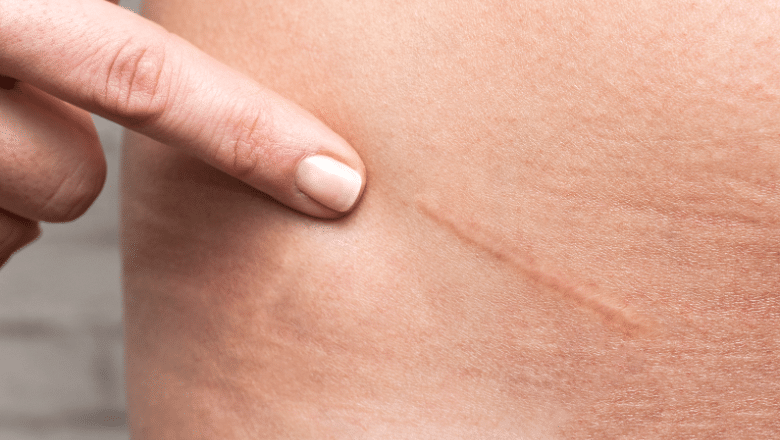
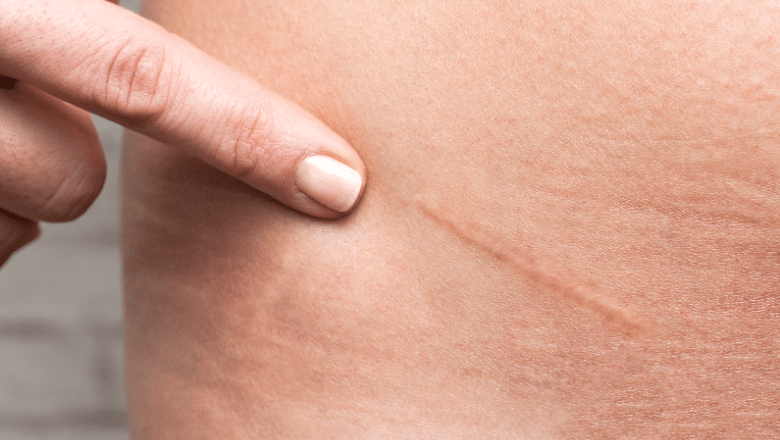
White scars — paler than the surrounding skin and often appearing long after the original wound has healed — are among the harder scars to treat. The honest answer to “can they be removed completely?” is no: complete restoration to original unmarked skin is rarely possible, because the pigment-producing cells in the area have been damaged or lost. What modern treatment can achieve is making the scar significantly less noticeable, improving texture, partially restoring pigment in some cases, and blending the scar more naturally with surrounding skin.
This guide covers why white scars form, what realistic treatment options exist, and where each fits within the wider scar revision service at Centre for Surgery’s CQC-regulated Baker Street private hospital. For broader context see different types of scars.
Why white scars form
When the skin is injured, the body produces collagen to repair the area. In some cases the melanocytes — the pigment-producing cells — are damaged or destroyed during the injury or its healing. Without melanocytes the area can no longer produce melanin, the pigment that gives skin its colour. The result is a scar that appears white or pale against the surrounding tissue.
White (hypopigmented) scars are most common after:
- Burns, particularly deeper burns that destroyed the melanocytes
- Deep surgical excisions
- Some inflammatory skin conditions
- Cryotherapy or aggressive resurfacing treatments
- Injuries that destroyed pigment-producing structures in the dermis
White scars differ from red or brown scars, which still have pigment or vascular activity. Once a scar has turned white, it is generally mature and stable — which makes treatment more difficult than treating an active maturing scar but doesn’t make improvement impossible.
For related context see do hypertrophic scars go away?
Can white scars be removed or just improved?
“Removal” suggests a scar can vanish without trace. In reality, treatment aims to improve colour, texture, and thickness rather than erase the scar completely. The goal is to make the scar less noticeable, sometimes substantially so. Modern treatments can soften the scar, re-pigment selected cases, and produce smoother texture — but realistic expectations are improvement rather than invisibility.
Non-surgical options for white scar treatment
Fractional laser resurfacing
Fractional laser resurfacing remains one of the most effective methods for improving the appearance of mature white scars. At Centre for Surgery we use the Fotona laser system, which delivers controlled energy into the skin to stimulate collagen and trigger remodelling. The laser creates microscopic channels in the scar tissue, prompting the body to remodel the area with healthier cells.
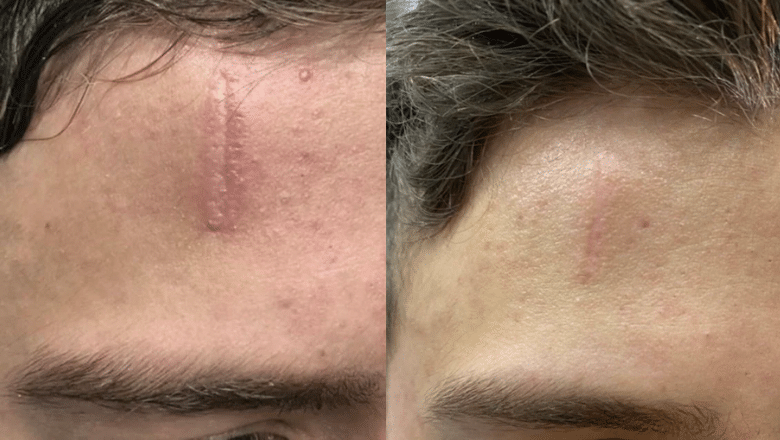
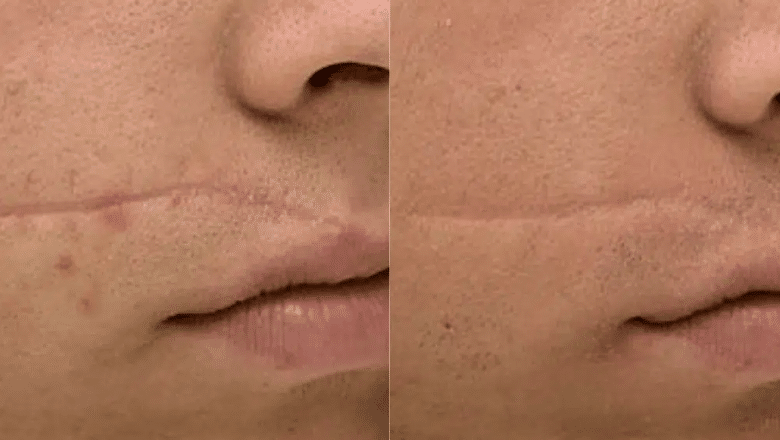
Fractional laser can improve both texture and pigmentation. Multiple sessions are typically needed, but patients often see gradual blending of the scar with surrounding skin. Recovery is short — a few days of redness and mild swelling — and most patients return to normal activities quickly. For full discussion of laser-based scar treatment see how laser acne scar removal works (the mechanisms apply to scars generally).
Radiofrequency microneedling (Morpheus8)
Morpheus8 combines microneedling with radiofrequency energy to remodel scar tissue at depth. The microneedles create controlled micro-injuries in the scar, while radiofrequency heat stimulates collagen and elastin production. Over a course of 3 to 4 sessions, the scar becomes smoother, firmer, and often more evenly toned.
Morpheus8 can be adjusted to different depths, making it versatile for scars of varying thickness and size. It is also safer than aggressive ablative laser in darker skin types (Fitzpatrick IV–VI), where pigmentation risk with laser is higher. Many patients have Morpheus8 as part of a combined treatment plan.
Chemical peels and skin resurfacing
Chemical peels can improve superficial textural irregularities by removing the outer layer of skin and encouraging new cell growth. They don’t typically restore pigment to a white scar but they can refine texture and smooth rough edges. For deeper scars, peels are usually combined with other treatments such as fractional laser resurfacing.
Medical micropigmentation
For selected white scars, medical tattooing can deposit pigment into the scar to match surrounding skin tone. This isn’t suitable for every case — the pigment needs to be matched carefully, and it tends to work better on small isolated scars than on larger areas. It can be useful for small scars in visible areas where other treatments haven’t produced sufficient blending.
Surgical options for white scar removal
For larger, deeper, or treatment-resistant white scars, surgical scar revision may be the right approach. The existing scar is excised and the wound closed with optimised technique. The aim is to replace the white scar with a much finer linear scar that is less visible. For larger areas where pigment or tissue is missing, skin grafting or local flap reconstruction may be needed.
Surgery is often combined with follow-up non-surgical treatment — fractional laser resurfacing or Morpheus8 microneedling — to refine the final result. Patients should understand that surgery produces a new scar in place of the old one; the trade-off is acceptable when the new scar is meaningfully less visible. For full discussion see scar revision surgery FAQs.
What determines the best treatment?
The right treatment depends on several factors: the size, location, and depth of the scar; skin type; overall health; and what the realistic improvement target is. At Centre for Surgery every patient has a full consultation where the scar is assessed and the realistic options are discussed.
No single treatment suits everyone. Often the best results come from combined approaches — fractional laser plus Morpheus8 microneedling, surgical revision followed by laser refinement, or selected medical micropigmentation alongside other treatments. The plan is tailored to your specific scar.
Recovery and aftercare
Recovery varies by treatment. Fractional laser and Morpheus8 usually produce a few days of redness and mild swelling similar to sunburn, with most patients returning to normal activities quickly. Surgical revision requires more downtime, with sutures and wound care for the first week.
Aftercare is crucial whatever the treatment used. Sun protection is one of the most important steps — UV exposure can darken or worsen surrounding skin and make the scar more obvious by contrast. Moisturising and following medical advice helps maintain results. Patience matters too: scar remodelling takes time, and improvements continue for several months after treatment. For full guidance see scar management after cosmetic surgery and the effects of tanning on cosmetic surgery scars.
Realistic expectations
White scars are difficult to treat because they lack pigment, and complete removal is not usually achievable. Modern treatments can substantially improve appearance — making the scar less obvious, smoother, and better blended with surrounding skin. Many patients report meaningful improvement in confidence and comfort once their scars are less visible. The expectation should be improvement, not erasure.
What we don’t recommend
- Expecting complete pigment restoration — once melanocytes have been destroyed, full pigment recovery is rare. Realistic expectations are improvement, not complete correction.
- Aggressive ablative laser on darker skin types without specialist experience — risk of further pigmentation problems is real. Morpheus8 is often the safer choice for Fitzpatrick IV–VI patients.
- DIY treatments — at-home “scar removal” creams, dermarollers — at best ineffective for mature white scarring; at worst they can worsen pigmentation problems.
- Sun exposure without protection — UV darkens surrounding skin and increases the visible contrast with the white scar. Daily SPF 50 essential.
- Surgical revision without follow-up scar management — produces a new scar that may itself become hypopigmented without intensive post-operative care.
- Cheap micropigmentation by inexperienced operators — wrong-colour or wrong-depth pigment placement can produce results that look worse than the original scar.
- Single-session treatments for mature white scarring — established white scars need a course of treatment, not a one-off session.
Frequently asked questions
Can white scars be removed permanently?
White scars cannot usually be erased completely. Treatment can make them substantially less noticeable by improving texture, tone, and sometimes partial pigmentation.
Which is better for white scars — laser or microneedling?
Both can be effective. Fractional laser excels at resurfacing and is particularly useful on lighter skin types. Morpheus8 radiofrequency microneedling remodels tissue at depth and is generally safer for darker skin types. Many patients benefit from combined treatment.
How many sessions will I need?
Most patients need 3 to 6 sessions for meaningful improvement. The exact number depends on scar size, depth, and response to early treatment.
Is scar revision surgery painful?
Surgery is performed under anaesthetic so the procedure itself is painless. Some discomfort afterwards is normal and manageable with paracetamol. Most patients describe the recovery as easier than expected.
Are treatments safe for all skin types?
Yes, with appropriate calibration. Your plastic surgeon will recommend the safest and most effective approach for your specific skin type.
Can creams remove white scars?
Topical creams and oils may improve skin texture or hydration, but they cannot restore pigment to a white scar. For meaningful improvement, in-clinic treatment is needed.
How much does white scar treatment cost?
Non-surgical sessions typically £350–800 each; courses £1,500–4,000+. Surgical revision £1,500–4,000+ depending on complexity. Finance from 0% APR is available. For full cost discussion see how much does laser scar removal cost in the UK?
Is white scar treatment available on the NHS?
NHS funding for scar treatment is restricted. Most patients seeking cosmetic improvement of white scarring proceed privately.
White scar treatment at Centre for Surgery
Centre for Surgery is a CQC-regulated plastic surgery clinic at 95–97 Baker Street, Marylebone. We treat white and hypopigmented scars with Fotona fractional laser, Morpheus8 radiofrequency microneedling, medical micropigmentation, and surgical scar revision where appropriate. All treatment is delivered by GMC-registered consultant plastic surgeons. No GP referral required.
For related guides, see different types of scars, scar revision surgery FAQs, scar management after cosmetic surgery, do hypertrophic scars go away?, and laser scar removal cost.
Centre for Surgery · CQC-regulated · GMC specialist-registered surgeons · 95–97 Baker Street, Marylebone, London W1U 6RN · 0207 993 4849 · Book a consultation · Finance from 0% APR


