
Mole removal can be performed by several different types of practitioner — general practitioners, dermatologists, aesthetic doctors and plastic surgeons all carry out the procedure in the UK. From a purely technical standpoint, removing a mole is a small operation. But the difference between a competent removal and an excellent one — particularly on the face or any visible area — lies in the surgical technique, the closure method, and the planning of the incision. This is where plastic surgical training adds clear value.
This guide explains why mole removal performed by a plastic surgeon typically produces a better cosmetic result than the same procedure performed by other practitioners, what specifically the surgeon does differently, and what to expect from the procedure at Centre for Surgery’s CQC-regulated Baker Street private hospital.
What plastic surgical training adds
Plastic surgeons undergo at least six years of specialist training after qualifying as a doctor, focused entirely on tissue handling, reconstruction, wound closure and aesthetic outcome. Their work spans everything from complex cancer reconstruction to delicate facial cosmetic surgery — but the underlying principles are constant: how to incise, how to handle tissue gently, how to close wounds with minimal tension, how to position scars where they will not be noticed, and how to manage the healing process to optimise the final result.
These principles apply just as much to a small mole excision as they do to a major procedure. The difference between a 5mm scar that fades to invisibility and a 5mm scar that remains visibly raised, puckered or pigmented is rarely the size of the original lesion — it is the technique used to remove it and close the wound.
What the surgeon does differently
Incision planning
The skin is under constant tension from underlying muscles and tissues. This tension is not uniform — it follows predictable patterns described in the 1860s by the Austrian anatomist Karl Langer, and known today as Langer’s lines (or relaxed skin tension lines). Incisions placed parallel to these lines heal with the least tension, and consequently produce the finest scars. Incisions placed across them heal with more tension, and produce wider, more visible scars.
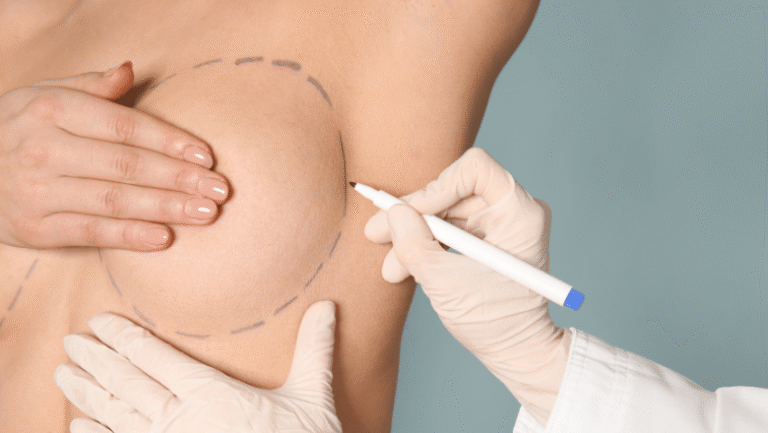
Plastic surgeons map these lines for every patient and plan the incision accordingly. For a mole on the cheek, this means orienting the elliptical excision along the natural line of facial expression. For a mole on the chest or upper back — high-tension areas — it means accepting that no orientation is perfect and planning additional measures to manage tension during healing. A practitioner unfamiliar with these principles may simply orient the excision around the mole’s shape rather than along the underlying tension pattern, producing an avoidable visible scar.
Tissue handling
Gentle tissue handling matters more than most patients realise. Skin handled roughly, crushed by instruments, or held under excessive tension during the procedure heals worse than skin handled with care. Plastic surgeons are trained in atraumatic technique — using fine instruments, skin hooks rather than forceps where possible, and avoiding unnecessary handling of the wound edges.
Layered wound closure
A skin wound is not just a surface to be brought back together. It has multiple anatomical layers — subcutaneous fat, deep dermis, superficial dermis, epidermis — and each plays a different role in the final scar appearance. A simple single-layer closure relies on the surface sutures to take all the wound tension, which produces wider scars and more risk of stretching or pigmentation. A layered closure uses absorbable deep sutures to take the tension off the surface, allowing the skin edges to come together passively and heal cleanly.
Plastic surgeons use layered closure for any excision where the cosmetic outcome matters. This means a slightly longer procedure, but a substantially better scar.
Suture choice and technique
The choice of suture material, suture size, needle type, knot technique and removal timing all influence the final scar. Different anatomical areas need different choices — fine 6/0 sutures for the face, slightly heavier 5/0 for body skin, dissolving sutures versus non-dissolving sutures depending on the situation. Plastic surgeons have these choices second nature; a less specialised practitioner may use the same general-purpose suture for every excision regardless of location.
Scar management afterwards
The work doesn’t end when the wound is closed. Plastic surgeons routinely provide structured scar management — silicone gel or sheeting, sun protection guidance, scar massage technique, follow-up review at the critical 6–8 week point when intervention can still influence the final result, and access to scar revision techniques if the scar develops unfavourably. For full detail on this, see our guides on do silicone strips help cosmetic surgery scars heal better and how long does a mole removal scar take to fade.
How different practitioners compare
| Practitioner | Training focus | Cosmetic outcome priority |
|---|---|---|
| GP | General medicine, basic minor surgery | Removal first, cosmesis secondary |
| Dermatologist | Skin disease diagnosis and treatment | Diagnostic accuracy first; technique variable |
| Aesthetic doctor | Non-surgical cosmetic procedures | Cosmetic focus but surgical technique training varies |
| Plastic surgeon | Tissue handling, reconstruction, wound closure, aesthetic outcome | Cosmetic outcome integral to training |
This is not to suggest that GPs or dermatologists cannot perform competent mole removals — many do. But cosmetic outcome is not the primary focus of their training. For a mole on a hidden area where any reasonable scar is acceptable, the choice of practitioner matters less. For a mole on the face, neck, decolletage, or any visible area, it matters considerably.
When the cosmetic result matters most
Several factors mean a plastic surgeon’s expertise will produce a clearer cosmetic benefit:
- Facial location — face, neck, ears, eyelids, scalp at the hairline, lips. Skin tension lines are particularly important here, and the final scar will be visible.
- Decolletage and upper chest — a high-tension area where scars tend to widen and hypertrophy. Specialist closure technique meaningfully improves outcomes.
- Visible body areas — hands, forearms, lower legs in patients who wear shorts or skirts.
- Patients with a history of poor scarring — keloid or hypertrophic scarring in previous procedures. See do hypertrophic scars go away?
- Patients with darker skin types — Fitzpatrick IV–VI have higher rates of post-inflammatory hyperpigmentation and keloid scarring; specialist technique matters more.
- Multiple lesions — where consistent excellent outcomes across several scars are needed.
- Children — a scar that will be visible for the rest of a child’s life deserves the best technique available.
The other clinical reasons for choosing a plastic surgeon
Beyond the cosmetic outcome, several other factors favour plastic surgical assessment for mole removal:
Diagnostic experience
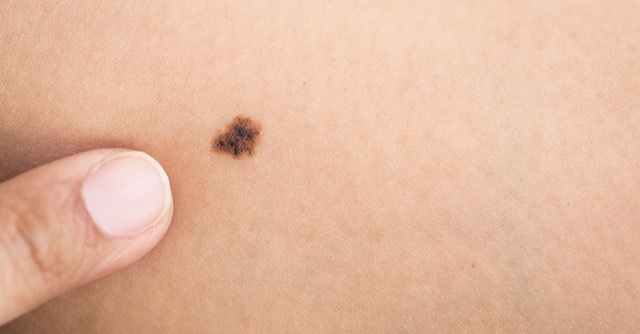
An experienced plastic surgeon who removes hundreds of moles per year develops strong pattern recognition for which lesions look benign and which warrant suspicion. The use of dermoscopy — non-invasive magnified examination of the lesion — adds to clinical accuracy. For the principles of melanoma identification, see what is the difference between a mole and a melanoma?
Routine histology
At Centre for Surgery, every surgically excised mole is sent for histological analysis as standard. The pathology report provides a definitive diagnosis at cellular level, picking up unexpected malignancy or atypia that may not have been obvious clinically. For more on this practice, see should every removed mole be sent for biopsy?
Onward management if needed
If a removed mole returns an unexpected histology result — atypical naevus requiring wider excision, or a melanoma — a plastic surgeon can manage the onward pathway directly. Wider local excision, sentinel lymph node biopsy consideration, and referral to a specialist skin cancer multidisciplinary team are all within scope. A non-surgical practitioner may need to refer onward at this critical stage.
Access to laser and surgical options under one team
For some patients, laser mole removal is appropriate; for others, surgical excision is required. CFS offers both approaches under one clinical team — laser for suitable benign raised moles where histology is not required, and surgical excision with histology for everything else. The choice is made at consultation based on what is right for the specific lesion.
What about cost?
Plastic surgical mole removal is typically more expensive than removal by a GP or aesthetic practitioner — usually by a meaningful margin. The question is whether the difference is worth paying for.
For a small mole on a hidden body area where any minor scar would be acceptable, the answer may genuinely be no. For a mole on a visible part of the body — and particularly the face — the answer is almost always yes. A scar lasts a lifetime; the surgical fee is paid once. Patients who economise on the initial procedure and end up dissatisfied with the scar often spend more on subsequent scar revision than they would have on a higher-quality initial removal.
For the full cost discussion, see our guide to private vs NHS mole removal. Finance from 0% APR through Chrysalis Finance is available at Centre for Surgery.
What to expect from mole removal at Centre for Surgery
The standard pathway at our Baker Street clinic:
- Consultation — face-to-face assessment of the mole, dermoscopic examination, discussion of removal technique, and quotation. Same-day treatment is available for many patients where the mole is clinically benign and the patient wishes to proceed.
- Procedure — performed under local anaesthetic as a day case. Typically 20–40 minutes from arrival to leaving the clinic.
- Histology — every excised specimen sent to a consultant histopathologist. Report typically returned within 5–7 working days.
- Follow-up — suture removal at 5–14 days depending on location. Scar management guidance given. Further review at 6–8 weeks if needed.
- Scar maturation — final scar appearance settles over 6–12 months. Active scar management throughout this period optimises the result.
For full detail on the recovery process, see how long does a mole removal scar take to fade? and what do mole removal scars look like?
What we don’t recommend
- Non-medical “mole removal” clinics — beauty clinics offering quick lunchtime mole removal, often without medical oversight or histology. The risks include poor cosmetic outcome, missed diagnosis of melanoma, and inadequate management of complications.
- Topical over-the-counter “mole removal” creams — unregulated, often caustic, and routinely produce worse outcomes than no treatment at all.
- DIY removal at home — never appropriate. Risks scarring, infection, incomplete removal, and most importantly, destruction of evidence that would have identified a malignancy. See should I be concerned about an itchy or bleeding mole?
- Skipping histology to save cost — every excised mole should be analysed. The cost is modest and the safety value substantial.
- Cosmetic-only consultations for visibly suspicious lesions — any lesion with melanoma features should be assessed first for its clinical significance, with cosmetic considerations secondary.
Frequently asked questions
Is mole removal more expensive with a plastic surgeon?
Yes, typically. The fee reflects specialist training and additional time spent on the technical and cosmetic detail. For visible-area moles, the cosmetic difference usually justifies the cost. For hidden body moles, the difference may matter less.
Will my scar be invisible?
No scar is invisible — every excision produces some mark. With plastic surgical technique on well-chosen incisions, the final scar is usually a fine pale line that is difficult to find without close inspection.
Can plastic surgeons do laser mole removal?
Yes. At Centre for Surgery, both laser and surgical mole removal are offered, with the choice made at consultation based on the specific lesion. Laser is suitable for benign raised moles where histology is not required.
Do I need a GP referral?
No. Patients can book a consultation directly. We do, however, send a copy of any histology report to your GP if requested, for your medical record.
How long does the procedure take?
Most mole removals take 20–40 minutes from arrival to leaving the clinic, including consent, anaesthesia, the procedure itself, and aftercare instructions.
Will I need stitches?
For surgical excision, yes — fine sutures are placed and removed at 5–14 days depending on the location. For shave excision or laser removal, no.
Can my mole be removed today?
Often yes. Same-day removal is available for many clinically benign lesions after consultation. We discuss this individually at the appointment.
Does Centre for Surgery treat children?
Yes — paediatric cases are accepted. We assess each case individually and discuss whether the right approach is removal now, deferral to adulthood, or simply monitoring.
Mole removal at Centre for Surgery
Centre for Surgery is a CQC-regulated plastic surgery clinic at 95–97 Baker Street, Marylebone. All mole removal procedures are performed by GMC-registered consultant plastic surgeons. Every surgically excised mole is sent for histological analysis as standard. Both surgical excision and laser mole removal are available, with the right approach chosen at consultation. No GP referral is required.
For related guides, see can all moles be safely removed?, should every removed mole be sent for biopsy?, can I get mole removal on the NHS?, and our broader guide to common skin lumps and bumps.
Centre for Surgery · CQC-regulated · GMC specialist-registered surgeons · 95–97 Baker Street, Marylebone, London W1U 6RN · 0207 993 4849 · Book a consultation · Finance from 0% APR