
If you have recently had a cyst removed — or are considering having one removed — one of the first questions that comes to mind is whether the cyst will simply grow back. It is an entirely reasonable concern, and one that our surgeons hear regularly at Centre for Surgery. The honest answer is that it depends almost entirely on how the removal was performed. When a cyst is removed correctly and completely, the chances of recurrence are very low. When it is not, recurrence is not just possible — it is likely.
In this guide, we explain why cysts come back, what determines recurrence risk, and how professional cyst removal at Centre for Surgery minimises the likelihood of you ever having to deal with the same cyst again.
What Is a Cyst and Why Does It Form?
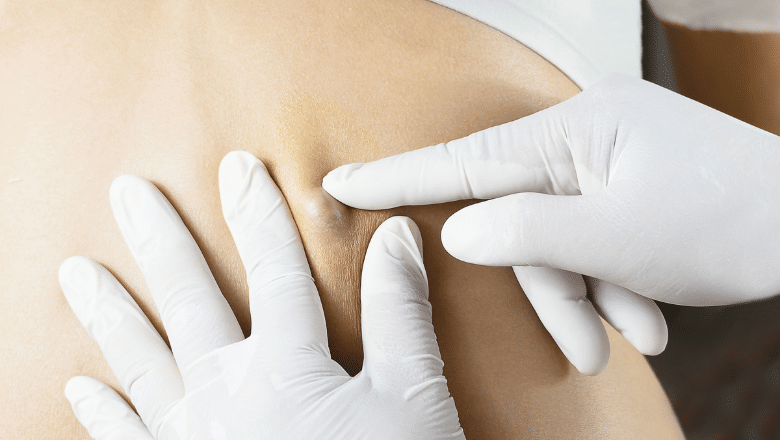
A cyst is a closed sac beneath the skin, lined with its own membrane wall, and filled with fluid, keratin, or semi-solid material. The most common types treated at Centre for Surgery are epidermoid cysts — sometimes called sebaceous cysts — which develop when skin cells multiply and accumulate beneath the surface rather than shedding normally, and pilar cysts, which form from hair follicles and most commonly appear on the scalp.
Cysts develop slowly and are almost always benign, but they can become a source of cosmetic concern, particularly when they appear on visible areas such as the face, neck, or scalp. They can also become infected, inflamed, or painful — at which point removal becomes a clinical necessity rather than an elective choice. Our guide on common skin lumps and bumps provides a broader overview of the range of lesions our surgeons treat.
Why Do Cysts Come Back After Removal?
The key to understanding cyst recurrence lies in understanding what a cyst actually is. A cyst is not simply a collection of fluid or debris sitting beneath the skin — it is an encapsulated structure with its own distinct wall, or capsule. This capsule is what produces the cyst’s contents, and it is this lining that causes the cyst to grow over time.
If a cyst is removed incompletely — whether by draining alone, squeezing, or surgical excision that fails to remove the entire capsule — the residual lining will simply begin producing contents again. The cyst effectively regrows from whatever portion of the wall was left behind. This is why attempting to remove a cyst at home almost always leads to recurrence. Popping or squeezing a cyst releases its contents temporarily but leaves the capsule fully intact — guaranteeing regrowth.
Even in clinical settings, incomplete excision is the most common cause of recurrence. This can happen when a cyst is inflamed or infected at the time of removal — making it harder to identify and fully excise the capsule cleanly — or when a surgeon attempts to remove a cyst through too small an incision, preventing full visualisation of the cyst wall.
How Likely Is a Cyst to Come Back?
When a cyst is surgically removed by an experienced surgeon, with the entire capsule excised intact, the recurrence rate is very low. In the hands of a skilled plastic surgeon performing complete excision, recurrence rates are typically reported at below 5%. When cysts are incompletely removed — whether through drainage alone, incision and expression, or partial excision — recurrence rates are substantially higher, often exceeding 50%.
The type of cyst also plays a role. Pilar cysts, which have a thicker, more robust capsule than epidermoid cysts, are generally easier to excise completely and intact, and tend to have lower recurrence rates as a result. Epidermoid cysts, particularly when inflamed or previously infected, can have a more fragile wall that increases the risk of rupture during removal — which, if not managed carefully, can leave residual lining behind.
Does the Location of a Cyst Affect Recurrence Risk?
Yes — location can influence both the complexity of removal and the recurrence risk. Cysts in areas of high movement or repeated friction, such as the back or neck, may be slightly more prone to irritation and regrowth if not fully excised. Cysts on the scalp — typically pilar cysts — are usually very straightforward to remove completely due to the plane of dissection available in this area.
Earlobe cysts present their own specific considerations. An earlobe cyst can be particularly prone to recurrence if not removed with care, given the limited tissue volume in this area and the proximity to cartilage. Surgical precision is especially important in this location to remove the entire capsule without damaging surrounding structures.
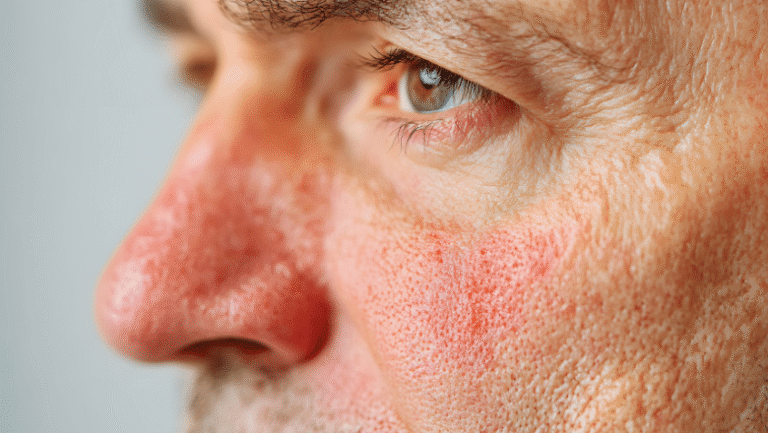
Facial cysts require particular care from a cosmetic standpoint, as scarring is a concern in addition to recurrence. Our surgeons use meticulous technique to excise facial cysts completely while keeping incisions as discreet as possible.
What Is the Difference Between Draining and Excising a Cyst?
This is one of the most important distinctions for patients to understand. Draining a cyst — making a small incision and expressing the contents — provides immediate cosmetic relief by collapsing the cyst, but it does not remove the capsule. The cyst will almost certainly recur, often within weeks or months.
Surgical excision, by contrast, involves removing the entire cyst including its intact capsule wall. This is the gold standard for cyst removal and the approach used at Centre for Surgery. The procedure is typically performed under local anaesthetic as a day-case procedure and takes between 20 and 45 minutes depending on the size and location of the cyst. The excision site is closed with sutures and heals cleanly, with minimal scarring in most cases.
It is also worth noting the distinction between a cyst and a lipoma, as patients sometimes confuse the two. A lipoma is a benign fatty lump that grows within the fat layer beneath the skin, rather than being an encapsulated sac of fluid or keratin. The approach to removal differs between the two, and accurate diagnosis is essential before any procedure. Our guide on skin lesion removal covers both conditions in further detail.
Should a Cyst Be Removed When Infected?
This is a situation that requires careful clinical judgement. When a cyst becomes infected and develops into an abscess, the standard initial treatment is incision and drainage — releasing the pus and relieving pressure — followed by a course of antibiotics. However, incision and drainage alone does not remove the cyst and the underlying condition will almost certainly recur.
Definitive surgical excision of an infected cyst is typically deferred until the active infection has fully resolved — usually at least four to six weeks after the acute episode. Attempting to excise an acutely infected cyst is technically more difficult, as the surrounding inflammation distorts tissue planes and makes it harder to identify and remove the capsule cleanly, increasing recurrence risk significantly. Once the infection has cleared, excision under planned, elective conditions produces far better and more reliable results.
Can a New Cyst Form in the Same Area?
It is important to distinguish between a recurring cyst — the same cyst regrowing because the capsule was not fully removed — and a new cyst forming in the same general area. Some patients are simply prone to developing epidermoid or pilar cysts, and a completely new cyst can develop near the site of a previously removed one. This is not the same as recurrence, though it may be difficult to tell the difference without clinical assessment.
Patients who develop multiple cysts over time, or who have a family history of cysts, should discuss this with their surgeon at consultation. In rare cases, multiple cysts can be associated with underlying genetic conditions — though the vast majority of people who develop cysts do so entirely sporadically with no underlying cause.
How to Minimise the Risk of Your Cyst Coming Back
The single most important factor in preventing cyst recurrence is ensuring that the entire capsule is removed at the time of surgery. This requires an experienced surgeon operating in a controlled, well-lit clinical environment with the appropriate instruments and technique. It also requires choosing the right time for surgery — when the cyst is quiescent rather than actively infected — and following a properly planned surgical approach rather than attempting a hasty minimal excision.
At Centre for Surgery, our surgeons perform cyst excision as a planned, meticulous procedure. Every cyst is sent for histopathological analysis following removal — a laboratory assessment of the tissue that confirms the diagnosis and identifies any features of clinical concern. This is standard practice at our clinic and provides an additional layer of reassurance for every patient.
Following your procedure, our post-operative nursing team will provide detailed aftercare guidance to support optimal healing and minimise scarring. Most patients experience a very straightforward recovery and are able to return to normal activities within a few days.
Book a Cyst Removal Consultation at Centre for Surgery
If you have a cyst that has returned following a previous removal, or if you are considering having a cyst removed for the first time and want the reassurance of complete, expert excision, we would encourage you to book a consultation at Centre for Surgery. Our GMC-registered specialist surgeons at our Baker Street clinic in London assess every cyst individually, provide an honest clinical opinion, and perform removal to the highest standard — with histopathological analysis of every specimen as standard.
You can learn more about our approach on our cyst removal service page, or browse our broader skin lesion removal service for information on the full range of conditions we treat. Finance options are available through Chrysalis Finance, including 0% APR.
Frequently Asked Questions
Will my cyst definitely come back after removal?
Not necessarily. When a cyst is removed completely — with the entire capsule wall excised intact — the recurrence rate is very low, typically below 5% in the hands of an experienced surgeon. Recurrence is most commonly the result of incomplete removal.
My cyst was drained but it has come back. What should I do?
Recurrence after draining is extremely common because draining only removes the contents, not the capsule. The definitive treatment is surgical excision of the entire cyst including its wall. Book a consultation at Centre for Surgery to have the cyst formally assessed and removed correctly.
How long after removal can a cyst come back?
If the capsule was left behind, a cyst can begin regrowing within weeks and may be clearly visible again within a few months. In some cases, incomplete excision leads to a slower regrowth that becomes apparent over a year or more. If you notice a lump returning in the same location as a previously removed cyst, seek a clinical assessment promptly.
Is draining a cyst ever appropriate?
Draining is appropriate as a temporary measure when a cyst has become acutely infected and formed an abscess — to relieve pain and allow the infection to clear. It is not an appropriate definitive treatment for a non-infected cyst. Once the infection has resolved, surgical excision should be planned to remove the cyst permanently.
What is the difference between a cyst and a lipoma?
A cyst is an encapsulated sac beneath the skin filled with fluid or keratin, produced by a cell-lined wall. A lipoma is a benign fatty lump that grows within the subcutaneous fat layer. Both are benign and both require surgical removal, but the technique differs. Accurate diagnosis before any procedure is essential. Read more about both conditions on our skin lesion removal page.
Can I have a cyst removed if it is currently infected?
Definitive surgical excision is not recommended while a cyst is actively infected, as inflammation makes complete removal more difficult and increases recurrence risk. The standard approach is to treat the infection first — with drainage and antibiotics if necessary — then plan excision once the infection has fully resolved, typically after four to six weeks.
Will cyst removal leave a scar?
All surgical cyst removal involves a small incision, which will produce a scar. In the hands of an experienced plastic surgeon, incisions are planned to be as discreet as possible and scars typically fade to be barely visible over time. Our post-operative nursing team provides comprehensive scar management advice as part of your aftercare.
How soon can I return to normal activities after cyst removal?
Most patients are able to return to normal daily activities within a few days of cyst removal. Strenuous exercise and activities that put tension on the excision site should be avoided for two to three weeks. Your surgeon will provide specific guidance based on the size and location of your cyst.