One of the most common anxieties patients have after otoplasty — and one of the most frequently asked questions at consultation — is whether the ears will stay flat or gradually spring back to their original protruding position over time. It is a legitimate concern, and it deserves a direct, honest answer rather than vague reassurance.
The short answer is that in the vast majority of cases, the results of well-performed otoplasty are permanent. But there are specific circumstances in which ears can partially return to their pre-operative position, and understanding what causes this — and how it is prevented — puts you in a much stronger position to make informed decisions about your surgery and your recovery.
At Centre for Surgery in London, otoplasty is performed by GMC-registered specialist surgeons at our CQC-regulated Baker Street clinic. In this guide, we explain exactly what determines whether your ears stay flat after surgery, what causes relapse in a minority of cases, and what you can do to protect your result.
How Otoplasty Works — and Why It Should Be Permanent
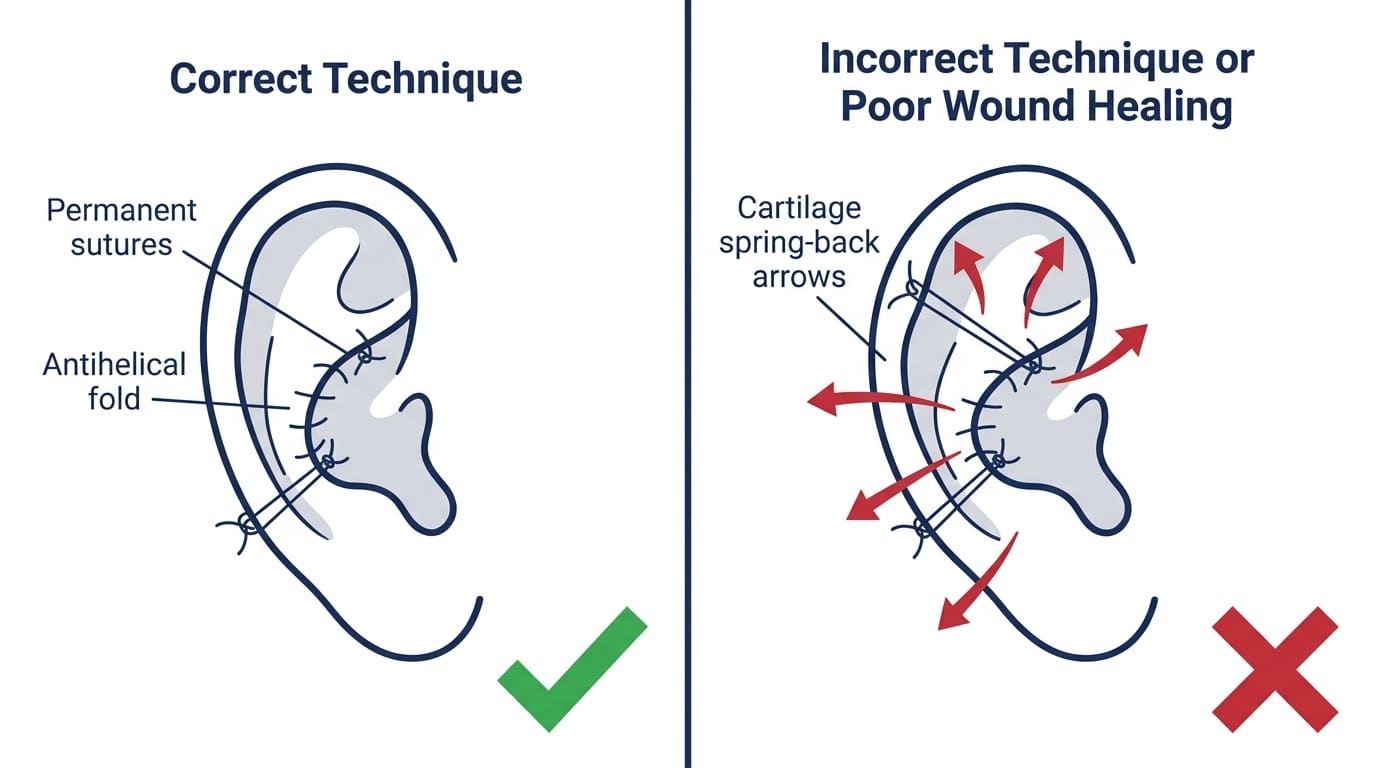
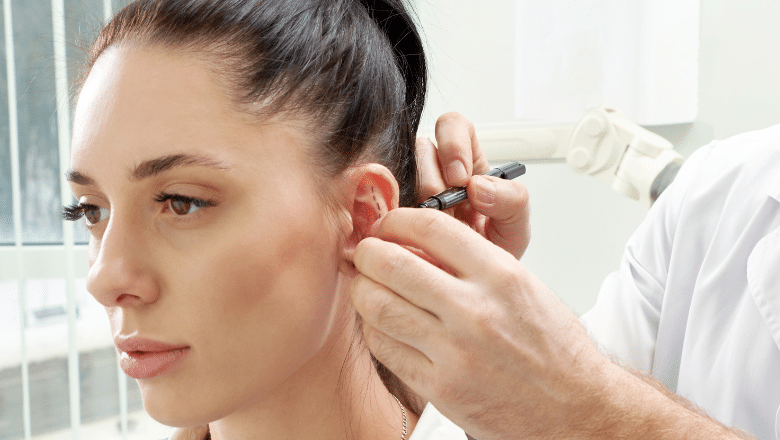
To understand whether ears can go back after otoplasty, it helps to understand what the surgery actually does. In the most common form of otoplasty — correction of prominent or protruding ears — the surgeon reshapes the cartilage of the ear to create or strengthen the antihelical fold (the inner curve of the ear), and uses permanent sutures to hold the reshaped cartilage in its new position closer to the head. These sutures are designed to maintain the ear’s position long-term, not just during the initial healing period.
When the surgery is performed correctly — with the right suture technique, appropriate tension, and sufficient cartilage remodelling — the results are durable. The ear heals in its new position, the cartilage adapts over time, and the sutures provide ongoing support. As covered in our post on whether otoplasty results look natural, well-executed ear pinning produces results that are indistinguishable from natural ear anatomy.
Can Ears Go Back After Otoplasty?
Yes — in a minority of cases, some degree of relapse can occur. This does not mean the surgery has failed entirely, but it does mean the ears may not remain quite as flat as they appeared immediately post-operatively. Understanding when and why this happens is important.
Early Relapse — Within the First Few Weeks
The most vulnerable period for relapse is the first six weeks following surgery, while the ears are still healing and the cartilage has not yet fully adapted to its new position. During this time, any significant mechanical force applied to the ears — a knock, sleeping on the ear without protection, or removing the headband too early — can place stress on the sutures and potentially cause partial displacement.
This is exactly why post-operative care during the early recovery phase is so important. Wearing the prescribed headband as directed, sleeping on your back, and avoiding contact sports or activities that could knock the ears are not optional recommendations — they are the primary protective measures that safeguard your result during the healing period. Our post on how long to wear a headband after otoplasty covers the timeline and rationale in detail.
Suture-Related Causes
In a small number of cases, relapse is caused by suture failure — a suture breaking or pulling through the cartilage. This is more likely when sutures are placed under excessive tension, when the cartilage is unusually stiff or springy, or when the surgical technique relies entirely on sutures without sufficient cartilage scoring or reshaping to reduce the inherent spring of the ear. The choice of surgical technique matters significantly here. Techniques that combine cartilage scoring or excision with suture fixation are generally more durable than suture-only approaches, particularly in ears with very stiff cartilage.
The Natural Spring of Ear Cartilage
Ear cartilage is inherently springy — it resists being bent into a new position and has a natural tendency to return to its original shape. This is the fundamental mechanical challenge of otoplasty. Sutures hold the cartilage in its new position while healing occurs and the cartilage adapts. In most cases the cartilage eventually settles permanently in its new position. In cases where the cartilage is particularly stiff, however, or where the surgical technique has not adequately reduced the spring, the sutures may be under more tension than ideal — and over time this can lead to gradual partial relapse.
Incomplete Antihelical Fold Formation
In some cases of partial relapse, the issue is not suture failure but rather incomplete antihelical fold formation. The antihelical fold — the curved ridge that lies between the outer rim of the ear and the ear canal — is what keeps the ear lying flat against the head. If this fold is not sufficiently well-defined during surgery, the ear can appear to drift back toward a more prominent position as swelling resolves and the tissues settle. This is a surgical outcome issue rather than a complication in the true sense, and it is the reason why experienced surgeons who perform high volumes of otoplasty consistently produce more durable results than surgeons for whom ear surgery is an occasional procedure.
How to Protect Your Otoplasty Results
The good news is that the great majority of relapse is preventable through a combination of choosing the right surgeon and following post-operative instructions carefully. Here is what matters most.
Choose a Surgeon Experienced in Otoplasty
This is the single most important factor in determining whether your results will last. Surgeons who perform otoplasty regularly have refined their technique to address stiff cartilage, ensure adequate antihelical fold formation, and select the appropriate suture placement for each individual ear anatomy. At consultation, it is reasonable to ask your surgeon how many otoplasty procedures they perform each year, which technique they use, and how they manage ears with particularly stiff or springy cartilage. Our detailed guide on what to expect from an otoplasty procedure explains the surgical steps involved.
Wear the Headband as Directed
The post-operative headband is not just a comfort measure — it is an active part of the healing process. It holds the ears in their new position while the swelling resolves and the cartilage begins to adapt. Most patients are asked to wear the headband continuously for the first two weeks, and then at night for a further four to six weeks. Removing it too early is one of the most common reasons for preventable partial relapse. As covered in our post on headband wear duration after otoplasty, compliance during the night-time phase is particularly important.
Protect the Ears from Trauma
During the first six weeks, any significant knock or force applied to the ears has the potential to displace the sutures before healing is complete. Avoid contact sports, roughhousing, and any activity where the ears could be accidentally knocked. Sleep on your back rather than on your side. When dressing and undressing, be mindful of clothing being pulled over the ears. These precautions are temporary — but they are important during the critical healing window. Our post on otoplasty recovery top tips covers the full range of protective measures in detail.
Attend All Post-Operative Appointments
Regular review appointments allow your surgeon to monitor healing progress, identify any early signs of suture tension or displacement, and intervene if necessary before partial relapse becomes established. If you notice the ears appear to be moving back toward their original position during recovery, contact the clinic promptly rather than waiting for your next scheduled appointment.
What If My Ears Do Go Back?
If partial relapse does occur — whether immediately after surgery or months later — revision otoplasty is available. Revision ear surgery is more technically demanding than primary otoplasty because the tissues will have scarred and the cartilage may be more difficult to reshape, but in experienced hands it can achieve excellent results. As covered in our post on the benefits of otoplasty, the goals remain the same: natural-looking ears that lie flat against the head and enhance overall facial symmetry.
The decision about whether and when to proceed with revision surgery depends on the degree of relapse, the patient’s concerns, and the surgeon’s assessment of what can be improved. In cases of minor partial relapse where the result is still significantly improved from the pre-operative position, many patients are content with the outcome and do not require revision.
What Does the Research Say?
Otoplasty has one of the highest patient satisfaction rates of any cosmetic procedure, with the majority of studies reporting satisfaction rates above 90%. Relapse requiring revision surgery is reported in a minority of cases — typically between 5% and 10% in published series — and is strongly correlated with surgical technique and post-operative compliance rather than patient-specific factors. The take-home message from the published evidence is clear: when performed by an experienced surgeon using an appropriate technique, and when the patient follows post-operative instructions carefully, the results of otoplasty are highly likely to be durable.
Frequently Asked Questions
Will my ears go back to normal after otoplasty?
In the vast majority of cases, no. Well-performed otoplasty produces permanent results. A minority of patients experience some degree of partial relapse, most commonly due to suture-related issues or inadequate antihelical fold formation. Choosing an experienced surgeon and following post-operative instructions carefully significantly reduces this risk.
How long until otoplasty results are permanent?
By six weeks post-operatively, the cartilage has adapted sufficiently that the risk of mechanical relapse is very low. The full result — including complete resolution of swelling and final scar maturation — takes three to six months to declare itself.
What is the most important thing I can do to protect my otoplasty results?
Wearing the prescribed headband exactly as directed — both day and night for the first two weeks, and at night for the following four to six weeks — is the single most important protective measure during recovery. Avoiding trauma to the ears during the first six weeks is equally critical.
Is otoplasty painful?
Most patients describe the recovery as uncomfortable rather than painful. Prescribed pain relief manages any discomfort effectively in the first few days. Our post on whether otoplasty is painful covers what to expect in detail.
Will otoplasty leave visible scars?
Otoplasty incisions are placed in the natural crease behind the ear and are well-concealed. Our post on minimising scars after otoplasty covers the healing process and scar management in full.
What is the best age for otoplasty?
At Centre for Surgery, otoplasty is performed on patients aged 18 and over only. Our post on the best age for otoplasty covers the candidacy considerations in detail.
Otoplasty at Centre for Surgery
Centre for Surgery performs otoplasty at our CQC-regulated Baker Street clinic in central London. All procedures are performed by GMC-registered specialist surgeons with extensive experience in ear reshaping surgery. Our surgeons use techniques that combine cartilage scoring and reshaping with suture fixation to produce durable, natural-looking results — minimising the risk of relapse and maximising long-term patient satisfaction.
Finance options including 0% APR are available through our partner Chrysalis Finance — visit our Finance Options page for details.
Phone: 0207 993 4849 | Email: contact@centreforsurgery.com | Address: 95-97 Baker Street, London W1U 6RN
[contact-form-7 id=”256″ title=”Treatments form”]