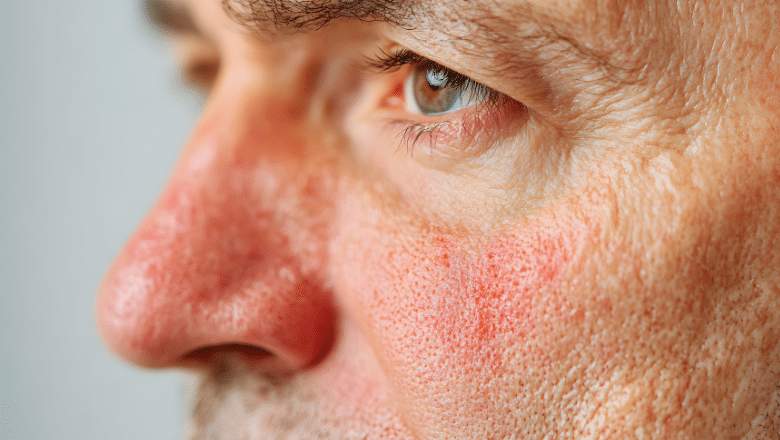
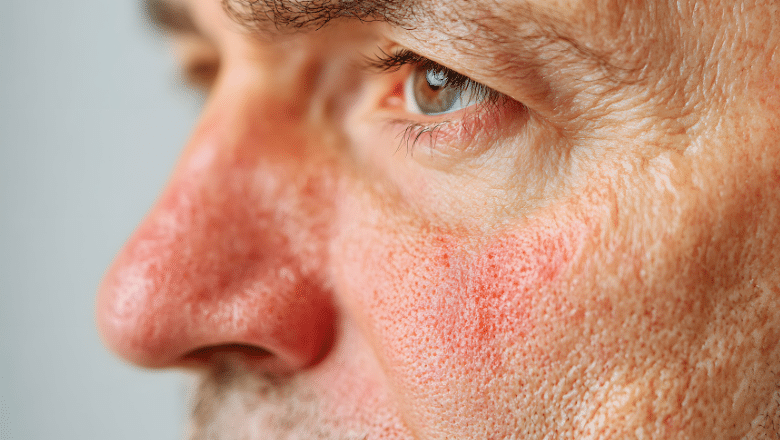
Rhinophyma is a chronic skin condition that causes progressive thickening and enlargement of the nose. It changes the shape and texture of the skin, producing visible bumps, redness, and surface irregularity. Many patients seek treatment to restore a smoother and more natural appearance. The most common question afterwards: can rhinophyma come back?
The honest answer: yes, it can recur — though recurrence is not inevitable. The likelihood depends on how well the underlying rosacea is controlled, the completeness of the original treatment, and lifestyle habits during recovery and beyond. With appropriate treatment and good ongoing skin management, many patients enjoy long-lasting results.
This guide covers what rhinophyma is, the realistic treatment options, what determines recurrence risk, and where rhinophyma treatment fits within the broader service at Centre for Surgery’s CQC-regulated Baker Street private hospital. See rhinophyma surgery for the full service overview.
What is rhinophyma?
Rhinophyma develops gradually, often as the advanced phymatous stage of rosacea. It involves thickened skin, enlarged sebaceous (oil) glands, and an irregular nasal surface. The condition is far more common in men and tends to appear later in life, usually between the ages of 50 and 70. The nose can appear bulbous, red, and swollen, sometimes with visible pores or surface nodules.
Although rhinophyma has historically been associated with alcohol use, this link is largely a myth. Alcohol can temporarily worsen redness, but it does not directly cause the tissue changes seen in rhinophyma. The underlying mechanism is chronic inflammation, vascular changes, and sebaceous gland overgrowth over many years.
What causes rhinophyma to develop?
The precise cause remains uncertain, but several contributing factors are recognised:
- Long-standing rosacea with chronic inflammation
- Hyperactivity of sebaceous (oil-producing) glands
- Genetic susceptibility — more common in people with fair skin and Northern European ancestry
- Environmental triggers including UV exposure, temperature extremes, spicy foods, caffeine, alcohol, and emotional stress
- Hormonal changes and immune system activity contributing to overproduction of skin cells and connective tissue
These triggers don’t cause rhinophyma on their own, but they can accelerate the vascular changes that lead to thickened tissue in susceptible patients.
For broader rosacea context see what are the different stages of rosacea?
How is rhinophyma diagnosed?
Diagnosis is usually made through clinical examination. The characteristic thickening, irregular texture, and enlarged pores are typically sufficient to confirm the condition. In advanced or atypical cases, a small biopsy may be performed to exclude other conditions such as skin cancer or granulomatous disease.
Because rhinophyma is associated with rosacea, assessing the extent of underlying vascular inflammation is essential. This helps determine the best treatment plan — combining local treatment of tissue overgrowth with broader rosacea management.
Treatment options
Treatment depends on severity. Early phymatous changes may slow with medical management of rosacea; once the skin has thickened noticeably, procedural or surgical intervention is needed to restore the nasal contour.
Medical management
For mild phymatous changes, treatment of the underlying rosacea — through topical or oral medication, plus gentle skincare, barrier protection, and daily SPF — may slow progression. Once tissue is enlarged or nodular, medical therapy alone cannot reverse the changes. Rosacea laser treatment may be used to manage the underlying vascular component.
Laser resurfacing
Carbon dioxide (CO2) or Erbium lasers precisely remove excess tissue while sealing small blood vessels. This allows accurate sculpting of the nose and reduces bleeding during the procedure.
Electrosurgery and radiofrequency
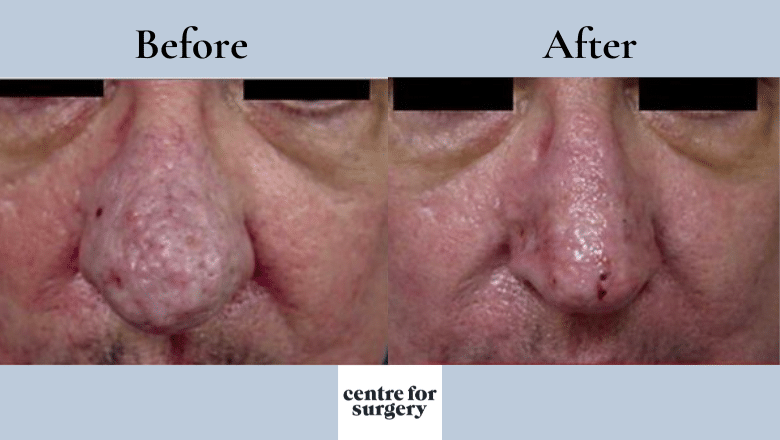
Controlled heat is used to vaporise thickened tissue. Effective for reshaping the nose and improving surface texture, often combined with other techniques in the same session.
Surgical excision and debulking
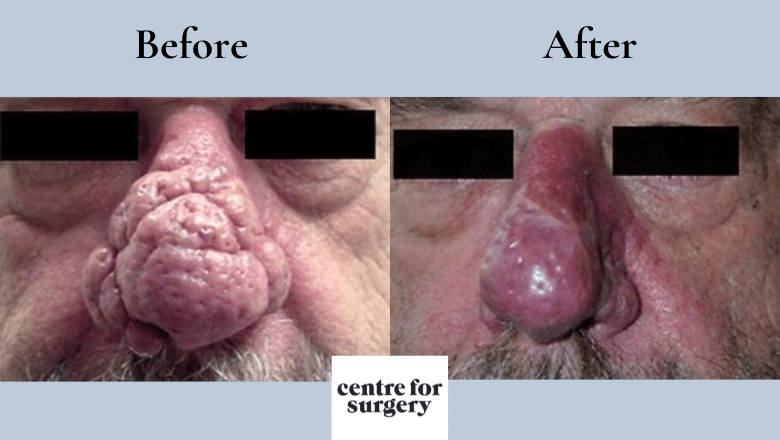
For more extensive rhinophyma, the surgeon removes substantial amounts of excess tissue with fine instruments, restoring the nasal shape. Reconstructive techniques may be needed if deeper layers are affected.
Dermabrasion
After debulking or laser treatment, dermabrasion can smooth the surface and blend the treated area with surrounding skin.
Most patients have a combined approach — debulking to restore contour, then laser or dermabrasion to refine the surface. Each plan is tailored to the severity and the patient’s specific pattern of disease.
Can rhinophyma recur after treatment?
Yes — recurrence is possible but not inevitable. The likelihood depends on several factors:
- How effectively the underlying rosacea is controlled after treatment
- The completeness of the original tissue removal
- Lifestyle habits during recovery and ongoing
- How advanced the disease was at the time of original treatment
When treated by an experienced surgeon and supported by good post-treatment skincare and rosacea management, the recurrence risk is low. However, because the underlying rosacea tendency persists, patients should remain vigilant about triggers and follow up regularly.
What causes recurrence?
- Inadequate control of underlying rosacea — ongoing inflammation and sebaceous gland activity drives renewed thickening
- Incomplete original treatment — residual abnormal tissue can slowly redevelop
- Continued exposure to triggers — UV, heat, alcohol, stress can reactivate disease
- Late presentation — more advanced disease at the time of treatment carries higher recurrence risk
- Genetic predisposition — patients with strong family history may have higher baseline tendency to recurrence
How long do results last?
Most patients enjoy long-lasting improvement — many remain free of meaningful recurrence for years, particularly when the condition was treated early and ongoing care is followed. Regular review with a specialist helps catch any subtle early changes before they progress to advanced disease again.
Can rhinophyma be prevented from returning?
Recurrence cannot always be prevented entirely, but the risk can be substantially reduced through consistent care:
- Ongoing rosacea control — through appropriate medication, skincare, and rosacea laser treatment where indicated
- Trigger avoidance — known triggers including UV exposure, temperature extremes, spicy foods, and excessive alcohol
- Daily SPF — non-negotiable for preventing both UV-driven inflammation and protecting treated skin
- Gentle skincare — non-irritating cleansers, supportive moisturisers, and avoidance of harsh actives
- Stress management — emotional stress measurably worsens rosacea
- Regular specialist follow-up — annual review allows early detection and treatment of any recurrence
Post-treatment recovery and aftercare
Recovery time varies by procedure. After laser or surgical rhinophyma treatment, the nose typically appears red and slightly swollen for several weeks. Gentle cleansing, prescribed ointments, and diligent sun protection are essential during this period. As new skin forms, redness fades and the contour assumes its smoother final shape.
Most patients return to normal daily activities within 1 to 2 weeks, with full healing and colour blending taking longer. Following aftercare instructions closely supports the best outcome and reduces the risk of complications or uneven texture.
Regular follow-up allows monitoring of healing and detection of any early recurrence. Ongoing management of the underlying rosacea remains a key part of long-term success. For full guidance see scar management after cosmetic surgery.
What we don’t recommend
- Ignoring the underlying rosacea after treatment — the single biggest driver of recurrence. Rhinophyma treatment without ongoing rosacea management is half a treatment plan.
- Sun exposure during recovery and beyond — UV drives the underlying inflammation. Daily SPF 50 is essential, indefinitely.
- Harsh skincare actives during healing — retinoids, exfoliants and acidic actives can worsen rosacea and disrupt healing.
- Continuing known triggers without consideration — alcohol, spicy foods, and temperature extremes accelerate recurrence in susceptible patients.
- DIY treatments — at-home dermarollers, abrasive scrubs, “rosacea kits” — frequently worsen the condition rather than improving it.
- Delaying treatment until disease is very advanced — late presentations are harder to fully correct and have higher recurrence risk.
- Smoking around the time of any rhinophyma surgery — measurably worsens healing and final result.
- Choosing an inexperienced operator on price alone — surgical and laser results vary considerably with operator experience.
Frequently asked questions
How common is rhinophyma?
Relatively uncommon but occurs more often in men with fair skin who have long-standing rosacea. Most common in patients over the age of 50.
Is rhinophyma painful?
Most patients don’t experience pain, but the area may feel tender, warm or uncomfortable if inflammation or secondary infection is present.
Can rhinophyma affect breathing?
Severe cases can cause nasal obstruction due to internal tissue thickening. Surgical reduction not only improves appearance but can also restore proper airflow.
How soon after surgery will I see results?
Initial improvement is visible almost immediately, though swelling and redness can take several weeks to settle. Final results develop gradually as the skin remodels over months.
What skincare routine should I follow after rhinophyma treatment?
A gentle, fragrance-free routine — non-abrasive cleanser, supportive moisturiser, and daily SPF. Avoid exfoliants and harsh actives until the skin has fully healed.
Does the NHS cover rhinophyma treatment?
NHS funding depends on severity and whether the condition affects function such as breathing. Most cosmetic rhinophyma treatment is private. Finance from 0% APR is available.
How much does rhinophyma treatment cost?
Pricing varies with severity and the techniques used. Laser-based treatment courses typically start from around £1,500; surgical debulking with combined laser/dermabrasion £2,500–5,000+. Detailed pricing is provided at consultation. For related cost discussion see rosacea laser treatment cost.
How long until I can tell whether the condition is recurring?
Any meaningful recurrence usually develops over months to years rather than weeks. Regular follow-up at 3, 6, and 12 months — then annually — allows any early changes to be picked up and addressed.
What if the rhinophyma does come back?
Recurrence can usually be re-treated effectively, particularly if caught early. The same range of treatment options (laser, electrosurgery, surgical debulking, dermabrasion) is available, calibrated to the extent of recurrent disease.
Rhinophyma treatment at Centre for Surgery
Centre for Surgery is a CQC-regulated plastic surgery clinic at 95–97 Baker Street, Marylebone. Our rhinophyma surgery service combines surgical debulking, laser resurfacing, electrosurgery and dermabrasion as appropriate, with ongoing rosacea laser treatment to support long-term control. All performed by GMC-registered consultant plastic surgeons. No GP referral required.
For related guides, see what are the different stages of rosacea?, rosacea laser treatment cost, different types of scars, and scar management after cosmetic surgery.
Centre for Surgery · CQC-regulated · GMC specialist-registered surgeons · 95–97 Baker Street, Marylebone, London W1U 6RN · 0207 993 4849 · Book a consultation · Finance from 0% APR