

Facelift surgery is often preferred by older patients who wish to eliminate loose or sagging skin around the neck and jaw. There are three different types of facelift surgery: rhytidectomy, better known as a traditional facelift, mid-facelift and mini facelift. There is also a complementary procedure that enhances the effects of the facelift: a neck lift. All four procedures involve surgery to remove and replace your skin.
Traditional Facelift
Traditional facelifts are most effective for older patients with loose or wrinkled skin.
The procedure starts with the patient being numbed with local anaesthesia. The next step is the incision. Your surgeon will begin by making incisions around your temples and along your hairline, behind your ears. Once the skin is cut, the surgeon will remove the appropriate amount to make the face appear tighter. After the correct amount of skin is removed, your surgeon will begin to stitch up the wound. They will do it along the natural hairline to reduce the appearance of scarring. This surgery is invasive so you should bear that in mind when considering it.
RELATED: Facelift Surgery FAQs – Q&A about Rhytidectomy
Mid and Lower Facelift
A mid-facelift involves lifting the cheeks and eyelids. This procedure again begins with local anaesthesia. The surgeon marks out an area around the hairline and behind the ears that needs to be removed to achieve a good result. The surgeon will then begin removing excess skin around the ears and hairline. The surgeon will ensure the cheeks are positioned correctly on the face. After that, the surgeon will start stitching the skin back together around the hairline to minimise scarring.
A lower facelift is a procedure that addresses the lower half of the face, including the neck, cheeks, and jowls. The surgery starts with local anaesthesia. The surgeon then cuts around the back of the ear and makes small incisions around the jaw. The excess skin is then removed from these areas, and the wounds are closed with stitches.
These two surgeries are typically combined to achieve the best possible results.
Mini Facelift

This procedure is very similar to a regular facelift, but it takes less time and has a less pronounced effect. This procedure does not eliminate fine lines or wrinkles.
The procedure begins with the patient being injected with a local anaesthetic in the necessary areas. The surgeon will then create small incisions around the hairline and behind the ears. The surgeon will use dissolvable stitches to attach them to fibrous tissues, tightening them and lifting the face.
Neck lift
This procedure is used to make the neck appear tighter and more youthful. Neck lift surgery is usually used to complement Facelift surgery. This procedure again starts off with the area being numbed with a local anaesthetic. Once the area is numb, the surgeon will begin creating small incisions large enough for the liposuction cannula to fit. The surgeon will begin liposuctioning all the necessary fat from the neck. Once all the fat is removed, small incisions are made behind the ears and along the jaw to remove any excess or loose skin. After all of the skin and fat are removed, the wound is then stitched up.
Revision Facelift
Revision facelift surgery is performed for patients who have previously had a facelift. There are several reasons why patients may opt for a revision facelift. In all cases, patients must weigh up the pros and cons of revision facelift surgery before proceeding with another procedure. In many cases, patients were initially happy with the results of their first facelift, but as they aged, the results faded. Facelifts cannot halt the ageing process, however successful the initial procedure may be. A well-performed facelift procedure lasts up to 10-15 years. Patients with less invasive facelift procedures may notice their results last about five years. Ageing of the face is a natural process, and people age at different rates, influenced by both intrinsic and extrinsic factors. Revision facelift is commonly performed for patients who have experienced the natural ageing process. The timing of surgery depends on several factors. Your surgeon will be able to advise you of the most appropriate options.
RELATED: Can I Get A Facelift Twice?
Reasons to undergo a revision facelift.
- Visible and unsightly scarring
- Facial asymmetry
- Use of older methods of facelift surgery (skin-only technique)
- Significant weight loss after facelift surgery
- The wind tunnel looks
- Uneven results with ridges or dimpling
- Use of PDO threads
- Inadequate degree of tightening with the first procedure
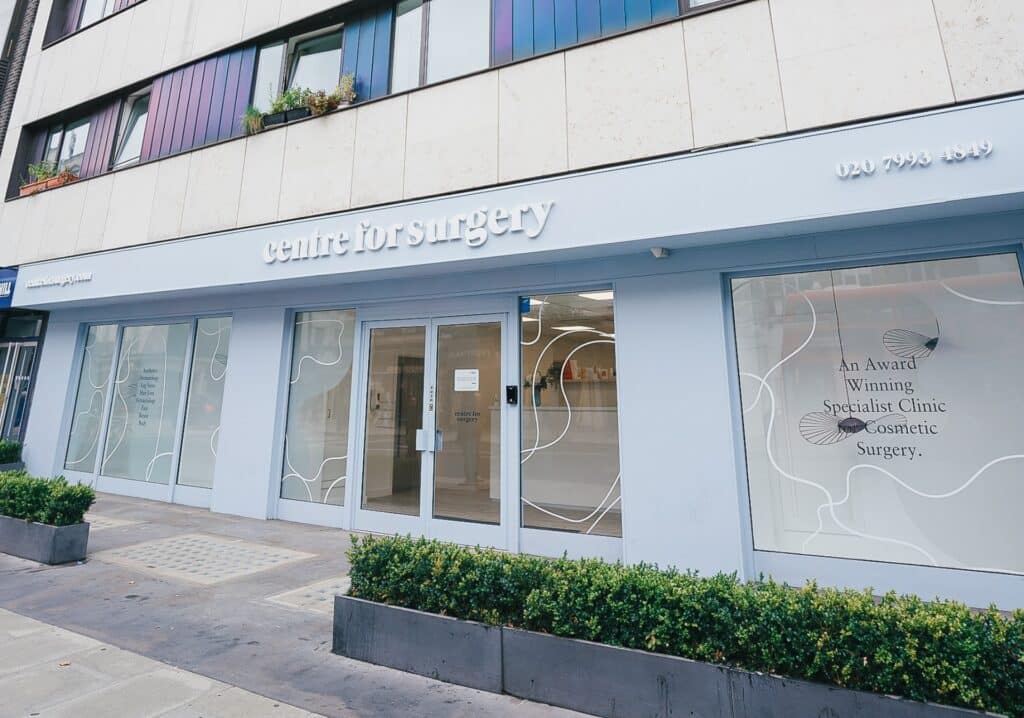
Revision facelift surgery is a more complex procedure compared with a primary facelift. The previous scar tissue, having formed dense scar tissue, has distorted the underlying soft tissues. A revision facelift carries more risks compared with primary facelift surgery. At Centre for Surgery, our facial plastic surgeons are masters in facial anatomy and have specialist expertise in performing advanced facelift surgery. It is essential to select a surgeon with specialisation in facelift surgery to achieve natural, symmetrical, youthful results.
Recovery after facelift
Recovery time for all of these facelift surgeries is roughly the same. The first couple of days after any of these operations, you need to rest. This is because your face may be painful, sore or swollen. So resting will allow you to heal. 2-3 weeks after the surgery, the swelling and the pain would have subsided and become more manageable. Three to four weeks after the operation, you will start to feel completely normal again and will be able to do everything you normally would. Usually, with surgeries like this, you will not see the full results straight away. It will take a couple of months.
Facelift Risks
Like every surgery, facelift surgery has risks as well as obvious benefits.
- The location of the surgery causes nerve damage.
- Hair loss in the incision areas is caused by scarring.
- Numbing of some regions of the face.
- Infection due to poor hygiene.
Overall, if you are considering a facelift, you should discuss the best option with your surgeon to achieve the best results.
[contact-form-7 id=”256″ title=”Treatments form”]