

Can I Get a Second Facelift?
It is possible to get a facelift twice, but it is not always recommended. A facelift, also known as rhytidectomy, is a surgical procedure designed to improve the appearance of the face by addressing sagging skin, wrinkles, and jowls. It can also restore a more youthful appearance. A secondary or revision facelift is a procedure performed after a previous facelift to correct issues or address concerns the patient may have with the initial results.
RELATED: Facelift Surgery FAQs – Q&As about Rhytidectomy
Another essential factor to consider is that with each facelift, the risk of complications increases, and recovery time may also be longer. Make sure to have realistic expectations and understand that a secondary facelift is a more complex procedure than a primary facelift and may involve greater risks and longer recovery time.
What is a secondary facelift?
A secondary facelift, also known as a revision facelift, is a surgical procedure performed after a previous facelift to correct issues or address concerns the patient may have with the initial results. This can include addressing sagging skin, correcting asymmetry, or addressing changes in the face due to ageing or other factors. The procedure can be more complex than a primary facelift, as the surgeon must work with the existing scar tissue and changes that have occurred in the face since the initial procedure. The procedure may involve a combination of techniques, such as lifting, tightening, and repositioning of skin and underlying structures.
How is a revision facelift performed?
A revision facelift is typically performed under general anaesthesia and usually takes several hours to complete, depending on the extent of the correction needed. The specific surgical technique will depend on the individual patient’s needs and the issues to be addressed.
RELATED: Key Questions to Explore Before Deciding on Facelift Surgery
One common technique used in a revision facelift is the deep-plane facelift. This technique involves the surgeon making an incision in the hairline, typically similar to that of a primary facelift, and then carefully lifting and repositioning the deep facial layers. This allows the surgeon to address sagging skin, jowls, and other issues that may have developed since the initial facelift.
Another technique is the subperiosteal facelift, which is used to address midface issues. This technique involves making an incision in the upper gums and then lifting the skin and underlying structures of the mid-face to reposition them higher on the face. This can help to address issues such as sunken cheeks or a sagging brow.
In some cases, additional procedures such as a neck lift, eyelid surgery, or a brow lift may be performed in conjunction with a revision facelift in order to achieve the desired results.
RELATED: Facelift Recovery – top tips
How will I know if I need a revision facelift?
Several signs may indicate that a revision facelift is necessary. Some of these include:
Unhappy with the results of the previous facelift
Some patients may find that their initial facelift did not meet their expectations and are unhappy with the results. In such cases, a revision facelift can help to address any issues and achieve the desired outcome.
Changes in the face due to ageing
The effects of ageing, such as skin laxity and volume loss, can persist after a facelift. A facelift revision can help address these changes and restore a more youthful appearance.
Asymmetry
Asymmetry can occur after a facelift, and a revision facelift can help correct it.
Scarring
Scarring can occur after a facelift, and in some cases it may be more visible than desired. A revision facelift can help to address this issue.
Sagging skin or jowls
Sagging skin or jowls may develop after a facelift, and a revision facelift can help to address these issues.
How difficult is it to perform a revision facelift?
A revision facelift is considered more difficult to perform than a primary facelift due to several factors.
Scar tissue
Scar tissue from a previous facelift can make it more challenging for the surgeon to work with the underlying facial structures. This can also make it more challenging to achieve a natural-looking result.
Changes in the face
The face can change over time due to ageing, weight fluctuations, or other factors. These changes can make it more difficult for the surgeon to achieve the desired outcome.
Complexity
A facelift revision may involve a combination of surgical techniques, which can increase the procedure’s complexity.
Risk of complications
The risk of complications is generally higher with a revision facelift than with a primary facelift. This may include bleeding, infection, nerve damage, and other issues.
Is a secondary facelift safe?
A secondary facelift carries certain risks and potential complications like any surgical procedure. However, with a skilled and experienced surgeon, the risks of a secondary facelift can be minimised.
Anaesthesia risks
General anaesthesia is used for a facelift, and as with any surgery, there are risks associated with anaesthesia. Your anaesthetist should discuss these risks with you before the procedure.
Bleeding and infection
These are potential surgery complications, including a facelift. Your surgeon will take precautions to minimise the risk of these complications.
Nerve damage
There is a small risk of temporary or permanent nerve damage, which can result in changes in facial sensation.
Scarring
Scarring is a potential complication of any surgery. Your surgeon will make every effort to minimise scarring and to place incisions in inconspicuous locations.
Asymmetry
Asymmetry can occur after a facelift, and a revision facelift can correct it.
Unsatisfied with the results
Some patients may not be satisfied with the results of the revision facelift; in some cases, additional revision surgeries may be needed.
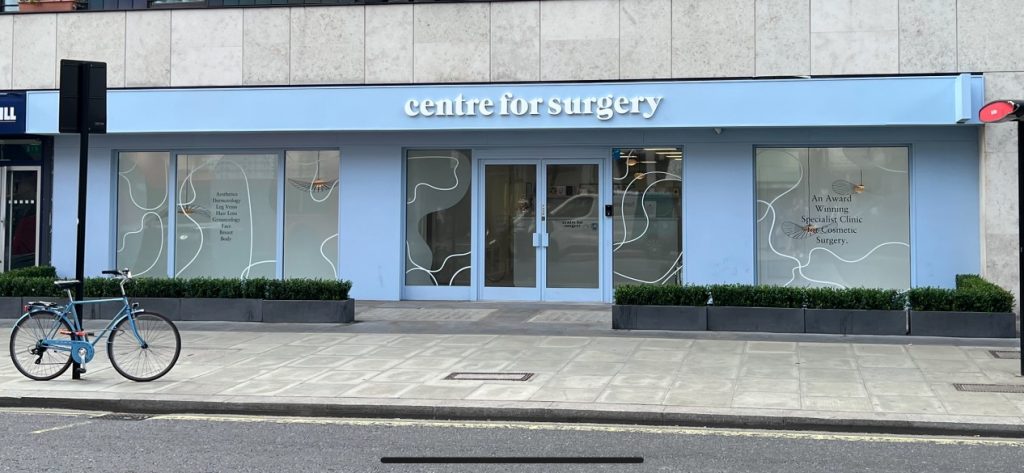
Revision facelift surgery at Centre for Surgery
Centre for Surgery is a specialist plastic surgery clinic renowned for its expertise in the full range of facelift procedures, including deep plane, facelifts, mini facelifts and revision facelifts. Although a facelift can reverse the signs of facial ageing, it cannot stop the ageing process, which means a second facelift may be required several years later to maintain the results of the initial procedure. Please book a consultation today by calling us on 0207 993 4849.
RELATED: Is a facelift worth it?
[contact-form-7 id=”256″ title=”Treatments form”]