
Facelift surgery is considered the most effective technique for achieving dramatic facial rejuvenation. A facelift can correct both loose skin and weakened facial muscles that have lost their elasticity over time. Our expert facelift surgeons are focused on achieving natural-looking results for patients through meticulous surgery that avoids an “overdone” look.
RELATED: What is the best age for a facelift?
If you have been considering having a facelift procedure and are keen to learn about what the procedure involves, read on to learn about the ins and outs of facelift surgery in London and how to achieve incredible life-changing results.
RELATED: Key Questions to Explore Before Deciding on Facelift Surgery
How does ageing affect the face?
Facial ageing has traditionally been thought to result from excess skin sagging. For many years, the main method for reversing these ageing changes has been tightening the skin through skin-only facelifts. The older facelift techniques focused solely on repositioning the skin, without addressing the underlying tissue layers. Patients who underwent these older (often on multiple occasions) lifts obtained an unnatural, stretched appearance – the ‘wind-tunnel effect’. In some cases, the eyebrows and forehead were also pulled upward, giving a startled and highly unnatural appearance.
RELATED: What is the Ideal Age for a Facelift?
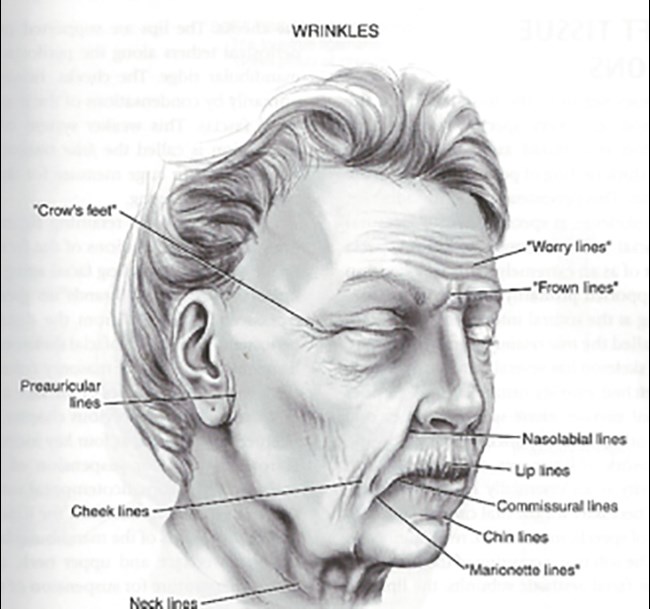
One important aspect of facial ageing that is missed with the older skin-only methods is that two other processes are occurring that skin-only facelifts do not adequately address:
- The deeper tissues of the face (fat and muscle) gradually detach from their facial attachments and begin to descend under the influence of gravity, and
- The soft tissue volume of the face decreases. Both bony and fatty changes occur with age. Thus, treatments to correct the ageing face should involve repositioning of these deeper structures (facelift), and restoring volume (fat grafting), as required.
Surgeons at Centre for Surgery focus on lifting the soft tissue and muscle and restoring volume – the ‘lift and fill’ facelift. It is often not enough to reposition the tissues with a facelift alone. Facial fat grafting to restore volume is also required.
RELATED: Facelift with Fat Transfer – Benefits of a Lift & Fill Facelift
There are many benefits to undertaking a facelift, including the following:
Skin tightening
Loose facial skin can make a person appear much older than they actually are, while taut facial skin is a sign of youthful vitality. The latest facelift techniques can completely remove loose skin from the lower face and neck, creating a more revitalised appearance
Wrinkle reduction
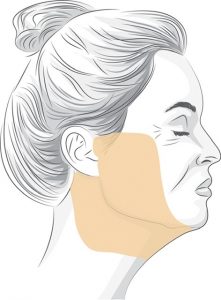
Wrinkles can be reduced when the skin is tightened during the facelift.
Repositioning of facial fat
Fat deposits in the face can sometimes result in an undesirable facial contour. Our surgical technique includes repositioning fat deposits to achieve a more aesthetically pleasing facial contour. Facial fat grafting can also be performed to create extra volume. Fat transfer is an advanced method for restoring volume to the facial fat compartments. Using this alone or in combination with a facelift can achieve optimal patient results.
A well-performed facelift does not leave visible scars.
All facelift procedures involve skin incisions, and as with any surgery, there will always be a residual scar. Facelift incisions are typically hidden in natural skin creases in front of, behind, and in the hairline (easier in women). When performed by an experienced, meticulous plastic surgeon at Centre for Surgery in London, facelift incisions are usually performed remarkably well. They are barely visible, though, of course, everyone will scar differently. In most cases, patients and their loved ones find it very challenging to find the incisions months after the procedure.
RELATED: Facelift Scars: What to Expect after Surgery
Scars continue to naturally soften, improve, and mature over the course of 12 months, but not every scar disappears completely. Fortunately, surgeons at Centre for Surgery have access to the most advanced lasers to reduce redness or flatten scars after the facelift procedure.
What are the different types of facelift surgery?
A facelift is also known by its medical name, rhytidectomy. Facelift surgery is designed to tighten the SMAS layer in the face and remove excess skin. This helps eliminate deep wrinkles and skin folds around the mouth and nose. Saggy skin caused by the natural ageing process can be tightened by removing excess skin to create a more defined jawline and neck. A facelift at Centre for Surgery in London is uniquely tailored to the individual patient’s needs and desires to achieve optimal outcomes.
RELATED: Are facelift results permanent?
Although a facelift can be performed on its own, it is commonly combined with other facial plastic surgery procedures such as eyelid surgery, brow lift or facial fat transfer. There are several types of facelift procedures, each designed to target a particular area of the face. Understanding the different methods of performing facelift surgery before your consultation will help you participate more effectively in the patient-surgeon relationship.
RELATED: What Are My Options For A Facelift?
Traditional SMAS facelift
The SMAS facelift is regarded as the most popular method for a facelift, capable of producing dramatic results even for people with extensive signs of facial ageing. Incisions for a full facelift are located at the front of the ear and extend downwards around the earlobe into the posterior hairline located behind the ear. Your surgeon may also make a small incision beneath the chin to perform a neck lift. Chin and neck liposuction is also often combined with a facelift and neck lift to achieve a contoured chin and jawline. The weakened SMAS muscle is tightened surgically, and any excess skin is removed. Facelift surgery is often combined with facial fat transfer to enhance the volume in other areas of the face, such as the cheeks, lower eyelids or temples.
RELATED: Deep Plane Facelift vs SMAS Facelift
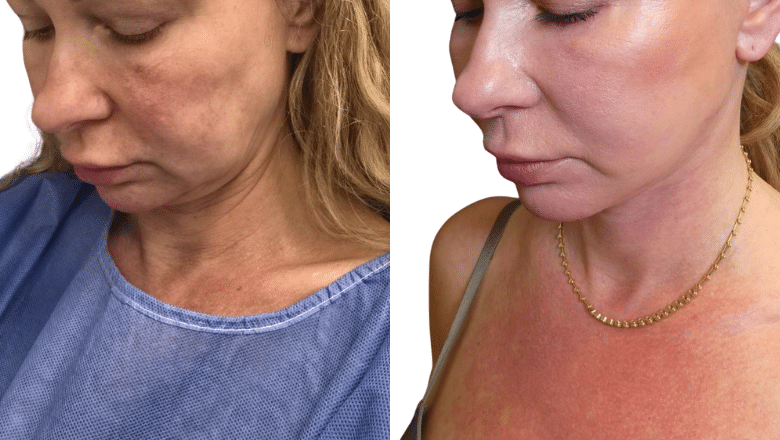
Mini facelift
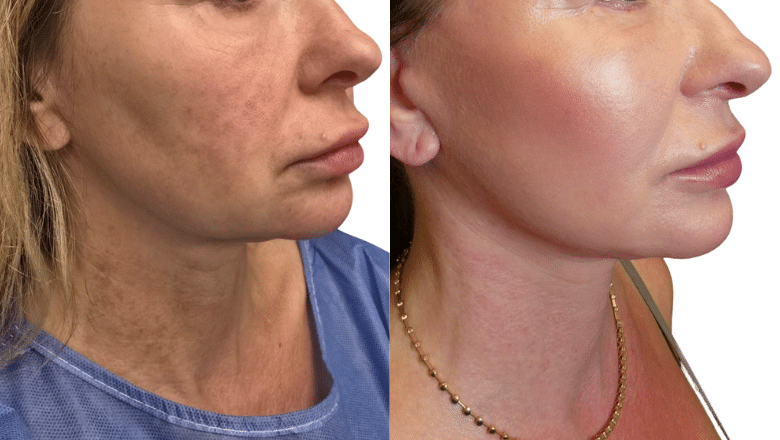
A mini facelift is an ideal option for people who prefer less scarring and quicker recovery. It is important to remember that a mini facelift does not produce as dramatic results as a standard facelift. The most suitable patients for a mini facelift are in their early 40s, with early signs of ageing most commonly seen around the lower face and jawline. Mini facelift surgery is ideal for tightening loose skin in the lower face and may often be repeated 5 to 10 years later to maintain results over time.
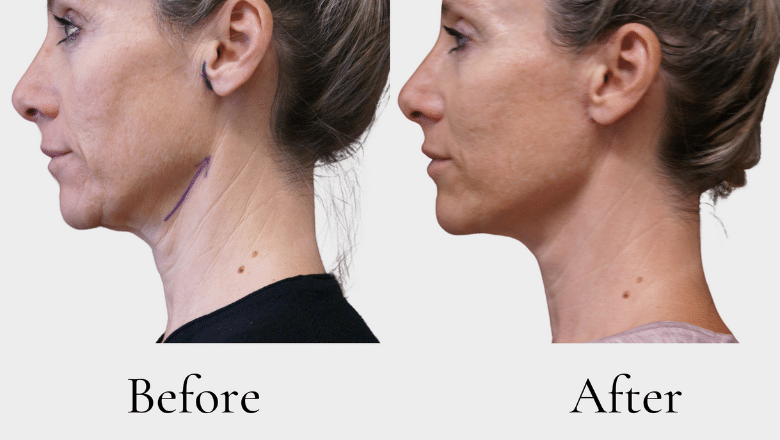
One Stitch facelift
A one-stitch facelift is a ‘short scar facelift’ or limited incision facelift. This procedure is designed to produce meaningful results without visible scars. The incision for a one-stitch facelift is positioned in front of the ear, both just above and below it. No incision is located at the front of the ear, unlike a traditional facelift. Some surgeons may place the incision within the ear, particularly if there is a higher risk of visible scarring. A one-stitch face takes no more than 60 minutes and involves a rapid recovery period with minimal side effects. To be suitable for this procedure, patients should develop early signs of ageing and be aged in their 30s or early 40s. Suitability for a short scar facelift will be determined at your consultation.
RELATED: Different types of facelift and neck lift
Can a facelift be combined with fat transfer?
A facelift can yield even better results when combined with facial fat transfer. Many facelift procedures involve removing fat from the chin and neck to contour and sculpt the lower face. Fat removal from the lower face and neck can be combined with fat injections to the middle third of the face. Many patients begin to develop signs of ageing, which first affects the middle part of the face. Sunken cheeks, hollowed eyes, and nasolabial folds are features that can be improved with facial fat grafting and a mid-facelift.
RELATED: Is facial fat transfer permanent?
Targeted injections of prepared fat removed from another part of the body, such as the inner thighs, can enhance cheek volume and fill sunken eyes, achieving a more youthful look. Fat injected into the face is rich in stem cells and has powerful regenerative effects that can also improve overall skin quality.
What does a facelift consultation at Centre for Surgery involve?
The first step towards achieving a refreshed facial appearance is an in-person consultation with an expert London facelift Surgeon. The consultation is a foundation for learning about your unique needs and desires. The surgeon will carefully listen to what you hope to achieve from the procedure and determine whether you are a suitable candidate. Having realistic expectations about what facelift surgery can achieve is vital, and your surgeon will also discuss the potential risks and complications.
RELATED: Face Lift For Men
We recommend you bring photos of people whose looks you like. You will have the opportunity to view a selection of before-and-after photos, which will give you an idea of the type of facelift results that can be achieved.
Once you have had a consultation, you will be seen by your dedicated patient coordinator and receive a detailed quotation. Your quotation will also include important information, including how to pay a deposit to secure a surgery date. Your patient coordinator will be available via a dedicated mobile phone number for any questions or queries you may have. We also offer various finance options, including 0% finance for eligible patients.
If you still have questions after your consultation, please get in touch with us, and our friendly, experienced patient coordinator team will be available to answer any questions you may have. Alternatively, we would be more than happy to arrange a follow-up consultation with your surgeon to ensure you are comfortable with all aspects of the procedure. Having a facelift is a significant decision, and we understand it can be a fairly nerve-wracking time. This is why we strive to make the process as smooth as possible and empower you with all the information needed to decide on surgery.
What can I expect on the day of facelift surgery?
The day of surgery has arrived, and our preoperative team will have carried out a detailed preoperative assessment to ensure you are medically fit for surgery. You should nominate a responsible adult to escort you to our Baker Street clinic at your booked time. Your adult caregiver needs to be available for you on surgery day. We would advise them to keep their phone on continuously and to come to the clinic within 30 minutes of our recovery nurses calling them.
Once your identity has been verified, our admission nurses can answer any last-minute questions you may have. They will also confirm your adult escort will be available to collect you after the procedure. You will be asked to change into a patient gown and will have your blood pressure and other vital signs checked. Your anaesthetist will then come to assess you to make sure you are fit for the procedure and will prescribe oral pre-medication for you to take before surgery. These medications help you to relax. Although it can be a hugely exciting day, it is normal to feel slightly anxious. Our expert nursing team is on hand to assist you at all stages of your patient journey.
Once the anaesthetist has seen you, your surgeon will meet with you to discuss the procedure plan and to mark the areas to be treated during surgery. Once the theatre team is ready, you will be walked to the operating room and asked to lie on the OR table. You will then be put to sleep by your anaesthetist. Facelift surgery takes 2 to 4 hours, depending on the extent of surgical correction required and whether it is combined with other procedures, such as facial fat transfer, eyelid surgery, or a brow lift.
What happens once the procedure is complete?
Once the procedure is complete, your anaesthetist will begin waking you up from anaesthesia. You will then be transferred to the dedicated recovery suite, where a specialist team of recovery nurses will closely monitor you. Once you are almost ready for discharge, your recovery nurse will contact your adult escort to provide an estimated time for them to come and collect you. Once you are medically fit for discharge, they will be contacted again to confirm that they will collect you. Your adult escort will be given detailed post-operative care instructions, and you will also be given the 24-hour nurse contact number if you have any concerns during the recovery period out of hours. We will also book a postoperative appointment for you to have any wound dressings removed the following day and a dressing change appointment approximately 7 to 10 days later. It is normal to experience some bruising and swelling after a facelift. However, if you are concerned about excessive swelling or bleeding, you should contact us immediately to arrange an urgent clinical assessment.
Attending your postoperative review appointments is very important per your surgeon’s instructions. This helps to ensure your healing and recovery are progressing as intended. Getting the best facelift results means actively engaging with our clinical team; you will receive ongoing advice and support during recovery.
How long does it take to recover after a facelift?
We recommend taking one week off work and avoiding vigorous physical activities for at least four weeks after a facelift. Depending on the type of work you do, you may be required to be off work after two weeks. Bruising and swelling after a facelift can take time to settle, and you should take plenty of time to rest and relax to ensure proper healing with minimal risk of complications. You should feel free to read a book or watch TV, as this will help your body heal and recover for the best results.
RELATED: Facelift Recovery – top tips
Light exercise is allowed after two weeks post-op. Strenuous physical exercise, such as going to the gym or lifting heavy weights, should be considered only after four weeks. Please speak to our clinical support team for customised recommendations on when to safely start certain activities. Any mild discomfort can be easily controlled with over-the-counter painkillers such as paracetamol. Most patients find they can cover up any residual bruising with concealer makeup after two weeks. This will allow them to feel comfortable going out in public.
Why choose Centre for Surgery for facelift surgery?
Centre for Surgery is considered the leading cosmetic surgery clinic in London, and our facelift surgeons are recognised as some of the best in the UK. Our friendly and experienced clinical team are here to assist you at every step of your patient journey with us. Once you are ready to take the first step towards achieving a youthful and refreshed you, call us today at 020 7993 4849 or complete the contact form below.
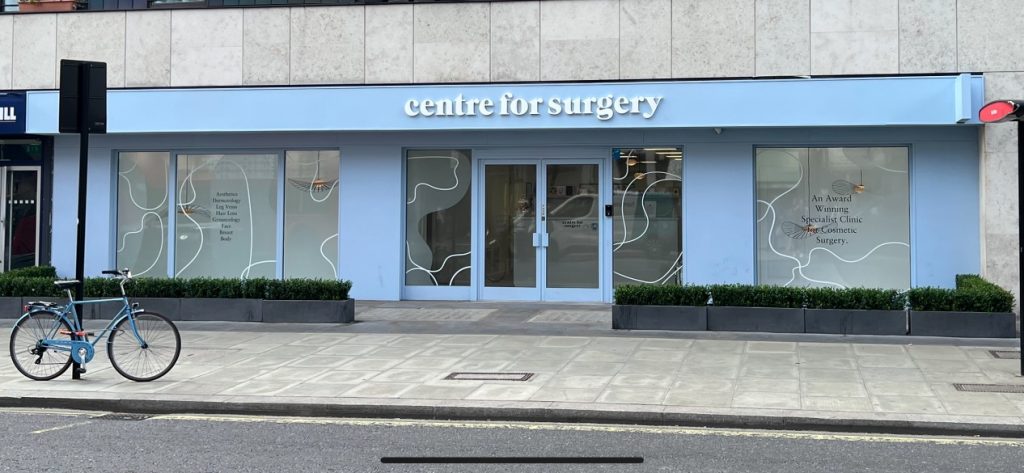
Our state-of-the-art Baker Street clinic in London is ideally located near all the major transport hubs, and we regularly receive patients from across the UK and internationally.
[contact-form-7 id=”256″ title=”Treatments form”]