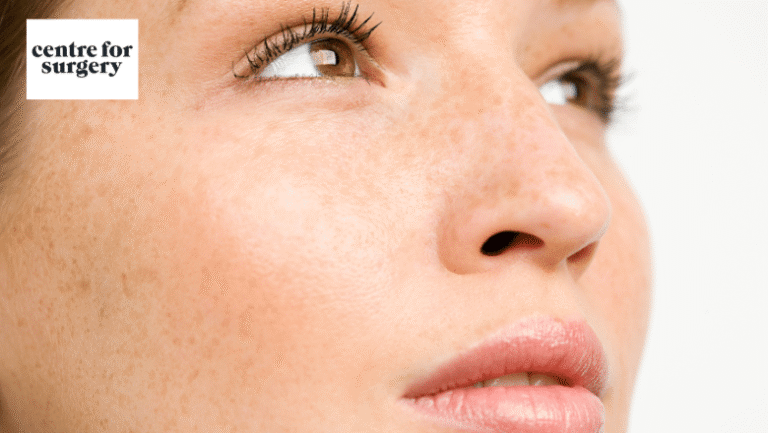

Blepharoplasty is one of the most commonly performed cosmetic procedures at Centre for Surgery, and part of its enduring popularity is due to the remarkably discreet nature of the scarring it produces. The eyelid skin is among the thinnest and most regenerative in the entire body, and when incisions are planned carefully and placed within the natural anatomical contours of the lids, the resulting scars heal to become virtually invisible in the vast majority of cases.
That said, understanding what to realistically expect from blepharoplasty scars — how they look, how they evolve, and what can be done to optimise their healing — is important information for any patient considering the procedure. This guide covers every aspect of blepharoplasty scarring, from incision placement through to long-term scar management.
RELATED: Eyelid Surgery FAQs – Q&A about Blepharoplasty
Where Are Blepharoplasty Incisions Placed?
The location of incisions in blepharoplasty is one of the primary reasons the procedure produces such inconspicuous scarring. In both upper and lower blepharoplasty, the incisions are specifically planned to follow the natural lines and folds of the eyelid anatomy, ensuring that any resulting scar is either hidden within a crease or concealed along the lash line.
Upper Blepharoplasty Incision
For upper eyelid surgery, the incision is placed precisely within the natural crease of the upper eyelid — the fold that forms when the eye is open. This is a strategically ideal location for two reasons. First, the incision is completely hidden when the eye is open, as it falls within the folded skin. Second, when the eye is closed, the incision is concealed within the crease itself, making it extremely difficult to detect even on close inspection once healing is complete.
The incision extends from the inner to the outer canthus, following the natural curvature of the crease. At the outer corner, it may extend very slightly beyond the orbital rim — a portion sometimes referred to as the “crow’s feet” extension — and this tiny lateral extension is placed to follow one of the naturally occurring expression lines in the outer corner of the eye, further aiding its concealment.
Lower Blepharoplasty Incision
For lower eyelid surgery, there are two main incision approaches. The transcutaneous approach places the incision just beneath the lower lash line — a location where the scar heals against the natural shadow of the lash margin and becomes effectively invisible once fully healed. The transconjunctival approach, by contrast, places the incision on the inner surface of the lower eyelid entirely, leaving no external scar at all. Your surgeon will discuss which approach is most appropriate for your anatomy and goals during your consultation.
The transcutaneous approach produces an external scar that, when well-executed and well-healed, is essentially undetectable. The scar sits within a millimetre of the lash line, in a zone where the fine texture of the skin naturally blends the healed line. The transconjunctival approach leaves no visible scar externally and is often preferred in younger patients or in cases where only fat removal or repositioning is needed rather than skin excision.
What Do Blepharoplasty Scars Look Like in the Early Stages?
In the immediate post-operative period, the incision sites will appear as fine red or pink lines. Some degree of swelling and bruising is expected around the eyelids during the first week, and this can make the incision lines look more prominent than they will be once healing is complete. The stitches — which are very fine, often 6-0 or 7-0 calibre sutures — will be visible during this stage, giving the incision a slightly dotted or stitched appearance.
Stitches are typically removed at the first post-operative review appointment, which takes place between five and seven days after surgery. After this point, the incision lines become fine, slightly pink or reddish lines that progressively soften and fade over the following weeks and months.
During the first few weeks, the scars may still look noticeably red, slightly thickened, or mildly raised — this is a normal part of the healing process and reflects the body’s active collagen deposition phase. Many patients feel self-conscious about the appearance of their scars at this stage, but it is important to understand that this phase is entirely temporary and does not represent the final result.
How Do Blepharoplasty Scars Evolve Over Time?
Scar maturation is a gradual process that continues for many months following surgery. Understanding the typical timeline helps patients maintain realistic expectations and avoid unnecessary anxiety during the intermediate stages of healing.
Weeks 1 to 4
After suture removal, the incision lines continue to heal. During this period they may appear pink, slightly raised, or firmer than the surrounding skin. This reflects the ongoing inflammatory phase of wound healing, during which the body lays down new collagen to repair the incision. Gentle scar care — including keeping the area moisturised and protected from sun exposure — is particularly important during this phase.
Months 1 to 3
As the inflammatory phase subsides, the scars typically begin to soften and flatten. The colour transitions from pink or red towards a lighter, more neutral tone. By the end of the third month, many patients notice that the scars are significantly less noticeable than they were in the early weeks, and in many cases they have begun to settle into the natural eyelid crease in a way that makes them very difficult to distinguish from the surrounding skin.
Months 3 to 12
The final stages of scar maturation continue throughout this period. The scars progressively fade in colour, soften further in texture, and blend more completely into the surrounding eyelid skin. By the six-month mark, the vast majority of patients find their blepharoplasty scars are essentially invisible to casual inspection. By twelve months, the healing process is considered complete for most patients, and the scars have typically matured to their final appearance — fine, pale lines that follow the natural anatomy of the eyelids.
RELATED: What Causes Lumps After Blepharoplasty?
Does Blepharoplasty Leave a Permanent Scar?
Technically, any surgical incision produces a permanent scar — the body repairs incised tissue by laying down collagen, and this healed tissue is structurally distinct from the original skin, even if it is invisible to the naked eye. However, the practical reality for the overwhelming majority of blepharoplasty patients is that their scars become so faint and so well-integrated with the surrounding eyelid skin that they are undetectable in normal social settings.
The eyelid skin has several properties that make it particularly well-suited to scar concealment. It is extremely thin, it regenerates quickly and efficiently, and its natural folds and creases provide a built-in hiding place for the healed incision lines. The result is that blepharoplasty is one of the procedures with the most consistently invisible scarring in the entire field of cosmetic surgery.
Factors That Influence Blepharoplasty Scar Quality
While the vast majority of patients heal excellently, several factors influence the final appearance of blepharoplasty scars. Understanding these helps patients take an active role in optimising their healing.
Surgical Technique and Incision Placement
The most fundamental determinant of scar quality is the surgeon’s technique. Precise incision placement within the natural anatomical crease, meticulous handling of the delicate eyelid tissues, and fine suturing with appropriately calibrated suture material all contribute to the finest possible final scar. At Centre for Surgery, our blepharoplasty surgeons are specialist-level consultants with extensive experience in this procedure, and they apply an extremely careful technique to minimise tissue trauma and optimise healing.
Skin Type and Individual Healing Response
Skin type influences how the body heals surgical wounds. Patients with darker skin tones — including those of African, Asian, South Asian, and Middle Eastern heritage — may be at slightly increased risk of hyperpigmentation of scars, where the healed tissue becomes darker than the surrounding skin. This is generally manageable but should be discussed at consultation so that appropriate post-operative scar care can be put in place. Patients with a personal or family history of keloid or hypertrophic scarring should also mention this to their surgeon, as it may influence the post-operative management plan.
Age
Younger skin generally heals more quickly and produces more elastic, finer scars. However, older patients — who represent a significant proportion of blepharoplasty patients — also tend to heal very well in the eyelid region due to the favourable properties of this skin. Age alone is not a reliable predictor of scar quality in this area.
Smoking
Smoking significantly impairs wound healing by reducing blood flow to the healing tissues and impairing the cellular repair processes. Patients who smoke are advised to stop smoking completely at least four weeks before surgery and to continue to abstain throughout the recovery period. Smoking during recovery increases the risk of wound healing complications and can negatively affect scar quality.
Sun Exposure
Ultraviolet light stimulates melanin production in healing scar tissue, which can cause scars to become permanently darker if they are exposed to the sun during the first year of healing. This is particularly important for blepharoplasty patients, as the eye area is often exposed to sunlight. Wearing sunglasses with UV protection outdoors is strongly recommended for at least twelve months following surgery.
How Long Do Blepharoplasty Scars Take to Fade?
The full process of scar maturation typically takes between six and twelve months, and in some patients, subtle changes may continue for up to eighteen months. The most dramatic improvement tends to occur in the first three to six months. Recovery from the procedure itself — including the resolution of swelling and bruising — is substantially complete within four to six weeks, but the final scar appearance continues to evolve beyond this point.
Patients should be aware that photographs taken at four to six weeks will not reflect the final scar appearance. Scars that look slightly pink or noticeable at this stage will continue to soften and fade significantly over the following months. Patience is an essential part of the scar healing process.
What Is the Best Way to Prevent and Minimise Scarring After Blepharoplasty?
Follow Post-Operative Care Instructions Precisely
Your surgical team will provide you with detailed instructions for the post-operative period. Adhering to these instructions carefully — including guidance on wound cleaning, ointment application, activity restrictions, and the use of any prescribed medications — creates the best possible conditions for healing and minimises the risk of complications that could adversely affect scar quality.
Use Silicone Gel or Silicone Sheets
Silicone-based scar products are the most clinically well-evidenced non-surgical intervention for scar management. Silicone gel applied to healed incision lines, or silicone gel sheets placed over the scars, create an occlusive environment that hydrates the scar tissue, normalises collagen deposition, and can help to flatten and soften raised scars. They are particularly useful for patients who are prone to hypertrophic scarring or who are noticing that their scars are healing with more firmness or elevation than expected. They should be used only after the incisions are fully healed — your surgeon will advise when it is appropriate to start.
Protect From Sun Exposure
As noted above, UV exposure to healing scar tissue can cause permanent darkening. Wearing quality UV-protective sunglasses outdoors and applying SPF to the area around the eyes are important steps throughout the first year following surgery.
Avoid Smoking
Abstaining from smoking throughout the post-operative period — and ideally beyond — supports optimal wound healing and gives the scars the best conditions to mature as finely as possible.
Massage Once Healed
Gentle scar massage, applied with a small amount of moisturising cream or vitamin E oil, can be started once the wounds are fully healed and the sutures have been removed for at least two weeks. Scar massage helps to soften and break down any fibrous tissue that is developing, improves local circulation, and can reduce the risk of the scar becoming thickened. Your surgeon will advise on when to start and how to perform scar massage correctly.
What If My Blepharoplasty Scar Heals Badly?
While poor scar healing is uncommon after blepharoplasty, it does occasionally occur. Hypertrophic scarring — where the scar becomes raised, firm, and darker than the surrounding skin — is the most frequent concern. If you notice that your scar appears to be thickening or is not fading as expected, contact your surgical team promptly. Early intervention with steroid injections or intensive silicone therapy can often resolve hypertrophic scarring effectively if managed before it becomes established.
In rare cases where scarring remains a significant concern after the full maturation period, further options including laser therapy or surgical scar revision may be discussed. Our surgeons will always take a conservative and patient-focused approach, ensuring that any intervention is genuinely indicated and that the expected benefits are clear.
RELATED: How to Reduce Bruising and Swelling After Eyelid Surgery
Frequently Asked Questions
Can you see blepharoplasty scars?
In the vast majority of patients, blepharoplasty scars are not visible in normal social settings once fully healed. The incisions are placed within the natural creases and along the lash line, and the thin eyelid skin heals to produce scars that blend seamlessly with the surrounding tissue.
How long do blepharoplasty scars take to heal?
The initial wound healing phase is largely complete within four to six weeks. Scar maturation — during which scars soften, fade, and become less noticeable — continues for six to twelve months in most patients.
Does blepharoplasty leave a permanent scar?
Technically yes — all surgical incisions produce a scar. In practice, blepharoplasty scars mature to become so fine and so well-integrated with the natural eyelid anatomy that they are effectively invisible to routine inspection for the vast majority of patients.
What is the best scar cream after blepharoplasty?
Silicone-based gels and sheets are the most clinically supported option for post-operative scar care. Products such as Mederma, Dermatix, or Kelo-Cote can be used once the incision is fully healed, as directed by your surgeon.
Do lower eyelid scars show more than upper eyelid scars?
Both heal very well, but the transconjunctival approach to lower blepharoplasty leaves no external scar at all. The transcutaneous lower lid scar, placed just below the lash line, also heals to be very inconspicuous in most patients.
Explore More About Blepharoplasty at Centre for Surgery
RELATED: Blepharoplasty Before & After Photos
RELATED: How Much Does Blepharoplasty Cost?
RELATED: Recovery After Eyelid Surgery
RELATED: Upper Blepharoplasty — Upper Eyelid Lift
RELATED: Lower Blepharoplasty — Eye Bag Removal
RELATED: Asian Blepharoplasty — Double Eyelid Surgery
RELATED: Non-Surgical Alternatives to Eyelid Surgery
Blepharoplasty at Centre for Surgery
Centre for Surgery is home to some of London’s leading consultant plastic surgeons, all of whom are specialist-trained and highly experienced in blepharoplasty. Our commitment to meticulous surgical technique, detailed pre-operative planning, and thorough post-operative support means that our patients consistently achieve natural-looking results with excellent scar outcomes.
If you would like to learn more about blepharoplasty surgery and scar management, please get in touch with us today at 020 7993 4849 or email contact@centreforsurgery.com. Finance options including 0% APR with Chrysalis Finance are available.
[contact-form-7 id=”256″ title=”Treatments form”]