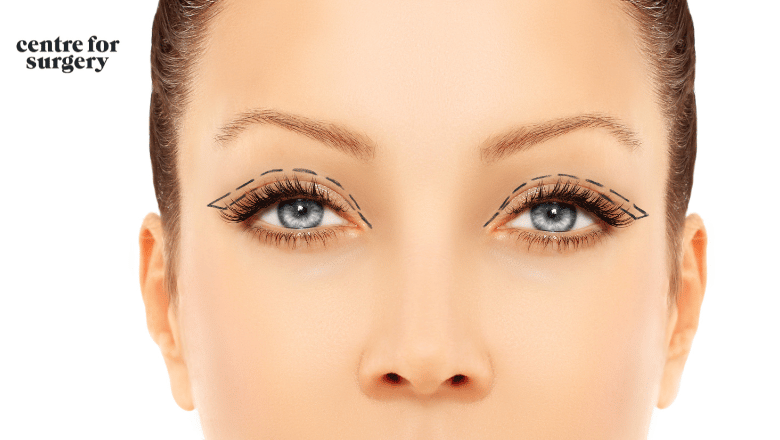
Hooded eyelids occur when there is excess skin on the upper eyelid, causing the eyelid to sag and creating a hooded appearance. Several factors can cause or contribute to hooded eyelids, including ageing, genetics, eyebrow position, muscle weakness, certain medical conditions, and lifestyle factors. As we age, the skin on the upper eyelids loses elasticity and collagen, leading to sagging and drooping.
At the same time, some people are born with a predisposition to hooded eyelids due to certain inherited facial features. The position of the eyebrows can also contribute to hooded eyelids, as low or heavy eyebrows can weigh down the upper eyelids.
Weakness in the muscles that support the upper eyelids and certain medical conditions, such as blepharitis, Graves’ disease, and myasthenia gravis, can also cause hooded eyelids. Additionally, lifestyle factors such as sun exposure, smoking, and poor diet can accelerate the ageing process and cause the skin to lose elasticity, contributing to the development of hooded eyelids.
RELATED: Hooded Eyes – Causes & Treatments
Hooded eyelids can be a cosmetic concern and may also impair vision in severe cases. Treatment options for hooded eyelids include non-surgical treatments, such as anti-wrinkle injections and dermal fillers, to lift the eyebrows and smooth out the skin, as well as surgical options, such as blepharoplasty or a brow lift, to remove excess skin and reposition the brows for a more youthful appearance.
What is Blepharoplasty?
Blepharoplasty, also known as eyelid surgery, is a cosmetic procedure that involves removing excess skin and fat from the upper and lower eyelids. The procedure improves the appearance of hooded eyes by correcting droopy or sagging eyelids, reducing puffiness or bags under the eyes, and smoothing out wrinkles and fine lines. The surgery can be performed on the upper eyelids, lower eyelids, or both, depending on the individual’s needs and goals.
Blepharoplasty is typically an outpatient procedure performed under local anaesthesia, and the recovery period usually takes several weeks. The method is commonly performed by plastic surgeons or oculoplastic surgeons specialising in cosmetic surgery of the eyes and surrounding areas.
Benefits of Blepharoplasty
Blepharoplasty can offer several benefits, including improving the appearance of the eyes by correcting droopy or sagging eyelids, reducing puffiness or bags under the eyes, and smoothing out wrinkles and fine lines. Many people who undergo the surgery report feeling more confident and satisfied with their appearance, which can positively impact their self-esteem and overall quality of life.
Additionally, if excess skin or fat on the upper eyelids is affecting vision, blepharoplasty can help to restore a more natural, open appearance to the eyes and improve vision. The results of the procedure can be long-lasting, and the surgery typically yields minimal scarring and downtime, with most patients able to return to work and normal activities within one to two weeks.
RELATED: Eyelid Surgery FAQs – Q&As about Blepharoplasty
Ideal candidates for blepharoplasty
Hooded eye surgery, also known as blepharoplasty, is a surgical procedure that involves removing excess skin and fat from the upper eyelids to create a more open, youthful appearance. Ideal candidates for blepharoplasty or eyelid surgery include individuals who:
- Have excess, sagging skin on the upper and lower eyelids.
- Have puffiness or bags under the eyes that do not improve with non-surgical treatments.
- Have wrinkles or fine lines around the eyes.
- Vision impairment is due to excess skin or fat on the upper eyelids.
- They are in good overall health and have no medical conditions that may increase the risk of complications.
- Non-smokers are at risk, as smoking can impair the healing process and increase the risk of complications.
- Have realistic expectations for the results of the procedure.
Risks and Complications of Upper Blepharoplasty
Upper blepharoplasty is not without risks and potential complications. Like any surgical procedure, there are some common risks associated with this surgery that patients should be aware of. These risks include bleeding, infection, scarring, dry eyes, asymmetry, vision impairment, and anaesthesia risks.
Bleeding is a typical risk with any surgical procedure, and while it is generally minor, excessive bleeding can occur and may require further treatment. Infection is another risk associated with any surgical procedure, and patients are usually prescribed antibiotics to prevent infection.
Scarring is a potential risk of upper blepharoplasty, but the incisions are typically well-hidden and made along the natural creases of the eyelids. Temporary dryness and irritation may occur after upper blepharoplasty due to swelling and bruising around the eyes.
There is a risk of asymmetry after the procedure, with one eyelid appearing different. In rare cases, upper blepharoplasty can result in vision impairment due to overcorrection or surgical technique complications. As with any surgical procedure, there are potential risks associated with anaesthesia.
Upper Blepharoplasty Procedure
Upper blepharoplasty is a surgical procedure that involves removing excess skin and fat from the upper eyelids. The following are the general steps involved in an upper blepharoplasty procedure:
Anaesthesia
The patient is given local anaesthesia or intravenous sedation to ensure comfort and a pain-free experience during the procedure.
Incisions
The surgeon makes a small incision along the natural crease of the upper eyelid, through which they will remove the excess skin and fat.
Removal of excess tissue
The surgeon removes the excess skin and fat from the upper eyelid, carefully maintaining the natural shape and contour of the eye.
Closure
The surgeon closes the incisions with small sutures, which are typically removed within a week or two after the procedure.
Bandaging
The surgical area may be covered with a light dressing or bandage to help reduce swelling and bruising.

What to Expect After Blepharoplasty
It’s essential to note that after undergoing blepharoplasty, several key aspects of recovery should be anticipated. Swelling and bruising are common and can be managed with ice packs or cold compresses. Discomfort or pain can be expected and can be managed with pain medication prescribed by your surgeon.
Depending on the extent of the surgery, your surgeon may place bandages over the incision sites, which will be removed a few days after the procedure. Stitches or sutures will also be removed approximately one week after the procedure. You may need to avoid strenuous activities for several weeks to allow for proper healing.
Attending all follow-up appointments with your surgeon is important to ensure proper healing and address any concerns or complications that may arise. The final results of blepharoplasty may take several weeks to several months to become fully apparent as swelling and bruising continue to subside and the tissues fully heal.
Hooded eyes surgery Aftercare – top tips
Here are some top tips for hooded eye surgery aftercare to ensure optimal healing and recovery:
Follow your surgeon’s postoperative instructions
Your surgeon will provide detailed postoperative instructions after the surgery. These may include how to care for the surgical site, when to remove bandages, and when to schedule follow-up appointments. It is important to follow these instructions closely to ensure proper healing.
Take pain medication as prescribed
Some discomfort or pain is expected after the procedure, which can be managed with pain medication prescribed by your surgeon. Take these medications as directed to minimise pain and discomfort during the recovery period.
Use cold compresses
Cold compresses can help reduce swelling and bruising around the surgical site. Apply ice packs or cold compresses to the surgical site for 10-15 minutes, several times a day, for the first few days after surgery.
Keep the surgical site clean and dry
To prevent infection, it is important to keep the surgical site clean and dry. Avoid getting the area wet or exposing it to irritants or contaminants, and follow your surgeon’s instructions for cleaning the area.
Avoid strenuous activities
To allow for proper healing, avoid strenuous activities or heavy lifting for several weeks after surgery. Your surgeon will guide you on when it is safe to resume normal activities.
Protect your eyes from the sun
Protect your eyes from the sun by wearing sunglasses and a hat when outside. Sun exposure can cause inflammation and delay healing.
Attend follow-up appointments
Attend all follow-up appointments with your surgeon to ensure proper healing and address any concerns or complications that may arise.
Be patient
The final results of hooded eye surgery may take several weeks to several months to become fully apparent as swelling and bruising continue to subside and the tissues fully heal. Be patient and follow your surgeon’s instructions for optimal results.
Hooded Eyes Surgery FAQs
Are hooded eyelids attractive?
Beauty and attractiveness are subjective, and opinions on the appearance of hooded eyelids can vary widely. Some individuals may find hooded eyelids attractive, while others may prefer a more open, alert appearance.
RELATED: How to treat hooded eyelids
It is essential to note that hooded eyelids are a common and natural phenomenon that affects many people. In fact, they are more prevalent in certain ethnic groups than others and are often regarded as a desirable beauty trait in some cultures.
Can eyelid exercises help reduce eyelid exposure?
While some exercises claim to improve the appearance of the eyes, there is no scientific evidence that eyelid exercises can eliminate or reduce hooded eyes. Hooded eyes are caused by excess skin or fat in the upper eyelid and can be effectively treated only through surgical interventions such as blepharoplasty.
While certain exercises can help strengthen the muscles around the eyes and may reduce puffiness or bags under the eyes, they will not address the underlying cause of hooded eyes.
What causes saggy eyelids?
Saggy eyelids, also known as ptosis, can be caused by a variety of factors, including:
- Ageing: As we age, the skin around our eyes can lose elasticity and begin to sag.
- Genetics: Some individuals may be genetically predisposed to ptosis or sagging eyelids.
- Medical conditions: Certain conditions, such as diabetes, myasthenia gravis, or stroke, can lead to sagging eyelids.
- Trauma: Trauma to the eye or head can cause damage to the muscles or nerves that control eyelid movement, leading to ptosis.
- Eyelid surgery: Previous eyelid surgery, such as blepharoplasty, can cause eyelids to sag.
- Lifestyle factors: Smoking or excessive sun exposure can contribute to sagging eyelids.
- Eyestrain: Chronic eyestrain, caused by prolonged use of computers or other digital devices, can lead to fatigue and weaken the muscles that control eyelid movement, potentially resulting in ptosis.
How do you get rid of hooded eyes?
Hooded eyes are caused by excess skin or fat in the upper eyelid that creates a heavy, drooping appearance. The most effective way to get rid of hooded eyes is through surgical intervention, specifically upper blepharoplasty (eyelid surgery). This surgical procedure involves removing excess skin and fat from the upper eyelids, resulting in a more open and youthful appearance.
Other non-surgical treatments, such as anti-wrinkle injections or dermal fillers, can help to reduce the appearance of hooded eyes by temporarily lifting and tightening the skin around the eyes. However, these treatments are temporary and require ongoing maintenance to maintain their results.
How can I improve my hooded eyes without surgery?
While surgical intervention, such as upper blepharoplasty (eyelid surgery), is the most effective way to permanently improve hooded eyes, some non-surgical options can temporarily improve their appearance. Here are some non-surgical options to consider:
Use makeup strategically
You can use makeup to create the illusion of lifted, more open eyes. Use a lighter eyeshadow shade on your lid and a darker shade in the crease. Use a highlighting powder on the inner corner of your eye to brighten your eyes and create the illusion of a more open, lifted look. You can also use a white or nude eyeliner pencil on the inner waterline of your eye to make your eyes appear larger.
Use eye creams
There are eye creams that can help reduce puffiness and the appearance of fine lines and wrinkles around the eye area, which can make hooded eyes look more prominent. Eye creams with ingredients like caffeine, hyaluronic acid, and retinol can help tighten and firm the skin around the eyes.
Get enough sleep
Lack of sleep can cause puffiness and swelling around the eyes, exacerbating the appearance of hooded eyes. Getting enough sleep can help to reduce swelling and promote healthy skin.
Use cooling eye masks
Applying a cooling eye mask can help to reduce puffiness and swelling around the eyes, which can make hooded eyes look more prominent.
Reduce sodium intake
Eating a high-sodium diet can lead to water retention and swelling, which can make hooded eyes appear more pronounced. Reducing your sodium intake can help reduce puffiness and swelling around the eyes.
Do eyes become hooded with age?
Yes, hooded eyes can develop with age. As we age, the skin around our eyes loses elasticity and begins to sag. This can cause excess skin to accumulate on the upper eyelids, creating a hooded appearance. Additionally, the muscles that control eyelid movement can weaken with age, causing the upper eyelids to droop and further exacerbating the appearance of hooded eyes.
Hooded eyes can also be caused by genetic factors or other lifestyle factors, such as sun exposure or smoking. However, age is a common factor in the development of hooded eyes.
While non-surgical treatments, such as makeup, eye creams, or anti-wrinkle injections, can help to temporarily improve the appearance of hooded eyes, surgical intervention, such as upper blepharoplasty, is typically the most effective way to correct hooded eyes caused by age or other factors permanently.
How should I prepare for upper blepharoplasty?
Preparing for upper blepharoplasty (eyelid surgery) can help ensure a smooth and successful recovery. Here are some tips to help you prepare for the procedure:
Avoid blood-thinning medications and supplements
In the weeks leading up to your surgery, you should avoid taking medications and supplements that thin the blood, such as aspirin, ibuprofen, and vitamin E, as these can increase the risk of bleeding during and after the procedure.
Stop smoking
Smoking can increase the risk of complications during and after the procedure, so it is important to stop smoking in the weeks leading up to your surgery.
Arrange for transportation and aftercare
You will need to arrange for transportation to and from the surgical facility on the day of the procedure, and you may also need assistance with daily activities during the recovery period.
Plan for downtime
You will need to take some time off from work and other daily activities to allow your body to heal. Plan to have at least a week of downtime after the procedure, and arrange for help with childcare, pet care, and other responsibilities.
How long does blepharoplasty surgery take?
The length of time for blepharoplasty (eyelid surgery) can vary depending on the extent of the procedure and whether both the upper and lower eyelids are being treated. In general, blepharoplasty typically takes between one and three hours to complete.
What is the age limit for undergoing blepharoplasty?
There is no specific age limit for blepharoplasty (eyelid surgery), as the decision to undergo the procedure should be based on individual concerns and goals, rather than age alone. In general, candidates for the procedure are typically over 18 years of age and in good overall health, with concerns about excess skin or fat in the upper and/or lower eyelids that is causing a tired, aged appearance, or impacting their vision.
Age is not a determining factor for eligibility for blepharoplasty; the condition of the skin and underlying tissues in the eye area can impact the outcome of the procedure. In some cases, older individuals may have skin that is less elastic and more prone to sagging, which can affect the outcome of the procedure. However, this can be evaluated by a qualified healthcare provider or plastic surgeon during a consultation for the procedure.
Will eye puffiness return after blepharoplasty?
While blepharoplasty (eyelid surgery) can effectively remove excess skin and fat from the upper and/or lower eyelids, creating a more youthful and refreshed appearance, eye puffiness can return after the procedure.
The longevity of blepharoplasty results can vary from person to person and depends on several factors, including age, skin quality, and lifestyle habits. Some individuals may experience a recurrence of eye puffiness or eyelid drooping several years after the procedure, while others may maintain their results for a longer period.
Make sure to practice good skincare habits, such as wearing sunscreen and avoiding smoking, which can accelerate the ageing process and cause the skin to lose elasticity. Additionally, regular use of eye creams or other topical treatments can help to improve skin quality and prevent sagging or puffiness.
Can blepharoplasty change the shape of the eyes?
Blepharoplasty (eyelid surgery) can change the appearance of the eyes to some extent, but it typically does not change the overall shape of the eyes. The goal of blepharoplasty is to remove excess skin and fat from the upper and/or lower eyelids to create a more youthful, refreshed appearance.
In some cases, blepharoplasty can create a more open, wider-eyed appearance by removing excess skin from the upper eyelids that may be weighing down the eyes. This can give the eyes a more almond or cat-like shape, but it is not a guaranteed outcome and can vary depending on the individual’s natural eye shape and other facial features.
When is a blepharoplasty medically necessary?
Blepharoplasty (eyelid surgery) may be medically necessary in cases where excess skin or fat in the eyelids is causing functional problems, such as obstructed vision or eye irritation. Medically necessary blepharoplasty may be covered by the NHS or private insurance, while cosmetic blepharoplasty is typically not.
RELATED: What does eyelid surgery involve?
Here are some specific situations where blepharoplasty may be considered medically necessary:
Vision obstruction
If excess skin or fat in the upper eyelids is causing drooping or sagging that is obstructing vision, blepharoplasty may be necessary to remove the excess tissue and restore clear vision.
Eyelid malposition
Abnormalities in the muscles or tissues that control eyelid movement can cause eyelids to turn inwards (entropion) or outwards (ectropion), which can cause irritation, dryness, and other eye problems. Blepharoplasty may be necessary to correct these abnormalities and restore proper eyelid function.
Thyroid eye disease
Thyroid eye disease is an autoimmune condition that can cause inflammation and swelling around the eyes, leading to protrusion of the eyes, double vision, and other symptoms. In some cases, blepharoplasty may be necessary to reduce the protrusion of the eyes and improve vision.
Eyelid tumours
Tumours or growths on the eyelids may need to be surgically removed, which can involve blepharoplasty to repair the eyelid after the tumour is removed.
How long will it take before I look normal after blepharoplasty?
The recovery time and when an individual will appear “normal” after blepharoplasty (eyelid surgery) can vary depending on several factors, such as the extent of the procedure, individual healing times, and the natural appearance of the eyelids before surgery. However, in general, it can take several weeks to several months for the results of blepharoplasty to fully manifest.
In the immediate postoperative period, bruising, swelling, and discomfort may occur around the eyes. This is a normal part of the healing process and may last for several days to a week or more. Many individuals can return to work and other daily activities within 7 to 10 days after the procedure, but it is essential to follow the surgeon’s instructions regarding postoperative care and activity restrictions to ensure proper healing.
Over the following weeks and months, the eyelids will continue to heal and settle into their new position. The final results of the procedure may take several months to become fully apparent as the skin and underlying tissues adapt to the new contours of the eyelids.
How soon can I go back to work after blepharoplasty?
The length of time it takes for an individual to return to work after blepharoplasty (eyelid surgery) can vary depending on several factors, including the extent of the procedure, individual healing times, and the individual’s occupation. However, in general, most individuals are able to return to work within 7 to 10 days after the procedure.
During the first few days after the procedure, you may experience some bruising, swelling, and discomfort around the eyes, which can make it difficult to perform certain tasks or activities. It is important to follow the surgeon’s instructions regarding postoperative care and activity restrictions to ensure proper healing and minimise the risk of complications.
Most individuals can resume non-strenuous work within one to two weeks after the procedure. However, if the job involves heavy lifting, strenuous physical activity, or exposure to dust or other irritants, it may be necessary to take additional time off to ensure proper healing.
When can I wear contact lenses after blepharoplasty?
The timing of when an individual can resume wearing contact lenses after blepharoplasty (eyelid surgery) can vary depending on the extent of the procedure, individual healing times, and the specific instructions of the surgeon. In general, it is recommended to avoid wearing contact lenses for at least one to two weeks after the procedure.
During the first few days after the procedure, there may be some discomfort, swelling, and bruising around the eyes, which can make wearing contact lenses uncomfortable or difficult. It is important to follow the surgeon’s instructions regarding postoperative care and activity restrictions to ensure proper healing and minimise the risk of complications.
After the initial recovery period, the surgeon may allow the individual to resume wearing contact lenses, but may recommend avoiding them for some time, such as one to two weeks, to allow for continued healing and reduce the risk of infection or other complications.
Hooded Eyes Surgery at Centre for Surgery
Centre for Surgery is the leading plastic surgery clinic in London with significant expertise in all types of hooded eye surgery, including upper blepharoplasty. Our state-of-the-art Baker Street clinic is situated in the heart of Marylebone, central London. Call us today to book an in-person consultation on 0207 993 4849 or complete the contact form below.
[contact-form-7 id=”256″ title=”Treatments form”]