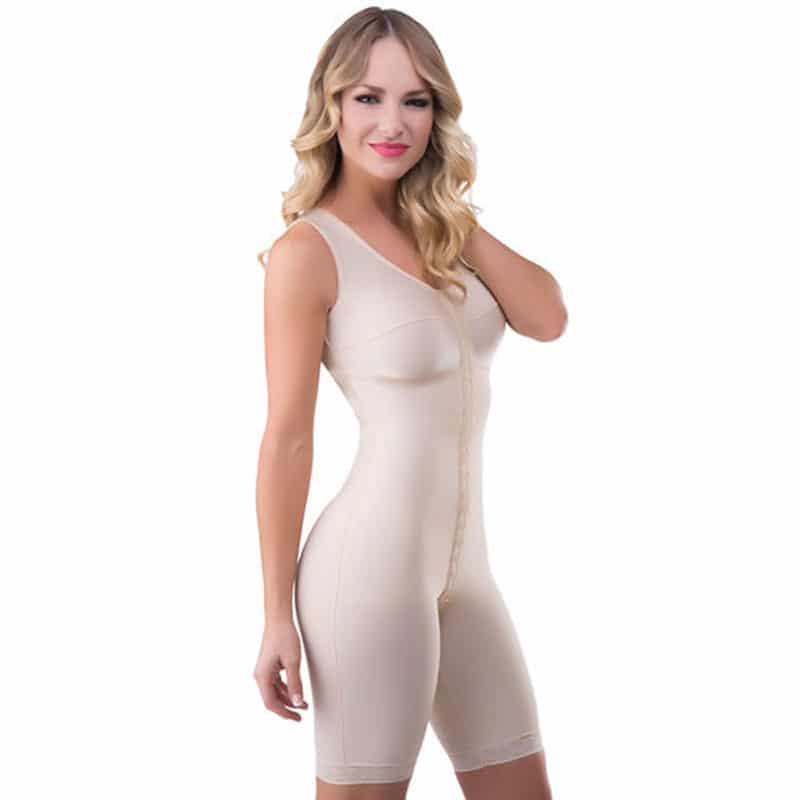
Compression garments are one of the most consistently prescribed and most consistently under-used parts of cosmetic surgery recovery. The clinical evidence supports their use across a wide range of procedures — body contouring, breast surgery, facial surgery, liposuction — but garment compliance is often the weakest link in patient recovery. This guide explains what compression garments actually do, why they matter, how long to wear them by procedure, what to look for in a garment, and the practical realities of living in one for weeks.
What compression garments actually do
A well-fitted post-surgical compression garment applies graduated, even pressure across the surgical site. Several mechanisms produce the clinical benefit:
- Limit interstitial fluid accumulation. External pressure reduces the gradient driving fluid into the tissue spaces, limiting how much swelling develops in the first place. This is the dominant benefit in the early post-op period.
- Support tissue adherence after dissection. Procedures involving extensive subcutaneous dissection (liposuction, abdominoplasty, body contouring) create a separation between the deeper tissues and the overlying skin. Compression encourages reattachment in the desired position rather than fluid accumulation in this space.
- Reduce risk of seroma formation. Seromas — pockets of clear inflammatory fluid — develop in spaces between surgically separated tissues. Compression reduces both the volume and likelihood of seroma collection.
- Support venous and lymphatic return. Graduated pressure (firmer at extremities, lighter centrally) supports the natural physiological return of fluid from the periphery.
- Provide physical support and comfort. Patients are often more comfortable with the garment than without — it stabilises healing tissue and reduces the discomfort of small movements.
- Encourage the desired final contour by shaping the healing tissues into the planned outcome rather than allowing them to settle into a less optimal position.
What compression garments do not do:
- Tighten skin permanently. They support during the healing process but do not produce lasting skin tightening.
- Cause weight loss or fat reduction. Marketing claims about “fat-burning” compression wear are not legitimate.
- Replace surgical results. A compression garment cannot improve a poorly designed surgical plan.
- Substitute for other elements of recovery. Garment use is one component alongside mobilisation, hydration, scar care, and clinical follow-up.
How long to wear them: typical protocols by procedure
Surgical teams give specific guidance for each procedure. Typical patterns:
Liposuction (single area)
- Stage 1 garment 24/7 for 4 weeks (off only for showering)
- Stage 2 garment 12-16 hours daily for an additional 2-4 weeks
- Total typical duration: 6-8 weeks
360 liposuction or larger-volume liposuction
- Stage 1 garment 24/7 for 4-6 weeks
- Stage 2 garment for an additional 4-6 weeks
- Total typical duration: 8-12 weeks
- Surgical binder/garment 24/7 for 6-8 weeks
- Stage 2 garment for an additional 4-6 weeks
- Total typical duration: 10-14 weeks. Some surgeons recommend longer for larger procedures.
Lipoabdominoplasty and mummy makeover
- Combined garment requirements, typically 8-12 weeks total
- Specialised BBL garment (with buttock cut-outs to avoid compressing transferred fat) for 4-6 weeks
- Standard compression for donor sites for 4-6 weeks
- Surgical bra for 6 weeks, usually 24/7 for the first 2-4 weeks then daytime only
- Some surgeons add a stabilising band for the first 4-6 weeks to encourage implants to settle
Breast reduction and breast lift
- Surgical bra 24/7 for 4-6 weeks
- Supportive non-wired bra for an additional 4-6 weeks
- Compression vest 24/7 for 4-6 weeks
- Stage 2 vest for an additional 2-4 weeks
- Facial garment (chin strap or full-face compression) 24/7 for the first week, then nights only for 3-4 weeks
Arm lift and thigh lift
- Compression sleeves or thigh garments 24/7 for 4-6 weeks
- Stage 2 garment for an additional 4-6 weeks
- Circumferential compression for 8-12 weeks
These are typical; your specific surgical team will give the protocol for your procedure.
Stage 1 versus Stage 2 garments
Most body contouring recovery uses two different garment stages:
Stage 1 (immediate post-op). Worn from the operating theatre through the first 3-6 weeks. Features:
- Open-front or zipper design for easy donning with limited arm range of motion.
- Heavy-duty compression at the surgical sites.
- Smooth-seamed construction to avoid friction on healing wounds.
- Coverage that extends well above and below the surgical area.
- Often medical-grade material with moisture-wicking properties.
- Tends to be less comfortable and less wearable under regular clothing.
Stage 2 (intermediate post-op). Replaces the stage 1 garment from week 3-6 onward. Features:
- Pull-on design without zippers.
- Slightly less aggressive compression.
- More wearable under everyday clothing.
- More comfortable for extended wear.
- Worn typically for daytime use through to weeks 8-12.
Some patients add a stage 3 garment — a light compression shaper for use during ongoing healing through to 3-6 months — though this is optional rather than standard.
Choosing the right garment
What to look for:
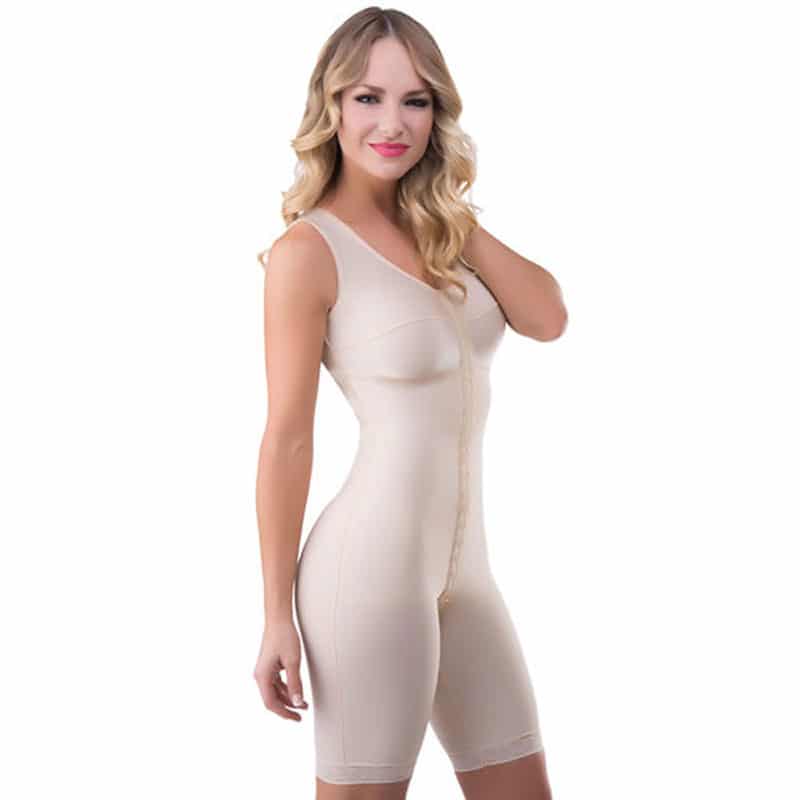
- Medical-grade construction. Designed for post-surgical use, not generic shapewear. Medical-grade garments have specific compression profiles, smooth seams, and durable materials. Cheaper shapewear can produce uneven compression and skin irritation.
- Correct size. Garments come in sizes based on body measurements, not normal clothing sizes. The surgical team or garment supplier will help with sizing. Wrong size produces either inadequate compression (too large) or skin damage and impaired healing (too small).
- Appropriate compression level. Most cosmetic surgery uses class 1 or class 2 compression. Higher classes (used for lymphoedema or severe venous disease) are not appropriate for routine post-op use.
- Procedure-specific design. A BBL garment with buttock cut-outs differs from a standard abdominal garment. The right design for your procedure matters.
- Two of each garment. One being worn while the other is laundered. Single-garment compliance is much harder than dual-garment rotation.
- Comfortable seams and panels. Bunched fabric or hard seams under tension produce skin irritation and impair sleep.
- Breathable, moisture-wicking material. Skin under continuous compression is at risk of fungal infection if moisture accumulates.
Your surgical team will usually have garment recommendations and may supply or sell suitable garments. Branded medical compression manufacturers (Marena, Macom, Design Veronique, Lipoelastic) produce reliable products. Cheaper alternatives sold online are often inadequate for serious post-surgical use.
Living in a compression garment: practical realities
Continuous compression for weeks at a time is challenging. Practical points:
Toileting. Garments with toilet openings or zippered access make this much easier. Without these features, fully removing the garment for every bathroom visit becomes exhausting.
Showering. Garments come off for showering. Plan accordingly — a non-slip stool in the shower, easy-removal garment, somewhere to put the wet garment if you sweat through it.
Sleeping. Stage 1 garments in particular are uncomfortable to sleep in. A loose nightshirt over the garment reduces friction. Pillows for positioning reduce pressure points.
Skin care underneath. Inspect the skin daily for redness, friction marks, or developing skin reactions. Apply small amounts of unscented moisturiser to dry areas (away from incisions). Watch for fungal infection in skin folds.
Working in a garment. Stage 1 garments are not designed for office or social wear; most patients are off work during this phase. Stage 2 garments fit reasonably under loose clothing — A-line dresses, loose trousers, longer tops.
Exercise in a garment. Light walking is encouraged with the garment on. More vigorous exercise is restricted by both the surgical team and the practical limitations of the garment.
Sweating. Common in the first weeks as the body heals. Moisture-wicking garments help. Have a spare garment to switch to if the current one becomes soaked.
Washing the garment. Cool wash with mild detergent, air-dry. Avoid tumble drying — heat damages the elastic fibres and reduces compression effectiveness. A garment that has lost its compression is functionally useless.
Don’t size down “to compress more”. A too-small garment does not provide better compression — it produces uneven pressure, skin damage, and impaired healing.
Common problems and how to handle them
Skin irritation under the garment. Common in the first weeks. A thin cotton vest underneath can reduce friction. Watch for developing rash, redness, or itching that does not resolve — possible contact dermatitis to fabric or detergent.
Pinching or rolling at the edges. Garment may be the wrong size or the wrong cut for your body shape. Try a different fit.
Numbness in the hands or feet. Garment too tight at the limb opening, restricting circulation. Loosen, re-size, or seek advice.
Increased rather than decreased swelling. Garment may be too tight, creating a tourniquet effect. Loosen or get re-fitted.
Wet patches at incisions. May indicate seroma formation or wound discharge — assess and contact the clinic if persistent.
Fungal infection in skin folds. Itchy red rash in skin folds under the garment. Treat with antifungal cream and improve garment hygiene.
Garment loses compression after a few weeks. Either incorrect washing (heat damage to elastic) or the garment was lower quality than expected. Replace.
Cannot tolerate the garment at all. Raise with the surgical team. Sometimes a different brand or design works much better. Complete non-compliance is worse than partial use.
What happens if you don’t wear the garment
Non-compliance has measurable consequences:
- Significantly more visible swelling, lasting longer.
- Higher rates of seroma formation, sometimes requiring drainage procedures.
- Higher rates of contour irregularities, particularly after liposuction.
- Less satisfactory final aesthetic outcome.
- Longer overall recovery period.
- Sometimes the need for revision surgery to correct contour problems that compression would have prevented.
Patients sometimes ask whether the garment is genuinely necessary or just a precaution. The honest answer is that it is genuinely necessary for most major body contouring procedures. The clinical benefit is well-documented.
Compression and lymphatic drainage massage
Compression garments and manual lymphatic drainage work as a complementary pair, not as alternatives. MLD sessions accelerate fluid clearance acutely; the garment maintains the gains between sessions. Patients who combine consistent garment compliance with a course of MLD typically have the smoothest swelling resolution and the best final contour.
FAQs
Can I sleep without my compression garment? Not in the first 3-4 weeks for most procedures. After that, depends on the procedure and stage.
Will compression tighten my skin permanently? No. It supports healing but does not produce lasting skin tightening.
Can I exercise in a compression garment? Light walking, yes. Vigorous exercise is restricted by your surgical recovery plan, not just the garment.
What if my garment gets too loose? Either you have lost swelling (good) or the garment has lost its elasticity (replace it). If genuinely too loose, a smaller stage 2 garment is appropriate.
Can I wear a different garment for going out? Stage 2 garments can be worn under regular clothing. Stage 1 garments are not really designed for this and are typically worn during home recovery.
Are there alternatives if I cannot tolerate the prescribed garment? Different brands and designs vary substantially in fit and comfort. Try alternatives before giving up on compression altogether.
How do I know if it’s the right size? Should be snug but not painful, no skin discolouration, no numbness or tingling beyond the garment edges, no pinching at openings.
Can I shower with it on? No — remove for showering. Garments lose effectiveness when waterlogged and air-drying takes hours.
Booking a consultation
If you are planning cosmetic surgery and want to understand the recovery requirements including compression garment use, this is covered at consultation and in pre-operative briefing. Call 0207 993 4849 or use the contact form to arrange a consultation at our Baker Street clinic.
Related reading
- Best compression garments after tummy tuck
- Support garments after breast surgery
- Benefits of lymphatic massage after cosmetic surgery
Centre for Surgery · CQC-regulated · GMC specialist-registered surgeons · 95–97 Baker Street, Marylebone, London W1U 6RN · 0207 993 4849 · Book a consultation · Finance from 0% APR