

What are Tubular Breasts?
Tubular breasts, also commonly referred to as tuberous breasts or breast hypoplasia, represent a condition that a significant number of women experience. Despite its prevalence, a considerable gap exists in awareness and open discussion about this condition, making it challenging to ascertain its true impact on the female population. The scarcity of research and lack of clarity on the root causes further complicates our understanding of tubular breasts.
RELATED: What Are Tuberous Breasts?
This condition is congenital, meaning it’s present from birth. However, the signs of tubular breasts become evident only during puberty, a phase when the breasts are expected to develop but do not do so in the typical manner. Many affected women might not even realise they have this condition until noticeable differences in breast development become apparent during their teenage years.
The conversation around tubular breasts is often shrouded in discomfort and unease, leading to a silence that hampers both awareness and support for those affected. This lack of open dialogue contributes to the challenges in estimating the prevalence of tubular breasts and advancing research to fully understand its causes and implications.
What Causes Tubular Breasts?

Understanding the origins and causes of tubular breasts presents a complex challenge, as the condition does not have a singular, clearly defined cause. This ambiguity around its aetiology means that medical professionals and researchers are still piecing together how and why tubular breasts develop. The condition becomes noticeable during puberty, a critical period of physical development when the breasts start to take on their adult form. It is during this time that the characteristics of tubular breasts emerge, signalling a divergence from typical breast development.
The development of tubular breasts is often attributed to an insufficient amount of breast tissue during puberty. This deficiency in breast tissue growth can lead to breasts that appear misshapen or droopy, a hallmark of the condition. However, the underlying reasons for this insufficient tissue development remain a subject of investigation and discussion within the medical community. Various factors, including genetic predispositions, hormonal imbalances, or environmental influences, could play a role in the manifestation of tubular breasts, but definitive conclusions are yet to be drawn.
The process of breast development is a complex interplay of hormonal signals and genetic instructions which guides the formation of breast size, shape, and composition. Any disruption or anomaly in this intricate process can potentially lead to developmental conditions such as tubular breasts. For individuals affected by tubular breasts, the breast tissue does not proliferate in the usual manner, often leading to a constricted or narrow base of the breast and a herniation or puffiness of the areola, among other distinctive features.
Are Tuberous Breasts Common?
Tubular breasts, though a relatively common condition affecting women, remain shrouded in a veil of unfamiliarity and misunderstanding. This lack of widespread knowledge significantly contributes to the underestimation of the condition in terms of its prevalence and impact. Many women, either due to a lack of awareness about the condition or the absence of desire for corrective procedures, do not seek out treatments, thereby contributing to the obscurity surrounding the true frequency of tubular breasts.
The condition’s commonality is juxtaposed against the silence and discomfort that often accompany discussions about breast health and abnormalities. This silence is further compounded by the personal and societal sensitivities surrounding bodily appearance and norms. As a result, many women who live with tubular breasts in the UK may not even be aware that what they are experiencing is a recognised medical condition, leading to a significant gap in understanding and support.
How Do I Know If I Have A Tubular Breast Deformity?

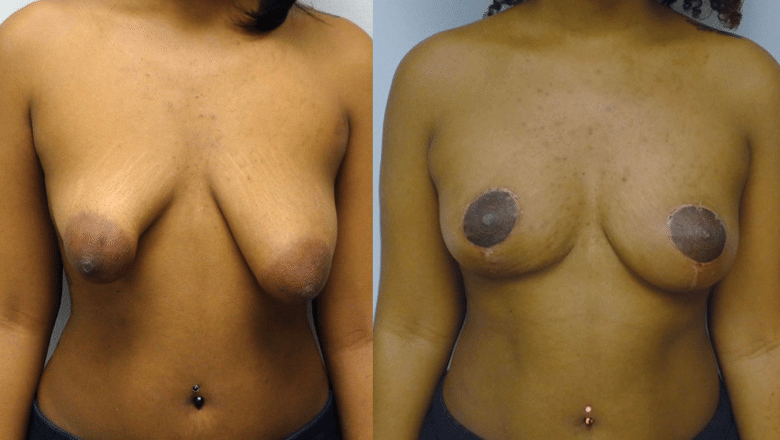
Recognising tuberous breast deformity can be challenging, particularly because its prevalence is not fully understood, partly due to the range of severity in its presentation. In some instances, women may exhibit such subtle manifestations of the condition that they go unnoticed. However, there are characteristic signs that typically indicate the presence of tuberous breasts. These breasts may appear smaller than average, with a shape that can be described as oval or square, and they often display a notable asymmetry. Additionally, they may be positioned unusually far apart on the chest wall, stemming from a constricted base that restricts natural growth and spread. A distinctive feature of this condition is the appearance of the nipples, which tend to be pointy, puffy, and disproportionately large compared to the rest of the breast.
A pioneering study in the UK sought to shed light on the actual prevalence of tuberous or constricted breasts within the general population, addressing the significant gap in existing research. This investigation involved a detailed analysis of pre-operative photographs submitted by patients to an Italian plastic surgery clinic, intending to provide a clearer picture of how widespread this condition truly is.
Published in a prestigious journal dedicated to plastic surgery, the research aimed to highlight the condition’s prevalence, which had been previously overlooked or insufficiently explored. The study meticulously reviewed thousands of photographs from patients considering various cosmetic breast surgeries, such as breast augmentations or reductions, alongside a comparison group drawn from the general population.
The findings of this comprehensive analysis were revealing. More than a quarter of the women in the general population group displayed at least one feature consistent with tuberous breast deformity. This rate was even more pronounced among women seeking cosmetic breast procedures, where over half of the participants were found to have some form of the condition.
How to Fix Tubular Breasts
Tuberous breast deformity presents a unique challenge that cannot be remedied through natural means due to its origin in the constrained growth of breast tissue. This condition necessitates a surgical approach to correction, aimed at addressing the structural issues underlying the deformity and achieving a more typical breast appearance.
RELATED: How to Fix Tuberous Breasts
Surgical Correction of Tuberous Breast Deformity
The pathway to correcting tuberous breasts is highly individualised, reflecting the diverse ways in which this condition can manifest. Central to most surgical strategies is the necessity to release the constriction at the breast’s base. This step is crucial for overcoming the fundamental growth limitation imposed by the deformity, allowing for a more natural breast shape and distribution of tissue.
Utilising Implants and Tissue Expanders
In many cases, the introduction of breast implants plays a pivotal role in achieving the desired outcome. Implants are selected and positioned to enhance the breast’s shape and volume, contributing to a more rounded and symmetrical appearance. However, before implants can be placed, some patients may need to use tissue expanders. These devices are temporarily inserted to gently stretch the skin and breast tissue, preparing the area for the eventual placement of implants. This preparatory phase is essential for patients with more severe constriction, ensuring that the skin and tissue can accommodate the implants without complications.
Correcting Asymmetry and Nipple Concerns
The treatment of tuberous breast deformity often extends beyond addressing the base constriction and may involve procedures to correct nipple and areola asymmetry. These additional corrections are tailored to the individual’s needs, aiming to achieve not only functional but also aesthetic improvements. The goal is to ensure that both breasts are as symmetrical as possible, with attention also given to the size, position, and appearance of the nipples and areolae.
RELATED: How To Fix Uneven Breasts – Surgical Solutions for Breast Asymmetry
Tubular Breast Correction at Centre for Surgery: Transforming Lives with Expert Care
At the Centre for Surgery, we specialise in providing comprehensive and compassionate care for individuals seeking correction of tubular breast deformity. Recognised as a leading plastic surgery clinic in London, our dedicated team of experts utilises the latest surgical techniques and personalised treatment plans to achieve exceptional results. Our commitment to excellence in patient care and outcomes is evident in everything we do, from initial consultation through to post-operative support.
Why Choose Centre for Surgery?
Our clinic is renowned for its state-of-the-art facilities, situated conveniently at 95-97 Baker Street, London. With a focus on safety, comfort, and confidentiality, we ensure the highest standards of care to support every patient’s journey. Our surgeons are leaders in the field of cosmetic and reconstructive breast surgery, bringing years of experience and a track record of successful outcomes.
For more detailed information about our ethos and approach, please visit our About Us page.
Tailored Treatment for Tuberous Breast Correction
Recognising that each case of tubular breast deformity is unique, we provide customised surgical solutions tailored to address the specific needs and goals of our patients. Our treatments range from the release of breast base constriction and the use of implants or tissue expanders, to precise adjustments for nipple and breast asymmetry.
Patient Testimonials
Sarah’s Story: “My journey with Centre for Surgery has been life-changing. The team provided me with detailed information, support, and care throughout my treatment for tubular breasts. I now enjoy confidence I never thought possible.”
Emily’s Experience: “Choosing Centre for Surgery was the best decision I made. The personalised care and attention to detail were exceptional. My results have surpassed my expectations, and I’m truly grateful to the entire team.”
Anna’s Transformation: “From my first consultation, I felt understood and supported. The surgery has not only improved my appearance but also my self-esteem. Thank you to everyone at Centre for Surgery for their expertise and kindness.”
Booking Your Consultation
If you’re considering tubular breast correction, we invite you to book a consultation with one of our expert surgeons. During your consultation, we will discuss your concerns, explain the available treatment options, and answer any questions you may have. To schedule your appointment, please get in touch with us at:
- Phone: 0207 993 4849
- Email: contact@centreforsurgery.com
- Address: 95-97 Baker Street, London W1U 6RN
For further details about our clinic and to book your consultation, visit our Contact Us page.
Explore Our Resources
We understand the importance of making informed decisions about your health and appearance. For more insights into tubular breast correction and other cosmetic procedures, we encourage you to explore our comprehensive Plastic Surgery Blog.
Learn more about our approach to patient care, our range of services, and read FAQs on our Clinic FAQs page.
Discover our finance options, including 0% APR with Chrysalis Finance, to make your treatment journey accessible and stress-free. Visit our Finance Options page for more information.
Visit Our Baker Street Clinic
Experience the highest standard of care at our Baker Street clinic, designed with your comfort and privacy in mind. For more details about our facilities and location, please visit the Baker Street clinic link.
At Centre for Surgery, we are committed to helping you achieve the results you desire, with a focus on safety, quality, and personalised care. Let us be part of your transformation journey. Contact us today to begin your path to confidence and well-being.
[contact-form-7 id=”256″ title=”Treatments form”]