

Mentor is one of three breast implant brands routinely used in breast augmentation surgery in the UK, alongside Motiva and Allergan. Manufactured by Mentor Worldwide LLC — a subsidiary of Johnson & Johnson — Mentor implants have been on the global market for over 40 years and are MHRA-cleared for use in the UK and FDA-approved in the United States.
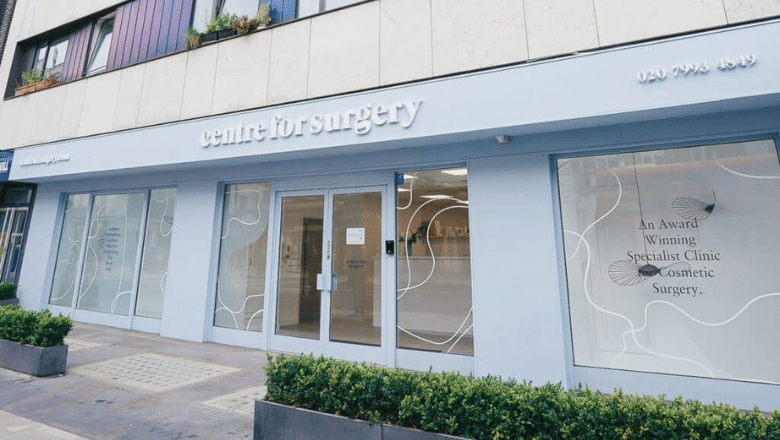
This guide covers everything you need to know if you are considering Mentor implants for your breast augmentation: how they are constructed, the different shapes and profiles available, how they compare with other major brands, what the safety record looks like, and how to decide whether they are the right choice for you. The guide is written by the team at Centre for Surgery, where breast augmentation is performed by GMC-registered specialist plastic surgeons at our CQC-regulated Baker Street clinic.
What are Mentor breast implants?
Mentor breast implants are silicone-shelled implants used in cosmetic breast augmentation and post-mastectomy reconstruction. The shell is made of cross-linked silicone elastomer; the filler is either cohesive silicone gel or sterile saline, depending on the implant type. They are available in a wide range of shapes, profiles, sizes, and surface textures, allowing the surgeon to match the implant precisely to your chest wall dimensions and aesthetic goals.
In the UK, Mentor is one of the most commonly used implant brands. Patient choice between Mentor, Motiva and Allergan often comes down to individual surgeon preference, specific anatomical considerations, and the warranty programme attached to each brand. Your surgeon will discuss the appropriate brand and implant specification at your consultation.
RELATED: Breast implant options at Centre for Surgery | Mentor vs Motiva breast implants
Mentor MemoryGel — round silicone implants
The MemoryGel range is Mentor’s silicone gel-filled round implant line and accounts for around 75% of Mentor implants used in UK breast augmentation. The cohesive silicone gel inside the shell holds its shape while moving naturally with the surrounding tissue, giving a result that feels close to natural breast tissue.
MemoryGel implants are available in three gel cohesivity levels:
- MemoryGel Standard — softer gel, most natural feel, suited to patients with adequate native breast tissue coverage
- MemoryGel Xtra — slightly firmer gel with increased projection, suited to patients seeking more upper-pole fullness
- MemoryGel Smooth Plus — designed for revision cases or where a more defined shape is required
Round MemoryGel implants come in five projection profiles — moderate classic, moderate plus, moderate plus Xtra, high profile, and ultra-high profile — allowing the surgeon to match the implant projection to your chest width and the look you are seeking. Round implants are inherently rotation-proof: if the implant moves within its pocket, the appearance does not change because the shape is symmetrical.
Mentor CPG — anatomical (teardrop) implants
Mentor Contour Profile Gel (CPG) implants are anatomically shaped — meaning they have more projection in the lower pole and a gradual slope towards the upper pole, mimicking the natural shape of the female breast. Around 25% of Mentor implants used at Centre for Surgery are anatomical, typically chosen by patients who want a softer, more sloping profile rather than the rounder appearance produced by round implants.
CPG implants use a firmer cohesive gel than MemoryGel round implants — a deliberate design choice that allows the implant to hold its teardrop shape against gravity and the surrounding tissue. The trade-off is that anatomical implants can rotate within the breast pocket, which would change the visible shape of the breast. The risk of rotation is small but real, and is the main reason many surgeons prefer round implants where the anatomy permits.
RELATED: Round vs teardrop implants — choosing the best implant shape | What happens if a breast implant flips or rotates?
Surface texture — Siltex micro-textured vs smooth
Mentor offers two shell surface options:
Siltex is a micro-textured surface — fine surface irregularity at a much smaller scale than the heavily textured surfaces that were withdrawn from several markets due to associations with breast implant-associated anaplastic large cell lymphoma (BIA-ALCL). Siltex texture is engineered to reduce capsule friction without the safety concerns of macrotextured shells, and has not been associated with BIA-ALCL in the way that macrotextured implants from other manufacturers have been.
Smooth shells have no surface texturing. They are softer to palpate, allow more natural movement of the implant within the pocket, and have not been associated with BIA-ALCL. They are the most commonly used shell type in modern breast augmentation.
Your surgeon will recommend the appropriate surface based on your anatomy, the implant placement (subglandular vs submuscular), and whether you are having primary augmentation or revision surgery.
Mentor implant sizes and profiles — how they are chosen
Implant size is measured in cubic centimetres (cc), not cup size. Mentor implants are available across a very wide volume range, from approximately 100cc up to over 800cc. The right size for any individual patient depends on chest wall width, native breast tissue volume, skin elasticity, and the aesthetic outcome you are seeking.
Profile (projection) is equally important and often less well understood. Two implants of the same volume can produce very different results depending on their projection. A wider, lower-projection implant will give a more natural slope; a narrower, higher-projection implant will give more forward fullness and a rounder appearance. Your surgeon takes physical measurements of your chest wall at consultation and combines these with your goals to recommend a specific volume-and-profile combination.
RELATED: Understanding breast implant profile and projection | What is the perfect breast implant for me?
Saline vs silicone Mentor implants
Although Mentor manufactures both saline and silicone implants, saline is rarely used in modern UK breast augmentation. Silicone gel implants give a much more natural feel, are less prone to visible rippling, and are the standard of care across the UK private sector.
Saline implants are still occasionally used in specific revision scenarios or where the patient strongly prefers them — they can be inserted via a smaller incision because they are filled in situ after placement. However, the cosmetic outcome with silicone is consistently more natural, and saline implants carry a higher risk of palpable rippling, particularly in patients with thin overlying tissue.
RELATED: Silicone vs saline breast implants
Mentor safety record
Mentor implants are MHRA-cleared in the UK and FDA-approved in the United States, with continuous post-market safety surveillance from both regulators. Independent published research supports their safety profile.
The most discussed safety concern in modern breast implant surgery is BIA-ALCL — a rare type of lymphoma associated specifically with macrotextured implant surfaces. The textured Allergan implants linked to most BIA-ALCL cases were recalled by the FDA in 2019. Mentor implants have not been the subject of a similar recall in the UK or US, and the Siltex micro-texture is engineered to a different specification than the macrotextured surfaces associated with BIA-ALCL cases.
Other recognised long-term considerations with any breast implant — Mentor included — are capsular contracture, implant rupture, and the very rare condition of breast implant illness (BII). All of these risks are discussed in detail at consultation. Routine monitoring with ultrasound or MRI from around three years post-augmentation is recommended for all silicone implants.
RELATED: How do I know when my breast implants need replacing? | Breast implant replacement
How long do Mentor implants last?
Mentor implants do not have a fixed expiry date, and there is no clinical requirement to remove or replace them at a specific age. In practice, most modern silicone implants last between 10 and 20 years before any clinical issue arises, and many last considerably longer.
What matters is monitoring — not the number on the calendar. A baseline ultrasound or MRI is recommended around three years post-augmentation, with follow-up imaging every two to three years thereafter. Replacement is appropriate when imaging or symptoms suggest implant rupture, when capsular contracture (Baker grade III or IV) develops, or when the patient simply wishes to change size or shape.
The Mentor MemoryGel Product Replacement Policy provides lifetime cover for confirmed rupture, with additional financial assistance for replacement surgery within the first ten years. Capsular contracture (Baker III/IV) and delayed-onset seroma are also covered for the first ten years post-implantation.
Mentor vs Motiva — how to choose
Both Mentor and Motiva are reputable, modern silicone implant brands. The differences are in implant gel cohesivity, shell technology, and warranty programme rather than fundamental safety or quality.
Motiva Ergonomix uses a proprietary ProgressiveGel that flows under gravity, creating a softer teardrop appearance when the patient is upright and a more rounded appearance when lying down. Motiva’s SmoothSilk shell is engineered to a specific micron specification not found in other brands.
Mentor MemoryGel uses a more traditional cohesive gel formulation with a wider range of profiles available off-the-shelf in the UK. Mentor’s longer market history means there is more long-term published data on outcomes.
Patient choice between the two is best made at consultation, where your surgeon can demonstrate sizers from each brand, explain how each implant behaves in different anatomies, and discuss the warranty implications.
Considering Mentor implants? Book a consultation
Breast augmentation at Centre for Surgery is performed by GMC-registered consultant plastic surgeons at our Baker Street clinic. All procedures are carried out under TIVA (Total Intravenous Anaesthesia) as a day case. The clinic is regulated by the Care Quality Commission, with an overall rating of “Good”. A mandatory two-week cooling-off period applies between consent and surgery.
At consultation, your surgeon will take detailed chest wall measurements, discuss your aesthetic goals, demonstrate Mentor and Motiva sizers, and recommend a specific implant brand, shape, profile, and volume. You can also discuss recovery, scarring, the bra you will wear afterwards (covered in our guide on choosing the right bra after breast augmentation), and the long-term monitoring schedule.
0% APR finance is available through Chrysalis Finance, subject to status. Full pricing is given at the end of your consultation.
RELATED: Are breast implants worth it? | Common questions about breast implants | Teardrop breast implants
Phone: 0207 993 4849
Email: contact@centreforsurgery.com
Address: 95–97 Baker Street, London W1U 6RN
Online: Book a consultation
[contact-form-7 id=”256″ title=”Treatments form”]