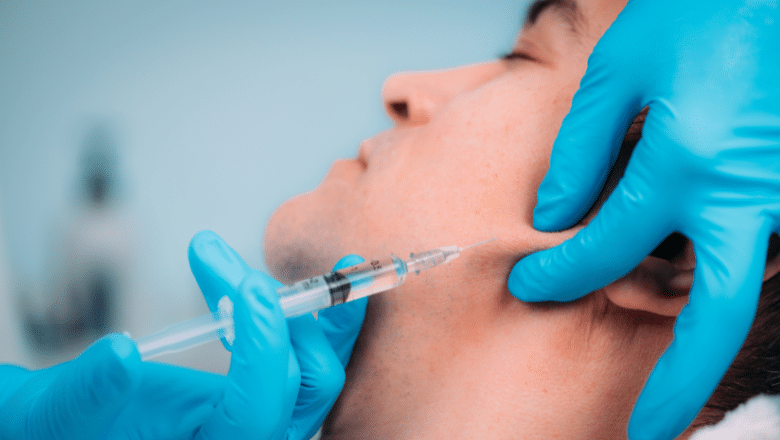

Non-surgical jaw reduction uses small doses of botulinum toxin placed precisely into the masseter muscles to reduce their bulk over 4-8 weeks. The result: a softer, more oval-shaped lower face for patients whose wide jaw is caused by enlarged masseter muscles rather than bone structure or excess fat. The treatment also provides therapeutic relief for bruxism (teeth grinding) and TMJ-related jaw tension, making it useful even for patients with no cosmetic concern.
This is the comprehensive guide to jaw slimming injections: how they work anatomically, who suits the treatment, what to expect from the procedure and result, and when alternative approaches are more appropriate.
The masseter muscle and what enlarges it
The masseter is one of the four chewing muscles. It originates from the zygomatic arch (cheekbone) and inserts into the angle and lower border of the mandible (jawbone). When it contracts, it elevates the jaw — its primary function in chewing.
The masseter is unusually strong for its size — one of the strongest muscles in the human body by force per cross-sectional area. Like any muscle, it responds to repeated heavy use by hypertrophying (growing larger). Several factors can produce masseter enlargement:
Genetic predisposition. Some individuals naturally have larger masseter muscles regardless of habits — particularly common in certain ethnic backgrounds and family lines.
Bruxism (teeth grinding). Repetitive clenching, especially during sleep, exercises the masseter day and night, producing significant muscle hypertrophy over years.
Chronic gum chewing or hard food chewing. Repeated heavy chewing of gum, ice, hard candy, or particularly tough foods can contribute to enlargement.
Jaw clenching from stress. Many patients clench their jaw unconsciously during stress, producing similar masseter exercise effects.
TMJ disorder. Underlying jaw joint problems can produce compensatory muscle overuse and consequent hypertrophy.
The result of enlarged masseters is a wider, more square-shaped lower face. For some patients this is purely cosmetic concern. For others, it’s accompanied by tension, jaw pain, headaches, or worn tooth surfaces from grinding.
How the treatment works
Botulinum toxin injected directly into the masseter muscles interrupts the nerve-muscle signal that controls contraction. Over 4-8 weeks, the affected muscle:
- Reduces its contractile activity
- Gradually shrinks (atrophies) from disuse
- Becomes visibly smaller — and the lower face appears narrower
The treatment doesn’t paralyse the muscle completely — chewing function is preserved. The dose is calibrated to weaken the muscle enough to produce useful slimming without compromising chewing strength meaningfully.
Typical dose: 25-50 units per side, depending on muscle size and treatment goal. Conservative dosing produces gradual slimming; higher dosing produces more pronounced effect but with more reduction in chewing strength.
Number of injection points: typically 3-5 per side, distributed across the body of the muscle. This ensures even distribution of effect rather than localised weakness.
What to expect from the procedure
Consultation. Assessment of jaw width, masseter size (palpation while you clench), and identification of contributing factors. Photos taken for comparison.
Preparation. Skin cleansed thoroughly. Topical anaesthetic isn’t usually needed — the injections are quick and well-tolerated.
The injection.
- You’re asked to clench your teeth so the muscle is identifiable by palpation
- Fine needle placed into the muscle through the skin
- 3-5 injection points per side
- Brief sharp sensation at each injection point
- Total procedure time 5-10 minutes
Immediate effects. Mild redness at injection points, occasional small bruise. No significant immediate effect on the muscle itself — the toxin takes time to act.
Aftercare.
- Avoid lying flat for 4 hours after treatment
- Avoid massaging the treated area for 24 hours
- Avoid strenuous exercise on the day of treatment
- Avoid hot/cold extremes for 48 hours
- Normal eating can resume immediately
For broader injectables aftercare context, see our injectables aftercare guide.
Timeline of results
Days 1-7: no visible change. The toxin is acting on the nerve-muscle signal but the muscle hasn’t shrunk yet.
Weeks 2-4: initial muscle weakening becomes noticeable. Some patients report less jaw tension and reduced grinding/clenching habits.
Weeks 4-8: the muscle begins visibly shrinking as it atrophies from reduced use. Lower face starts to look narrower.
Month 2-3: maximum slimming effect visible. The lower face appears more oval-shaped, cheekbones often look more defined by contrast.
Months 3-6: stable result. Patients enjoy the slimmer appearance and ongoing reduction in jaw tension.
Months 6-9: effect begins to fade as muscle activity gradually returns. Maintenance treatment recommended.
The slimming effect is gradual and often goes unnoticed by family and friends — they may comment that you look refreshed without identifying what’s changed. This subtlety is part of why the treatment is popular: it produces meaningful change without obvious “work.”
Who is a good candidate?
The ideal candidate has:
- Genuinely enlarged masseter muscles — visible and palpable when clenching teeth
- A “square jaw” appearance they want softened
- Bruxism or jaw tension alongside the cosmetic concern (treatment addresses both)
- Lower face width primarily from muscle rather than bone or fat
- Realistic expectations — gradual slimming over weeks, not immediate transformation
- Willingness to maintain the result with treatment every 6-9 months
Less suitable candidates:
- Patients whose wide lower face is from bone structure (no muscle treatment changes bone)
- Patients with already-slim lower face who want further slimming (risk of looking gaunt)
- Patients with very thin facial fat overall (treatment can produce hollow appearance)
- Patients with significant facial asymmetry needing surgical correction
- Patients during pregnancy or breastfeeding
- Patients with neuromuscular disorders
- Patients with known allergy to botulinum toxin
For more on the broader question of jawline aesthetics, see our guide on jaw profile and how to get a sculpted jawline and our ideal female jawline reference.
The therapeutic benefits beyond cosmetic
For many patients, jaw slimming injections provide significant relief from:
Bruxism (teeth grinding). The weakened muscle can’t grind as forcefully. Patients with worn tooth surfaces from years of grinding often see substantial improvement, sometimes documented by their dentist at routine check-ups.
Jaw tension and pain. Chronic masseter tightness produces deep jaw aching that responds well to muscle relaxation.
Tension headaches. Some headaches are driven by chronic masseter and temporalis muscle tension. Treatment can produce meaningful headache reduction.
TMJ discomfort. While not a primary treatment for TMJ disorder, the masseter relaxation can reduce TMJ-related pain in many patients.
Dental wear protection. For patients who grind their teeth, protecting remaining tooth surface from further wear is valuable beyond any cosmetic consideration.
These therapeutic benefits sometimes prompt patients to seek the treatment for non-cosmetic reasons, with the slimming effect being a welcome additional benefit rather than the primary goal.
Combining with other treatments
Jaw slimming injections often combine well with other facial treatments:
Jaw slimming + cheek filler. Reducing lower-face width while enhancing cheekbone definition produces dramatic overall sculpting. See our guide on cheek fillers.
Jaw slimming + chin filler. Sharper, more defined chin combined with narrower jaw produces refined lower-face proportion.
Jaw slimming + buccal fat removal. For patients with both wide jaw and full lower cheeks, combined treatment addresses both. See our guide on non-surgical alternatives to buccal fat removal for the broader thinking.
Jaw slimming + anti-wrinkle treatment elsewhere. Often performed in the same session as forehead or glabella treatment for comprehensive injectable refinement.
For the broader non-surgical rejuvenation context, see our non-surgical facelift hub.
Cost
Jaw slimming injections at Centre for Surgery are priced per session:
- Single session: from £350
- Cost varies with the units required (larger muscles need more units)
- Maintenance every 6-9 months
Over a year, total cost is typically £400-£700 depending on the dose and maintenance frequency.
Finance options through Chrysalis Finance, including 0% APR, are available.
A useful comparison: the cost is substantially less than the surgical alternatives (mandibular contouring or masseter reduction surgery), with much faster recovery and no permanent change.
Risks and considerations
Common (mild and self-limiting):
- Mild bruising at injection sites for 3-5 days
- Brief soreness at injection points
- Temporary mild reduction in chewing strength as the muscle weakens (usually unnoticed)
Less common:
- Asymmetric muscle reduction if dosing is uneven between sides
- Excessive muscle weakening producing chewing difficulty (resolves over months)
- Slight hollowing of the cheek if the patient already had thin cheeks before treatment
Rare:
- Allergic reaction to the toxin
- Smile asymmetry if toxin diffuses to nearby muscles (very rare with proper technique)
- Significant chewing difficulty (extremely rare with appropriate dosing)
Experienced injection technique substantially reduces these risks. A thorough consultation discusses your specific risk profile based on your anatomy and goals.
Common questions
Will I still be able to chew normally?
Yes — chewing function is preserved. The treatment reduces masseter bulk and weakens excessive force but doesn’t eliminate the muscle’s function. Most patients notice no change in their ability to eat normally.
How quickly will I see the result?
The slimming develops gradually over 4-8 weeks. Initial muscle relaxation is felt within 2 weeks; visible slimming starts at week 4 and peaks around weeks 8-12.
Will my face look gaunt?
Not when the treatment is conservatively dosed in appropriate candidates. Patients with already-slim faces are typically advised against the treatment because of this risk. The slimming should look like refinement, not depletion.
Will I still be able to bite into hard foods?
Yes — biting force is preserved. Some patients notice the slight reduction in chewing strength when eating particularly tough foods (chewy meat, hard candy), but routine eating is entirely normal.
How long does it last?
Typically 6-9 months. Many patients find that with regular maintenance treatment over years, the underlying muscle stays relatively reduced even between treatments, sometimes allowing longer intervals.
Can the treatment help with my teeth grinding?
Often yes — particularly nighttime grinding. The weakened muscle can’t grind as forcefully. Tooth wear protection is a significant therapeutic benefit. Discuss with your dentist as well — combining the treatment with a night guard can be even more effective.
Can men have jaw slimming injections?
Yes, though more conservatively. Men typically prefer to retain some jaw width for masculine proportions while still benefiting from reduced muscle tension and bruxism relief. The treatment plan is adjusted accordingly.
What if I want it reversed?
The toxin can’t be actively reversed (unlike filler, which can be dissolved). The effect wears off naturally over 6-9 months as muscle activity returns. If you don’t like the result, simply discontinuing treatment will allow the muscle to gradually regain its previous size.
How does this compare with surgical mandibular contouring?
Mandibular contouring surgery removes bone from the jaw angle — addressing wide jaw caused by bone structure rather than muscle. It’s more invasive, more permanent, and addresses a different cause. Jaw slimming injections only affect muscle. The right treatment depends on whether your jaw width comes from bone or muscle, which is established at consultation.
Will I notice the difference, or will only I see it?
Most patients clearly see the change in their own face. Friends and family often notice the patient looks “refreshed” or “thinner” without identifying what specifically changed. The subtlety is part of why the treatment is popular.
Centre for Surgery · CQC-regulated · GMC specialist-registered surgeons · 95–97 Baker Street, Marylebone, London W1U 6RN · 0207 993 4849 · Book a consultation · Finance from 0% APR