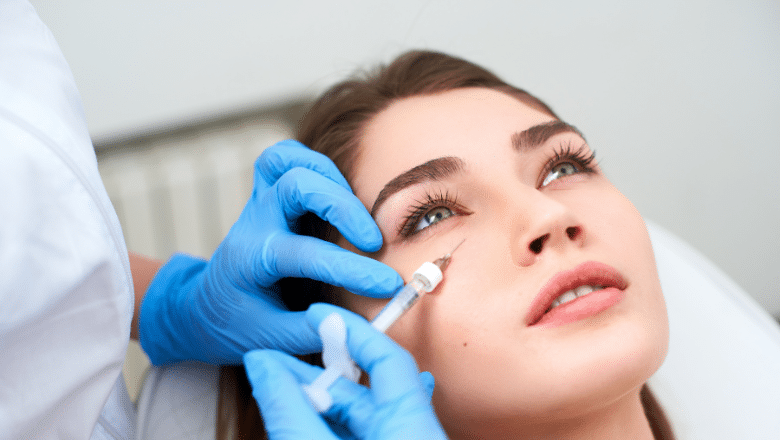
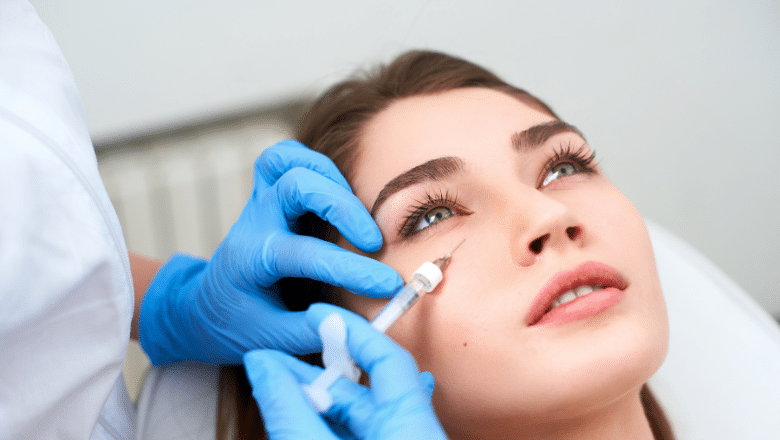
Tear trough filler is one of the most-requested non-surgical treatments at Centre for Surgery — and one of the most commonly misapplied. The treatment can transform a tired-looking under-eye into something rested and refreshed, but only for a specific subset of patients. For the wrong candidates, it makes the area look worse, sometimes for years.
This is the honesty piece on tear trough filler: who shouldn’t have it, the anatomical reasons why, what the warning signs are, and what the appropriate alternative is in each case. If you’re considering under-eye filler, this is the conversation to have with yourself before booking.
For the comprehensive guide to who tear trough filler does suit and how the treatment is properly delivered, see our complete tear trough filler guide.
The fundamental problem: it’s a high-stakes area
The skin under the eye is the thinnest on the face — around 0.5mm thick, compared to about 2mm on the cheek. There’s minimal subcutaneous fat to buffer or hide what’s underneath. The area sits over an active muscle (the orbicularis oculi) and contains some of the highest-risk vascular anatomy on the face, with branches connecting via the ophthalmic artery to the central retinal artery supplying the eye.
This combination means three things:
- Small errors in product placement, volume, or product choice are immediately visible
- Filler shows through thin skin more readily than anywhere else on the face
- Vascular complications, while rare, can have severe consequences
None of this is a reason to avoid the treatment when it’s appropriate. It is a reason to be careful about candidacy — and to seek out experienced injectors when proceeding.
The five groups who should not have tear trough filler
1. Patients with significant under-eye bags
Under-eye bags are pockets of orbital fat that herniate forward through a weakening septum (the membrane behind the eye that holds the fat in place). They protrude above the natural lid-cheek junction and are visible as raised pouches rather than hollows.
Trying to “fill around” bags with filler makes the under-eye area look heavier, not smoother. The filler raises the level of the surrounding tissue to try to match the bag — producing a generally puffy, heavy appearance instead of correcting the bag itself.
The right intervention for these patients is surgical lower blepharoplasty, which addresses the herniated fat directly. The procedure takes 1.5 to 2 hours and requires about a week of social downtime, but produces a clean, long-lasting result that filler cannot replicate. For a deeper look at whether bags can resolve without surgery, see can eye bags go away?
For practical advice on under-eye bag management more generally, see our guide on how to get rid of under-eye bags.
2. Patients with malar oedema or festoons
Some patients have impaired lymphatic drainage in the lower lid and cheek area, producing chronic puffiness that often gets worse with anything injected into the area. The condition is called malar oedema, and the prominent fluid-filled bags it produces are called festoons.
Festoons are an absolute contraindication to tear trough filler. The product accumulates with fluid in the impaired lymphatic system and creates a permanently puffy appearance just above the cheekbones — exactly where the original tear trough hollow used to be. Once this happens, the only fix is dissolving the filler with hyalase, and even then the underlying tendency to fluid accumulation remains.
The warning sign: if your under-eye area looks worse when you’ve been crying, drinking salty food, or sleeping poorly — and the change is fluid-related puffiness rather than just darker shadowing — malar oedema is likely involved. An experienced injector should recognise this and decline treatment.
3. Patients with significant lower-lid skin laxity
Loose, crepey under-eye skin doesn’t hold filler well. The skin can’t recoil neatly over the placed product, and the result often looks lumpy, ridged, or uneven. Patients sometimes pursue more filler in an attempt to “smooth out” the appearance, which compounds the problem.
The right approach for these patients is to address the skin quality first — either with energy-based treatment (SmoothEye laser or Morpheus8 radiofrequency microneedling) or, if the laxity is significant, with surgical correction via lower blepharoplasty. Canthoplasty may be appropriate where lateral lid laxity is the dominant issue.
A useful self-test: pinch the skin below the eye gently and release it. Skin that snaps back quickly will hold filler. Skin that lingers in a pinched position before slowly returning is too lax — and needs skin work before any filler is considered.
4. Patients whose problem is actually somewhere else
This is the most common misdiagnosis we see in patients who arrive saying “my under-eye area looks tired.” Often the tear trough itself is fine. The issue is sitting somewhere else on the face:
Descended cheek volume. When the mid-face fat compartments thin and descend with age, the lid-cheek junction becomes more visible as a shadowed line. The tear trough itself hasn’t changed — but the cheek that used to sit high under the eye now sits lower. The right treatment is cheek filler to restore the volume above the lid, not filler within the trough itself. See our guide on sunken cheeks for more on this pattern.
Temple hollowing. Volume loss in the temples produces a generally tired, drawn appearance that radiates through to the eye area. Filling the temple often improves how the under-eye reads, without touching the under-eye itself.
Dark circles from pigmentation or vascular show-through. Dark circles have multiple causes. Some are shadowing from a deep hollow (which filler addresses). Others are pigmentation from sun damage or genetics, or visible blood vessels under thin skin. Filler doesn’t address pigmentation or vascular show-through — energy-based skin treatments and topical lightening agents do. See bags under the eyes and dark circles for the full breakdown.
Crepey under-eye skin. If the complaint is fine lines and texture rather than hollowing, the right tool is skincare plus energy-based treatment. See our guide on how to get rid of under-eye wrinkles.
The right consultation looks at the whole face, not just the area the patient is pointing to. An experienced injector should tell a patient asking for tear trough filler that the cheek or temple is the actual problem, when that’s what’s happening.
5. Patients with old, undissolved filler still in the area
Tear trough filler sometimes sits for years — particularly when placed too superficially, in the wrong tissue plane, or with the wrong product. Patients often present months or years after treatment elsewhere with persistent under-eye puffiness they assumed was their own swelling — but is actually old filler that hasn’t broken down.
Adding new filler on top of badly-placed old filler typically compounds the problem. The right approach is to dissolve the old filler with hyalase first, wait a few weeks for the area to settle, then carefully assess what (if anything) the patient now needs.
If you’ve had under-eye filler at another clinic and aren’t happy with it, please don’t book more treatment elsewhere on top. Book an assessment first.
How to recognise a clinic that will say no when appropriate
A reputable injector turning down treatment isn’t trying to lose your business — they’re protecting you from a complication that’s expensive and time-consuming to fix. Warning signs of a clinic that may take on inappropriate cases:
- Offers “same-day treatment” without thorough consultation and assessment
- Uses the same filler brand for every area of the face (under-eye needs a specific product, not a general one)
- Doesn’t ask about your history of swelling, salt sensitivity, or fluid retention
- Doesn’t take standard pre-treatment photographs
- Doesn’t explain the difference between bags, hollows, dark circles, and skin laxity in your assessment
- Doesn’t have hyalase available on-site for emergency dissolving
- Doesn’t mention vascular risks or the rare but serious complications
A consultation should leave you with a clearer understanding of what’s happening in your under-eye area — not just a sales pitch for filler.
What the right consultation looks like
At Centre for Surgery the assessment for tear trough filler includes:
Anatomical assessment of whether the patient has a true hollow (filler may help) or fat herniation, lymphatic compromise, or skin laxity (filler may not help, and other treatment is appropriate).
The pinch-and-release test on the lower lid skin to assess elasticity.
Cheek and temple volume assessment to identify whether the tear trough is the actual problem or a secondary feature of volume loss elsewhere.
Skin quality and pigmentation review to determine whether energy-based treatment or topical management would be more appropriate.
History review for fluid retention patterns, previous filler treatment in the area, any chronic eye conditions, and pregnancy/breastfeeding.
Photographs taken in standard lighting for the medical record.
An honest recommendation — which may be tear trough filler, may be a different injectable, may be energy-based treatment, may be surgery, and may be “do nothing right now.”
A consultation with our specialist team — including Dr Spyridon Vlachos — establishes which approach (if any) matches your actual anatomy. Patients are often surprised when the recommendation isn’t the treatment they came in asking for. That’s the consultation working as it should.
If filler isn’t right for you, what is?
The alternative depends on what’s actually driving the under-eye appearance:
For dark circles with no hollow: SmoothEye laser stimulates collagen and improves skin quality in the periorbital area. Several sessions are typically needed. Topical brightening agents (vitamin C, niacinamide, kojic acid) provide additional benefit.
For crepey, lax under-eye skin: Morpheus8 radiofrequency microneedling reaches deeper into the dermis. For more pronounced laxity, surgical correction.
For bags: Lower blepharoplasty is the appropriate intervention. The newer transconjunctival approach (where the incision is hidden inside the lower lid) leaves no visible scar.
For descended cheek volume contributing to under-eye shadow: Cheek filler restores the volume above the lid-cheek junction without touching the under-eye area directly.
For under-eye RF tightening with limited downtime: FaceTite (and the AccuTite precision applicator) uses radiofrequency energy to tighten skin and reduce small fat deposits. The AccuTite handpiece is designed specifically for delicate areas like the under-eye, providing controlled tightening without significant surgical downtime.
For pigmentation issues: medical-grade topical skincare and laser treatment targeting pigmentation. Filler doesn’t help.
Cost considerations
The cost of inappropriate filler treatment goes well beyond the initial session. Patients who develop migration, lymphatic puffiness, or visible old filler often spend significantly more on dissolving and corrective treatment than the original filler cost. The eventual fix sometimes requires surgery that would have been the right answer from the start.
For patients who proceed with appropriate tear trough filler treatment, pricing is per syringe of Teosyal Redensity 2 (the specialist product used for this area). Finance options through Chrysalis Finance, including 0% APR, are available across treatment plans — but the most important financial consideration is choosing the right treatment in the first place rather than paying twice.
Common questions
Why does my under-eye look puffy after seeing photos of myself? Is it eye bags or fluid?
A useful distinction: bags are constant — they’re there in the morning, the evening, and after every night’s sleep. Fluid retention varies — worse in the morning, after salty food, after crying, after poor sleep. If your under-eye area changes significantly day to day, fluid is contributing. If it’s consistent, structural change (bags or hollow) is the issue.
I had filler somewhere else and now I look puffy. Is it the filler?
Often yes — particularly if the puffiness is consistent rather than fluctuating. Old filler that hasn’t broken down is a common cause of this presentation. An assessment with us (or any reputable clinic) will determine whether dissolving is appropriate.
How do I know if I have malar oedema?
The signs include chronic under-eye puffiness that gets worse with salt intake, crying, or poor sleep; a generally rounded “moon-face” appearance; and family members with similar features. A clinical assessment can confirm.
Can tear trough filler ever be reversed if I’m unhappy?
Yes — hyaluronic acid filler can be dissolved with hyalase, typically within 24 to 48 hours. The area returns to whatever state it was in before treatment. This is one of the main reasons we use HA filler — it’s reversible if the result isn’t right.
What’s the most common mistake patients make?
Insisting on tear trough filler when the consultation reveals their actual problem is elsewhere (cheek volume, temple hollowing, skin quality) — and finding a clinic that will accommodate the request. The most common version of “filler gone wrong” is filler placed where it didn’t need to go, in a patient who would have been better served by addressing the real underlying issue.
Centre for Surgery · CQC-regulated · GMC specialist-registered surgeons · 95–97 Baker Street, Marylebone, London W1U 6RN · 0207 993 4849 · Book a consultation · Finance from 0% APR