Self-massage during recovery is one of the most useful interventions a patient can carry out at home. The right technique at the right time accelerates swelling resolution, softens scar tissue, reduces fibrosis after liposuction, and supports the final aesthetic outcome. The wrong technique, started too early or applied with the wrong pressure, can disrupt healing and worsen results. This guide covers the practical self-massage techniques used after the most common cosmetic procedures, when to start, and what to avoid.
Self-massage works alongside — not instead of — professional manual lymphatic drainage sessions, compression garment use, and clinical follow-up.
General principles of self-massage during recovery
A few principles apply across all procedures:
- Surgeon clearance comes first. Self-massage timing depends on the specific procedure and individual healing. Do not start until cleared by your surgical team.
- Wash hands thoroughly before any contact with healing areas. Infection risk is highest in the first weeks.
- Pressure should be appropriate to the area and stage of healing. Excessive pressure damages healing tissue; insufficient pressure produces no useful effect.
- Direction matters for lymphatic-style techniques (toward draining lymph nodes).
- Pain is a signal. Mild discomfort is normal; sharp pain means stop and reassess.
- Consistency over intensity. Regular short sessions across weeks produce better results than occasional intense sessions.
- Document changes. Note where you feel hard areas, swelling, or asymmetry — useful information for follow-up.
- Stop if anything looks wrong — redness, increasing swelling, discharge, fever — and contact the clinic.
Sun protection of scars
Before discussing massage technique, the most important non-massage intervention for scar quality is sun protection. UV exposure on developing scars produces permanent hyperpigmentation that cannot be reversed. Practical rules:
- Cover scars with clothing where possible for the first 12 months post-op.
- Apply broad-spectrum SPF 30+ (preferably SPF 50) to any exposed scar areas for 12 months.
- Avoid deliberate sun exposure or sunbeds on scar lines for the first year.
- Reapply sunscreen frequently — every 2 hours when outside.
- See effects of tanning on cosmetic surgery scars for more detail.
Scar massage
The most universally applicable self-massage technique. Scar massage:
- Helps soften and flatten scar tissue.
- Reduces adhesions between the scar and deeper tissue layers.
- Improves scar pliability.
- Reduces tingling, itching, and tightness sensations.
- Encourages a less visible final scar appearance.
When to start: typically 4-6 weeks post-op once the wound is fully closed and the surgical team has cleared scar massage. Earlier scar manipulation can disrupt healing.
Technique:
- Apply a small amount of unscented moisturiser, vitamin E oil, or silicone gel to the scar.
- Using the pad of one or two fingers, apply firm but not painful pressure directly over the scar.
- Move in small circular motions for 30 seconds at each point along the scar.
- Then move in cross-fibre direction (perpendicular to the scar) for another 30 seconds at each point.
- Finally, gently stretch the scar by moving the surrounding skin in different directions.
- Spend 2-5 minutes total per scar area, two to three times daily.
Pressure: firm enough to blanch the surrounding skin briefly but not so firm that it causes sharp pain or skin damage.
Duration of programme: typically 3-6 months. Scars continue to mature for 12-18 months but the most active intervention period is the first 6 months.
Combine with silicone gel sheets where prescribed — see do silicone strips help cosmetic surgery scars heal better. The combination of silicone gel plus scar massage produces better outcomes than either alone.
Breast implant displacement exercises after augmentation
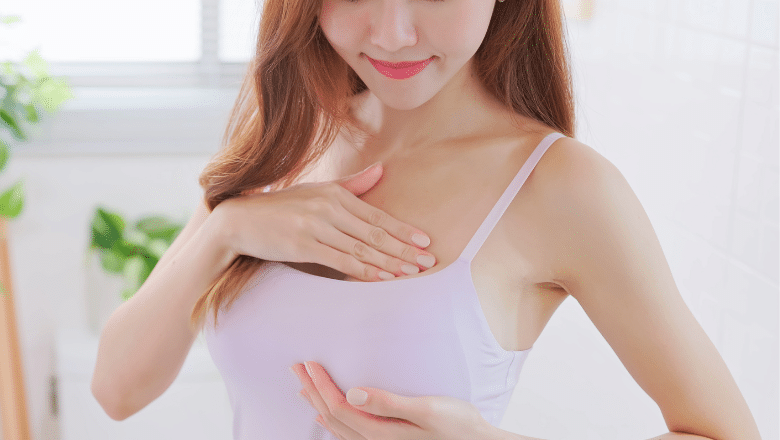
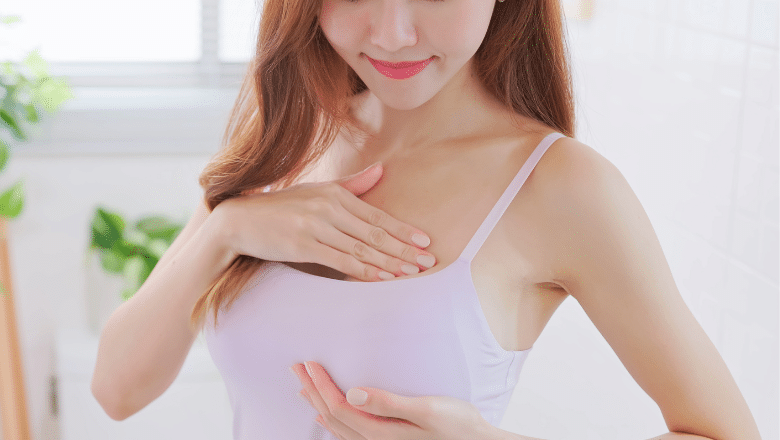
After breast augmentation, displacement exercises (sometimes called “implant massage”) help the implants settle into the surgical pocket and contribute to the natural drop-and-fluff process. The protocol has been refined in recent years — earlier recommendations involving very frequent intense massage have been replaced by gentler, less frequent protocols.
When to start: typically 2 weeks post-op, on surgeon clearance. Specific guidance varies — some surgeons do not recommend displacement exercises at all for certain implant types (textured implants, dual-plane placements), so follow your specific surgical team’s protocol.
Technique:
- Lying on your back, place both hands on the upper part of one breast.
- Gently push the implant downward toward the lower pole of the breast, holding for 5-10 seconds.
- Move the implant inward toward the midline and hold.
- Move the implant outward toward the armpit and hold.
- Move the implant upward (briefly — this is the least useful direction).
- Repeat for 2-3 minutes per breast, twice daily for the first 4-6 weeks.
What to avoid: aggressive squeezing or pressure that causes significant pain. The point is to encourage natural settling, not to force the implants into a position. Surface scar massage is separate and starts later (4-6 weeks).
See drop and fluff after breast augmentation for what to expect as implants settle.
Self-massage after abdominoplasty
Abdominoplasty produces extensive swelling that resolves gradually over 3-6 months. Self-massage in combination with compression garment use and professional MLD speeds the resolution.
When to start: typically 2-3 weeks post-op for gentle self-massage of the abdomen (not the incision itself). Direct scar massage starts later, at 4-6 weeks once the incision is fully closed.
Technique for swelling reduction (weeks 2-8):
- Lying comfortably with the abdomen exposed.
- Apply unscented lotion or arnica gel to fingers.
- Using flat hand pressure, sweep from the lower abdomen upward toward the chest, then out to the sides toward the armpits.
- Avoid the immediate area of the incision and any open wounds.
- Pay attention to any hard areas or lumps — gentle circular pressure over these helps mobilise fluid and reduce fibrosis.
- 5-10 minutes once or twice daily.
Technique for scar massage (from week 4-6):
- Once incision is fully closed, apply firm circular pressure directly over the scar.
- Include the small belly button incision in your routine.
- 2-5 minutes per session, two to three times daily.
What to expect: the abdomen will feel firm and swollen for weeks. Lumps and bumps under the scar are common in the early weeks and usually soften with continued massage. Persistent hard areas at 12+ weeks warrant clinical assessment.
Self-massage after liposuction
Liposuction produces extensive subcutaneous swelling and small amounts of fibrosis that respond well to combined professional MLD and self-massage. The aim is to keep tissue mobile and prevent the development of hard, lumpy areas that can persist.
When to start: typically 5-10 days post-op for gentle self-massage, on surgeon clearance.
Technique:
- Apply lotion or oil to the treated area.
- Using flat hand or knuckle pressure, work the treated areas with firm but not painful pressure.
- Direction: generally toward the nearest lymph node basin (groin for lower abdomen/thighs; armpit for chest/flanks; behind the ear for face/neck).
- Pay particular attention to hard or lumpy areas — firm circular pressure for 30-60 seconds per spot helps break up early fibrosis.
- 10-15 minutes daily for the first 6-8 weeks.
Combine with professional MLD — the two are complementary rather than alternative. See lymphatic drainage massage after liposuction.
Procedure variations: VASER liposuction tends to produce more uniform contour with less fibrosis. 360 liposuction requires self-massage across the whole circumference.
Self-massage after BBL
Brazilian butt lift involves two distinct self-massage considerations:
- Donor sites (where fat was harvested — usually flanks, abdomen, thighs) — treat as liposuction sites with standard self-massage from 7-10 days post-op.
- Recipient site (the buttocks where fat was placed) — should NOT be aggressively massaged in the first 6-8 weeks. The transferred fat needs to establish blood supply during this period; firm pressure can disrupt fat cell survival and reduce the final result.
Gentle lymphatic-style strokes around the periphery of the buttocks (not directly over the augmented area) can help drainage without disrupting fat survival. After 6-8 weeks the buttocks can be treated more like other areas. See when does fluffing happen after BBL.
Self-massage after facelift and neck lift
Facial post-op massage requires particularly gentle technique. Heavy pressure on healing facial tissues can disrupt underlying SMAS work, displace small sutures, or produce hematomas.
When to start: typically 1-2 weeks post-op for very gentle facial self-massage; more substantial technique from 3-4 weeks.
Technique:
- Always with clean hands.
- Use the pads of fingers only, never knuckles or harder pressure.
- Direction: outward from the centre of the face and downward toward the neck.
- Start at the collarbone area (clearing the downstream lymphatic pathway), then work the face from forehead down toward the ears and down the neck.
- Avoid direct pressure on incision lines.
- Avoid pressure that hurts or that moves the skin significantly.
- 5-10 minutes once or twice daily.
Special considerations: areas of numbness behind the ears and in the lower face are normal post-facelift and resolve over months. Massaging numb areas is safe but feels strange. Areas of unusual firmness or tenderness should be raised at follow-up rather than aggressively massaged.
Self-massage after rhinoplasty
Most rhinoplasty post-op care is hands-off — the nose is splinted for the first week and significant external manipulation can disrupt the technical work. Some surgeons recommend gentle massage of specific areas in the later recovery phase:
- Specific firmness above the radix — light circular pressure may help, but only on surgical team direction.
- Persistent tip swelling — gentle taping protocols are sometimes prescribed.
- Saline nasal spray for internal moisture (under surgical direction).
Do not initiate rhinoplasty self-massage without explicit direction from your surgical team. The standard advice is hands-off for the first 6-12 weeks.
Self-massage after labiaplasty
Labiaplasty recovery is largely hands-off. Some considerations:
- Gentle external rinsing during showers from day 1.
- No direct massage of healing tissue for the first 4-6 weeks.
- From 6 weeks onward, gentle external application of moisturiser to the area can be helpful.
- Avoid internal use of products or any internal massage during the first 6-8 weeks.
- Sexual activity resumes only at the surgeon’s clearance (typically 6 weeks).
Self-massage after blepharoplasty
The eyelid area is delicate and most self-massage is best avoided. What helps:
- Cool compresses for swelling (well-wrapped, not directly on incisions).
- Gentle finger taps around (not on) the eye area to encourage drainage from 7-10 days.
- Light scar massage along the upper lid crease from 3-4 weeks once the wound is fully closed.
- Lower lid scars are very fine and rarely need direct massage.
Self-massage after gynaecomastia surgery
Gynaecomastia surgery recovery benefits from chest self-massage similar to abdominoplasty:
- Gentle drainage strokes from the chest outward toward the armpits from 1-2 weeks post-op.
- Direct chest massage to break up any fibrosis from 3-4 weeks.
- Scar massage from 4-6 weeks once incisions are fully closed.
- 10 minutes daily across the chest for the first 6-8 weeks.
What not to do
- Do not massage open wounds or incisions that are still scabbed or not fully closed.
- Do not apply firm pressure to numb areas if you cannot feel the pressure you are applying — risk of damage without realising.
- Do not use deep tissue massage in the first weeks. Deep technique can disrupt healing tissue.
- Do not massage hot, red, or swollen areas that might indicate infection — call the clinic instead.
- Do not start self-massage without surgical clearance for your specific procedure.
- Do not use products containing fragrances or active ingredients directly on healing wounds.
- Do not skip self-massage entirely when prescribed — it produces measurable improvements in outcome.
When to stop and call the clinic
Stop massage and contact the clinic if you notice:
- Increasing redness, warmth, or pain in the treated area.
- Pus or discharge from incisions.
- Fever or feeling generally unwell.
- Sudden new swelling that is hard or tender.
- Bleeding from an incision.
- A new, expanding bruise that was not there before.
- Severe pain during or after self-massage.
FAQs
How long do I need to massage? Procedure-dependent. Scar massage typically 3-6 months. Abdominal and liposuction self-massage 6-8 weeks. Breast implant displacement 4-6 weeks. Your surgical team will give specific guidance.
What do I use for self-massage? Plain unscented moisturiser (Aveeno, E45, CeraVe), vitamin E oil, arnica gel, or silicone gel for scars. Avoid heavily perfumed products and active ingredients (retinoids, acids) directly on healing wounds.
How firm should I press? Firm enough to feel meaningful pressure but not so firm that it produces sharp pain. Mild discomfort is acceptable; significant pain is not.
Can I overdo it? Yes — excessive pressure or duration can disrupt healing. The protocols above are typical; more is not better.
Is self-massage as good as professional MLD? No, they are complementary. Professional MLD has specific techniques and reaches areas self-massage cannot. Self-massage between professional sessions extends the benefit.
What if I have areas of numbness? Common after most cosmetic procedures and resolves over months to a year. Massaging numb areas is safe but feels strange — apply pressure based on visual feedback rather than feel.
Booking a consultation
If you are planning cosmetic surgery and want to understand what recovery looks like — including self-massage protocols — this is covered at consultation. Call 0207 993 4849 or use the contact form to arrange a consultation at our Baker Street clinic.
Related reading
- Benefits of lymphatic massage after cosmetic surgery
- Do silicone strips help cosmetic surgery scars heal better
- Benefits of wearing a compression garment after cosmetic surgery
Centre for Surgery · CQC-regulated · GMC specialist-registered surgeons · 95–97 Baker Street, Marylebone, London W1U 6RN · 0207 993 4849 · Book a consultation · Finance from 0% APR