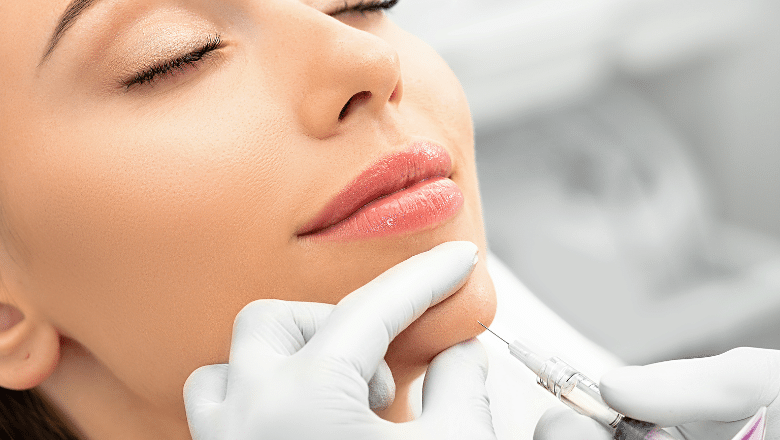
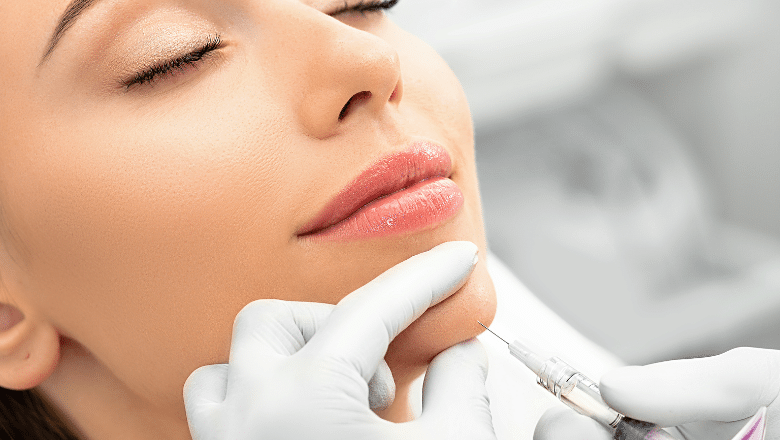
Dermal fillers are the most-requested non-surgical treatment at Centre for Surgery, and the questions patients ask in consultation tend to repeat. This FAQ collects the answers we give most often — covering longevity, safety, sleeping position, the right starting age, and what really happens during and after a filler appointment.
At our Baker Street clinic in Marylebone, all dermal filler treatments are performed by GMC-registered doctors using hyaluronic acid-based fillers. Hyaluronic acid is a sugar molecule that occurs naturally in skin, joints, and connective tissue; it binds water and provides cushioning and structure. Because it is broken down by enzymes the body already produces, hyaluronic acid fillers are gradually absorbed over months — and can be dissolved on demand if needed. This is the safety feature that sets them apart from older permanent fillers and biostimulators like Sculptra or Radiesse, which we do not use.
If you can’t find your question below, our patient coordinators are happy to talk things through on 0207 993 4849.
How long do dermal fillers last?
The honest answer is “it depends” — typically between 6 and 18 months, but this varies meaningfully by area and by patient. Lip fillers tend to break down fastest because the lips are constantly moving, eating, drinking and being expressed; expect 6 to 9 months on average. Cheek and jawline fillers placed deep on bone last longest — often 12 to 18 months — because they sit in a quieter anatomical layer. Tear trough fillers under the eye sit somewhere in the middle, usually 9 to 12 months.
Your individual metabolism, exercise level, and product choice all influence longevity. Patients who train intensively or have high baseline metabolic rates often metabolise filler faster than sedentary patients. We discuss realistic expectations during consultation rather than promising a specific timeframe, because over-promising on duration is a common red flag in this industry.
RELATED: Lip Fillers London | Cheek Fillers London | Tear Trough Fillers
At what age should I start dermal fillers?
There is no single correct age. Most patients have their first treatment between 25 and 40, often to address volume loss in the mid-face or to enhance lip shape. Volume loss in the cheeks usually becomes visible in the early thirties as bone resorption and fat-pad shrinkage begin; subtle cheek filler at this stage can pre-empt the deeper folds that develop later.
We do not treat anyone under 18, and we are cautious with patients in their late teens and early twenties — at that age, the face is generally still gaining definition, and intervention is rarely needed. If a young patient comes in asking for filler to copy a specific celebrity or social-media aesthetic, we will often suggest waiting and re-evaluating in a year. Good filler work is invisible; aggressive filler in a young face usually isn’t.
RELATED: How Young is Too Young for Anti Wrinkle Injections?
Are dermal fillers safe?
Hyaluronic acid fillers have an excellent safety record when administered by a trained medical practitioner who understands facial anatomy. The most common side effects — swelling, bruising, mild tenderness — are predictable and resolve within a week.
Serious complications are rare but possible. The two most important risks are vascular occlusion (filler accidentally injected into or compressing a blood vessel, which can cause tissue damage if not treated quickly) and delayed nodule formation. Both are managed faster and more effectively in a clinic that stocks hyalase, has medical oversight, and is set up to handle complications. The non-medical “filler parties” and home-based injectors that have proliferated in the UK do not have this safety net, which is why the regulatory landscape is now tightening around who can legally inject.
At Centre for Surgery, all injectables are performed by GMC-registered doctors in a CQC-regulated environment. Hyalase is on-site, and follow-up access is built into every treatment.
RELATED: Filler Dissolving Treatment (Hyalase)
How much filler do I need for jawline enhancement?
Jawline contouring is one of the more filler-intensive treatments because it works in three dimensions across a large surface area. Most patients need 2 to 4 ml across the jawline and chin combined to see a meaningful change. Men typically need more product than women because the male jaw is larger and the desired outcome is more angular and defined.
We almost always split jawline treatment across two sessions — placing about 60 to 70% of the planned volume in the first session, assessing how it integrates after 2 weeks, then completing the work. This prevents over-filling, allows tissue to settle, and gives a more natural-looking result than trying to do everything in one visit.
RELATED: Jawline Contouring Fillers
Can dermal fillers make you look older if overused?
Yes. Over-filled faces look heavier, less defined, and paradoxically older — this is the “puffy face” or “pillow face” effect you see on certain celebrities and influencers. It happens when too much product is placed in superficial planes, or when filler is added year after year without ever allowing previous treatments to fully dissolve. Hyaluronic acid is hygroscopic, meaning it attracts water, so retained filler continues to absorb moisture and expand over time even when fresh product isn’t added.
The good news: this is reversible. Hyalase dissolves excess or migrated hyaluronic acid, and many of our patients come to us specifically to undo overfilling done elsewhere. The lesson is conservative dosing, an injector who understands when to stop, and being honest about previous treatments at consultation.
Are dermal filler results permanent?
No, and we consider this a feature rather than a bug. Hyaluronic acid fillers are temporary by design. Faces change over time — bone structure shifts, fat pads migrate, skin laxity develops — and a filler placement that suited you at 32 may not suit you at 45. Temporary fillers let your treatment plan evolve with your face.
Permanent fillers (silicone, polymethyl methacrylate, polyacrylamide) do exist but carry significantly higher long-term risks — chronic inflammation, granulomas, migration, infection years after placement — and cannot be dissolved. We do not offer them.
What should I do before a dermal filler appointment?
A few simple steps reduce the risk of bruising and swelling:
- Avoid alcohol for 24 hours before treatment
- Avoid blood-thinning medications and supplements (aspirin, ibuprofen, fish oil, vitamin E, ginkgo) for 48–72 hours where medically safe to do so — never stop prescribed blood thinners without speaking to the prescribing doctor first
- Avoid intense exercise on the morning of treatment
- Tell us about any history of cold sores; we may prescribe antiviral prophylaxis before lip treatment
- Avoid any other injectables, peels, or laser in the treatment area for at least 2 weeks
- Tell us if you are pregnant, breastfeeding, or trying to conceive — we do not treat in these circumstances
Arrive without makeup on the treatment area if possible, and eat beforehand — patients who skip meals are more likely to feel light-headed.
How should I sleep after dermal filler?
For the first 2 to 3 nights, sleep on your back with your head elevated on two pillows. This minimises swelling and stops uneven pressure on freshly placed filler, which can occasionally lead to asymmetry or product displacement if you’re a heavy side-sleeper.
After 72 hours, the filler has integrated with surrounding tissue and you can return to your usual sleeping position. If you genuinely cannot sleep on your back, a U-shaped travel pillow worn around the neck helps keep your head neutral.
Which filler lasts the longest?
Among hyaluronic acid products, the longest-lasting are dense, cross-linked formulations designed for deep structural placement — used on the cheekbones, chin, and jawline. These can last 18 to 24 months in some patients. Softer, less cross-linked products used for the lips and tear trough are designed to integrate smoothly with mobile or thin-skinned tissue and last 6 to 12 months.
We don’t promote specific brand names in public material because what matters is choosing the right product viscosity for the right anatomical area — a decision we make based on examination, not patient request. If you’ve read about a particular product online, bring it up at consultation and we’ll explain whether it’s right for your face.
How often should dermal fillers be topped up?
Most patients return every 9 to 12 months for maintenance. The exception is lips, where some patients top up at 6 months to maintain shape, though we increasingly recommend going longer between lip treatments — letting filler fully dissolve before re-treating produces more natural long-term results and avoids the cumulative volume creep that causes overfilled lips.
We don’t have a fixed schedule. We assess at each visit whether top-up is actually needed; sometimes the answer is “not yet.”
Will 1 ml of cheek filler make a difference?
1 ml — half a millilitre per side — is a starter dose for the cheeks. It will make a visible difference, particularly if you are slim-faced or have early volume loss, but it is on the conservative end. Patients with more pronounced volume loss, or those wanting more obvious lift and definition, typically need 2 ml total (1 ml per side) for noticeable contouring.
We almost always recommend starting conservatively. You can always add more in a second session; you can’t easily remove filler that’s been placed too aggressively without dissolving the whole area and starting over.
RELATED: Cheek Fillers London
When do dermal filler results show?
The structural change is visible immediately — you’ll see the volume difference as soon as we hold up the mirror. However, the true final result takes 2 to 4 weeks to appear. In the first 48 to 72 hours there is usually some swelling that makes the area look slightly fuller than it really is. Swelling resolves, the filler integrates with surrounding tissue, and the result settles into its natural appearance.
We routinely book a 2-week review for new patients so we can assess the settled result and add small refinements if needed.
What are the common side effects after filler treatment?
Expected and normal:
- Mild swelling for 1–3 days (longer with lip fillers — up to 7 days)
- Bruising at injection points, typically lasting 3–7 days
- Tenderness when pressing the treated area
- Small palpable lumps that resolve as the filler integrates
Contact us promptly if you notice:
- Severe, increasing, or asymmetric pain
- Blanching (whitening) of the skin
- A dusky, mottled, or purple discolouration
- Vision changes
- Signs of infection — increasing redness, warmth, pus, fever
The first four can indicate vascular compromise and need same-day assessment.
How long do hyaluronic acid fillers last?
Already covered above in detail, but the headline: 6 to 18 months depending on product, placement, and patient. Anyone quoting a single number is over-simplifying.
Can I exercise after dermal fillers?
Avoid strenuous exercise and saunas for 24 hours. Light walking is fine the same day. Heavy training, hot yoga, and steam rooms can increase swelling, bruising, and the (very small) risk of bacterial seeding of the injection site.
After 24 hours, resume normal activity. After 2 weeks, there are no restrictions.
Can I have dermal fillers if I’m pregnant or breastfeeding?
We don’t treat patients who are pregnant, breastfeeding, or actively trying to conceive. This isn’t because hyaluronic acid is known to be unsafe — there are no good studies in this group precisely because pregnant women aren’t enrolled in cosmetic trials — but because the precautionary principle applies. Wait until you’ve finished breastfeeding before resuming injectable treatments.
Can dermal fillers be combined with other treatments?
Yes — most of our patients combine dermal fillers with at least one other modality. Common combinations include:
- Fillers + anti-wrinkle injections — fillers add volume; muscle relaxants soften dynamic lines. Together they cover the two main ageing processes.
- Fillers + Profhilo — Profhilo improves skin quality and hydration; fillers add structural support.
- Fillers + Morpheus8 — Morpheus8 tightens skin and improves texture; fillers replace lost volume.
- Fillers + Fotona 4D — laser tightening and contouring alongside structural volumisation.
We usually space treatments by 2 weeks where possible — for example, doing Profhilo first, then fillers two weeks later — so we can isolate the response to each treatment.
Why choose Centre for Surgery for your dermal fillers?
We are a CQC-regulated cosmetic clinic on Baker Street in central London. All dermal filler treatments are performed by GMC-registered doctors, never by nurse injectors operating without medical supervision and never in unregulated settings. Hyalase is stocked on-site, and complication management is built into our protocols rather than outsourced.
Our approach is conservative — we’d rather see you again in 6 weeks for a small top-up than over-fill at the first visit. We do not use permanent fillers, biostimulators (Sculptra, Radiesse), or branded products we wouldn’t be comfortable dissolving if needed. We do not perform thread lifts.
Consultation is structured, written, and includes a 2-week cooling-off period before any procedure. If we don’t think filler is the right answer for what you’re describing, we will say so.
To book a consultation, call 0207 993 4849, email contact@centreforsurgery.com, or complete the contact form below.
Centre for Surgery
95-97 Baker Street, London W1U 6RN
📞 0207 993 4849
Book a consultation | 0% Finance with Chrysalis Finance
[contact-form-7 id=”256″ title=”Treatments form”]