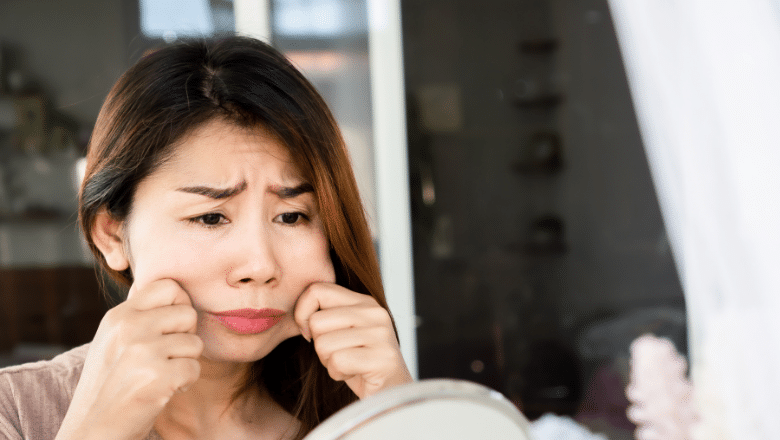
“Chubby cheeks” — fullness in the lower cheek and submalar area that gives the face a rounded appearance — has multiple causes, and the right treatment depends entirely on which cause is operating in your face. Some patients have prominent buccal fat pads (a genetic feature unaffected by weight); others carry general facial fat that responds to weight loss; others have masseter muscle prominence (the chewing muscle); and many have a combination.
Choosing the right treatment requires accurate diagnosis. Buccal fat removal for someone whose fullness is from masseter prominence won’t help. Jaw slimming injections for someone with prominent buccal fat pads won’t help. This guide explains what causes chubby cheeks, how to identify which cause is operating in your face, the treatment options that match each cause, and the long-term considerations — including the important question of how your face will look as it ages.
What causes chubby cheeks
The lower cheek area gets its volume from multiple sources, any of which can contribute to a rounded appearance:
The buccal fat pad. A discrete encapsulated mass of fat sitting between the masseter muscle and the deeper facial muscles. The size of the buccal fat pad is largely genetic and remains relatively constant regardless of body weight. Some patients have naturally large buccal fat pads from a young age. This is the structure addressed by buccal fat removal surgery.
Subcutaneous facial fat. The general layer of fat beneath the skin across the face. This responds to overall body weight — gaining weight increases facial fat; losing weight reduces it. Patients whose cheek fullness is from subcutaneous fat see substantial improvement with weight loss.
Masseter muscle prominence. The masseter is the main chewing muscle, running from the cheekbone to the angle of the jaw. In patients with bruxism (teeth grinding/clenching), or in patients with naturally developed masseters, the muscle is enlarged. This produces a square-jawed appearance and lower cheek fullness that’s actually muscle, not fat. Addressed by jaw slimming injections — see our guide on non-surgical jaw reduction.
Skeletal structure. Wide zygomatic bones (cheekbones) and the underlying maxillary structure determine the overall framework of the face. Some patients have facial skeletons that simply produce a rounder face regardless of soft tissue volume. Skeletal contributions can’t be changed without orthognathic surgery (rare and reserved for functional concerns).
Fluid retention. Salt intake, alcohol, and certain medications cause temporary facial puffiness that mimics chubby cheeks. This is reversible with lifestyle changes.
Age-related descent and accumulation. In mid-life, jowling develops as facial fat compartments descend. The cheek can appear simultaneously hollow in some areas and full in others. This is a different problem from young-adult chubby cheeks.
For comprehensive guidance on the different approaches, see our guides on questions before buccal fat removal and non-surgical alternatives to buccal fat removal.
How to identify which cause is operating in your face
Self-assessment markers (a consultation provides definitive assessment):
Likely buccal fat pad prominence if:
- The fullness is in a specific defined area below the cheekbone
- The fullness has been present since adolescence or earlier
- The fullness hasn’t changed despite weight fluctuations
- Other body areas don’t carry significant fat
- Sucking your cheeks in dramatically reveals a defined hollow that would benefit from being more permanent
- Family members have similar facial structure
Likely subcutaneous facial fat if:
- Fullness corresponds to overall weight changes
- Fullness is diffuse across the face rather than localised
- Other body areas also carry weight
- Recent weight gain has produced facial changes
- Facial volume reduces with weight loss
Likely masseter prominence if:
- The fullness is more in the lower face/angle of jaw rather than mid-cheek
- The “fullness” is firm to touch (muscle) rather than soft (fat)
- The jaw appears wide / square from front view
- You have a history of teeth grinding, clenching, or TMJ issues
- You can feel the muscle bulge when you clench your teeth
- Common in patients of East Asian descent — though present in all populations
Likely skeletal contribution if:
- The bony structure of your face is naturally wide
- The fullness extends from the cheekbones themselves
- Reducing soft tissue would still leave a wide-appearing face
- Other family members have similar bone structure
Multiple causes commonly operate together. Most patients have some combination — for example, naturally large buccal fat pads PLUS some general facial fat PLUS mild masseter prominence.
Lifestyle approaches — when they work and when they don’t
For the subcutaneous fat component of facial fullness, lifestyle interventions genuinely matter:
Overall weight management. Facial fat decreases with overall weight loss, though the face often loses less than the body proportionally. Realistic expectation: 5-10% body weight loss often produces visible facial slimming.
Limit alcohol. Alcohol causes fluid retention and inflammation that makes faces appear fuller. Reducing alcohol consumption produces visible facial change within days.
Reduce salt intake. High dietary sodium causes fluid retention. Moderating intake reduces facial puffiness.
Stay hydrated. Paradoxically, adequate water intake reduces facial puffiness — dehydration causes the body to retain fluid in tissues.
Manage refined carbohydrate intake. Refined carbs and sugar drive inflammation and weight gain. Moderation supports both facial and overall body composition.
Quality sleep. Sleep deprivation produces facial puffiness through both fluid retention and increased cortisol. 7-9 hours nightly matters.
What doesn’t work:
- Facial exercises (“face yoga”) — no published evidence shows meaningful effect on facial fat or cheek volume
- Spot reduction — you can’t lose fat from one specific facial area through targeted exercise
- Topical creams claiming to “melt facial fat” — no mechanism supports this
- Massage techniques claiming to reduce facial fat permanently
- “Detox” approaches — facial fullness from genuine fat doesn’t respond to detox protocols
For patients whose fullness is entirely or primarily buccal fat pad or masseter muscle, lifestyle changes won’t substantially help. These require targeted intervention.
Non-surgical treatment options
For patients wanting non-surgical approaches before considering surgery:
Jaw slimming injections (for masseter prominence). Small doses of botulinum toxin placed in the masseter muscle reduce its size over 6-8 weeks. Effect lasts 4-6 months initially, with progressively longer duration on repeat treatment as the muscle adapts. The single most effective non-surgical treatment for masseter-driven facial fullness. See our non-surgical jaw reduction guide.
Fat-dissolving injections. Various deoxycholic acid or similar formulations are marketed for facial fat reduction. Mixed evidence; risk of complications including nerve injury. Not offered at our clinic for buccal fat — surgical removal produces more predictable results.
Energy-based skin tightening. Morpheus8 (microneedling + radiofrequency) and Fotona 4D tighten skin and produce subtle improvement in facial contour. They don’t reduce facial fat substantially but can refine appearance in patients with mild concerns.
Strategic dermal filler placement. Counter-intuitively, adding filler to specific areas (cheekbones, jawline) can create the visual illusion of a slimmer face by enhancing contrast. Patients with flat cheekbones may appear “rounder” simply because no defined contours interrupt the soft tissue. See our guide on cheek fillers.
For full non-surgical treatment options for facial slimming, see our dedicated guide on non-surgical alternatives to buccal fat removal.
Surgical treatment options
For patients whose primary concern is buccal fat pad prominence:
Buccal fat removal surgery. The gold standard for genuine buccal fat pad prominence. A small incision inside the mouth (no external scarring) allows access to the buccal fat pad, which is then partially or completely removed. The procedure takes 30-45 minutes under local anaesthesia. Recovery involves 1-2 weeks of mild swelling. Results are permanent.
Conservative approach. Modern buccal fat removal typically removes only a portion of the fat pad, not the whole structure. This is because complete removal can lead to gaunt-looking faces as natural ageing produces further volume loss. Conservative removal balances current cheek slimming with future-proofing against premature ageing appearance.
Facial liposuction. For patients with more diffuse subcutaneous facial fat (not buccal fat pad), small-volume liposuction of the jowls, neck, and chin can refine the lower face. See submental liposuction.
Combination approaches. Many patients benefit from combined treatment — buccal fat removal for the cheek fullness, plus jaw slimming injections for masseter contribution, plus strategic filler placement for cheekbone definition. A consultation establishes the appropriate combination.
For comprehensive guidance, see our service page on buccal fat removal.
The ageing factor — important long-term consideration
The most important conversation about chubby cheeks isn’t about how to look today — it’s about how you’ll look at 50 or 60.
The youthful face is volumised. What looks like “chubby cheeks” at 20 is often “youthful fullness” — the feature that distinguishes young faces from older ones.
Faces lose volume with age. From the mid-30s onward, fat compartments thin and descend. By the 50s and 60s, faces that started fuller have aged better than faces that started thin.
Aggressive fat removal in youth ages poorly. Patients who had extensive buccal fat removal in their 20s often look prematurely gaunt in their 40s and beyond. The current trend toward more conservative buccal fat removal reflects this clinical experience.
The right candidate considers their future face. Surgical removal of facial fat is permanent and cannot be reversed. The decision should account for how the face will look as it ages, not just current concerns.
Reversible options first. Before committing to permanent fat removal, consider whether jaw slimming injections (reversible, treats masseter), strategic filler (reversible, enhances contrast), or lifestyle interventions (free, treats subcutaneous fat) might address the concern adequately.
Patients in their 30s+ generally tolerate fat removal better. By this age, the face has begun its natural volume changes, and removing buccal fat has less impact on long-term appearance.
This isn’t a reason to avoid buccal fat removal — for the right candidate, it produces excellent results. It’s a reason to think carefully about the decision and choose conservative removal techniques.
Decision framework
A practical approach for patients deciding what to do:
Step 1: Diagnose the cause. Consultation with examination identifies which factors are contributing. Self-diagnosis often confuses the contributions.
Step 2: Start with reversible options. If lifestyle factors apply, address them. If masseter contributes, try jaw slimming injections. If general facial fat contributes, consider weight management.
Step 3: Assess after reversible interventions. Re-evaluate after 6-12 months of lifestyle changes and any non-surgical treatments. The remaining concern is what genuinely requires surgical intervention.
Step 4: Conservative surgical approach if needed. If buccal fat removal is appropriate, conservative partial removal rather than complete removal preserves long-term facial appearance.
Step 5: Maintain. Whatever combination of treatments you choose, ongoing maintenance — lifestyle factors, periodic non-surgical treatments — sustains results.
Step 6: Reassess periodically. Facial ageing changes the equation. What was appropriate in your 20s may not be appropriate in your 40s.
Cost
Treatment options at Centre for Surgery:
- Jaw slimming injections: from £400-£600 per session (every 4-6 months initially)
- Cheek fillers (for contrast/contour): from £450-£700 per syringe
- Morpheus8 facial: from £900-£1,500 per session
- Buccal fat removal surgery: from £3,500-£5,000
- Facial / submental liposuction: from £3,500-£5,500
Finance options through Chrysalis Finance, including 0% APR, are available across all treatments.
For comprehensive cost detail on buccal fat surgery specifically, see our service page on buccal fat removal.
Common questions
Can I lose chubby cheeks through diet alone?
Partially — for the subcutaneous fat component. The buccal fat pad component doesn’t respond to weight loss. Many patients see meaningful improvement with weight management but still have residual concerns about buccal fat.
How young can I have buccal fat removal?
Most experienced surgeons recommend waiting until at least the mid-20s, when facial structure has fully matured. Removing buccal fat at 18-19 is rarely advisable due to the long-term ageing considerations.
Will my face look gaunt as I age after buccal fat removal?
Possibly, particularly with aggressive complete removal in young patients. Conservative partial removal reduces this risk substantially. Some patients address this with cheek filler in later years.
How long until I see results from buccal fat removal?
Initial swelling resolves over 2-4 weeks. Final settled result visible at 3-6 months once all swelling has fully resolved.
Can I have buccal fat removed and add cheek filler at the same time?
Not in the same session. Sequential treatment — buccal fat removal first, then cheek filler 8-12 weeks later — is appropriate for some patients wanting to enhance cheekbones while reducing lower cheek fullness.
What about masseter muscle reduction with jaw slimming injections?
This is the most effective non-surgical treatment for masseter-driven facial fullness. The muscle reduces in size over 6-8 weeks. Effect lasts 4-6 months initially, with longer durations on repeat treatment. See our jaw slimming guide.
Will my face change shape from jaw slimming injections?
Yes — the lower face becomes less square and more oval-shaped. The effect is gradual and natural-looking.
How do I know if my chubby cheeks are buccal fat versus muscle?
A clinical examination distinguishes the two. Roughly: buccal fat is soft, mid-cheek, and doesn’t change when you clench. Masseter is firm, more posterior at the jaw angle, and bulges when you clench your teeth.
Can I combine multiple treatments?
Yes — combination is often appropriate. Jaw slimming injections + conservative buccal fat removal + cheek filler is a common combination for patients with mixed-cause fullness.
Are there permanent treatments for masseter prominence?
Jaw slimming injections are not permanent — they require ongoing maintenance. Surgical jaw contouring is technically possible but rarely performed in the UK for cosmetic reasons. Most patients accept ongoing injection maintenance.
What about Morpheus8 for facial slimming?
Morpheus8 produces subtle tightening and modest contour refinement. It’s a useful adjunct but doesn’t substantially reduce facial volume on its own.
Is buccal fat removal painful?
Performed under local anaesthesia — patients feel pressure during surgery but no pain. Mild discomfort during recovery, manageable with paracetamol.
Will I have visible scarring from buccal fat removal?
No — incisions are entirely inside the mouth. No external scars.
Can buccal fat be transferred elsewhere rather than removed?
Technically possible but not commonly performed. The buccal fat pad is small and its tissue characteristics differ from typical fat transfer material. Standard facial fat transfer uses fat from other body areas instead.
Centre for Surgery · CQC-regulated · GMC specialist-registered surgeons · 95–97 Baker Street, Marylebone, London W1U 6RN · 0207 993 4849 · Book a consultation · Finance from 0% APR