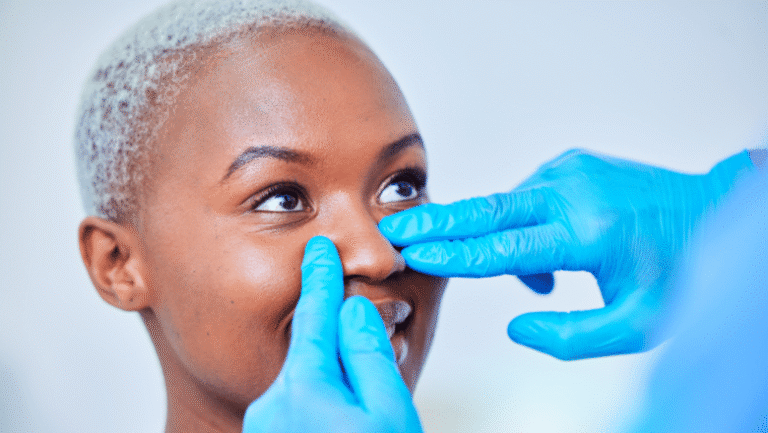

A deep plane facelift typically gives results that hold for 10 to 15 years before significant relapse becomes visible. That doesn’t mean the face suddenly snaps back at year 10 — ageing continues at its normal pace, and the face simply ages from a tighter starting point.
This article explains what determines longevity, how the deep plane technique compares to other facelift options, and what affects how long any individual patient’s result will last.
Longevity by facelift technique
Deep plane facelift: 10–15 years. Lifts the SMAS, midface fat pads, and overlying skin as a single composite unit by releasing key retaining ligaments. The structural depth of the dissection is what produces the long duration, particularly in the midface where it lifts the cheek fat pad up rather than just stretching skin.
SMAS facelift: 10–12 years. Lifts the superficial musculoaponeurotic system independently of the skin. Reaches a similar duration to deep plane in many patients, with a slightly shorter recovery.
Mini facelift / S-lift: 5–7 years. Limited dissection through smaller incisions in front of the ear. Best for patients in their 40s with early laxity who want a less involved procedure.
Thread lift: 12–18 months. Not a true facelift — sutures are placed under the skin to provide temporary lift. Cannot reproduce surgical results.
RELATED: SMAS Facelift vs Deep Plane Facelift
What affects how long any facelift lasts
The technique sets the ceiling, but several patient factors determine where in the range the result lands.
Sun protection. UV breaks down both old and newly formed collagen. Daily SPF 50 is the most effective single thing a patient can do to protect the result.
Smoking. Nicotine impairs collagen synthesis and accelerates skin ageing. Smokers see noticeable relapse two to three years earlier than non-smokers, and have a higher risk of skin necrosis at the time of surgery.
Weight stability. Significant weight gain or loss after a facelift stretches or deflates the lifted tissue.
Skin quality at the time of surgery. Patients with thicker, well-elasticated skin retain results longer than those with significant pre-existing sun damage or thin, atrophic skin.
Ongoing skincare and tightening treatments. Regular use of retinoids, vitamin C, and energy-based maintenance treatments such as Morpheus8 or FaceTite from year three onwards extends the visible benefit.
What does the deep plane technique actually do differently?
The midface fat pad — the cheek fat — sits over the SMAS layer. In a traditional SMAS facelift, the SMAS and skin are lifted but the deep retaining ligaments remain intact, which limits how far the midface can be repositioned vertically.
The deep plane technique releases those ligaments, principally the zygomatic and masseteric cutaneous ligaments. Once released, the entire midface composite — skin, SMAS, fat, and the muscles of facial expression — moves as a single unit. The cheek can be lifted vertically rather than just pulled tighter laterally, which addresses nasolabial folds and midface flattening more directly than other techniques.
The trade-off is technical. Working in the deep plane brings the dissection closer to the buccal branches of the facial nerve, which means the procedure should only be performed by surgeons with high case volumes in this specific technique.
Combining a facelift with neck and brow work
A facelift addresses the lower face and jawline. The neck, forehead, and eyelids age on their own timelines and often need separate intervention.
A neck lift is performed through a small incision under the chin and is commonly combined with a facelift in the same operation. A brow lift raises the upper third of the face. Upper or lower blepharoplasty addresses heavy upper lids or under-eye bags.
Combining procedures during a single anaesthetic reduces total recovery time and avoids leaving one part of the face looking out of step with the rest.
Pain and recovery
Discomfort peaks in the first 48 hours and is generally well controlled with paracetamol and codeine. Most patients describe tightness rather than pain. Bruising and swelling settle over two weeks. Sutures are removed at 7–10 days. Most patients return to social activity at three weeks, with residual swelling continuing to refine over three months.
RELATED: Facelift Surgery FAQs
Booking a consultation
For a facelift consultation at our Baker Street clinic, call 0207 993 4849 or email contact@centreforsurgery.com. Finance options including 0% APR are available through Chrysalis Finance.
[contact-form-7 id=”256″ title=”Treatments form”]